
再生医学

Search documents
哺乳动物再生能力调控关键分子开关发现
Ke Ji Ri Bao· 2025-06-26 23:31
Core Insights - Chinese scientists have made a groundbreaking discovery in regenerative medicine by identifying retinoic acid, a metabolite of vitamin A, as a key "molecular switch" that regulates the regenerative capacity of mammals [1][2] - The research marks a significant original innovation breakthrough in the field of regenerative medicine in China, particularly in understanding why mammals have limited organ regeneration capabilities compared to lower animals like salamanders [1] Group 1 - The research team focused on the ear structure of mammals, which evolved approximately 160 million years ago and consists of complex tissues such as skin, cartilage, and peripheral nerves [1] - Different mammals exhibit significant variations in their ear regeneration capabilities after damage, with species like rabbits and African spiny mice able to fully repair their ear structures, while mice and rats fail to regenerate effectively [1][2] Group 2 - A systematic comparative study was conducted on the ear damage repair processes in rabbits and mice, utilizing advanced techniques such as spatial transcriptomics and cell lineage tracing to analyze differences in cell types and gene expression during repair [2] - The study concluded that insufficient production of retinoic acid leads to regeneration failure, while external supplementation of retinoic acid can activate regeneration processes [2] - This research provides new insights into the key factors behind the failure of organ regeneration in mammals, including the heart and central nervous system, and has significant implications for understanding the regulation of regenerative capabilities in evolutionary biology [2]
耗时两年多,冠昊生物5亿定增终止
Bei Ke Cai Jing· 2025-06-25 08:46
Core Viewpoint - Guanhao Bio's plan to raise 500 million yuan through a private placement has been terminated due to changes in market conditions after more than two years of efforts [1][11]. Group 1: Private Placement Details - The private placement aimed to issue up to 55.8 million shares at a price of 8.96 yuan per share, with the total funds intended for working capital [2][3]. - If completed, the actual controllers, Zhang Yongming and Lin Ling, along with their controlled entities, would hold a combined 39.32% of the company's shares [2]. Group 2: Regulatory and Market Challenges - The private placement faced scrutiny regarding its rationale, particularly due to the controlling shareholder's stock being fully pledged and the involvement of related parties in the subscription [4][5]. - The Shenzhen Stock Exchange issued inquiries regarding the legitimacy of the related party subscriptions and the financial capabilities of the actual controllers [6][10]. Group 3: Financial Performance - Guanhao Bio has experienced significant fluctuations in performance, reporting a loss of over 300 million yuan in 2022, primarily due to issues with a subsidiary and impairment losses [12][13]. - In 2023 and 2024, the company's revenue was 404 million yuan and 378 million yuan, with net profits of 31.01 million yuan and 27.42 million yuan, reflecting year-on-year declines of 6.60% and 11.57% respectively [14].

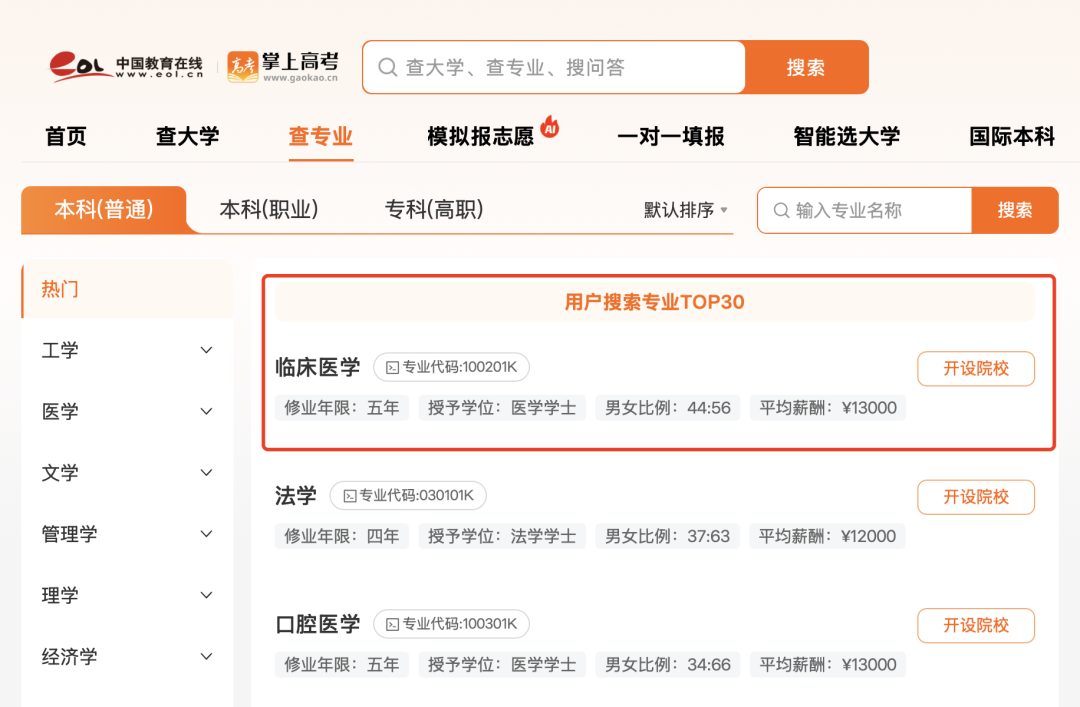
临床医学热度第一,现在是学医的好时候吗?
Hu Xiu· 2025-06-24 13:01
Core Viewpoint - The popularity of clinical medicine as a major continues to rise, with many medical schools increasing their enrollment plans to meet the demand from students and parents [2][4][6]. Group 1: Popularity of Clinical Medicine - Clinical medicine has become one of the most sought-after majors, ranking first in the "Top 30" most searched undergraduate majors [2]. - Several medical institutions have expanded their enrollment for clinical medicine, such as Guangdong Medical University increasing its enrollment by 100 students compared to last year [4]. - The enthusiasm for studying medicine remains high despite jokes and challenges associated with the profession [4]. Group 2: Expert Opinions on Studying Medicine - Experts encourage young people to pursue medicine due to job stability, good future prospects, and the fulfillment of being needed by others [6][9]. - However, they also caution that studying medicine requires careful consideration of personal interests, family circumstances, and the long-term commitment involved [7][11]. - The rigorous nature of medical education and the high standards for entry into the profession are highlighted, with many top hospitals now requiring doctoral degrees for employment [11][39]. Group 3: Career Insights from Medical Professionals - Medical professionals emphasize the long-term commitment required in the field, often comparing it to a marathon due to the extensive training and education involved [27]. - The profession offers significant rewards, including the ability to provide critical support to friends and family, stable career development, and a profound sense of accomplishment from helping patients [27][29]. - The evolving landscape of medicine, including advancements in technology and the increasing importance of health management, suggests a bright future for those entering the field [36][38]. Group 4: Considerations for Future Medical Students - Prospective medical students should be aware of the lengthy training period and the emotional and physical demands of the profession [39][40]. - The importance of personal motivation and the ability to handle stress are crucial for success in the medical field [44][50]. - The need for continuous learning and adaptation in the rapidly changing medical environment is emphasized, as well as the potential for diverse career paths within healthcare [36][38].

我国科学家为骨修复开辟新路径
Huan Qiu Wang Zi Xun· 2025-06-24 02:04
Core Viewpoint - The research team from Yunnan Province has developed a method to convert skin fibroblasts into induced osteoblasts, providing an innovative solution for the clinical treatment of severe fractures or non-unions [1][2]. Group 1: Research Methodology - The team utilized a combination of small molecule compounds to successfully reprogram fibroblasts into induced osteoblasts with biological characteristics similar to natural osteoblasts, laying the foundation for autologous cell therapy for bone injuries, particularly in the elderly [2]. - The induced osteoblasts were formed into spheroids, which simulate the three-dimensional growth environment of cells, enhancing their activity and functionality compared to traditional two-dimensional cultures [2]. Group 2: Experimental Results - In experiments on a critical bone defect mouse model, the transplantation of induced osteoblast spheroids resulted in significant bone bridging at the defect site after 28 days, comparable to the effects of young donor-derived bone marrow mesenchymal stem cell transplants [2]. - The induced osteoblast spheroids significantly improved metrics such as bone volume fraction, bone surface fraction, trabecular number, and bone density at the defect site [2][3]. Group 3: Clinical Implications - The induced osteoblast spheroids maintained good functional activity post-transplant, promoting angiogenesis and bone tissue regeneration while reducing reactive oxygen species levels, which aids in protecting transplanted cells and surrounding tissues [3]. - This breakthrough addresses the critical shortage of allogeneic bone sources in clinical treatment and lays the groundwork for precise treatment of bone injuries using autologous tissue-engineered bone, potentially advancing the field of regenerative medicine [3].
日媒:再生医学能让日本实现“健康长寿”吗?
Huan Qiu Shi Bao· 2025-06-23 21:44
Core Insights - Japan is leading the development of regenerative medicine, with significant advancements in stem cell research and applications [1][2][3] Group 1: Research and Development - Researchers at Kyoto University have successfully injected reprogrammed neurons into the brains of seven patients, aiming to treat conditions like Parkinson's disease [1] - The process of reprogramming involves converting differentiated skin cells back into pluripotent stem cells, which can then be induced to become neurons [1] - The work in regenerative medicine is seen as a potential solution to Japan's aging population and economic challenges [1] Group 2: Government Support and Policy - The Japanese government has increased funding and support for stem cell research, particularly after Shinya Yamanaka's Nobel Prize win in 2012 [2] - In 2013, former Prime Minister Shinzo Abe emphasized the importance of regenerative medicine in creating a "society of healthy longevity" [2] - Policies were enacted to facilitate clinical applications of induced pluripotent stem cell therapies following initial successes [2] Group 3: Clinical Applications and Innovations - Japanese scientists have successfully developed healthy retinal cells for transplantation, showcasing the potential of regenerative medicine [2] - Two startups are exploring heart repair using induced pluripotent stem cells, with one company injecting reprogrammed heart muscle cells into patients and another creating thin heart muscle patches for damaged tissue [2] - As of now, eight patients have received the heart patch treatment, with most reporting improved symptoms and no deterioration in condition [2] Group 4: Regulatory Environment and Challenges - Regenerative medicine in Japan has received regulatory approval, marking a significant step beyond clinical trials [3] - Despite progress, there are concerns regarding the speed of regulatory approvals and the robustness of the therapies being developed [3] - Critics, including Yamanaka, have urged caution, highlighting the unpredictable nature of living cells [3]
海南首个外资干细胞项目落户海口国家高新区
Hai Nan Ri Bao· 2025-06-22 00:57
Group 1 - The establishment of the first foreign-funded stem cell project in Hainan marks a significant achievement in the cooperation between Hainan and Hong Kong [2][3] - The project, initiated by Baiwei Gene Biotechnology (Hainan) Co., Ltd., focuses on the research, transformation, and production related to stem cell therapy [2] - The company plans to set up an intelligent laboratory and R&D center exceeding 1,500 square meters, along with a GMP-certified production line [2] Group 2 - The project aims to attract high-end talent domestically and internationally, expanding its business scope and collaborating with local universities and research institutions [2] - The Hainan Free Trade Port's policies and geographical advantages provide a natural platform for integrating into the Asia-Pacific and global value chains [2] - The project is expected to enhance Hainan's leading position in regenerative medicine and attract more global biopharmaceutical companies [3]
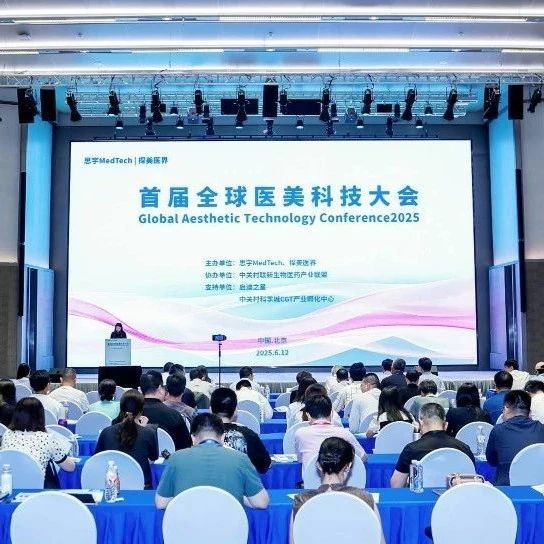
完整回顾:首届全球医美科技大会
思宇MedTech· 2025-06-18 09:05
Core Viewpoint - The first Global Aesthetic Technology Conference 2025 was held in Beijing, focusing on the deep development of aesthetic technology and the efficient gathering of innovative resources, signaling a new stage of systematic innovation and implementation capability in China's aesthetic technology sector [2][14]. Group 1: Policy Guidance and Mechanism Construction - The conference established a main theme of "starting from demand and focusing on transformation," with significant policy support for the aesthetic medicine sector in Beijing [3][14]. - A series of policy tools have been introduced in the "beautiful health" field, forming a systematic ecosystem in terms of industrial space, funding support, talent cultivation, and service mechanisms [3][14]. Group 2: Multidisciplinary Collaboration - The integration of regenerative medicine, material science, energy devices, and artificial intelligence is emphasized as the core of advancing aesthetic technology [5][14]. - Collagen-related products are highlighted as current clinical and industrial hotspots, reflecting a consensus in the industry to move upstream and closer to clinical applications [5][14]. Group 3: Awards and Competitions - The conference launched the 2025 Global Aesthetic Technology Innovation Awards, showcasing innovations in materials, equipment, and results transformation within the aesthetic technology sector [7][14]. - The third China Aesthetic Surgery Technology Achievement Transformation Competition was initiated, focusing on the core role of aesthetic surgery technology achievements in industry development [9][14]. Group 4: Systematic Challenges in Aesthetic Technology - The aesthetic industry is undergoing a reconstruction led by science, with challenges in regulatory evaluation and intellectual property becoming key variables for success [15][26]. - Experts discussed the need for a collaborative system to overcome challenges in the transition from research to clinical application, emphasizing the importance of synchronized efforts across science, regulation, clinical practice, and market dynamics [26][39]. Group 5: Pathway Design and Investment Insights - Investors are advised to focus on the ability of technology to complete the closed loop from research and development to sales, with an emphasis on the importance of understanding consumer needs [30][32]. - The transition from laboratory to clinical application faces numerous barriers, including ethical approvals and product registration, which require a systematic understanding of regulatory frameworks [32][33]. - The need for independent product definitions and development standards in aesthetic applications is highlighted, as materials from other medical fields cannot be directly transferred without adaptation [36][39]. Group 6: Knowledge and Intellectual Property Awareness - There is a common oversight among researchers regarding the importance of intellectual property, with many prioritizing publication over patent protection, which can lead to loss of core technology [38][39]. - The consensus among industry experts is that a clear understanding of patent strategies and regulatory frameworks is essential for the successful transformation of research outcomes into marketable products [38][39].
华润三九与艾尔普再生医学签订HiCM-188项目联合开发协议
Zheng Quan Shi Bao Wang· 2025-06-13 06:20
Core Viewpoint - China Resources Sanjiu (华润三九) and Nanjing Ai'erpu Regenerative Medicine have announced a joint development agreement for HiCM-188, an iPSC-derived cardiac cell therapy aimed at addressing the unmet clinical needs of heart failure patients in China [1][2]. Group 1: Company Collaboration - The collaboration between China Resources Sanjiu and Ai'erpu Regenerative Medicine is seen as a significant milestone, leveraging China Resources Sanjiu's strong marketing network and innovative drug promotion experience [2]. - The partnership aims to accelerate the development and commercialization of HiCM-188, which is the first iPSC-derived cardiac cell therapy approved for clinical trials in both China and the U.S. [1][2]. Group 2: Market Context and Clinical Need - According to the "China Heart Failure Center Work Report," there are approximately 12.1 million heart failure patients aged 25 and above in China, with around 3 million new cases each year [1]. - The five-year survival rate for heart failure patients is only 56.7%, and the survival rate for end-stage heart failure patients is less than 60% after two years, highlighting the urgent need for effective treatments [1]. Group 3: Innovation and Future Prospects - HiCM-188 is positioned to meet the significant clinical demand for end-stage heart failure treatments, as no effective drugs have been developed for this condition to date [1]. - The collaboration is expected to contribute to the rapid development of the cell therapy industry in China, aligning with the trend of regenerative medicine for aging and difficult-to-treat diseases [2].

新突破!广州科研团队用莲藕接骨“塑肉身”,冻豆腐、枸杞、油柑都在研究之列
Huan Qiu Wang Zi Xun· 2025-06-04 05:55
Core Viewpoint - The article discusses the innovative use of lotus root as a natural biomaterial for bone and skin wound healing, highlighting its potential in regenerative medicine and its advantages over traditional materials like bone cement [1][3][9]. Group 1: Lotus Root as a Biomaterial - Lotus root is identified as a high-strength composite material with a natural porous structure, making it suitable for bone repair [3][4]. - Research indicates that using lotus root as a bone repair material significantly accelerates the healing process in animal models compared to control groups [3][13]. - The lotus root scaffold promotes the growth of new blood vessels and nerves, enhancing the microenvironment for bone healing [6][9]. Group 2: Production and Processing - The production of lotus root biomaterials involves simple processes such as freeze-drying and mineralization, which reduce immunogenicity and enhance strength [9][10]. - After processing, the strength of lotus root materials is comparable to human bone, making it a viable alternative to bone cement [9][10]. Group 3: Experimental Validation - Experiments on mice with cranial bone defects showed that lotus root scaffolds led to a healing rate of approximately 50%, significantly higher than untreated controls [13][14]. - Future studies are planned to test the effectiveness of lotus root scaffolds in larger animal models, such as sheep, to address larger bone defects in humans [14][16]. Group 4: Broader Research Initiatives - The research team is also exploring other food materials like frozen tofu and goji berries for their potential applications in biomedical engineering [17]. - The emphasis is on utilizing natural materials to inspire new biomaterials, reflecting a trend towards biomimicry in material science [17]. Group 5: Stem Cell Research - The Guangzhou Institute of Biomedicine and Health has made significant advancements in stem cell research, particularly in obtaining induced pluripotent stem cells (iPS) from human urine [19][20]. - This method is non-invasive and quick, with potential applications in generating functional blood cells for therapeutic purposes [21].
奥精医疗科技股份有限公司关于2024年年度报告的更正公告
Shang Hai Zheng Quan Bao· 2025-06-02 20:31
Core Viewpoint - The company has issued a correction to its 2024 annual report, specifically regarding the sales dependency on major customers, indicating that two of the top five customers were new in 2024, which was not previously disclosed [1][2]. Group 1: Business Performance and Strategy - In 2024, the company accelerated its market expansion, developing over 900 new hospitals, with 800 of these due to the nationwide implementation of centralized procurement for orthopedic artificial bones, resulting in a 90% increase in terminal hospitals compared to the previous year [4][5]. - The company completed the acquisition of HumanTech Dental in April 2024, entering the dental implant market and establishing a diversified distribution system, which has shown rapid growth and is expected to become a new revenue driver [5]. - The company has made significant progress in international market expansion, obtaining medical device registrations in multiple Southeast Asian and Latin American countries, which is expected to enhance its global market presence [5]. Group 2: Operational Efficiency and Cost Management - The company has optimized its production operations, establishing a new production line capable of producing 2 million boxes of mineralized collagen artificial bone repair materials annually, which supports the increased clinical demand following centralized procurement [7][8]. - In 2025, the company plans to implement cost-reduction measures, enhance internal control management, and improve operational quality by optimizing production efficiency and managing inventory effectively [8][9]. Group 3: Innovation and R&D - The company is committed to long-term R&D investments, achieving significant breakthroughs in 2024, including the registration of new medical devices and the establishment of a postdoctoral research station to foster innovation and talent development [10]. - In 2025, the company aims to expand its R&D team and enhance collaboration mechanisms to improve product competitiveness and market share [10]. Group 4: Governance and Investor Relations - The company is focused on strengthening its governance structure and decision-making processes to enhance operational efficiency and accountability [11]. - The company emphasizes the importance of investor communication and aims to improve the quality of information disclosure while ensuring stable and continuous profit distribution policies [12][13].
