AIoT

Search documents
甬矽电子(688362):消费类订单持续饱满,2.5D封装加速验证
China Post Securities· 2025-12-11 06:08
| 最新收盘价(元) | 31.98 | | --- | --- | | 总股本/流通股本(亿股)4.10 | / 4.10 | | 总市值/流通市值(亿元)131 | / 131 | | 52 周内最高/最低价 | 40.79 / 24.06 | | 资产负债率(%) | 70.4% | | 市盈率 | 199.88 | | 第一大股东 | 浙江甬顺芯电子有限公 | | 司 | | 研究所 分析师:吴文吉 SAC 登记编号:S1340523050004 Email:wuwenji@cnpsec.com 分析师:翟一梦 SAC 登记编号:S1340525040003 Email:zhaiyimeng@cnpsec.com 甬矽电子(688362) 证券研究报告:电子 | 公司点评报告 股票投资评级 资料来源:聚源,中邮证券研究所 公司基本情况 消费类订单持续饱满,2.5D 封装加速验证 l 投资要点 消费类订单持续饱满。2025 年前三季度,随着全球终端消费 市场持续回暖,产业链去库存周期基本结束,叠加 AI 应用场景不 断涌现,集成电路行业整体景气度维持在较高水平。2025 年前三 季度,得益于海外大客户的 ...

奥迪威赴港二次上市:智能传感器赛道领跑者,如何穿越行业“红海”?
Zhi Tong Cai Jing· 2025-12-11 01:53
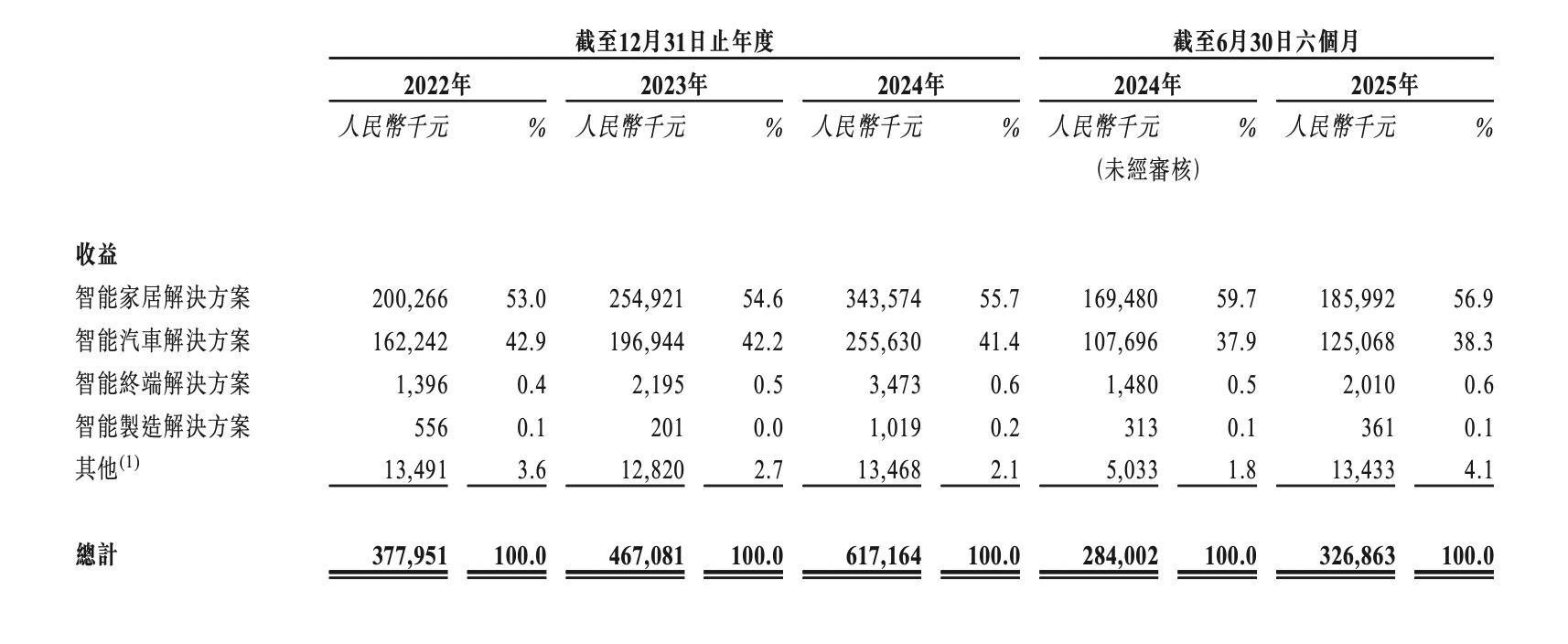
Core Viewpoint - The company, Guangdong Aodiwei Sensor Technology Co., Ltd., is initiating a secondary listing in Hong Kong to leverage capital market opportunities in the rapidly growing smart sensor industry, which is essential for industrial intelligence driven by 5G and AIoT technologies [1]. Company Overview - Aodiwei is a provider of smart sensing and precision execution solutions, with a business focus on smart home, smart automotive, smart terminals, and smart manufacturing sectors [2]. - The company employs an IDM (Integrated Device Manufacturing) model, achieving vertical integration from sensitive materials to precision manufacturing, thereby establishing a self-controlled technology chain [2]. - Aodiwei ranks prominently in various market statistics, being the second in smart home sensor revenue in China and third globally in automotive ultrasonic sensor shipments [2]. Financial Performance - Aodiwei's revenue has shown robust growth, with figures of 378 million RMB in 2022, 467 million RMB in 2023, and projected 617 million RMB in 2024, reflecting a compound annual growth rate (CAGR) of 27.8% [2]. - The revenue breakdown indicates that smart home solutions contributed 200 million RMB in 2022, increasing to 343 million RMB by 2024, while smart automotive solutions grew from 162 million RMB to 256 million RMB in the same period [4]. - The company's gross margin fluctuated, recorded at 34.9% in 2022, 38.0% in 2023, and 34.8% in 2024, influenced by increased competition in the automotive supply chain [5]. Market Outlook - The global sensor market is projected to grow from approximately $189.1 billion in 2020 to $237.1 billion by 2024, with a CAGR of about 5.8%, while the Chinese market is expected to grow from 292.9 billion RMB to 398.3 billion RMB, with a CAGR of 8.0% [6]. - In the smart home sector, the market for sensors and actuators is anticipated to reach approximately $230 billion and $459 billion globally by 2024, with corresponding figures for China at 449 billion RMB and 865 billion RMB [8]. - The automotive sector is also significant, with the market for automotive sensors and actuators projected to reach approximately $457 billion and $406 billion globally by 2024, and 895 billion RMB and 867 billion RMB in China [9]. Competitive Landscape - The sensor market is characterized by intense competition and is highly fragmented, with the top five sensor suppliers in China holding only about 5.4% market share [9]. - Aodiwei, while ranked fifth in the industry, has a market share of only 0.1%, indicating the competitive challenges it faces [9]. Strategic Positioning - Aodiwei's secondary listing in Hong Kong is a strategic move to strengthen its market position and enhance its technological research and development capabilities, aiming to capitalize on structural opportunities presented by the AIoT wave [10]. - The company must navigate the balance between scaling operations and maintaining technological leadership to convert its accumulated technological advantages into sustainable profitability and long-term value [10].

新股前瞻|奥迪威赴港二次上市:智能传感器赛道领跑者,如何穿越行业“红海”?
智通财经网· 2025-12-11 00:45
Core Viewpoint - The company, Guangdong Aodiwei Sensor Technology Co., Ltd., is initiating a secondary listing in Hong Kong to leverage capital market opportunities in the rapidly growing smart sensor industry, which is foundational to industrial intelligence driven by 5G and AIoT technologies [1] Company Overview - Aodiwei specializes in smart sensors and precision execution solutions, covering sectors such as smart home, smart automotive, smart terminals, and smart manufacturing [2] - The company employs an IDM (Integrated Device Manufacturing) model, achieving vertical integration from sensitive materials to precision manufacturing, establishing a self-controlled technology chain [2] - Aodiwei ranks prominently in various market statistics, being the second in smart home sensor revenue in China and third globally in automotive ultrasonic sensor shipments [2] Financial Performance - Aodiwei's revenue has shown robust growth, with figures of 378 million RMB in 2022, 467 million RMB in 2023, and projected 617 million RMB in 2024, reflecting a compound annual growth rate (CAGR) of 27.8% [2] - The revenue structure indicates that smart home solutions contributed the largest share, increasing from 200 million RMB in 2022 to 344 million RMB in 2024, while smart automotive solutions also grew from 162 million RMB to 256 million RMB during the same period [4] - The company's gross margin fluctuated, recorded at 34.9% in 2022, 38.0% in 2023, and 34.8% in 2024, influenced by intensified competition in the domestic automotive supply chain [5] Market Outlook - The global sensor market is projected to grow from approximately 189.1 billion USD in 2020 to 237.1 billion USD by 2024, with a CAGR of about 5.8%, while the Chinese market is expected to grow from 292.9 billion RMB to 398.3 billion RMB, with a CAGR of 8.0% [6] - In the smart home sector, the market for sensors and actuators is anticipated to reach around 230 billion USD and 459 billion USD globally by 2024, with significant growth expected in China as well [8] - The automotive sector is also a key market, with the global market for automotive sensors projected to reach approximately 457 billion USD by 2024, reflecting a CAGR of about 6.2% [9] Competitive Landscape - The sensor market is characterized by intense competition and is highly fragmented, with the top five sensor suppliers in China holding only about 5.4% market share [9] - Aodiwei, while ranked fifth in the industry, has a market share of only 0.1%, indicating the competitive challenges it faces [9] Strategic Initiatives - The company's secondary listing in Hong Kong is a strategic move to strengthen its market position and enhance its technological research and development capabilities, aiming to capitalize on structural opportunities presented by the AIoT wave [10] - Aodiwei's ability to convert its technological advancements and market position into sustainable profitability and long-term value will be crucial for success in the competitive sensor market [10]
智能体互联网引发物联网的重新定位,如何完成从"智联万物"到"可编程世界"的惊险一跃?
3 6 Ke· 2025-12-10 09:28
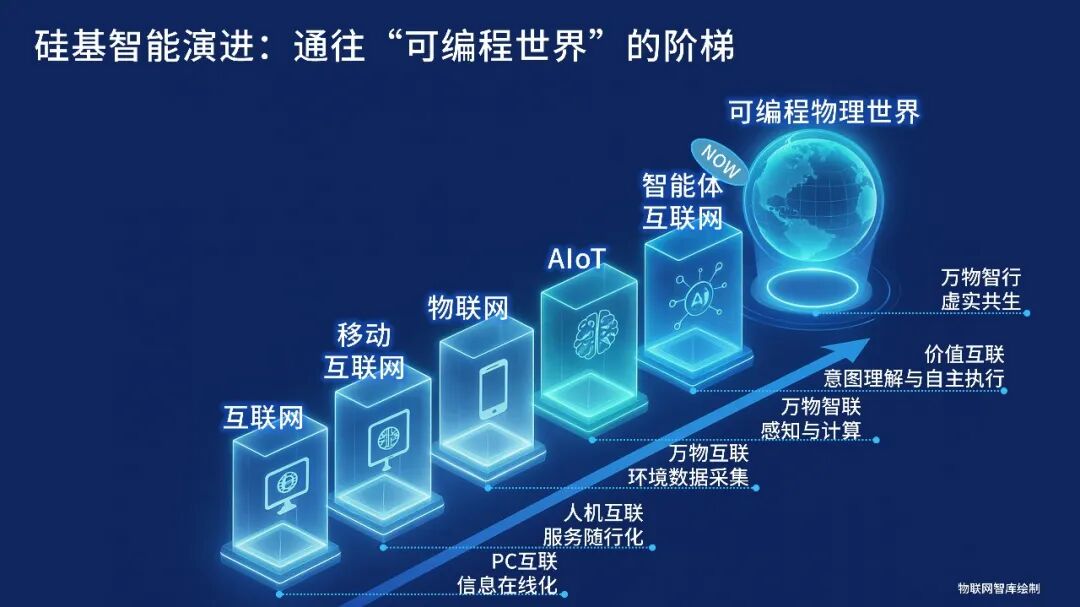
Core Insights - The rise of AI does not threaten the Internet of Things (IoT); instead, it emphasizes the importance of IoT as a foundational infrastructure for AI applications [1] - The concept of "intelligent agent internet" is emerging, where IoT devices evolve from passive data terminals to active intelligent partners that can collaborate and deliver results [1][8] - The evolution of digital technology over the past 30 years has been marked by five key phases, each addressing limitations of the previous one, ultimately aiming to dissolve the boundaries between the digital and physical worlds [2][4][5][6][7] Evolution of Digital Technology - The 1990s saw the digitalization of information through the internet, allowing access to knowledge previously limited by physical location [4] - The launch of the iPhone in 2007 marked the beginning of mobile internet, connecting people and enabling services to be accessed anytime, anywhere [5] - The development of IoT in the mid-2000s allowed physical objects to communicate through data, creating a digital twin of the physical world [6] - The AIoT era began in 2016, where AI enhanced IoT devices with cognitive capabilities, although they remained largely reactive [7] - By 2025, the intelligent agent internet will enable devices to understand intent and collaborate autonomously, marking a significant shift in how technology interacts with users [8] The Future of IoT - IoT is predicted to further sink into the background, becoming the digital foundation for AI applications, akin to how electricity operates invisibly yet fundamentally [13][16] - By 2025, global data volume is expected to reach 213.56 ZB, with a significant portion generated by IoT devices, highlighting their role as data supply bases for AI [14] - The value of IoT is increasingly realized through AI, with B2B applications contributing approximately 65% of its total value, often hidden beneath the surface [15] - IoT is transitioning from a connection layer to a foundational layer, becoming integral to AI's functionality and data processing [16] Intelligent Agent Economy - The concept of "liquid physical capabilities" suggests that services will no longer be confined to specific applications but will be modular and combinable based on user intent [21] - Companies must adapt to a new competitive landscape where interoperability and open protocols are crucial for being recognized and utilized by intelligent agents [22] - The focus for IoT companies is shifting from controlling user entry points to enhancing their infrastructure and ensuring their devices are easily accessible to intelligent agents [23] Conclusion - The ultimate success of IoT will be its seamless integration into the digital ecosystem, functioning as an invisible yet essential infrastructure, much like the electrical grid today [24]
2026-2032年DDR4内存颗粒行业专项研究及投资战略咨询报告
Xin Lang Cai Jing· 2025-12-09 13:41
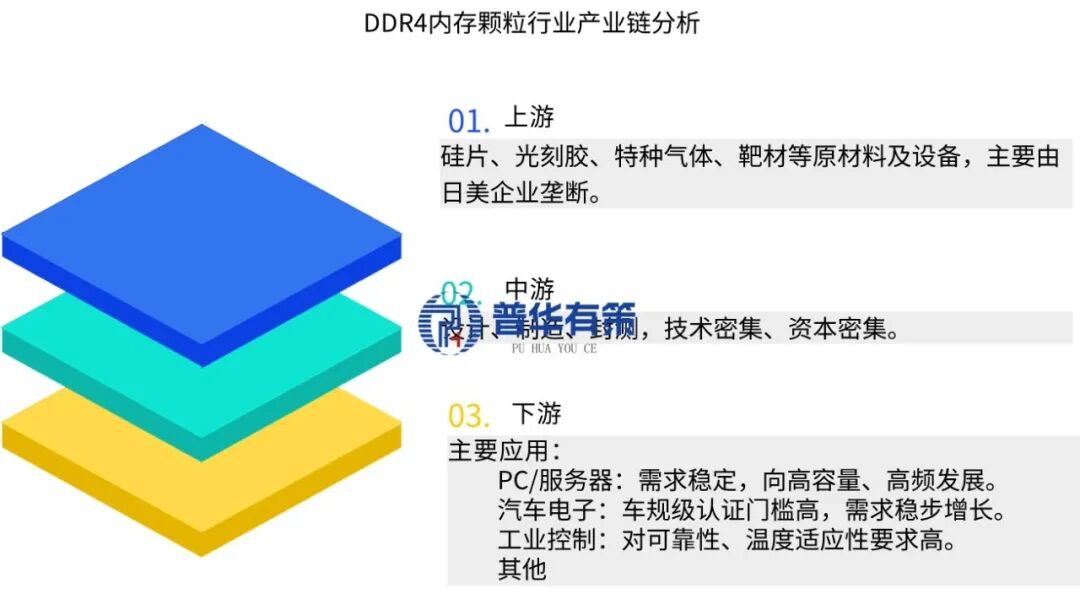
Core Insights - The DDR4 memory chip industry is facing challenges due to the rise of DDR5 technology, which is expected to dominate high-end markets, while DDR4 will retreat to mid-low-end and specific legacy markets [6][22][27] - Despite the decline in traditional PC and server markets, emerging applications such as AI edge computing and smart vehicles are creating new, differentiated long-tail demand for DDR4 [6][22][25] Industry Overview - DDR4 memory chips are critical components in computers, servers, and various electronic devices, directly influencing system performance through their specifications such as frequency, capacity, and power consumption [1][6] - The DDR4 industry is characterized by a high degree of technological barriers, with upstream suppliers primarily from Japan, the US, and the Netherlands, leading to a concentrated market structure [3][19] Supply Chain Analysis - Upstream components include silicon wafers, photoresists, specialty gases, and semiconductor manufacturing equipment, which are crucial for the production of DDR4 chips [3][19] - Downstream applications for DDR4 are diverse, including servers, personal computers, industrial control, automotive electronics, and consumer electronics, each with varying performance and reliability requirements [3][19] Policy Environment - The industry is influenced by various policies, including China's "14th Five-Year Plan" which emphasizes self-sufficiency in semiconductor manufacturing and aims to increase the domestic production rate of DRAM [4][20] Development Trends - The market is expected to shift from general growth to structural differentiation, with DDR4 maintaining a long-tail demand cycle of 5-8 years in low-end consumer electronics and traditional industrial control [6][22] - The focus for DDR4 technology will shift towards optimizing existing processes rather than pursuing new nodes, emphasizing reliability and specific application adaptations [6][23] Domestic Industry Restructuring - The Chinese DDR4 industry is undergoing a restructuring process driven by the need for self-sufficiency, with a focus on localizing materials and equipment supply chains [6][24] - Geopolitical risks are accelerating the push for domestic DDR4 chip penetration in critical infrastructure and industrial sectors [6][24] Emerging Applications - The rise of AI and IoT is creating unexpected opportunities for DDR4, particularly in edge devices where cost, power consumption, and reliability are more critical than peak performance [6][25] - The demand for low-power DDR4 (LPDDR4) is expected to grow in mobile devices and energy-sensitive data centers, aligning with global sustainability goals [6][26] Market Outlook - The DDR4 market is projected to experience a decline in the long term due to the encroachment of DDR5, but short-term demand is supported by existing inventory and specific market needs [6][27] - The competitive landscape is shifting, with international giants focusing on DDR5 while domestic players target mid-low-end markets [6][27]
大厂竞逐AI眼镜,谷歌携Android XR入局
2 1 Shi Ji Jing Ji Bao Dao· 2025-12-09 12:24
Core Insights - Google is preparing to challenge Meta in the AI glasses market, aiming to take the lead in the next generation of computing platforms [1][5] - The company is set to launch its first AI glasses in 2026, focusing on two types: voice assistant glasses and display-enabled glasses [1][2] Group 1: Product Development - Google is collaborating with partners to develop AI glasses that integrate voice assistance and display capabilities, allowing users to interact without screens [1][2] - The "Project Aura" AI glasses, developed with Chinese AR company Xreal, will operate independently without a smartphone connection and feature advanced optical technology [3] - The Android XR platform will support diverse hardware forms, enhancing user experience through visual understanding and intelligent task execution [2][3] Group 2: Market Strategy - Google aims to differentiate itself from Meta by focusing on software platform empowerment rather than vertical integration of hardware and software [5] - The company is leveraging its Android XR platform and Gemini model to test market responses ahead of the AI glasses launch [5] - Google is forming partnerships with hardware manufacturers like Samsung and Qualcomm to build a competitive ecosystem against Meta [5] Group 3: Market Trends - The smart glasses market is expected to experience significant growth, with projections indicating that global shipments could exceed 23.68 million units by 2026 [7] - The Chinese smart glasses market is anticipated to reach over 4.91 million units in the same year, marking a critical turning point for large-scale growth [7] - Analysts believe that the evolution of AI capabilities will lead to unique applications in high-frequency scenarios, transforming smart glasses from novelty items to essential tools [8][9]

Why PowerFleet’s Q2 Revenue Surge and Analyst Support Highlight Strong Upside Potential
Yahoo Finance· 2025-12-09 10:01
Core Viewpoint - PowerFleet, Inc. (NASDAQ:AIOT) is identified as a strong logistics-tech stock with significant upside potential, supported by positive analyst ratings and robust operational performance [1][5]. Analyst Ratings - As of December 5, PowerFleet is rated a consensus Buy by all analysts, with a median price target of $9.50, indicating an 81% potential upside from current levels [1]. - Barrington Research reaffirmed an "Outperform" rating on November 26, setting a price target of $15.00, suggesting substantial upside from current prices [2]. Financial Performance - In Q2 FY26, PowerFleet reported total revenue of $111.7 million, a 45% increase year-over-year from $77.0 million in Q2 FY25, and a 7.3% sequential rise [3]. - Services revenue, a key segment, reached $89.3 million, reflecting a 57% year-over-year growth [3]. - The company achieved a gross profit of $62.6 million with a 56% margin, and raised its FY26 total revenue guidance to $435–$445 million, up from $430–$440 million [3][4]. Operational Highlights - Management noted a milestone in achieving double-digit organic recurring revenue growth ahead of schedule, driven by momentum in AI-powered SaaS solutions and global traction [4]. - There was a 27% sequential improvement in product revenue, alongside solid margin expansion despite challenging macro conditions [4]. - Although the reported net loss was $4.3 million (approximately $0.03 per share), the company emphasized meaningful bottom-line leverage from synergy programs and scalable SaaS execution [4]. Company Overview - PowerFleet is a global AIoT SaaS company that provides fleet tracking, mobility and asset management, safety, and compliance solutions for logistics, transportation, and other mobile-asset heavy industries [5].

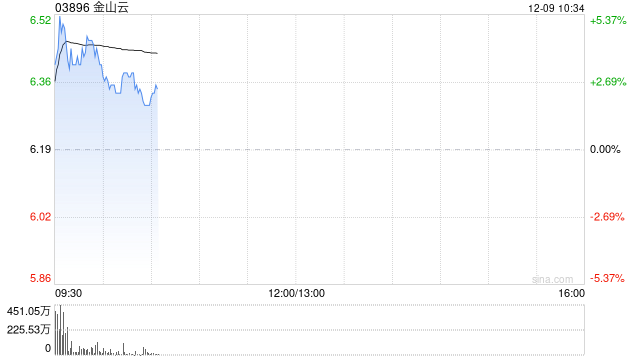
金山云盘中涨超5% 高盛预期小米有望推出更多AI成果
Xin Lang Cai Jing· 2025-12-09 02:34
Core Viewpoint - Kingsoft Cloud (03896) has seen a stock price increase of 1.78% to HKD 6.30, with a trading volume of HKD 281 million, amid positive market sentiment driven by developments in AI technology by Xiaomi [5]. Group 1: Company Performance - Kingsoft Cloud's stock rose over 5% during trading, reflecting investor confidence [5]. - The company reported revenue of CNY 1.82 billion from Xiaomi and Kingsoft ecosystem in the first three quarters [5]. - The company is expected to achieve a target of CNY 2.78 billion in related transactions for the full year of 2025 [5]. Group 2: Industry Developments - Goldman Sachs' latest report indicates that Xiaomi is actively exploring large language models at both the edge and cloud levels to meet diverse needs for flexibility and convenience [5]. - The report anticipates that Xiaomi will announce more AI achievements in the coming quarters, which will be integrated into its ecosystem and the largest AIoT connected devices globally [5]. - Kingsoft Cloud, as the sole strategic cloud platform for the Xiaomi-Kingsoft ecosystem, is positioned to benefit significantly from the surge in computing power demand within the ecosystem [5].
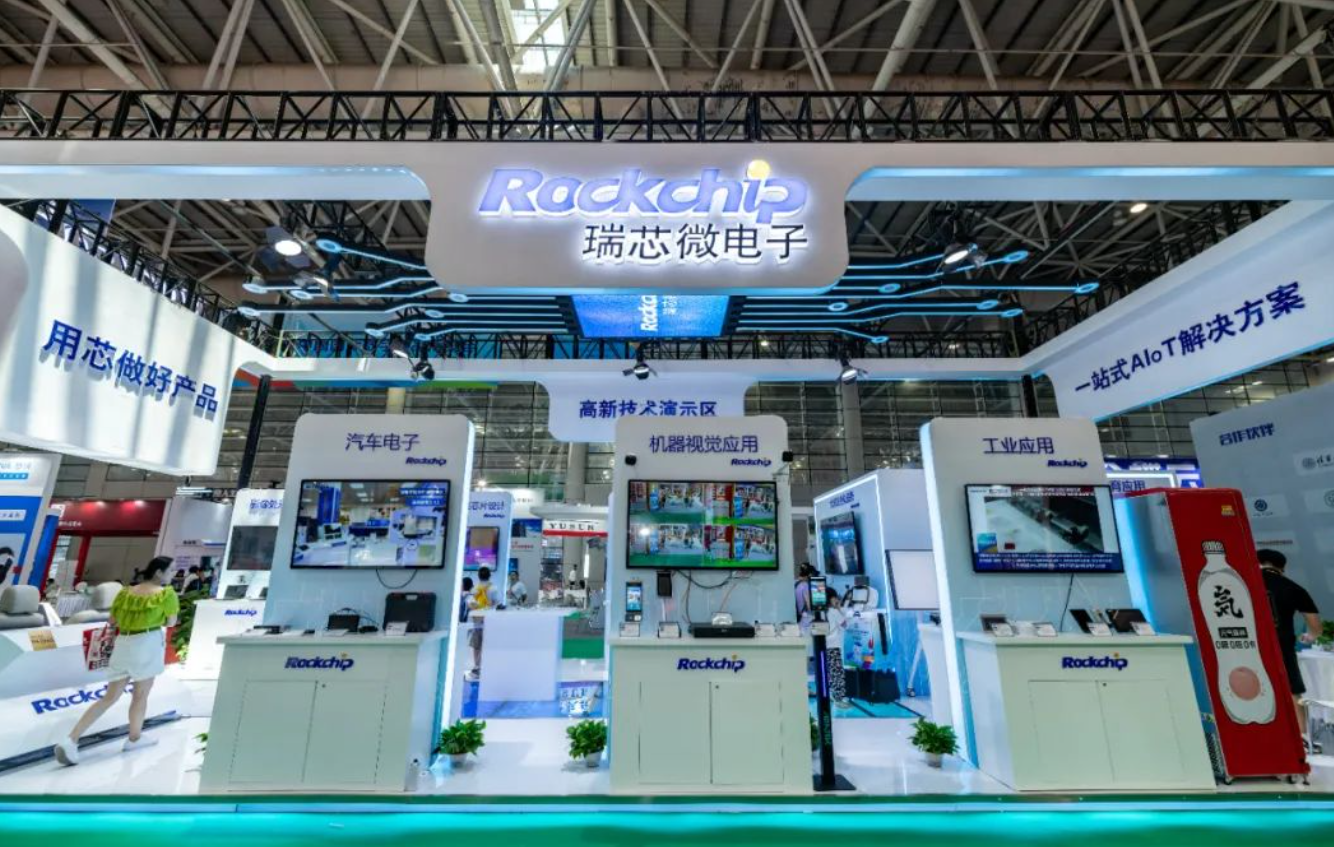
瑞芯微与宇树科技等客户合作人形机器人,浙江荣泰拟在泰国建设生产项目
Mei Ri Jing Ji Xin Wen· 2025-12-09 01:27
Market Review - The Huaxia AI ETF (589010) rose by 1.49%, with a strong performance throughout the day, primarily trading above the intraday average line. The holdings showed a broad upward trend, with AI chip leader Cambricon surging over 4.6% and other stocks like Xinghuan Technology and Lingyun Optics also performing well. The ETF has attracted significant capital, recording net inflows for five consecutive trading days, with a recent trading volume of nearly 800 million yuan, indicating active trading [1] - The Robot ETF (562500) opened slightly lower but quickly rebounded, closing at its daily high with a 1.24% increase, ending at 0.982 yuan. Key holdings like Haimeixing surged nearly 10%, with other stocks such as Jingye Intelligent and Oat Technology also rising. Notably, substantial capital inflows were observed, with over 448 million yuan in a single day and a significant cumulative inflow over the past five days [1] Key News - RichChip Microelectronics announced that its flagship product RK3588 has a high market share in the robotics sector, collaborating with well-known clients like Yushutech and Ecovacs on various robot types. The company positions robotics as a crucial product line in AIoT, leveraging its technology and product advantages to expand cooperation in machine vision and audio fields [2] - Zhejiang Rongtai plans to invest approximately 77 million USD (about 544.88 million yuan) through its wholly-owned subsidiary to establish a production project in Thailand for 14,000 tons of mica paper, 4,500 tons of mica products, and 7 million robot components. This project aims to enhance the company's overseas business and supply chain [2] - Luming Robotics announced the completion of Pre-A1 and Pre-A2 financing rounds, raising several hundred million yuan, with funds allocated for continued investment in embodied intelligence data and hardware [2] Institutional Insights - Guojin Securities highlights three key trends in the industry: (1) Continued investment from industrial capital into the embodied intelligence sector, with companies like Ningbo Huaxiang participating in venture funds focused on this area [3] (2) Deepening supply chain collaboration, with core components and manufacturing processes integrating into leading ecosystems, as seen with Qide New Materials securing contracts for humanoid robots [3] (3) Commercialization is accelerating, with several companies achieving stable shipments or project completions, indicating sustained downstream demand [3] Popular ETFs - The Robot ETF (562500) is the only ETF in the market with a scale exceeding 20 billion, offering the best liquidity and comprehensive coverage of the Chinese robotics industry [4] - The Huaxia AI ETF (589010) is described as the "brain" of robotics, with a 20% price fluctuation limit and small to mid-cap elasticity, aimed at capturing the "singularity moment" in the AI industry [4]


瑞芯微:RK3588已应用于宇树、云深处等客户的人形、四足等多类机器人中
Ju Chao Zi Xun· 2025-12-08 16:54
Group 1 - The core product RK3588 has achieved a significant market share in the robotics sector, collaborating with well-known companies such as Yushutech, Yundongchu Technology, Jizhijia, and Ecovacs, covering various types of robots including humanoid, quadruped, service, industrial inspection, AGV handling, and cleaning robots [1] - The robotics business is a key product line in the company's AIoT strategy, with the SoC primarily acting as the "brain" for robots, responsible for motion control and environmental perception, leading to large-scale deployment across multiple robotic terminals [1] Group 2 - The company is enhancing the decision-making and planning capabilities of robots by leveraging edge computing co-processors, with a focus on high-performance, low-power integrated chip solutions becoming a core competitive point in the industry [3] - The company has established mature solutions in machine vision and audio interaction, providing foundational support for applications such as intelligent visual recognition, target detection, and multimodal interaction [3] - Long-term stable partnerships with several storage manufacturers ensure advantages in supply chain and cost management for robotics and AIoT businesses, laying the groundwork for future large-scale shipments [3]