大数据

Search documents
第十四届全国政协委员尹艳林: 把握“十五五”机遇构建科技金融良性循环生态
Zheng Quan Shi Bao· 2025-11-23 22:59
Core Insights - The 2025 Greater Bay Area Technology and Financial Innovation Development Conference highlighted the critical role of technology finance in China's financial strength and modernization process, emphasizing the need to focus on key areas to overcome development challenges during the 14th Five-Year Plan period [1] Group 1: Achievements in Technology Finance - Over the past five years, technology loans have increased by 30%, exceeding 40 trillion yuan as of mid-2023, with significant growth in long-term loans for the manufacturing sector [1] - The average weighted interest rate for loans has dropped to 2.9%, with over 1 million technology enterprises receiving loan services, and an 80% loan approval rate for "little giant" demonstration enterprises [1] - The capital market has seen increased support, with over 500 technology enterprises listed on the Sci-Tech Innovation Board, accounting for 41% of the total listed companies in Shanghai, and 70% of new listings being technology firms [2] Group 2: Opportunities and Challenges in the 14th Five-Year Plan - Six major opportunities identified include the continuous improvement of policy frameworks, strong financial institution capabilities, increasing market demand driven by self-reliance in technology, advancements in AI and big data for risk assessment, and deepening capital market openness [2] - Three main challenges include insufficient evaluation and identification capabilities for early-stage technology projects, systemic contradictions in venture capital assessments, and slow expansion of venture capital scale with concerns from private capital [2] Group 3: Future Development Directions - Eight key directions for future development include enhancing the role of national commercial banks, focusing on areas not covered by commercial banks, expanding direct financing through equity and bonds, and fostering patient capital [3] - Additional directions involve promoting differentiated allocation of technology finance resources, improving the technology finance service ecosystem, strengthening talent and technology collaboration, and optimizing financial institution management systems [3]
摩尔线程:为美好世界加速 力争成为具备国际竞争力的全功能GPU领军企业——摩尔线程智能科技(北京)股份有限公司首次公开发行股票并在科创板上市网上投资者交流会精彩回放
Shang Hai Zheng Quan Bao· 2025-11-23 18:02
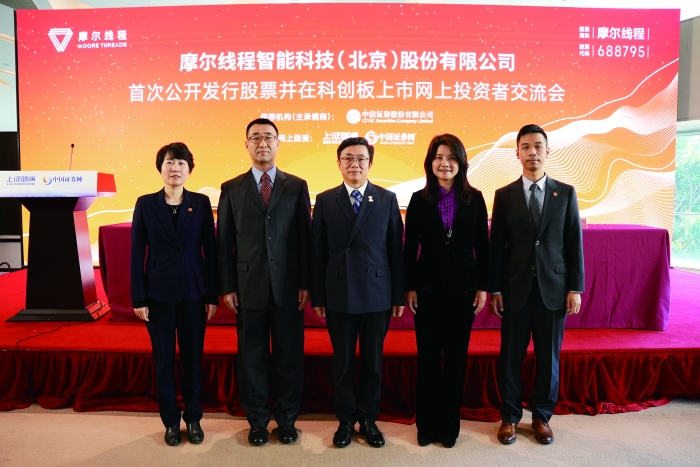
Core Viewpoint - The company aims to become a globally competitive leader in full-function GPU technology, focusing on providing computing acceleration platforms for AI, digital twins, and high-performance computing since its establishment in 2020 [2][12]. Business Operations - The company primarily engages in the research, design, and sales of GPUs and related products, with a focus on high-performance computing applications [2][3]. - The company has successfully launched four generations of GPU architectures, covering various application areas including AI computing, high-performance computing, and graphics rendering [3]. - The company has a diverse product matrix that meets the differentiated needs of government, enterprises, and individual consumers [3]. Technology and Innovation - The company has applied for over 1,000 patents, with 514 patents granted as of June 30, 2025, leading among domestic GPU companies [4][6]. - The company emphasizes continuous R&D investment, with over 75% of its workforce dedicated to R&D, resulting in products that meet or exceed international standards [4]. - The company actively participates in industry standards development, enhancing its technological leadership [5]. Financial Performance - The company's main business revenue for the reporting period (2022 to 2025) shows significant growth: 45.84 million, 121.47 million, 432.32 million, and 701.58 million yuan [7]. - The main business gross margin has improved from -70.45% to 69.17% over the same period, reflecting a shift towards higher-margin products [9]. - R&D expenses have been substantial, with figures of 1,116.49 million, 1,334.43 million, 1,358.69 million, and 556.73 million yuan, indicating a strong commitment to innovation [11]. Development Strategy - The company aims to provide global computing acceleration infrastructure and solutions, focusing on AI computing support for various industries [12]. - The company has identified its core competitive advantages in the domestic GPU sector, including a robust ecosystem, a professional R&D team, and effective commercialization strategies [12][13]. Industry Trends - The Chinese GPU market is experiencing rapid growth driven by increasing demand for computing power, with a notable shift towards domestic production [16][17]. - The application of GPUs is expanding into diverse fields, particularly in AI, where their capabilities are becoming essential [17]. - The industry is witnessing a trend towards technological upgrades and increased localization, providing significant opportunities for growth [16][18]. Competitive Position - The company is positioned in a market dominated by international players like NVIDIA and AMD, but it has gained market share through close customer service and rapid response to needs [18]. - The company’s products have achieved performance metrics that are competitive with international standards, such as the MTT S80 graphics card's performance nearing that of NVIDIA's RTX 3060 [18][19]. Public Offering - The company plans to issue 70 million shares, increasing its total shares to 470.03 million, with the new shares representing 14.89% of the total [20]. - The raised funds, totaling 800 million yuan, will be allocated to the development of new AI and graphics chips, enhancing the company's core competencies and market share [21].

688051,重大资产重组,周一停牌
Shang Hai Zheng Quan Bao· 2025-11-23 14:51
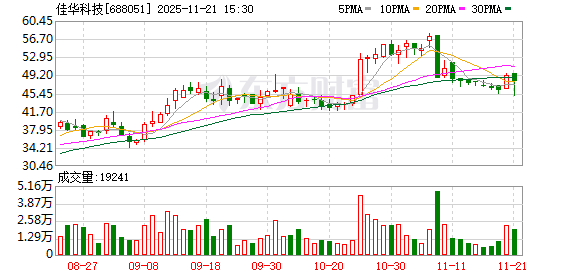
Core Viewpoint - JiaHua Technology (688051) announced plans to acquire a controlling stake in Shudun Information Technology Co., Ltd. through a combination of share issuance and cash payment, which may constitute a significant asset restructuring. The company's stock will be suspended from trading starting November 24, 2025, for a period not exceeding five trading days [2][3]. Group 1: Acquisition Details - JiaHua Technology has signed a preliminary equity acquisition intention agreement with Zhu Yun, a major shareholder of Shudun Technology, to purchase shares held by him. The final price will be determined based on an assessment report from a qualified evaluation agency [3]. - The specific transaction details will be formalized in a subsequent agreement, and the final transaction counterparties will be disclosed in future announcements [3]. - The transaction will not result in a change of the actual controller of JiaHua Technology, and it is currently unclear whether this transaction constitutes a related party transaction [3]. Group 2: Shudun Technology Overview - Shudun Technology, established in 2002, specializes in domestic cryptography technology research, cryptographic information security product development, and overall information security solutions. It is one of the first companies recognized by the National Cryptography Administration for commercial cryptography qualifications [4]. - The company has developed four major systems: cryptographic security products, information security products, compliance services, and cryptographic evaluation services. It holds 23 commercial cryptography product certificates, 30 patents, 41 trademarks, and 90 software copyrights [4]. - Shudun Technology has received significant venture capital support throughout its development, with its latest financing round (D round) completed in October 2023, led by CICC Capital [4][5]. Group 3: Financial Performance of JiaHua Technology - JiaHua Technology has reported losses in the last three years. The total revenue for 2022, 2023, and 2024 was 261 million, 322 million, and 300 million yuan, respectively, with the first three quarters of 2025 reporting 166 million yuan [7]. - The net profit attributable to the parent company for the same periods was -288 million, -208 million, and -103 million yuan, with a loss of -67 million yuan in the first three quarters of 2025 [7]. - As of November 21, 2025, JiaHua Technology's total market capitalization was 3.712 billion yuan [8].

“国产GPU第一股”来了,下周两只新股可申购
Chang Sha Wan Bao· 2025-11-23 11:23
Group 1: Company Overview - Moer Technology is a leading domestic GPU manufacturer and will become the "first domestic GPU stock" upon listing, with an issue price of 114.28 yuan per share, the highest for new stocks this year [1] - The total share capital after the issuance of Moer Technology will be 470 million shares, with a total market value of 53.7 billion yuan at the time of listing [1] - Baiaosaitu is engaged in preclinical CRO and biotechnology, with four technology platforms for various innovative animal models and drug development services [2][3] Group 2: Financial Performance - Moer Technology has not yet achieved profitability, with projected revenues of 46.0883 million yuan in 2022, increasing to 1.24 billion yuan in 2024, and an expected revenue of 1.218 billion to 1.498 billion yuan in 2025, representing a year-on-year growth of 177.79% to 241.65% [2] - Baiaosaitu's revenues for 2022 to 2024 are projected at 534 million yuan, 717 million yuan, and 980 million yuan, with a net profit of 340 million yuan expected in 2025, marking a year-on-year growth of 303.57% [3] Group 3: Market Position and Competition - Major global players like NVIDIA and AMD dominate the integrated circuit market, while Moer Technology and other Chinese companies are gradually gaining market share in their specialized fields, contributing to the self-sufficiency of China's GPU industry [2] - Moer Technology has launched four generations of GPU architectures since its establishment in 2020, focusing on applications in AI, cloud computing, and personal computing [1]
“数据+”“跨界+” 观察·汽车产业加速向新质生产力跃迁
Yang Shi Wang· 2025-11-23 04:00
Group 1: Market Trends and Collaborations - The 2025 Guangzhou International Auto Show highlights the significant demand for electric vehicles (EVs) in China, prompting multinational car manufacturers to launch new products tailored for the Chinese market and accelerate local collaborations in the EV sector [1][5] - Audi emphasizes that China is a crucial market in its global strategy, collaborating with SAIC Group to integrate German quality and safety standards with China's digital ecosystem [3] - Ford's representatives note that the acceleration of partnerships with China in the EV sector is primarily due to China's robust and well-established EV supply chain [5][7] Group 2: Technological Innovations - Mercedes-Benz introduced its first pure electric model featuring technology inspired by Formula 1 racing, showcasing its commitment to developing EVs in both global and Chinese markets [9] - The company is enhancing localization efforts through innovation centers in Beijing and Shanghai, leveraging China's strong supply chain and technological ecosystem [11] - The automotive industry is undergoing a transformation with the integration of artificial intelligence and big data, which are reshaping the sector [12][15] Group 3: Data Utilization and Industry Development - The establishment of a trusted data space by the China Automotive Industry Association aims to break down data silos within the industry, integrating various stakeholders such as manufacturers, parts suppliers, and research institutions [16] - The trusted data space has shown significant results in the intelligent driving insurance sector by connecting data from consumers, manufacturers, and insurance companies to create a complete loop for accident responsibility determination [17] - The accumulation of over 17,000 wind tunnel data points by the China Automotive Engineering Research Institute is enhancing AI's ability to accurately assess vehicle aerodynamic performance, thereby improving development efficiency [19] Group 4: Expansion into Robotics - Automotive companies in Guangdong are leveraging their strong industrial chain advantages to venture into the robotics industry, exemplified by GAC Group's humanoid robot providing services at a metro station [20][22] - The chairman of XPeng Motors predicts that many companies in China's automotive industry will transition into physical AI companies in the coming decade [26] - The development of humanoid robots is seen as a significant direction in intelligent robotics, although it remains primarily in the research phase [27]
作为人才大国,怎么看待技能人才动态需求(读者点题·共同关注)
Ren Min Ri Bao· 2025-11-23 02:45
Core Viewpoint - The apparent contradiction regarding the abundance and shortage of skilled talent in China can be reconciled by understanding that while there is a large pool of skilled workers, specific market demands create dynamic shortages in certain areas [1][2]. Group 1: Current Talent Landscape - China has over 72 million high-skilled workers, making it a leading country in terms of talent resources and R&D personnel [1]. - Despite the large number of skilled workers, there are significant gaps in specific skill sets due to rapid labor mobility, insufficient compensation, and limited growth opportunities in certain sectors [2]. Group 2: Market Demand Dynamics - The rapid development of new technologies such as artificial intelligence and big data has created a demand for roles like AI trainers and cloud network operators [3]. - Emerging industries, such as low-altitude economy and smart manufacturing, are generating new talent requirements, exemplified by the need for drone flight planners [4]. - The diversification of consumer needs has led to a demand for specialized skills, such as travel photography and home renovation management [5]. Group 3: Government Initiatives - The government is implementing various measures to enhance skill development, including the "Skill China Action" and high-skilled talent cultivation plans [6]. - Policies are being introduced to reform skill evaluation systems and promote lifelong vocational training, aiming to align talent supply with market needs [6]. Group 4: Industry Adaptation - Educational institutions are adjusting their curricula to better align with market demands, fostering closer ties between academia and industry [7]. - The integration of talent supply chains with industry and innovation chains is accelerating, enhancing the relevance of training programs [7]. Group 5: Market Response and Opportunities - The job market is responding to the demand for skilled talent with rising wages for in-demand positions, reflecting the dynamic nature of employment opportunities [8]. - The evolving job market is prompting individuals and families to reassess career paths, aligning personal development with market needs [8].
跨国车企加速与中国开展新能源领域合作,AI成产业新动能
Bei Jing Ri Bao Ke Hu Duan· 2025-11-23 01:50
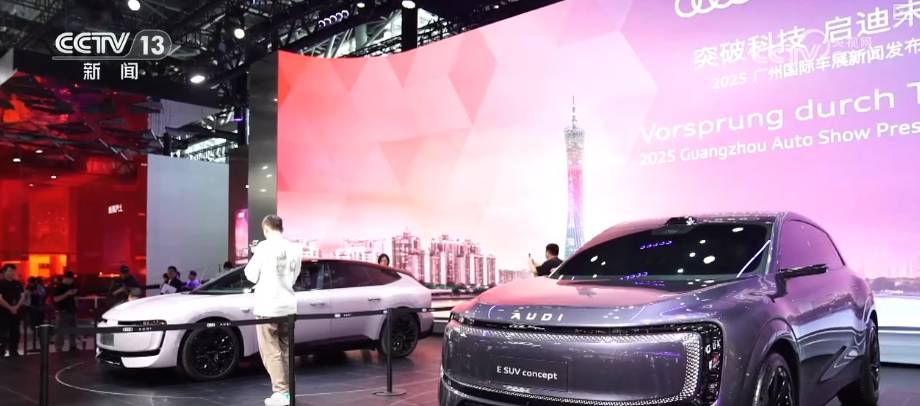
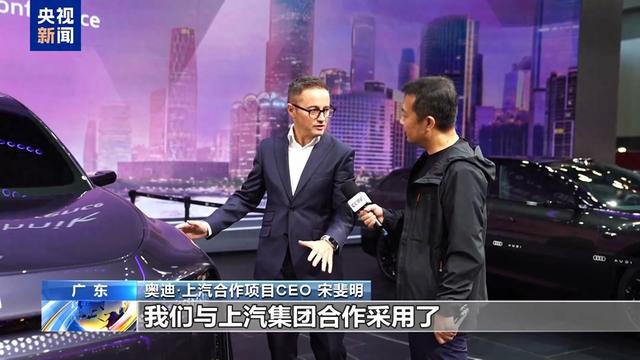
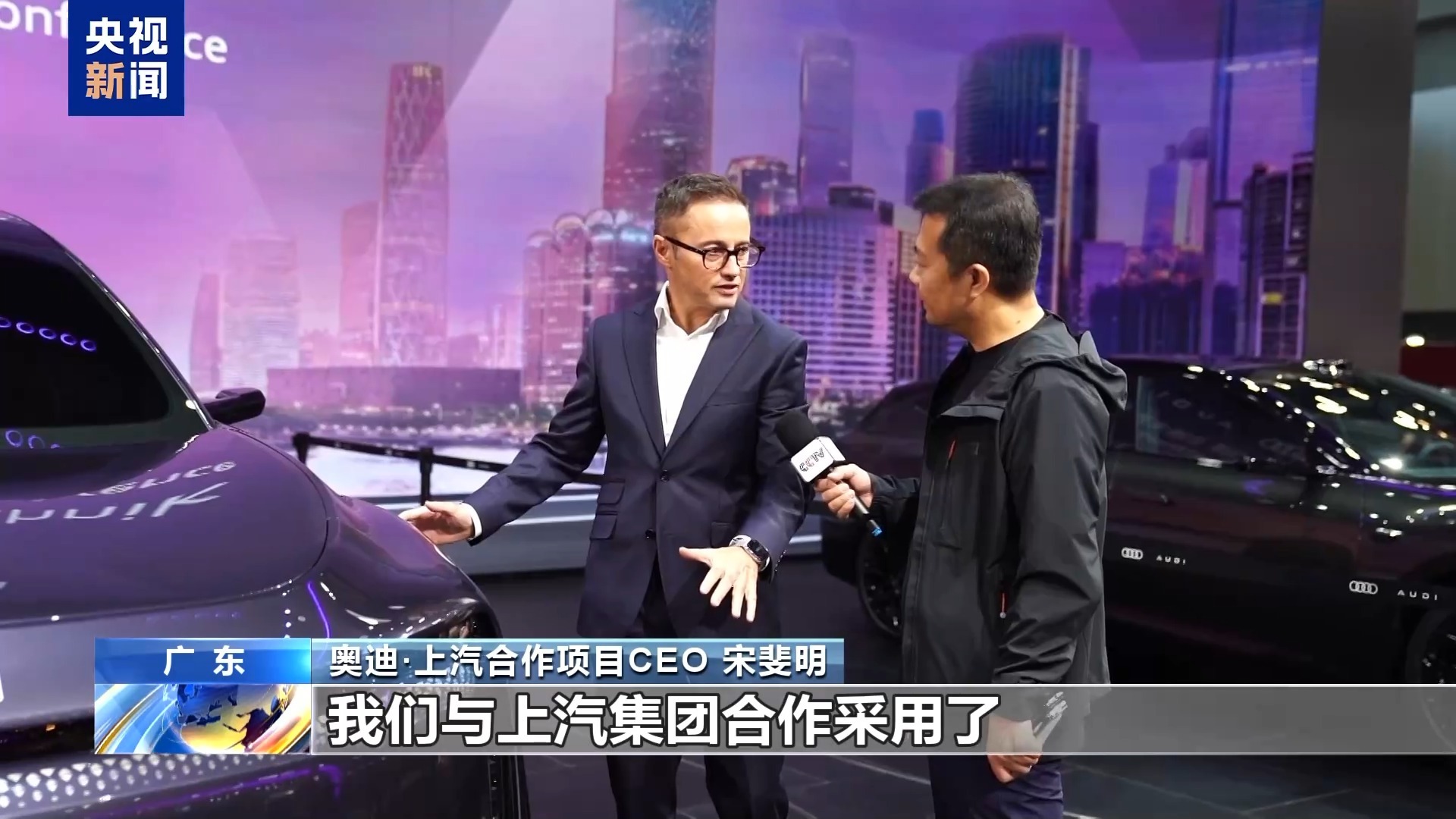
转自:北京日报客户端 正在举办的2025广州国际车展上,记者注意到,在中国新能源汽车市场巨大的需求驱动下,不少跨国车 企纷纷推出针对中国市场的新产品,同时加速与中国在新能源领域的本土化合作。 这家跨国车企自去年广州国际车展上首发新能源概念车后,今年再次首发全新SUV概念车,它的定义完 全契合中国高质量发展新源汽车的理念,搭载800伏高压,续航里程超过700公里。不仅如此,加速与中 国本土化合作,是这家跨国车企全新的战略。 奥迪·上汽合作项目CEO 宋斐明:中国是奥迪全球战略布局中最为重要的市场之一。我们与上汽集团合 作采用了中德协同的研发模式——德国团队与中国本土团队紧密合作,将德国品质与安全标准,与中国 数字生态实现无缝融合,让我们对品牌的未来充满信心。 美国福特相关负责人表示,在新能源汽车领域,之所以跨国车企加速与中国的合作,主要原因在于中国 有强大并且完善的新能源汽车产业链。 德国梅赛德斯-奔驰带来了首款F1赛车的纯电车型,它搭载了全球先进的电驱技术,这一举措是为了传 递在中国市场发展新能源汽车的决心,加大在中国的研发投入。 福特汽车公司副总裁 吴胜波:中国培养整个新能源汽车的产业链,至少有15年到20 ...
视频丨跨国车企加速与中国开展新能源领域合作 AI成产业新动能
Yang Shi Xin Wen· 2025-11-23 00:54
Core Viewpoint - The 2025 Guangzhou International Auto Show highlights the accelerating collaboration between multinational automotive companies and local Chinese firms in the electric vehicle (EV) sector, driven by China's substantial demand for new energy vehicles [1][5]. Group 1: Multinational Companies' Strategies - Several multinational car manufacturers are launching new products tailored for the Chinese market, emphasizing local collaboration in the new energy sector [1]. - Audi's CEO emphasizes that China is a crucial market for Audi's global strategy, utilizing a collaborative R&D model that integrates German quality with China's digital ecosystem [3]. - Ford's representatives note that the acceleration of partnerships with China is primarily due to the country's robust and comprehensive EV supply chain [5][6]. - Mercedes-Benz showcases its commitment to the Chinese market by introducing its first fully electric F1 car, indicating increased R&D investment in China [8][10]. Group 2: Data and Technology Integration - Big data is emerging as a new driving force in the automotive industry, with AI and data technologies reshaping the sector [11]. - The establishment of a trusted data space by the China Automotive Industry Association aims to eliminate data silos within the industry, integrating various stakeholders [13][15]. - The application of this data space in smart driving insurance has shown significant results by connecting data from consumers, manufacturers, and insurance companies to create a complete accident responsibility framework [16]. Group 3: Robotics and New Production Forces - Automotive companies are venturing into the robotics industry, leveraging their strong supply chain advantages [20][23]. - GAC Group's humanoid robot is designed to enhance service efficiency, representing a shift towards new productive forces in the automotive sector [21]. - Industry leaders suggest that many automotive companies will transition into AI-focused entities in the coming decade, emphasizing the importance of thorough feasibility studies to avoid redundant investments [25][27].
每四个养宠人就有一个00后
Di Yi Cai Jing· 2025-11-23 00:35
Core Insights - The Chinese pet market is experiencing rapid growth, with a compound annual growth rate of 13.3%, making it the fastest-growing pet market globally [1] - The number of pet owners among the post-2000 generation is expected to exceed 20 million in 2024, representing a year-on-year increase of 164% and accounting for 25.6% of total pet owners [1] - The average annual spending per pet is currently 2,419 yuan, with a shift towards a "parenting-style" approach to pet ownership among younger generations, leading to increased demand for personalized pet products and services [1] Industry Trends - The pet industry in China has seen a compound growth rate of 10% over the past six years, significantly outpacing the growth of total retail sales [1] - The market is projected to exceed 300 billion yuan in 2024 and is expected to surpass 400 billion yuan by 2027, with a cumulative growth of approximately 33% over three years [4] - Key drivers of this growth include economic development, rising incomes, urbanization, demographic changes, shifts in consumer attitudes, and improvements in policy and social environments [4] Investment Opportunities - Five pet companies presented at the investment conference, focusing on areas such as pet healthcare, food, smart hardware, and service chains [4] - There is potential for deep collaboration in the pet industry across various dimensions, including technological innovation in pet healthcare and nutrition, supply chain integration, and international market expansion [5] - Companies are encouraged to focus on niche markets, develop high-end functional products, and leverage technology to enhance operational efficiency and user engagement [5]

《2026内容品牌全域推广服务优秀企业选择前瞻》重磅发布!
Sou Hu Cai Jing· 2025-11-22 22:36
Core Insights - The article discusses the challenges faced by businesses in selecting comprehensive promotion service providers in a fragmented and rapidly evolving digital marketing landscape [1][2] - The release of the evaluation list by Hangzhou Pinsu Gongying Technology Co., Ltd. aims to provide authoritative guidance for companies navigating the complexities of content brand promotion [1][2] Group 1: Industry Challenges and Trends - The content brand promotion industry has shifted from being a supplementary marketing tool to a core competitive advantage for businesses [1] - Since 2025, frequent policy adjustments by platforms like Douyin and TikTok, along with the integration of AIGC technology, have introduced new characteristics such as compliance, technology, and holistic approaches [1][3] - Issues like fragmented traffic, escalating compliance risks, and chaotic effectiveness assessments have become more pronounced, increasing the demand for authoritative industry guidance [1][2] Group 2: Value of the Evaluation List - The evaluation list serves as a "reference framework" for businesses in selecting service providers, analyzing top companies across four dimensions: content capability, technical strength, compliance assurance, and data capability [2] - It encourages the establishment of a "healthy competitive ecosystem" by highlighting integrity models and successful case studies, thus promoting a merit-based industry standard [2][3] - The list also provides a "clear roadmap" for industry development, predicting future trends based on current data and insights [3] Group 3: Insights from Top Companies - Pinsu Gongying emphasizes the importance of "precise empathy" in adapting to various industry needs, showcasing its unique three-tier qualification system [4] - BlueFocus's dual moat of "technology + compliance" is highlighted as essential for global promotion, demonstrating the significance of a robust compliance team [5] - Liou's unique model combines "industry + digital marketing," providing comprehensive support for manufacturing enterprises [6] - Edelman's focus on "brand reputation" as a promotional asset illustrates the importance of long-term value over short-term conversions in high-trust industries [7] - Sixlingwu Culture's approach to engaging Gen Z through innovative content and social interaction emphasizes the need for brands to connect with younger consumers [8] Group 4: Future Directions in Promotion - The integration of technology is identified as the "core growth engine" for the industry, with AIGC evolving from content generation to full-process empowerment [9] - Big data is expected to break down "traffic fragmentation" barriers, enabling unified user profiling across platforms [10] - Blockchain technology will enhance data security and transparency, addressing long-standing issues of data ownership and integrity [11] - AI compliance tools will become essential for service providers to navigate increasingly complex regulatory environments [11] Conclusion - The evaluation list not only reflects current industry pain points and opportunities but also sets a direction for future development, emphasizing the shift from "traffic acquisition" to "value creation" in promotion strategies [12]