
普惠金融

Search documents
国开行:做好金融“五篇大文章” 奋力书写金融高质量发展新篇章
Xin Hua Wang· 2025-10-22 03:06
Core Viewpoint - The China Development Bank (CDB) emphasizes its commitment to serving the real economy by focusing on five key areas: technology finance, green finance, inclusive finance, pension finance, and digital finance, aiming to enhance high-quality financial development and support the construction of a strong financial nation [1][17]. Group 1: Technology Finance - CDB actively promotes financial services for technological innovation, providing comprehensive financial support throughout the lifecycle of technology projects and enterprises, thereby fostering new productive forces [2][3]. - The bank has issued its first batch of three "Technology Innovation Bonds" totaling 20 billion yuan, aimed at supporting technology innovation demonstration enterprises and high-tech manufacturing sectors [4]. Group 2: Green Finance - CDB is committed to supporting green transformation in the economy and society, focusing on financing for infrastructure upgrades, low-carbon technology innovation, and major ecological projects [5][9]. - The bank has issued 157 billion yuan in green financial bonds since the beginning of the 14th Five-Year Plan, supporting national strategies for ecological protection and high-quality development [9]. Group 3: Inclusive Finance - CDB plays a significant role in providing student loans, having issued 246 billion yuan in loans supporting over 23 million students, covering 80% of the national total [11]. - The bank has supported over 1.5 million small and micro enterprises, enhancing financial services to meet diverse needs in key sectors [10][12]. Group 4: Pension Finance - CDB has supported the construction of over 190,000 inclusive pension beds during the 14th Five-Year Plan, addressing the needs of the aging population [13][14]. Group 5: Digital Finance - CDB is advancing its digital transformation by supporting the construction of foundational networks and artificial intelligence infrastructure, enhancing financial service efficiency [15][16]. - The bank has implemented a mobile app for student loan services, streamlining the application process and improving user experience [16].


济南农商银行:金融添力丰收季
Qi Lu Wan Bao· 2025-10-22 02:32
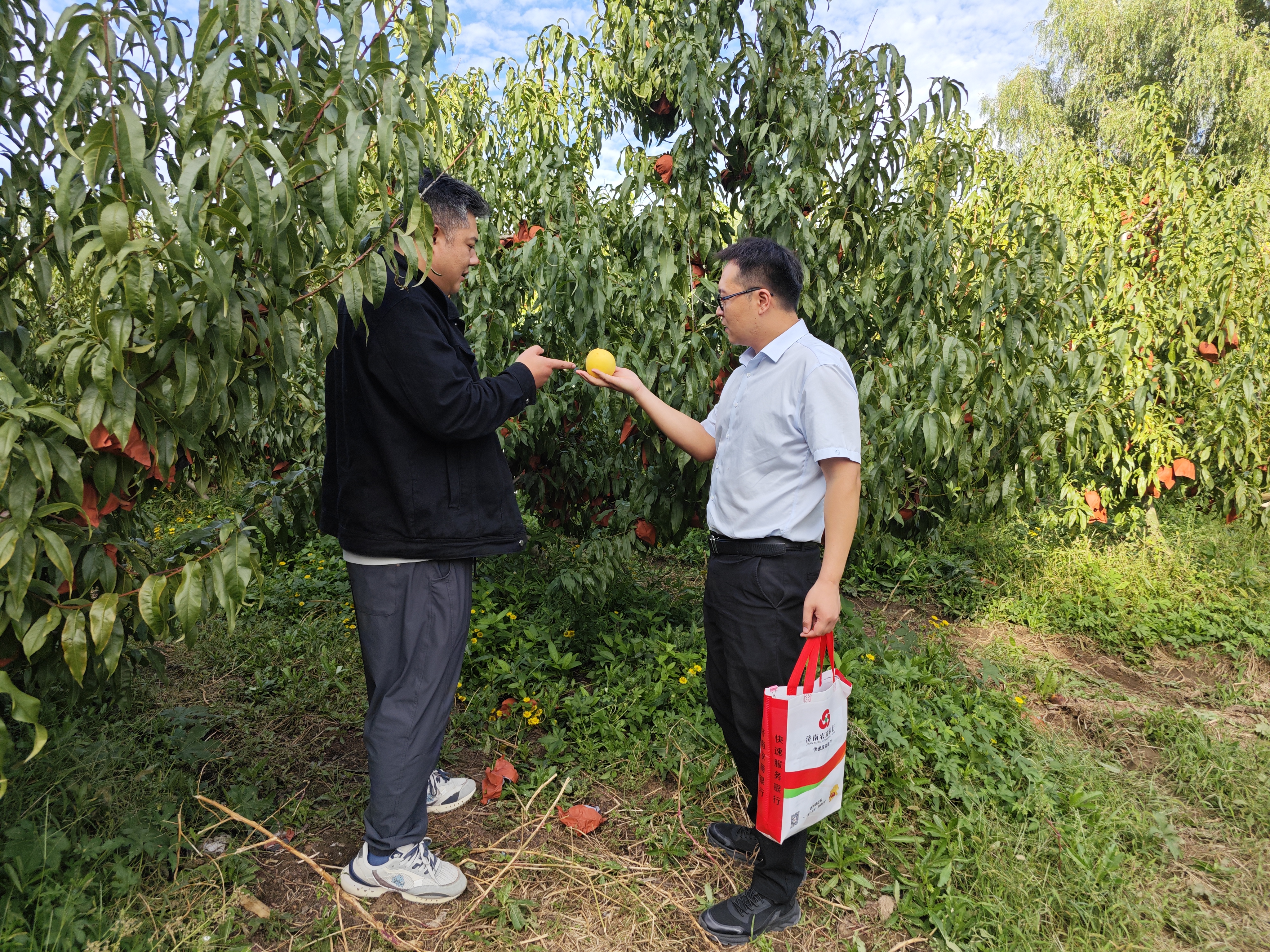
济南农商银行深入贯彻落实省联社工作思路及要求,紧紧围绕推进普惠金融、助力乡村振兴的重要工作部署,坚守扎根农村、服务三农的初心使命,持续深 耕农村市场,充分发挥地方金融机构服务乡村振兴主力军的作用,以"不忘初心、以农为本"的担当与情怀,做实做细金融服务乡村振兴战略各项措施。在第 八个中国农民丰收节之际,众多济南农商银行金融活水精准支持的经营者,也迎来了喜悦的丰收时刻。 "百亩果园"铺就增收路 西营镇果农老崔的果园,如今已从10亩扩展至100亩,还配套发展了鱼塘与农家乐,成为当地农户增收的典型。而四年前,他曾因计划扩种优质果树、引进 新品种却缺乏合格抵押物,多次面临贷款难题,生产发展陷入停滞。 围绕重点涉农主体服务,济南农商银行自推进金融专员工作以来,已累计对接涉农经营主体459户,为其中136户发放贷款超22亿元;联合53家农区街道办开 展94次政银企座谈会,为村居产业搭建合作桥梁;今年农业局在全辖打造24个泉韵乡居和美乡村示范片区,其中10个位于我行辖内,12名二级支行行长同步 被选为和美乡村金融专员,专项负责片区内产业融资对接、惠农政策落地等服务。 "直播助销"解了卖果难 了解到老崔的困境后,济南农商银行乡 ...
深耕普惠 量质齐升
Jin Rong Shi Bao· 2025-10-22 02:32
Core Insights - Consumption is a key driver of economic growth and has seen increasing contributions due to a series of policies aimed at expanding domestic demand during the "14th Five-Year Plan" period [1] - The consumer finance sector has experienced significant growth, with total assets and loan balances reaching 13,848.59 billion yuan and 13,456.03 billion yuan respectively by the end of 2024 [1] Group 1: Industry Growth and Development - As of 2024, consumer finance companies have served 85.43 million county-level customers, addressing the needs of previously underserved groups [2] - The application of emerging technologies such as AI, big data, and blockchain has been pivotal in expanding customer reach and service offerings [2] - Consumer finance companies have filled gaps left by traditional financial services, providing tailored financial solutions to specific demographics like new citizens and young consumers [3] Group 2: Product and Service Innovations - Companies like Mengshang Consumer Finance have launched specialized credit products for new citizens, resulting in the issuance of 65.398 billion yuan in consumer loans by September 2025 [3] - Zhongyin Consumer Finance has focused on high-education and salaried customer segments, issuing 129.681 billion yuan in loans for amounts below 100,000 yuan, marking a 19.61% year-on-year increase [4] Group 3: Regulatory Environment and Compliance - The consumer finance industry has evolved over 15 years, transitioning from rapid expansion to a focus on high-quality development and compliance [5][6] - Regulatory measures have been implemented to enhance transparency and protect consumer rights, including the prohibition of misleading lending practices [7] - The introduction of the "Consumer Finance Company Management Measures" in March 2024 has set higher compliance standards for the industry [7] Group 4: Technological Empowerment - Technology has become a crucial tool for consumer finance companies to enhance compliance and operational efficiency, particularly in risk management and customer service [8] - Companies like Zhaolian Consumer Finance have developed advanced systems for real-time data processing, improving risk management capabilities [8] - The integration of AI in customer service has streamlined processes, enhancing the overall consumer financing experience [8]

香港财政司司长在韩国仁川出席亚太经合组织财长会议
Zhong Guo Xin Wen Wang· 2025-10-21 23:33
香港财政司司长在韩国仁川出席亚太经合组织财长会议 中新网香港10月21日电 当地时间10月21日,香港特区政府财政司司长陈茂波在韩国仁川出席亚太经济 合作组织(简称"亚太经合组织")财政部长会议,并与会议主席、韩国经济副总理兼企划财政部长官具润 哲会面,讨论如何加强在经贸、金融和创科领域的合作。 当地时间10月21日,香港特区政府财政司司长陈茂波(左)在韩国仁川出席亚太经济合作组织财政部长会 议,并与会议主席、韩国经济副总理兼企划财政部长官具润哲(右)会面。 (香港特区政府新闻处供图) 据香港特区政府新闻处消息,本次会议聚焦讨论环球和亚太区的经济情况与展望、数字金融、各经济体 的公共财政政策等议题。陈茂波在会上表示,中国香港坚定维持自由开放的贸易与投资环境,为全球企 业和资本提供稳定、一致和可预期的营商环境。他呼吁各成员经济体坚定维护以规则为本的多边贸易体 系,团结合作,推动区域经济的可持续增长。 在讨论公共财政政策的环节,陈茂波分享了中国香港的经济发展策略,包括巩固国际金融中心和贸易中 心等优势产业,并推动创科等新兴产业发展。他表示,特区政府会积极运用市场资源,例如公私营合作 及发债等,以提速发展北部都会区 ...

业绩稳健增长,中邮消费金融积极践行金融“五篇大文章”
Sou Hu Cai Jing· 2025-10-21 19:46
Core Insights - 中邮消费金融 achieved significant growth in the first half of 2025, with operating income of 3.972 billion yuan and net profit of 633 million yuan, marking a year-on-year increase of 165.97% in net profit [1] Group 1: Financial Performance - The company reported a robust performance with a dual increase in scale and quality, reflecting its commitment to responsible financial practices [1] - The comprehensive loan pricing decreased by 21 basis points compared to the end of the previous year, with 103.8 billion yuan in inclusive loans issued [2] Group 2: Innovation and Technology - 中邮消费金融 has focused on technological innovation, holding 104 authorized patents and 121 software copyrights, with over 90% of its application systems being self-developed [2] - The company has developed a large model "邮远见" and an intelligent digital assistant "邮小宝" to enhance customer service and operational efficiency [3] Group 3: Risk Management - A three-pronged intelligent defense system for fraud prevention has been established, successfully intercepting over 1.09 million non-compliant applications and blocking 8,479 fraud cases [3] Group 4: Green Finance Initiatives - The company launched initiatives to promote green consumption, including a program for old appliance replacements and a feature that quantifies users' green behaviors into carbon reduction points [3] - 中邮消费金融 is transitioning to a paperless operation model, with over 89% of its loan balance being online loans by the end of 2024 [4] Group 5: Social Responsibility - The company emphasizes the synergy between social responsibility and business development, aiming for sustainable and high-quality growth in the consumer finance sector [4]
中国资产迎来新一轮价值重估 财富管理怎么变?
Zhong Guo Xin Wen Wang· 2025-10-21 17:20
Core Insights - The global monetary order is undergoing rapid restructuring, leading to a new round of value reassessment for Chinese assets [1] - The wealth management industry is transitioning from a "product-selling" model to a "service-oriented" approach, establishing a solid foundation for the growth of client-centered advisory models [2] Industry Transformation - The wealth management industry is experiencing profound changes driven by macroeconomic shifts, with a focus on enhancing client services [2] - As of July this year, the assets under management for the client advisory model at China International Capital Corporation (CICC) Wealth Management surpassed 1 trillion, recently exceeding 120 billion [2] Global Asset Allocation - The importance of global asset allocation is increasingly recognized amid deep economic integration and the dual opening of capital markets [2] - Investors face challenges related to information asymmetry and a lack of appropriate investment tools when pursuing global asset allocation [2][3] Technological Advancements - The advent of AI is expected to break existing limitations and provide more inclusive financial services [3] - The development of a systematic service framework that is accessible, understandable, and easy to invest in is currently lacking in the market [3] Financial Inclusion - China's inclusive finance sector has progressed from the "existence" stage to the "quality" stage, emphasizing the need for investor education and low-threshold, high-liquidity investment products [3]

焕新启航!中国民生银行长沙分行营业部重装开业
Chang Sha Wan Bao· 2025-10-21 10:42
Core Viewpoint - China Minsheng Bank's Changsha branch has undergone a significant renovation, enhancing its service capabilities and reaffirming its commitment to serving the local economy and community [1][5]. Group 1: Renovation and Service Enhancement - The newly renovated branch features a "technology + warmth" service space, equipped with modern devices such as cash intelligent cabinets and a VIP area, creating a comfortable and private environment for customers [3]. - The branch has implemented accessibility features and developed a simplified mobile banking app tailored for elderly users, ensuring that financial services are inclusive and user-friendly [3][6]. Group 2: Support for Local Economy - As the first financial institution in Hunan Financial Center, the Changsha branch focuses on customer-centric services, promoting inclusive finance, and embracing digital transformation to support the local economy [5]. - The bank has introduced a diverse range of financial products for small and micro enterprises, including "Cloud Quick Loan" and "Tax Network Happy Loan," addressing the unique financing needs of these businesses [5][6]. - In response to national policies aimed at boosting consumption, the branch has optimized personal consumption loan processes and tailored loan schemes to various consumer scenarios, contributing to market vitality [6].


海尔融资租赁:聚焦普惠金融,护航中小微企业发展之路
2 1 Shi Ji Jing Ji Bao Dao· 2025-10-21 09:50
随着经济结构调整与产业升级步伐的持续加快,中小企业的融资需求与方式迎来了深刻变化,信贷资源 正逐步向高质量发展和新质生产力产业倾斜。在此趋势下,设备更新成为中小企业提升竞争力的关键一 环,但是,高昂的购置成本往往让企业望而却步,资金筹集也成为制约其发展的首要瓶颈。针对这一痛 点,海尔融资租赁充分发挥"融资+融物"的独特属性,精准对接中小企业设备更新的诉求,切实履行普 惠金融服务初心,稳步提升普惠金融服务质效,为中小微企业设备焕新及转型发展注入强劲动能。 深圳市某模具有限公司(以下简称"J企业")是一家专注于橡胶与塑料制品加工的企业,其生产的3C电 子产品凭借卓越品质远销海外市场。然而,随着订单量持续激增,传统生产设备的产能逐渐触顶,成为 制约J企业承接更多订单、扩大销售规模的"瓶颈"。原有设备已难以匹配当前生产需求,J企业迫切需要 引进一批新设备,却因资金短缺而受阻。 在了解到J企业急于采购新设备的诉求后,海尔融资租赁第一时间响应,针对其需求定制了一份总价值 330万元的设备直租方案,推动相关设备快速落地并投入生产。新设备的投用,不仅显著提升了J企业的 精密制造能力,助力其更好地承接高端制造订单,同时还推动企 ...
中小券商做好金融“五篇大文章”的优化路径探索
Zhong Zheng Wang· 2025-10-21 09:49
Core Viewpoint - The Chinese financial system is undergoing a transformation to better serve the real economy, focusing on five key areas: technology finance, green finance, inclusive finance, pension finance, and digital finance, as outlined in the recent Central Financial Work Conference and subsequent regulatory guidance [1][2]. Group 1: Overview of Securities Companies' Development - Securities companies are actively integrating the "five key areas" into their long-term strategies, emphasizing top-level design and coordinated efforts across departments [1]. - The scale of services in core areas has significantly increased, with the total underwriting scale of the five major themed bonds reaching 1.32 trillion yuan in 2024, a 16-fold increase from 2020 [1]. Group 2: Focus Areas in Financial Services - In technology finance, securities firms are enhancing the "financing + investment" model to support tech companies and establish mother funds in sectors like renewable energy and healthcare [2]. - In green finance, there is a push for product innovation and the creation of ESG-themed products to link green projects with capital [2]. - Inclusive finance efforts are aimed at addressing the financing challenges faced by small and micro enterprises and improving investment education for individual investors [2]. - In pension finance, firms are developing customized products and exploring financing avenues for pension facilities and industries [2]. - Digital finance has achieved comprehensive coverage across business lines, enhancing service efficiency and matching customer needs [2]. Group 3: Challenges for Small and Medium-sized Securities Firms - Small and medium-sized securities firms face challenges in strategic understanding, collaboration efficiency, and business model optimization, leading to a lack of internal motivation for long-term strategic investment [3]. - There are significant gaps in capabilities, particularly in technology and green finance, where service tools and product development need improvement [3]. - The product offerings in pension finance are limited compared to banks and insurance companies, with innovative businesses still in pilot stages [3]. Group 4: Market Dynamics and Competition - The market is increasingly concentrated, with the top five securities firms capturing 58.87% of the underwriting scale for the "five key areas" themed bonds, while smaller firms struggle due to limitations in business layout and capital strength [4]. - Capital pressure restricts business expansion for smaller firms, which face challenges in launching innovative financial products due to stringent regulations [5]. Group 5: Optimization Paths for Small and Medium-sized Securities Firms - Small and medium-sized firms are encouraged to enhance their functional roles and improve service tools to better serve the "five key areas" [6]. - Emphasizing collaboration across business lines and integrating research capabilities can provide timely industry insights and support business development [6]. - Firms should adopt a differentiated development strategy, focusing on specific industries and regional strategies to enhance competitiveness [7]. Group 6: Capital Strengthening Strategies - Strengthening capital through refinancing and exploring merger and acquisition opportunities is crucial for enhancing service capabilities in the "five key areas" [8]. - Optimizing talent resource allocation and fostering high-end professional talent is essential for sustainable growth [8].
深耕医疗供应链 中信银行济南分行助力破解小微融资难题
Qi Lu Wan Bao· 2025-10-21 08:23
Core Insights - The central financial work conference emphasizes the importance of inclusive finance to support the development of small and micro enterprises [1] - China CITIC Bank Jinan Branch has launched a supply chain inclusive finance service plan to address the financing difficulties faced by upstream small and micro enterprises in the medical supply chain [1] Group 1: Financial Services Initiatives - The bank's "Order e-loan + Credit e-chain" financing service effectively revitalizes accounts receivable for upstream enterprises, alleviating cash flow pressures for small suppliers [1] - As of September, the bank has provided 250 million yuan in funding to numerous hospital suppliers, serving over 100 enterprises [1] Group 2: Future Plans - The bank plans to continue its commitment to serving the real economy by deepening innovations in inclusive finance and expanding the supply chain financial ecosystem [2] - The bank aims to assist more small and micro enterprises in achieving high-quality development, aligning with the "Serve Ten Thousand Enterprises - Trust and Benefit Enterprises" initiative [2]
