
物联网

Search documents
eSIM运营商不主动就要被竞争“毒打”
Bei Jing Shang Bao· 2025-10-23 16:21
Core Viewpoint - The telecommunications industry is experiencing a significant shift towards eSIM technology, driven by consumer demand for flexibility and convenience, although challenges remain for large-scale adoption [1]. Group 1: Industry Dynamics - The approval of eSIM mobile service trials and the launch of Apple's iPhone Air are pivotal moments that signal the approach of a "cardless era" [1]. - The trend towards eSIM is part of a broader movement among device manufacturers to simplify designs by eliminating physical components, such as card slots, to create thinner and lighter devices [2]. - The transition from physical SIM cards to eSIM technology is not just limited to smartphones but is expected to extend to wearables, automotive, and home appliances, promoting a more interconnected ecosystem [2]. Group 2: Operator Challenges - Mobile operators have a complex relationship with eSIM technology, as it disrupts their traditional business model that relies on physical SIM cards and customer visits to retail locations [4]. - eSIM technology allows users to switch carriers and numbers more easily, which poses a significant challenge to operators who must enhance their cloud capabilities and service transparency to retain customers [4]. - The competitive landscape among operators is expected to intensify with the advent of eSIM, potentially undermining the stability of their revenue models that have been reliant on physical SIM card sales [4][5]. Group 3: Market Opportunities - The rise of eSIM technology presents a substantial opportunity for operators to tap into the larger Internet of Things (IoT) market, which could redefine their roles beyond traditional service providers [4]. - The shift towards eSIM is seen as a necessary evolution in the telecommunications industry, where those who do not adapt may face significant competitive disadvantages [5].
【西街观察】eSIM 运营商不主动就要被竞争“毒打”
Bei Jing Shang Bao· 2025-10-23 15:13
Core Viewpoint - The telecommunications industry is experiencing a resurgence with the approval of eSIM mobile service trials and the launch of Apple's iPhone Air, signaling a shift towards a "cardless era" [1] Group 1: eSIM Technology and Market Dynamics - eSIM technology offers flexibility and convenience, shifting control towards consumers, but faces challenges in large-scale adoption [1] - The removal of physical SIM card slots aligns with mobile manufacturers' trends towards sleeker designs and simplified functionalities [2] - The transition to eSIM is not limited to smartphones but extends to wearables, automotive, and home appliances, promoting a broader Internet of Things (IoT) ecosystem [2] Group 2: Operator Perspectives and Challenges - Operators have mixed feelings about eSIM; while it enhances user flexibility, it disrupts traditional business models reliant on physical SIM cards [4] - The shift to eSIM allows users to change numbers and carriers more easily, increasing competition among operators and challenging their customer retention strategies [4] - Operators must adapt to provide more transparent and efficient services, as the limitations of the physical card era are no longer justifiable in a cardless environment [4] Group 3: Industry Implications and Future Outlook - The advent of eSIM technology presents both opportunities and challenges, necessitating a reevaluation of roles within the industry [5] - Companies that do not proactively engage with the eSIM trend risk being outpaced by competitors [5]
【西街观察】eSIM,运营商不主动就要被竞争“毒打”
Bei Jing Shang Bao· 2025-10-23 15:10
Core Viewpoint - The telecommunications industry is experiencing a significant shift towards eSIM technology, driven by consumer demand for flexibility and convenience, although challenges remain for large-scale adoption [1]. Group 1: Industry Trends - The approval of eSIM mobile service trials and the launch of Apple's iPhone Air are pivotal moments that signal the approach of a "cardless era" [1]. - eSIM technology allows for remote programming of mobile devices, which enhances user choice and simplifies the process of changing carriers or numbers, potentially disrupting traditional business models of telecom operators [4]. Group 2: Stakeholder Perspectives - Device manufacturers, including mobile and chip makers, are motivated to promote eSIM due to the desire for sleeker designs and the elimination of physical SIM card slots, which aligns with broader trends of simplifying device functionality [2]. - Telecom operators have mixed feelings about eSIM; while it offers new opportunities, it also threatens their long-standing business models that rely on physical SIM cards and customer visits to stores [4]. Group 3: Market Dynamics - The transition to eSIM is expected to intensify competition among telecom operators, as the ease of switching carriers will require them to enhance their service offerings and transparency [4]. - The rise of eSIM technology is not just limited to mobile phones but is also anticipated to expand into wearables, automotive, and home appliances, promoting a more interconnected ecosystem [2]. Group 4: Challenges and Opportunities - The shift to eSIM presents both opportunities and challenges for various stakeholders in the industry, with those who do not adapt likely facing significant competitive disadvantages [5].
康斯特前三季度营收3.94亿元同比增9.99%,归母净利润9432.47万元同比增5.49%,净利率下降1.03个百分点
Xin Lang Cai Jing· 2025-10-23 12:22
Core Insights - 康斯特 reported a revenue of 394 million yuan for the first three quarters of 2025, representing a year-on-year growth of 9.99% [1] - The net profit attributable to shareholders was 94.32 million yuan, an increase of 5.49% year-on-year, with a basic earnings per share of 0.44 yuan [1][2] - The company's gross margin for the first three quarters was 65.43%, up 0.75 percentage points year-on-year, while the net margin was 23.62%, down 1.03 percentage points from the previous year [2] Financial Performance - For Q3 2025, 康斯特's gross margin was 67.81%, showing a year-on-year increase of 1.07 percentage points and a quarter-on-quarter increase of 4.07 percentage points [2] - The net margin for Q3 2025 was 27.40%, which is an increase of 2.65 percentage points year-on-year and up 4.26 percentage points from the previous quarter [2] - The company’s total operating expenses for the period were 163 million yuan, an increase of 19.84 million yuan year-on-year, with an expense ratio of 41.37%, up 1.41 percentage points from the previous year [2] Shareholder Information - As of the end of Q3 2025, 康斯特 had a total of 12,500 shareholders, a decrease of 311 from the end of the first half of the year, representing a decline of 2.42% [2] - The average market value per shareholder increased from 281,900 yuan at the end of the first half to 319,900 yuan, reflecting a growth of 13.48% [2] Company Overview - 康斯特, established on September 20, 2004, and listed on April 24, 2015, specializes in the research, production, and sales of digital testing instruments and equipment [3] - The main revenue sources include digital pressure detection products (75.44%), temperature and humidity detection products (17.22%), process signal detection products (6.14%), and others (1.20%) [3] - The company operates within the mechanical equipment sector, specifically in general equipment and instrumentation [3]

东土科技前三季度营收5.01亿元同比降11.72%,归母净利润-1.48亿元同比增1.32%,毛利率下降1.95个百分点
Xin Lang Cai Jing· 2025-10-23 12:19
Core Insights - Dongtu Technology reported a revenue of 501 million yuan for the first three quarters of 2025, a year-on-year decrease of 11.72% [1] - The company recorded a net profit attributable to shareholders of -148 million yuan, a year-on-year increase of 1.32% [1] - The basic earnings per share stood at -0.24 yuan [1] Financial Performance - The gross profit margin for the first three quarters was 40.67%, down 1.95 percentage points year-on-year [2] - The net profit margin was -30.28%, a decrease of 2.97 percentage points compared to the same period last year [2] - In Q3 2025, the gross profit margin improved to 47.71%, an increase of 7.34 percentage points year-on-year and 9.49 percentage points quarter-on-quarter [2] - The net profit margin for Q3 was -53.27%, down 14.85 percentage points year-on-year and 36.76 percentage points quarter-on-quarter [2] Cost Structure - Total operating expenses for the period were 364 million yuan, a decrease of 53.42 million yuan year-on-year [2] - The expense ratio was 72.69%, down 0.89 percentage points from the previous year [2] - Sales expenses decreased by 8.78%, management expenses decreased by 5.46%, and R&D expenses decreased by 22.68%, while financial expenses increased by 10.27% [2] Shareholder Information - As of the end of Q3 2025, the total number of shareholders was 58,700, a decrease of 6,241 or 9.62% from the end of the previous half [3] - The average market value of shares held per shareholder increased from 202,300 yuan to 271,000 yuan, a growth of 34.01% [3] Company Overview - Dongtu Technology, established on March 27, 2000, and listed on September 27, 2012, is located in Beijing and specializes in the R&D, production, and sales of hardware devices in the industrial control network field [3] - The main business revenue composition includes industrial network communication (68.97%), intelligent controllers and solutions (20.05%), and industrial operating systems and related software services (10.98%) [3] - The company is classified under the communication equipment sector and is involved in various concept sectors including mid-cap, IoT, aerospace and military, nuclear power, and margin financing [3]

江西瑞纯科技实业有限公司成立 注册资本200万人民币
Sou Hu Cai Jing· 2025-10-23 11:28
Core Insights - Jiangxi Ruichun Technology Industry Co., Ltd. has recently been established with a registered capital of 2 million RMB [1] - The company is engaged in a wide range of business activities, including technology services, software development, cloud computing, and big data services [1] Company Overview - The legal representative of the company is Ao Haifeng [1] - The company’s business scope includes both licensed and general projects, indicating a diverse operational focus [1] Business Activities - Licensed activities include the import and export of goods under state trade management, which requires approval from relevant authorities [1] - General activities encompass technology consulting, artificial intelligence application system integration, industrial internet data services, and various sales including medical devices and electronic products [1]
广和通募资28亿强化端侧AI,能否扭转业绩颓势?
3 6 Ke· 2025-10-23 09:44
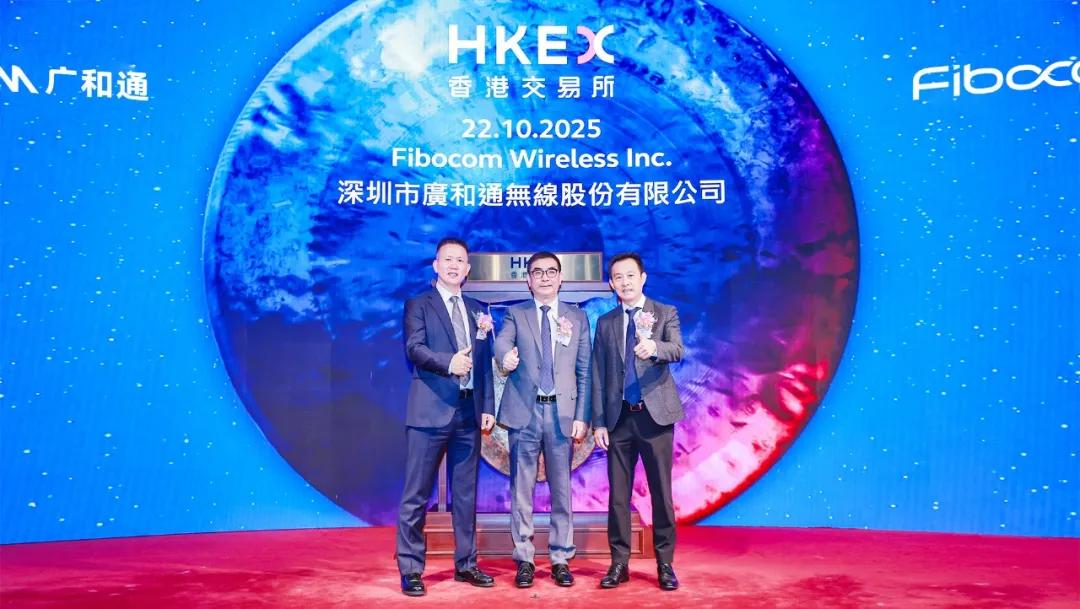
Core Viewpoint - Guanghetong's H-share listing on the Hong Kong Stock Exchange on October 22, 2025, raised HKD 2.9 billion, becoming the first domestic wireless communication module company to achieve "A+H" listing, despite facing significant stock price declines post-listing [1][3]. Financial Performance - In the first half of 2025, Guanghetong reported revenue of CNY 3.7 billion, a year-on-year decrease of 9.02%, and a net profit of CNY 217 million, down 34.66% compared to the previous year [4]. - The company sold 22.72 million wireless communication modules in the first half of 2025, a decline of 14% year-on-year, generating revenue of CNY 3.446 billion, with a gross margin of 16.31%, down 4.85 percentage points [10]. Market Position and Competition - Guanghetong is the second-largest wireless communication module provider globally, but its performance lags behind that of its competitor, Yiyuan Communication, which reported a revenue of CNY 11.546 billion in the first half of 2025, a 40% increase year-on-year, and a net profit of CNY 470 million, up 124% [5][4]. - The company aims to strengthen its position in the wireless module sector while expanding into edge AI solutions, leveraging its recent listing to enhance technological innovation and global presence [6]. Industry Trends - The edge AI market is projected to grow significantly, from CNY 321.9 billion in 2025 to CNY 1.22 trillion by 2029, indicating a strong demand for AI applications integrated with wireless communication modules [6][9]. - The integration of AI and wireless communication modules is becoming a key trend in the industry, with Guanghetong planning to establish an AI research institute in 2024 to capitalize on this opportunity [7]. Strategic Initiatives - Guanghetong plans to allocate 55% of the funds raised from its H-share issuance towards research and development, particularly in AI and robotics technologies [6]. - The company has launched the Fibocom AI Stack technology platform, which integrates various AI models and enhances the competitiveness of its AI module products [7][8].


移远通信:前三季度净利润同比增长105.65%
Zheng Quan Shi Bao Wang· 2025-10-23 08:28
Core Insights - The company reported a significant increase in revenue and net profit for the third quarter of 2025, with revenue reaching 6.33 billion yuan, a year-on-year growth of 26.68%, and net profit of 262 million yuan, up 78.11% [1] - For the first three quarters of 2025, the company achieved a total revenue of 17.877 billion yuan, reflecting a year-on-year increase of 34.96%, and a net profit of 733 million yuan, which is a 105.65% increase compared to the previous year [1] - The growth in revenue is primarily attributed to the accelerated advancement of IoT intelligence and the deep integration of AI and 5G, allowing the company to effectively target market demands and expand its business boundaries [1] Revenue and Profit Analysis - Third quarter revenue was 6.33 billion yuan, marking a 26.68% increase year-on-year [1] - Third quarter net profit was 262 million yuan, showing a substantial growth of 78.11% year-on-year [1] - Year-to-date revenue for the first three quarters reached 17.877 billion yuan, with a 34.96% year-on-year growth [1] - Year-to-date net profit for the first three quarters was 733 million yuan, reflecting a remarkable increase of 105.65% year-on-year [1] Business Growth Drivers - The company's core businesses, including 5G modules, automotive modules, smart modules, ODM, and antennas, all experienced rapid growth during the reporting period [1] - The diversified business matrix has injected strong growth momentum into the company's development [1] - The company is committed to providing one-stop solutions for its customers, which has contributed to its robust performance [1]

广州奉仙健康科技有限公司成立 注册资本131万人民币
Sou Hu Cai Jing· 2025-10-23 07:17
Core Insights - Guangzhou Fengxian Health Technology Co., Ltd. has been established with a registered capital of 1.31 million RMB [1] - The company is involved in a wide range of activities including research and development of home appliances, smart devices, and various technology services [1] Company Overview - The legal representative of the company is Qiu Jiahui [1] - The registered capital is 1.31 million RMB, indicating a modest initial investment [1] Business Scope - The company’s business scope includes R&D in home appliances, electric motors, computer hardware and software, industrial control systems, and smart home gateways [1] - It also manufactures and sells IoT devices, wearable smart devices, and consumer robots [1] - Additional services include technology consulting, software development, and intellectual property services [1]
“十四五·十四物”系列报道之三 车间的“智”变,发展的“质”变
Ren Min Wang· 2025-10-23 06:58
Core Insights - The transformation of a traditional manufacturing enterprise in Gansu, Lanzhou, showcases the impact of digitalization and intelligent transformation on productivity and worker conditions [1][2] - The "14th Five-Year Plan" emphasizes the development of emerging digital industries, including AI, big data, and cloud computing, which are driving significant advancements in technology and application [2][3] - China has established a comprehensive technological ecosystem in the AI sector, with numerous general models achieving international standards and contributing to a virtuous cycle of innovation [3] Group 1 - The manufacturing enterprise has improved its production efficiency by 2 to 3 times and reduced production costs by 20% through the adoption of new automated equipment [1] - The company has transitioned its workforce from manual labor to more skilled roles, enhancing both working conditions and income [1] - The digital transformation has revitalized the company, allowing it to rank among the top 100 mechanical industries in China [1] Group 2 - The "14th Five-Year Plan" aims to cultivate and expand new digital industries, enhancing the levels of communication equipment and key software [2] - China's computing power has become the second largest globally, providing essential support for the intelligent era [2] - The integration of AI with big data and 5G technologies is driving industries to ascend the value chain [2][3] Group 3 - China leads the world in the number of "lighthouse factories," accounting for over 40% of the global total, reflecting the strength of its smart manufacturing [3] - The added value of equipment manufacturing and high-tech manufacturing industries is projected to grow annually by 8.2% and 9.2%, respectively, from 2021 to 2024 [3] - The ongoing integration of digital and physical realms is expected to further penetrate various industry chain segments, fueling high-quality economic development [3]