Workflow
硬科技
icon
Search documents
锚定科技金融 打造服务科创“国信新范式”
Zheng Quan Shi Bao· 2025-07-27 17:10
Core Viewpoint - Guosen Securities is leveraging its experience in serving small and medium-sized enterprises to build a specialized system that empowers technology companies, aligning with national strategies and enhancing service capabilities [1][2]. Group 1: Service Strategy - Guosen Securities aims to establish a comprehensive service system for technology enterprises, focusing on three core capabilities: a competitive full-chain service system, a precise investment system through its platforms, and full industry chain service coverage in strategic sectors like new energy and healthcare [2][3]. - As of the end of 2024, over 70% of the IPO projects Guosen Securities has sponsored are strategic emerging enterprises, covering industries such as new generation information technology and high-end equipment manufacturing [2]. Group 2: Competitive Advantages - The dual characteristics of being a state-owned enterprise with market-oriented genes provide Guosen Securities with confidence in serving technology companies, as they understand the challenges faced by entrepreneurs [3]. - The company implements a collaborative mechanism to quickly respond to the needs of technology enterprises, enhancing service dimensions through customer classification and localized service models [3][4]. Group 3: Project Identification and Evaluation - Guosen Securities focuses on sectors like TMT, new materials, and high-end manufacturing for project reserves, using "technology content" as a hard standard for project selection [4][6]. - The "customer validation" model is employed to assess the technological advancement and market fit of potential investments, utilizing feedback from downstream clients to inform investment decisions [6][7]. Group 4: Regional Development Support - Guosen Securities supports Shenzhen's "20+8" industrial cluster initiative by providing full-cycle services and leveraging private equity management to establish large mother funds for industry clusters [7][8]. - The company has successfully facilitated significant financing for state-owned enterprises, exemplified by a recent project that raised 5 billion yuan for a waste-to-energy initiative, showcasing the integration of technology and economic benefits [8].
科创板开市6年“科技叙事”清晰
Shen Zhen Shang Bao· 2025-07-27 16:32
Group 1 - The "2025 China Sci-Tech Innovation Leaders Conference and the 6th Anniversary of the Sci-Tech Innovation Board" was held in Shanghai, focusing on themes of policy, technological innovation, and industrial development with over 80 leaders from listed companies and investors attending [1] - The Shanghai Stock Exchange's Deputy General Manager Wang Bo highlighted that the Sci-Tech Innovation Board has been dedicated to serving "hard technology" and has clarified the "technology narrative" logic in the capital market over the past six years [1] - Li Xunlei, Chief Economist at Zhongtai International, emphasized the need for the capital market to better allocate resources and guide "new productive forces" towards stronger entities [1] Group 2 - Chui Shan, Chairman and President of Zhongkong Technology, stated that the era of artificial intelligence is reshaping value creation, and the company has developed a "1+2+N" industrial AI-driven smart factory architecture to support the intelligentization of process industries [2] - Yu Dan, General Manager of Yicun Capital, noted three characteristics of the current merger and acquisition wave: a focus on finding second growth curves for listed companies, a buyer's market for valuations, and a pragmatic approach to cross-border acquisitions emphasizing supply chains and customer bases [2]
不远千里,80余位科创领军人物赶赴这场大会!
财联社· 2025-07-26 10:21
Core Viewpoint - The "2025 China Sci-Tech Leaders Conference and the 6th Anniversary of the Sci-Tech Innovation Board" highlighted the integration of technology innovation and capital markets, emphasizing the role of the Sci-Tech Innovation Board in supporting China's technological advancements and industrial upgrades [2][5][22]. Group 1: Conference Overview - The conference featured 9 keynote speeches, 2 roundtable discussions, and various forums, attracting over 80 leaders from listed companies and nearly 1,000 attendees [2]. - Keynote speeches addressed topics such as semiconductor technology, AI, and innovative pharmaceuticals, showcasing the diverse fields of innovation [7][9][10]. Group 2: Government and Institutional Support - The Shanghai Municipal Government emphasized the importance of the Songjiang District in advancing manufacturing and technology innovation, focusing on high-end equipment and new-generation information technology [4]. - The Shanghai Stock Exchange reiterated its commitment to supporting "hard technology" and enhancing the "technology-industry-capital" cycle to align with national strategic needs [5]. Group 3: Industry Insights - Industry leaders discussed the challenges and opportunities in the semiconductor sector, highlighting the need for internationalization and innovation in the face of global competition [9]. - The conference revealed structural issues within the Sci-Tech Innovation Board, such as market capitalization dispersion and low delisting rates, which need to be addressed for better resource allocation [7]. Group 4: Mergers and Acquisitions - A roundtable discussion on mergers and acquisitions highlighted the evolving landscape, with a focus on strategic growth and industry chain restructuring rather than merely increasing market capitalization [13][15]. - The current M&A environment is characterized by a buyer's market for listed companies, emphasizing the importance of synergies and realistic valuations [15]. Group 5: International Expansion - Discussions on international expansion revealed a shift from cost advantages to technological advantages, with companies focusing on ecosystem outputs and proactive participation in standard-setting [17]. - The need for data security and software safety in overseas markets was underscored, as companies adapt to geopolitical challenges [17]. Group 6: Industry Collaboration - The conference facilitated connections between technology and capital demands, with a focus on high-barrier technology fields such as semiconductors and medical devices [21]. - The establishment of the "Best ESG Sci-Tech Innovation Board Listed Company" award aims to provide a reference for evaluating ESG performance in the industry [21]. Group 7: Future Outlook - The Sci-Tech Innovation Board has seen significant growth, with 589 listed companies and a total market capitalization exceeding 7.5 trillion yuan, positioning it as a key player in China's technological innovation landscape [22].
LP圈发生了什么
投资界· 2025-07-26 08:06
Group 1 - Chengdu has launched its first future industry fund with an initial scale of 1,120 million yuan and a long-term scale of 2,600 million yuan, focusing on ten future industry sectors including humanoid robots and quantum technology [2][3] - KKR has registered a private equity fund in Shanghai, with notable domestic LPs including Ping An Capital and Schroder, indicating a significant shift in the domestic dollar fund ecosystem [4] - Changshi Capital has completed a fundraising of 728 million yuan for its third hard technology fund, with contributions from various industry players and financial institutions [5] Group 2 - The Suzhou Taikang No.1 equity investment fund has been established with a total contribution of 310 million yuan, involving multiple local investment partners [7] - The Changjiang Special Automobile Industry Investment Fund has been registered with a total scale of 50 million yuan, focusing on specialized vehicles and high-end manufacturing [8] - Hangzhou plans to establish a 200 million yuan direct investment fund to support early-stage technology startups [9] Group 3 - A new biopharmaceutical industry fund has been launched in Shanghai with an initial scale of 10 million yuan, involving local enterprises and government support [10][11] - The Yunnan Dianzhong New Area Industry Guidance Fund has been established with a scale of 50 million yuan, focusing on non-listed enterprises [12] - The Shanghai Baoshan Zhongying Fuyiao Venture Capital Fund has been launched with a total scale of 50 million yuan [13] Group 4 - The Guangxi Technology Achievement Transformation Mother Fund has been initiated with a total scale of 200 million yuan, aimed at supporting technology enterprises [14] - The first provincial-level biopharmaceutical industry fund in Fujian has been launched with an initial scale of 100 million yuan, targeting innovative drugs and vaccines [15] - The first industrial venture capital mother fund in Guangxi has been registered with a total scale of 500 million yuan [16] Group 5 - The Anhui National Control University Achievement Transformation Venture Capital Fund has been registered with a total scale of 100 million yuan, focusing on high-tech fields [17][18] - The first batch of sub-funds under the Jiading District New Industry Fund has been established, with a total scale of 1.5 million yuan for each sub-fund [19] - A new industrial mother fund has been established in Zhangzhou with a scale of 50 million yuan [20] Group 6 - Shenhuo Co., Ltd. has announced a contribution of 1.2 billion yuan to establish a high-quality industrial development fund [21] - Beijing's Science and Technology Innovation Fund has approved additional investments in a new equity investment partnership [22] - Ningbo's Angel Investment Guidance Fund is planning to establish two new sub-funds [23] Group 7 - The Fujian Province Specialized and New Mother Fund has announced the selection results for five sub-fund management institutions, with an initial scale of nearly 1 billion yuan [24] - Chengdu's Angel Mother Fund is planning to invest in a new sub-fund with a target scale of 300 million yuan [25] - Nanjing's Talent Phase I Development Fund is set to invest in a new sub-fund [26] Group 8 - The Inner Mongolia Key Industry Guidance Fund is in the process of selecting a management organization [27] - The Hainan Free Trade Port Construction Investment Fund is planning to invest in a new sub-fund with a scale of 1 billion yuan [28] - The Huai'an Industrial Investment Fund is reviewing proposals for two new sub-funds [29] Group 9 - Sichuan Borui Rongben Fund is seeking GP partners to support strategic emerging industries in Ya'an [30] - Zhongjin Yaoshen Mother Fund is recruiting GP partners to leverage state-owned capital for industrial development [31] - Tianjin has introduced new policies to support venture capital development, allowing for higher government investment ratios [32][33] Group 10 - Guangzhou Development Zone is promoting the biopharmaceutical industry with a 500 million yuan mother fund to support early-stage investments [34]
科技资本融汇,新质动能奔涌!第十三届创业投资大会暨全国创投协会联盟走进光明科学城活动成功举行
证券时报· 2025-07-25 14:28
Core Viewpoint - The 13th Venture Capital Conference held in Shenzhen's Guangming Science City emphasizes the integration of technology and capital, highlighting the evolving landscape of the venture capital industry and its role in driving innovation and economic development [3][5][30]. Group 1: Event Overview - The conference attracted over 300 active venture capital institutions and industry professionals from more than 20 provinces, focusing on new trends and the future of venture capital [3][5]. - A strategic cooperation agreement was signed between the Securities Times and the Guangming District government to enhance collaboration in the venture capital sector [30][32]. Group 2: Industry Trends - The venture capital industry is experiencing a recovery, with a focus on discovering and creating value through professional insights and quality services [5][7]. - The shift towards hard technology sectors such as artificial intelligence, robotics, and biotechnology is evident, as traditional entrepreneurial models decline [16][24]. Group 3: Investment Opportunities - The report on China's city venture capital vitality indicates that Shanghai, Shenzhen, and Beijing lead in venture capital activity, driven by strong innovation capabilities [20]. - The potential for "super unicorns" is seen in the intersection of artificial intelligence and data, with significant market opportunities anticipated in various sectors [25][28]. Group 4: Collaborative Efforts - The establishment of the National Venture Capital Association Alliance Think Tank aims to provide diverse wisdom and support for the venture capital industry [34][37]. - The conference highlighted the importance of collaboration among various stakeholders to address industry challenges and foster innovation [34][37].
规模突破千亿,资金热捧科创债ETF
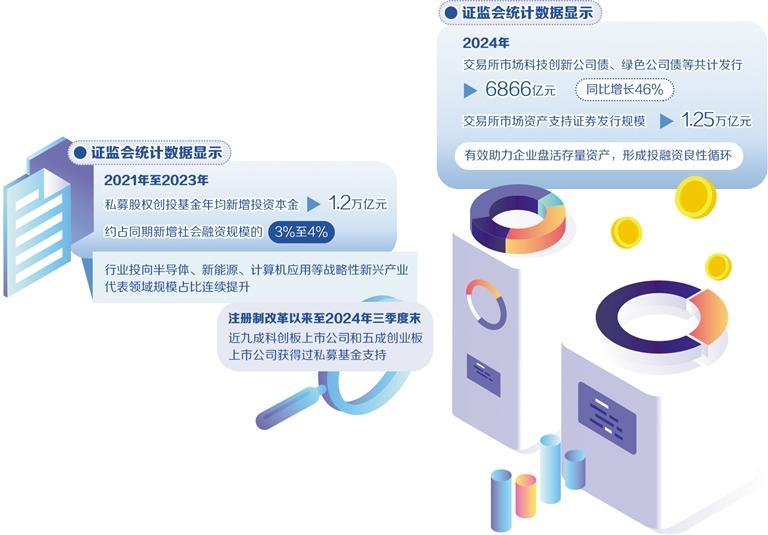
Core Viewpoint - The rapid growth of the bond ETF market, particularly the newly launched Sci-Tech Bond ETFs, reflects a strong institutional demand for transparent, low-cost, and highly liquid investment tools, marking a golden period for bond index investing [1][10]. Group 1: Market Performance - The first batch of 10 Sci-Tech Bond ETFs launched on July 10, 2023, and by July 24, their total scale reached 1010.86 billion yuan, with significant trading activity observed [2][3]. - From July 17 to July 24, the trading volume of these ETFs totaled 722.78 billion yuan, indicating high investor interest [2]. Group 2: Product Characteristics - The Sci-Tech Bond ETFs track various indices, including the China Securities AAA Sci-Tech Innovation Corporate Bond Index, which focuses on high-credit-rated corporate bonds with a technology innovation label [3]. - The ETFs utilize a T+0 trading mechanism and a physical redemption model, enhancing trading flexibility and arbitrage opportunities [4]. Group 3: Institutional Demand - The surge in investment in Sci-Tech Bond ETFs is attributed to the ongoing "asset shortage" in the bond market, where these ETFs offer attractive coupon rates and meet current allocation needs [4][5]. - Institutional investors, including banks, trusts, and insurance companies, are the primary participants in this market, driven by the ETFs' high liquidity and the ability to pledge them for financing [10]. Group 4: Market Expansion - Prior to the launch of the Sci-Tech Bond ETFs, the first batch of 8 benchmark market-making credit bond ETFs had already gained significant traction, with a total scale of 1317.6 billion yuan by July 24 [7][8]. - The overall bond ETF market has expanded to 39 products, with a total scale of 5075.30 billion yuan, nearly doubling since the end of 2024 [8]. Group 5: Future Outlook - The continuous support from regulatory bodies for the development of the Sci-Tech bond market is expected to inject certainty into the market, enhancing the attractiveness of passive investment tools [5][6]. - The broad coverage of the underlying indices, which span the Shanghai and Shenzhen stock exchanges, provides ample liquidity support for investors [6].
一图看懂科创民企策略指数
中国基金报· 2025-07-25 11:14
Core Viewpoint - The article discusses the rapid development of the index system in China, highlighting the increasing market recognition and the accelerating trend of index-based investment, particularly focusing on the Shanghai Stock Exchange's initiatives to educate investors about index investment [8]. Group 1: Index Development and Market Trends - The index system in China has been rapidly improved, leading to a growing acceptance of index-based investment strategies among investors [8]. - The Shanghai Stock Exchange, in collaboration with China Fund News and China Securities Index Company, has launched educational initiatives to help investors understand the key aspects of index investment [8]. Group 2: Private Enterprises in the Sci-Tech Board - As of June 2025, there are 3,478 listed private enterprises on the A-share market, accounting for nearly two-thirds of all listed companies, with 422 of them on the Sci-Tech Board, representing over 70% [10]. - The total market capitalization of private enterprises on the Sci-Tech Board is 3.5 trillion yuan, with total revenue of 0.9 trillion yuan, constituting 58.2% and 68.0% of the total for the Sci-Tech Board, respectively [10][11]. Group 3: R&D Investment and Innovation - The Sci-Tech Board aims to support high-level technological self-reliance, focusing on "hard technology" enterprises, with private enterprises' R&D investment reaching nearly 80 billion yuan in 2024, resulting in an R&D intensity of 8.9% [12]. - The private enterprise strategy index on the Sci-Tech Board selects 50 companies based on their R&D investment and profitability, providing a tool for investors to access high-quality private enterprises [14][16]. Group 4: Index Sample Characteristics - The sample space for the private enterprise strategy index includes all private enterprises listed on the Sci-Tech Board, excluding ST and *ST securities, with a focus on liquidity and market capitalization [15][16]. - As of July 10, 2025, the total market capitalization of the index samples ranges from 2.3 billion to 50 billion yuan, covering 18% of the Sci-Tech Board [21]. Group 5: Industry Distribution - The private enterprise strategy index emphasizes support for technology enterprises, with the top three industries being new generation information technology (55.2%), biomedicine (23.6%), and high-end equipment (9.9%) [23][25]. - The average R&D investment ratio for the index samples is significantly higher than the overall A-share market, with a median of 21.4% compared to 4.3% for the A-share market [25].
凯赛生物:如果合成生物是未来的石油,凯赛能否成为它的中石化?
Sou Hu Wang· 2025-07-25 02:43
Core Viewpoint - Synthetic biology is an underappreciated industry that has the potential to significantly change manufacturing methods, with Kasei Biotech positioned as a leading player in this field [1] Group 1: Technology Core - Kasei's core technology barriers include autonomous strain construction, industrial fermentation capabilities, and integrated engineering systems, allowing it to develop new materials without relying on external patents [4][5] - The company has successfully scaled fermentation processes from laboratory to industrial levels, achieving stable production rates essential for turning research into marketable products [4] - Kasei's integrated capabilities across the entire production chain enhance its ability to optimize yield and reduce costs [4][5] Group 2: Business Model - Kasei's business model focuses on selling products rather than licensing technology, with key products including bio-based pentamethylenediamine and long-chain dicarboxylic acids [5][6] - The company targets industrial material companies as primary customers, benefiting from strong customer loyalty and high switching costs [5] - Kasei's model emphasizes scalability and cost reduction, directly replacing fossil fuel-derived products [5][6] Group 3: Industry Positioning - Kasei is among the first companies globally to achieve large-scale production of bio-based materials, with a significant portion of its customer base in industrialized nations [6] - The company faces challenges such as long certification processes and policy barriers in international markets, indicating a slow but steady growth trajectory [6] Group 4: Financial Health - Kasei has maintained profitability for several years, with stable gross margins between 35-45%, indicating strong financial health relative to its industry [6][7] - The company invests 6-8% of its revenue in R&D annually, demonstrating a commitment to innovation while maintaining a healthy cash flow [7] - Kasei's net profit margin remains stable, reflecting a steady growth strategy rather than reliance on explosive revenue increases [6][7] Group 5: Moat and Long-term Evolution - Kasei's long-term advantages stem from a deepening technical system, strong customer relationships, and production capacity that cannot be easily replicated [7][8] - The company has established a "flywheel" effect through its technology, customer base, and supply chain, allowing for continuous product line expansion [7] - Kasei's strategy focuses on building a diversified product portfolio that supports long-term growth and stability [7][8] Group 6: Recent Performance - In Q1 2025, Kasei reported revenue of 776 million yuan, a year-on-year increase of 13.33%, indicating a recovery in demand for its core bio-based materials [8] - The net profit reached 137 million yuan, reflecting a 30.11% increase, showcasing improvements in profitability and cost management [8] - The company maintains a healthy cash flow without reliance on external financing, indicating robust financial management [8]
陕西省创业投资协会理事长卢道真—— 打造“小而精、专而强”的区域差异化竞争力
Zheng Quan Shi Bao· 2025-07-24 18:27
Core Insights - Shaanxi has emerged as a significant venture capital hub in Western China, with a total fund management scale nearing 1000 billion yuan [1] - The investment frequency in Shaanxi's venture capital market is increasing, with a notable rise in early-stage investments and a trend towards smaller, technology-focused investments [1] - The industry distribution in Shaanxi's venture capital shows a strong emphasis on "hard technology," particularly in electronic information, equipment manufacturing, and materials chemistry [1] Investment Trends - The investment landscape in Shaanxi is characterized by a focus on early-stage projects, with single investments predominantly in the million-yuan range, reflecting a trend of "investing early, investing small, and investing in technology" [1] - Significant investments in sectors such as photonics and renewable energy are attracting national capital, indicating a growing interest in these areas [1] Association Efforts - The Shaanxi Provincial Venture Capital Association has established a "1237" ecosystem service system to facilitate efficient connections between technological achievements and financial capital, contributing to over 8 billion yuan in financing [2] - The association's "1+4+N" precise matching service system aims to streamline the entire fundraising, investment, and exit process, enhancing the support for hard technology projects [2] Policy and Ecosystem Support - The increasing influence of state-owned funds, along with tax incentives and special funds, is directing capital towards local advantageous fields such as photonics and renewable energy [3] - The ecosystem focuses on industries like artificial intelligence and high-end equipment, utilizing venture capital conferences and roadshows to promote technology commercialization and project incubation [3]
杭州市创业投资协会会长周恺秉—— 坚持早期投资 杭州科技创新生态渐入佳境
Zheng Quan Shi Bao· 2025-07-24 18:27
周恺秉介绍,协会在构建行业生态方面主要通过活动链接各方面资源,典型代表就是在杭州每年举办万 物生长大会,积聚创投、创业企业等,打造整个创投生态,并且不断拓展和海外地区的沟通衔接,近年 来和东盟等地监管机构、创投机构、创业企业保持频繁互动,做专场的活动交流。协会还设立独角兽俱 乐部,对杭州的独角兽企业保持两周一次的走访频率,得到会员机构较好的认可。 (文章来源:证券时报) 杭州的民营创投氛围也十分浓厚。周恺秉介绍,协会的会员以杭州本土成长起来的创投机构为主,规模 不是特别大,但从起步发展阶段就更重视投早投小投科技,形成独特的本地化投资逻辑:更早介入(本 土机构以早期投资为主要投资阶段)、更重技术(硬科技项目在投资组合中的占比普遍较高)、更长周 期(愿意陪跑企业成长平均投资周期长)。据杭州市创投协会不完全统计,目前在杭州市注册的创业投 资基金约3000只,认缴规模约4000亿元。 根据周恺秉的观察,今年以来,杭州投资机构最关注三大领域。首先是以人工智能为代表的AI企业; 其次是以机器人为代表的具身智能、智能设备领域;最后就是生物医药赛道的创新企业,尤其是和AI 相结合的方向。与其他地方创投机构相比,杭州创投机构之 ...