数字金融

Search documents
刘小涛吴庆文会见中国进出口银行董事长陈怀宇
Su Zhou Ri Bao· 2025-08-01 23:00
Core Viewpoint - The meeting between Suzhou officials and the chairman of the China Export-Import Bank emphasizes the importance of strategic collaboration to enhance financial support for Suzhou's economic development and international trade initiatives [1][3]. Group 1: Suzhou's Economic Strategy - Suzhou is committed to deepening the implementation of Xi Jinping's important speeches, expanding high-level opening-up, and stabilizing foreign trade and investment [3]. - The city aims to improve the quality and efficiency of its open economy and promote sustainable economic recovery [3]. Group 2: Financial Support and Collaboration - Suzhou officials requested the China Export-Import Bank to prioritize the city in its strategic layout, focusing on new policy financial tools, digital finance, foreign trade transformation, and supporting enterprises in going global [3]. - The China Export-Import Bank expressed gratitude for Suzhou's support and highlighted the city's strong industrial foundation, vast market space, excellent business environment, and good financial ecosystem as key factors for investment [3]. Group 3: Future Development Focus - The China Export-Import Bank aims to integrate deeply into Suzhou's modernization process, leveraging its advantages to expand functional business areas [3]. - The bank will focus on technology innovation, industry cultivation, international cooperation, and financing for small and medium-sized foreign trade enterprises to empower Suzhou's high-quality development of its open economy [3].


发挥财务公司优势化解融资难
Jing Ji Ri Bao· 2025-08-01 21:56
Core Viewpoint - The article emphasizes the critical role of corporate financial companies in alleviating the financing difficulties faced by small and medium-sized enterprises (SMEs) by leveraging their unique advantages in understanding industries and providing tailored financial services [1][2]. Group 1: Transformation of Corporate Financial Companies - Corporate financial companies are transitioning from traditional fund managers to integrated hubs for industry-finance collaboration, driven by policy guidance and market demand [1][3]. - They utilize their deep understanding of industry chains to offer customized financing and innovative risk control, particularly in key areas such as technology and green finance [1][2]. Group 2: Key Characteristics of Financial Services - Corporate financial companies possess a competitive edge through their understanding of industry costs and characteristics, allowing them to provide financing at lower rates than traditional banks [1][2]. - In the technology sector, loans have increased by 12% year-on-year, while green loans have surged by 27.4% as these companies facilitate low-carbon transitions [2]. - The companies are extending their services to the end of the industry chain, addressing funding shortages for SMEs and transforming the approach to inclusive finance from broad distribution to targeted support [2]. Group 3: Digital Transformation and Service Upgrade - The rise of digital finance is creating new opportunities for corporate financial companies to enhance their services by integrating logistics, information flow, and capital flow into a unified digital credit system [3]. - By automating financial processes and employing big data for risk assessment, these companies are improving financing efficiency and reducing moral hazards [3]. - The implementation of the new management regulations for corporate financial companies is providing clearer directions for industry transformation, with examples of successful integration of resources by companies like Haier and Haier [3][4]. Group 4: Future Directions - Corporate financial companies need to deepen their industry insights, expand their services from individual enterprises to entire industry chains, and enhance their role as strategic partners [4]. - They should leverage technology such as artificial intelligence and blockchain to improve service intelligence and create data-driven financial service models [4]. - Strengthening internal and external collaboration will be essential for maximizing resource efficiency and forming a cohesive service network [4].
青岛银行半年度业绩快报:规模效益双增长,特色金融构筑发展韧性
Zhong Guo Zheng Quan Bao· 2025-08-01 12:18
Core Viewpoint - Qingdao Bank has demonstrated steady growth in operational scale, profitability, and asset quality in the first half of 2025, maintaining strong performance amidst a complex economic environment [1][6]. Group 1: Financial Performance - As of June 30, 2025, Qingdao Bank's total assets reached 743.03 billion yuan, an increase of 7.69% compared to the end of the previous year [2] - The total customer loans amounted to 368.41 billion yuan, reflecting an 8.14% growth year-on-year [2] - Customer deposits totaled 466.14 billion yuan, with a growth rate of 7.9% [2] - The bank achieved operating revenue of 7.66 billion yuan, a year-on-year increase of 7.5% [2] - The net profit attributable to shareholders was 3.07 billion yuan, up 16.05% from the previous year, indicating a significant improvement in profitability [2] - The non-performing loan ratio stood at 1.12%, down by 0.02 percentage points from the end of the previous year [2] - The provision coverage ratio improved to 252.8%, an increase of 11.48 percentage points, enhancing risk mitigation capabilities [2] Group 2: Strategic Initiatives - Qingdao Bank has focused on five key areas: technology finance, green finance, inclusive finance, pension finance, and digital finance, aligning with national strategies [3] - In technology finance, the bank's loans reached 27.30 billion yuan, significantly increasing year-on-year, supporting innovation and entrepreneurship [3] - The green loan balance was 43.72 billion yuan, growing over 17% compared to the previous year, reflecting the bank's commitment to the "dual carbon" strategy [3] - The bank has established a blue finance evaluation system and launched a "marine ranch + finance" service model, supporting the development of the marine economy [4] - Qingdao Bank has successfully implemented a sustainable development-linked syndicate loan, marking a significant achievement in the consumer finance sector [4] Group 3: Brand and Social Responsibility - The bank has enhanced its brand value and social responsibility, integrating corporate development with social value creation [5] - The "Happy Neighborhood" volunteer service team conducted over 270 activities, reaching more than 14,000 people, enhancing community engagement [5] - Qingdao Bank has partnered with Shandong University to establish a humanities and arts fund, contributing to educational and cultural development [5] - The bank ranked 270th in the 2025 Global Bank 1000 list and 495th in the Fortune China 500 list, highlighting its regional significance and brand value [6] - The bank's performance reflects its resilience and commitment to serving the local economy and national strategies [6]
青岛银行半年度业绩快报:规模效益双增长 特色金融构筑发展韧性
Zhong Zheng Wang· 2025-08-01 06:54
2025年上半年,青岛银行在"科技金融、绿色金融、普惠金融、养老金融、数字金融"五篇大文章中找准 定位,按照"专业提升、数智赋能、体系优化、特色驱动"的年度经营指导思想,打造出独具特色的差异 化竞争优势,实现与地方经济同频共振。 在科技金融领域,该行立足青岛科技创新策源地优势,构建"政银企研"协同创新生态,科技金融贷款余 额同比大幅增长,截至2025年3月末,青岛银行科技金融贷款余额达273.02亿元。创新推出"知识产权估 值+风险代偿"双轮驱动模式,实现科技成果转化贷款全省全覆盖,为科创企业提供全生命周期金融服 务。 核心指标攀升 从发展规模看,规模稳健提升。截至6月末,青岛银行资产总额达7430.28亿元,较上年末增长7.69%; 客户贷款总额3684.06亿元,较上年末增长8.14%;客户存款总额4661.40亿元,增幅7.9%,资产负债结 构持续优化。 从盈利能力看,营收净利保持双增长。截至6月末,该行实现营业收入76.62亿元,同比增长7.5%;实现 归母净利润30.65亿元,同比增长16.05%,净利增速显著高于营收增长,凸显精细化经营成效。 从资产质量看,持续向好。截至6月末,该行不良贷款率1. ...
截至6月末西藏社会融资规模存量超9400亿元
Sou Hu Cai Jing· 2025-08-01 03:46
Core Insights - The financial sector in Tibet has shown significant growth in the first half of the year, with a notable increase in social financing and loans, supporting the region's economic recovery [1][2] Financial Growth - As of June, the total social financing in Tibet reached 944.73 billion yuan, marking a year-on-year increase of 6.19% - The balance of various loans in both domestic and foreign currencies was 656.82 billion yuan, reflecting a growth of 9.25% since the beginning of the year - The financial industry's added value grew by 26.7% year-on-year, contributing 2.9 percentage points to the regional GDP [1] Financial Services Improvement - In the technology finance sector, loans amounting to 14.44 billion yuan were issued to 156 technology enterprises, with a total technology loan balance of 135.40 billion yuan, up 18.18% year-on-year - Green finance initiatives included carbon reduction loans of 6.89 billion yuan, with a total green loan balance of 195.62 billion yuan, increasing by 12.2% since the start of the year - Inclusive finance efforts resulted in 76 financing connection events, providing 1.21 billion yuan to 425 enterprises, with a total balance of inclusive small and micro enterprise loans at 52.96 billion yuan, up 25.72% year-on-year [2] Key Sector Support - Various sectors such as infrastructure, personal consumption, real estate, manufacturing, and agricultural loans have all experienced growth, providing essential support for development [2] Financing Costs - The average interest rates for newly issued general commercial loans, corporate loans, and inclusive small and micro loans were 1.46%, 1.39%, and 1.15% respectively, showing a year-on-year decrease of 0.34, 0.45, and 0.51 percentage points [2] Cross-Border RMB Business - By the end of June, four banks in the region had opened five RMB interbank accounts, establishing a RMB fund clearing network - The cross-border payment service launched on June 22 processed 286 transactions totaling 2.3763 million yuan - The total cross-border RMB payment volume with neighboring countries increased by 71.72% year-on-year [3]
截至6月末 山西社会融资存量规模为6.9万亿元
Sou Hu Cai Jing· 2025-08-01 01:16
信贷结构持续优化 截至6月末,全省金融机构本外币各项贷款余额4.8万亿元,同比增长7.6%,高于全国平均水平0.8个百 分点,较年初增加2608.9亿元,金融体系对实体经济支持保持较高水平。 上半年,金融支持重点领域和薄弱环节力度持续加大。一是持续加大对绿色低碳领域的支持力度。6月 末,全省绿色贷款余额5497.6亿元,较年初增加467亿元。二是普惠小微等薄弱领域贷款较快增长。6月 末,全省普惠小微贷款余额5164.7亿元,同比增长21.6%;全省科技型企业贷款余额同比增长12.8%,均 高于各项贷款增速。三是持续加大对制造业等重点领域的支持力度。6月末,全省制造业中长期贷款余 额2604亿元,同比增长16.6%,较年初增加256.2亿元。 同时,优化利率政策传导,促进社会综合融资成本下降。上半年,全省新发放企业贷款、普惠小微贷款 加权平均利率分别为3.44%、4.44%,同比分别下降0.52个、0.49个百分点。 今年上半年,全省金融保持平稳运行态势,社会融资规模,金融机构贷款、存款均保持平稳增长,信贷 结构持续优化,支持经济高质量转型发展的力度进一步加大。这是记者从7月31日人民银行山西省分行 召开的20 ...
英伟达H20算力芯片被曝存在严重安全问题;乐道沈斐截胡理想广告,讽刺友商暗搓搓请水军;罗马仕进入破产程序?内部员工:9月底定生死
雷峰网· 2025-08-01 00:41
Key Points - The article discusses various recent developments in the automotive, technology, and finance sectors, highlighting competitive dynamics and strategic moves by companies like Li Auto, ByteDance, NVIDIA, and JD.com [1][5][24]. Group 1: Automotive Industry - Li Auto launched its new electric SUV, the Li i8, which has sparked competitive responses from other brands, particularly regarding advertising and performance claims [1][9]. - The launch of the Li i8 coincides with the introduction of the LeDao L90, another electric SUV, which is positioned as a strong competitor in the family-oriented electric vehicle market [27]. - Concerns have been raised about the safety and performance claims of the Li i8 after a collision test video was released, leading to disputes with other manufacturers [9][10]. Group 2: Technology Sector - NVIDIA's H20 chip has been flagged for serious security vulnerabilities, prompting a government inquiry into its safety for Chinese users [5]. - ByteDance has clarified its employee retention statistics, stating that the average tenure is around 3 years, countering rumors of high turnover rates [8]. - OpenAI's annual revenue has reportedly surged to $12 billion, with ChatGPT's weekly active users surpassing 700 million, indicating strong market demand for AI services [37]. Group 3: Financial Developments - JD.com announced a voluntary public acquisition offer for German retailer Ceconomy, valuing the company at approximately €22.3 billion (around $26.3 billion) [24]. - Meta is planning to invest heavily in AI infrastructure, with projected capital expenditures reaching between $66 billion and $72 billion by 2025, reflecting a significant commitment to AI development [38].




科普|香港稳定币来了!一文看懂你能做什么、怎么参与
Xin Lang Cai Jing· 2025-07-31 23:39
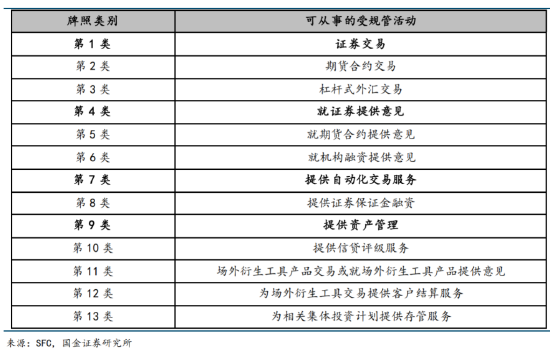
Group 1: Core Insights - The Hong Kong Stablecoin Regulation officially comes into effect on August 1, 2025, marking the establishment of the world's first licensed stablecoin system, transitioning stablecoins from a gray area to a compliant business [1][9] - This regulation positions Hong Kong as a leader in digital finance regulation, having completed legislation and established a licensing and auditing mechanism, serving as a model for global institutional exploration [1][4] - Stablecoins are evolving from niche tools in the crypto industry to key infrastructure in the global digital financial system, with a monthly payment and settlement scale exceeding $6 billion as of February 2025, tripling from the same period in 2023 [2][3] Group 2: Regulatory Framework - The regulation introduces a dual mechanism of "licensing + sandbox," allowing the Hong Kong Monetary Authority to oversee stablecoin operations, setting a global standard [4][6] - Entities wishing to issue or operate stablecoins must obtain relevant licenses, with stringent regulatory requirements including a minimum registered capital of HKD 25 million, 100% asset backing, and compliance with AML and KYC rules [6][10] - The regulatory framework includes 13 categories of regulated activities, with specific licenses required for various financial services related to stablecoins [6] Group 3: Market Participation - Ordinary users can now participate in the stablecoin ecosystem through licensed virtual asset exchanges, allowing them to purchase stablecoins and engage in on-chain investments [12][13] - The stablecoin ecosystem is currently open to Hong Kong residents, providing access to various investment opportunities, including on-chain fundraising and green bonds [13][14] - The introduction of stablecoins is seen as a bridge for ordinary individuals to engage in global digital assets, moving beyond institutional access to a more inclusive financial landscape [14]
HashKey首席分析师丁肇飞:稳定币是中美金融竞争的重要一环
Xin Lang Cai Jing· 2025-07-31 23:32
中环街巷,熟悉的热闹气息正在回归。写字楼中,金融从业者热议港股、美股与全球利率走势;咖啡馆 里,创业者与律师围绕稳定币、跨境结算和RWA(现实世界资产)发行展开探讨。咖啡香气中混杂着 区块链术语,映射出数字金融时代的脉动节奏。 稳定币与平台协作"打通四环",交易申购场景闭环逐步成型 丁肇飞将"交易平台与稳定币发行方之间的协同路径"总结为3个关键环节: 1. 公开交易支持:稳定币需要通过像HashKey Exchange这样的持牌交易所,实现二级市场自由流通的 能力。交易所通过提供交易撮合机制,让用户完成兑换,有助于价格锚定与流动性形成;交易所作为入 口,可实现用户一键申购/赎回稳定币,降低使用门槛; 2. 资产增值机制:如持币锁仓、质押奖励等增值功能,帮助提升用户黏性和使用频率; 2025年5月,香港《稳定币条例》正式通过,8月1日起落地实施,为稳定币设立发牌制度;6月,《数字 资产发展政策宣言2.0》发布,为Web3和RWA的制度化发展铺设路径。香港,这座走在全球加密政策前 沿的城市,正将监管框架化为生态优势。 在此背景下,新浪财经赵般娇专访 HashKey Group 首席分析师丁肇飞(Jeffrey D ...

CIPS:重构信任基础,区块链应用的创新范式
Sou Hu Cai Jing· 2025-07-31 16:11
Core Insights - The article emphasizes the transformation of "trust" in transaction structures through technology, particularly blockchain, which is evolving into a new generation of value circulation networks [1][4] - The CIPS+ project, led by multiple domestic institutions, aims to establish a credible infrastructure network focusing on cross-border payments, value clearing, smart contracts, and on-chain compliance by 2025 [1][3] Group 1: CIPS+ Project Overview - CIPS+ enhances the existing CIPS system by integrating blockchain ledgers, smart contracts, and multi-chain communication, thereby creating a next-generation system that injects algorithmic trust [3] - The upgrade represents a fundamental shift from a centralized ledger system to a model driven by "rules + consensus," improving transparency, efficiency, and risk perception while ensuring compliance [3][4] Group 2: Strategic Goals - The CIPS+ project aims to expand its applications in cross-border clearing, supply chains, and cross-border e-commerce, providing integrated and multi-layered trusted access for institutions, enterprises, and ecosystem developers [3] - The initiative reflects a non-disruptive innovation approach, integrating with existing systems to enhance their intelligence, efficiency, and trustworthiness, while addressing security, global competition, and technological sovereignty [3][4] Group 3: Future Vision - CIPS+ is positioned as a proactive attempt to shape future trust mechanisms, aiming to provide a globally applicable digital financial paradigm with an Eastern perspective [4][5] - The project seeks to build a self-controlled, trustworthy ledger system, support the global digital payment system's institutional embedding, and facilitate the intelligent flow of global value networks to serve the real economy and multilateral cooperation [6]