
跨境电商

Search documents
俄罗斯锅炉市场机遇凸显,中国企业的淘金正当时
Sou Hu Cai Jing· 2025-10-09 07:10
Market Opportunities - The Russian boiler market is experiencing growth driven by increasing energy demand and government policy support, with a focus on infrastructure upgrades [3] - The global industrial boiler market is projected to reach $20.99 billion by 2029, with a compound annual growth rate (CAGR) of 6.8% [1] - The HVAC market in Russia is currently valued at approximately $3 billion to $4 billion, with a CAGR of 4.2% to 4.5% [2] Product Categories - Water supply and heating equipment accounts for about 60% of the Russian HVAC market, showing a trend towards diversification [4] - Gas boilers are seeing accelerated localization for mid-to-low-end products, while high-end equipment still relies on imports [4] - Pipes and valves represent 20% to 30% of the HVAC market, with significant exports from China, focusing on material upgrades and technological innovations [4] China-Russia Trade - Trade between China and Russia is steadily growing, with a trade volume of $244.7 billion in 2024, marking a 1.9% increase year-on-year [5] - In the first half of 2025, bilateral trade reached $116.8 billion, reflecting a 1.8% year-on-year growth [6] - Over 9,000 Chinese companies are registered in Russia, supported by the upgraded China-Russia Investment Protection Agreement [7] Exhibition Information - Key exhibitions for Chinese companies entering the Russian market include the Boilers and Burners Exhibition in October 2025 and the HEAT&POWER EXPO in October 2025 [8][11] - The Aquaflame exhibition in February 2026 is also significant, showcasing heating and water supply equipment with participation from over 700 exhibitors [13] Market Expansion Strategies - Chinese companies are encouraged to shift marketing strategies towards brand building and customer-centric approaches [16] - Leveraging cross-border e-commerce platforms like Wildberries can enhance market entry, with incentives for new Chinese sellers [17] - Optimizing logistics and supply chains through digitalization and compliance is crucial for improving cross-border e-commerce efficiency [18] - Localized operations and compliance with regulations are essential for sustainable growth in the Russian market [19]


安克创新涨2.02%,成交额3.85亿元,主力资金净流入460.31万元
Xin Lang Cai Jing· 2025-10-09 05:31
Core Viewpoint - Anker Innovations has shown a significant increase in stock price and revenue growth, indicating strong market performance and operational efficiency [1][2]. Financial Performance - As of June 30, Anker Innovations reported a revenue of 12.867 billion yuan, a year-on-year increase of 33.36% [2]. - The net profit attributable to shareholders for the same period was 1.167 billion yuan, reflecting a growth of 33.80% year-on-year [2]. - The company has distributed a total of 3.443 billion yuan in dividends since its A-share listing, with 2.792 billion yuan distributed over the past three years [3]. Stock Market Activity - On October 9, Anker Innovations' stock price rose by 2.02%, reaching 124.19 yuan per share, with a total market capitalization of 66.585 billion yuan [1]. - The stock has increased by 30.12% year-to-date, but has seen a decline of 3.73% over the last five trading days and 8.68% over the last twenty days [1]. - The company experienced a net inflow of 4.6031 million yuan in principal funds, with significant buying and selling activity from large orders [1]. Shareholder Information - As of June 30, the number of shareholders for Anker Innovations was 18,100, a decrease of 0.53% from the previous period [2]. - The average number of circulating shares per shareholder increased by 1.18% to 16,449 shares [2]. - The second-largest circulating shareholder is Hong Kong Central Clearing Limited, holding 47.4438 million shares, a decrease of 2.0278 million shares from the previous period [3].

“小”包裹映照经济“大”棋局 我国快递业“跑”出发展加速度
Yang Shi Wang· 2025-10-09 02:07
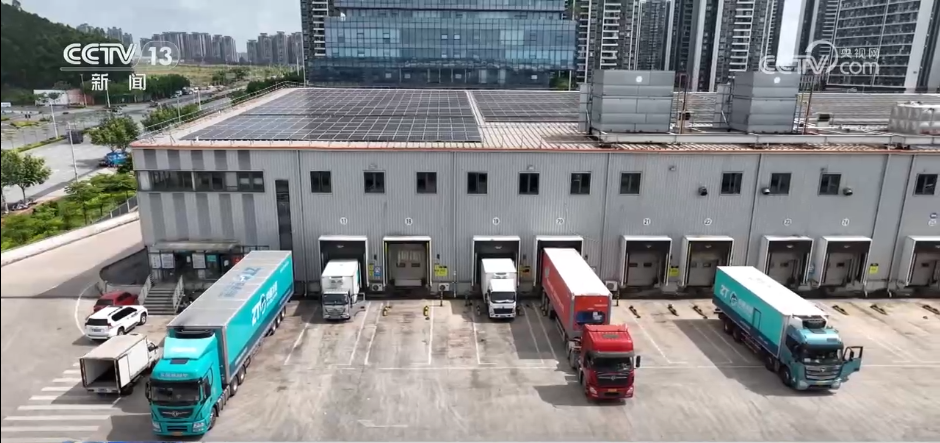
Core Insights - The express delivery market in China has been experiencing continuous growth in 2023, driven by the rise in online consumption and the industry's focus on enhancing service levels and promoting smart, green, and international development [1][2] Group 1: Market Performance - From January to August 2023, the total express delivery volume reached 128.2 billion pieces, marking a year-on-year increase of 17.8% [1] - The average daily express delivery volume during January and February was approximately 620 million pieces, surpassing the expected daily volume for the 2024 "Double 11" shopping festival [1] Group 2: E-commerce Influence - The sustained increase in express delivery volume is primarily attributed to the continuous growth of e-commerce, with online retail sales in China rising from 258.6 billion yuan in 2009 to 15.5 trillion yuan in 2024, a 59-fold increase over 15 years [3] - Over 80% of the express delivery volume currently comes from e-commerce, indicating a deep integration between the two sectors that is transforming production, lifestyle habits, and economic operations [5] Group 3: Regional Growth - The express delivery volume in western regions of China has shown remarkable growth, with provinces like Shaanxi and Ningxia experiencing increases of over 40%, and several others exceeding 30% [7] - The expansion of e-commerce has significantly broadened the sales radius, enhancing consumption's role in economic growth [7] Group 4: Cross-border Expansion - The cross-border e-commerce sector in China is accelerating its overseas expansion, with nearly 300 overseas distribution centers and warehouses established this year [11] - Logistics companies have opened 41 routes for China-Europe freight trains and maritime mail services, achieving delivery times of 2-3 days in markets across Europe, America, Asia, and the Middle East [11]
中国武夷跌2.17%,成交额2486.12万元,主力资金净流入197.34万元
Xin Lang Cai Jing· 2025-10-09 02:01
Core Viewpoint - China Wuyi's stock price has experienced a decline of 2.53% year-to-date, with a recent drop of 2.17% on October 9, 2023, indicating ongoing challenges in the market [1][2]. Financial Performance - For the first half of 2025, China Wuyi reported a revenue of 1.581 billion yuan, a significant decrease of 51.96% year-on-year, and a net profit attributable to shareholders of -92.996 million yuan, down 146.34% compared to the previous period [2]. - Cumulatively, since its A-share listing, China Wuyi has distributed a total of 705 million yuan in dividends, with 31.415 million yuan distributed over the last three years [3]. Shareholder Information - As of June 30, 2025, the number of shareholders for China Wuyi was 41,200, reflecting a decrease of 6.63% from the previous period, while the average number of circulating shares per person increased by 7.10% to 38,154 shares [2]. - Among the top ten circulating shareholders, the Southern CSI Real Estate ETF ranked as the fourth largest with 10.0061 million shares, an increase of 334,200 shares from the previous period [3]. Market Activity - On October 9, 2023, China Wuyi's stock traded at 2.70 yuan per share, with a total transaction volume of 24.8612 million yuan and a turnover rate of 0.58% [1]. - The net inflow of main funds was 1.9734 million yuan, with large orders accounting for 28.95% of purchases and 21.01% of sales [1].

2025年全球跨境支付服务行业洞察报告
艾瑞咨询· 2025-10-09 00:06
Core Insights - The global cross-border e-commerce market is continuously expanding, with a steady increase in the share of goods trade, and China remains a dominant player in the global cross-border e-commerce landscape, reinforcing an export-oriented structure [1][11][17]. Global Cross-Border Trade Market - From 2020 to 2024, global import and export trade is expected to achieve an average annual compound growth rate of approximately 8%, driven by service trade, which is becoming a core force in global trade expansion [2][7]. - Emerging economies, particularly in Asia and Oceania, are leading growth, while developed economies are facing low or zero growth by 2024 [2]. China Cross-Border Trade Market - China's total import and export trade is projected to grow at an average annual compound growth rate of about 8% from 2020 to 2024, maintaining a stable global trade share of around 11% [7]. - The diversification of export markets is evident, with significant growth in Asia, Europe, and North America, despite ongoing trade tensions with the U.S. [7]. Global Cross-Border E-Commerce Market - The global cross-border e-commerce market is expected to grow at a compound annual growth rate of 17% from 2020 to 2024, driven by consumer demand for diverse products and the digital transformation of traditional trade [11][17]. - Social e-commerce is rapidly rising, reshaping user acquisition paths and decision-making processes [11]. Global Cross-Border Payment Market - The global cross-border payment market is projected to grow from approximately $141.1 trillion to nearly $194.6 trillion between 2020 and 2024, with personal cross-border payments experiencing a growth rate exceeding 30% [26]. - The shift towards consumer-centric payment solutions is expected to drive the evolution of the cross-border payment industry [26]. Cross-Border Third-Party Payment Services - Cross-border third-party payment service providers are gaining prominence due to their efficiency, flexibility, and ability to meet the high-frequency transaction needs of cross-border e-commerce sellers [28][29]. - The market for cross-border third-party collection services is anticipated to grow from nearly $600 billion in 2024 to over $1 trillion by 2029, driven by the diversification of trade participants [33]. Competitive Landscape - The cross-border third-party payment service market is showing signs of increasing concentration, with leading firms leveraging technology and scale to enhance payment efficiency and security [38]. - The ability to provide modular and customizable payment solutions is becoming a key competitive advantage for payment service providers [39]. Emerging Market Opportunities - The expansion of cross-border e-commerce into emerging markets such as Southeast Asia, Latin America, and Africa presents both opportunities and challenges, necessitating enhanced local payment capabilities [47][51]. - Key countries to watch include Singapore, Indonesia, Thailand, Brazil, Mexico, Saudi Arabia, UAE, Nigeria, and South Africa [49]. Integrated Payment Solutions - Cross-border payment service providers are extending their value proposition through integrated solutions that include tax compliance and operational support, thereby lowering the operational barriers for merchants [52].

传邮万里通天下 服务城乡惠民生
Ren Min Ri Bao· 2025-10-08 22:11
Core Viewpoint - The postal industry plays a crucial role in national public services and modern circulation systems, significantly contributing to economic and social development, with a focus on high-quality growth and enhanced connectivity [1][2]. Group 1: Industry Achievements - The postal sector has achieved remarkable accomplishments under the leadership of the central government, emphasizing new development concepts and high-quality growth [1]. - The express delivery business volume in China surpassed 1 trillion items this year, 35 days earlier than in 2024, showcasing the industry's support for consumption upgrades and economic growth [2]. Group 2: Service Quality and Consumer Satisfaction - The quality of postal and express services has improved, with domestic express service timeliness, accuracy, and stability ranking among the world's best, and a complaint rate of only 0.00002 [2]. - The satisfaction rate for express services in major cities has increased, alongside a rise in the 72-hour delivery rate [2]. Group 3: Safety and Environmental Initiatives - The industry is transitioning to green production methods, with new regulations emphasizing eco-friendly packaging and the construction of green facilities [3]. - The annual photovoltaic power generation in the industry exceeds 200 million kilowatt-hours, and over 95% of e-commerce packages no longer require secondary packaging [3]. Group 4: Infrastructure and Connectivity - The postal industry is enhancing its infrastructure, particularly in rural and western regions, to support the transfer of industries from the east and promote regional coordination [3]. - Efforts are being made to improve international delivery services and support cross-border e-commerce through various logistics models [3]. Group 5: Cost Reduction and Industry Collaboration - The industry is developing a new model of "delivery hubs + industrial clusters" to attract related industries and promote collaborative development [4]. - Various service models, including factory logistics and reverse logistics, are being promoted to integrate production services with the supply chain [4]. Group 6: Technological Advancements - The industry is focusing on integrating artificial intelligence to enhance operational efficiency and promote the transition to smart logistics [4]. - Upgrades in sorting equipment and transportation tools are being accelerated to support the development of comprehensive logistics service systems [4]. Group 7: Universal Service Enhancement - Strengthening the universal postal service network to improve accessibility and equity in service delivery is a priority [5]. - Continuous monitoring and enforcement of postal service standards are being implemented to address consumer complaints and ensure fair market practices [5].
在白沟,这里有北方商埠的流量密码|十月行记
经济观察报· 2025-10-08 04:20
Core Viewpoint - The article highlights the transformation of Baigou from a traditional trading hub to a global e-commerce powerhouse, emphasizing its significant growth in the bag industry and the integration of digital commerce into its business model [31][32]. Group 1: Historical Context and Evolution - Baigou, located in the northern part of Xiong'an New Area, has a rich history as a significant trading port, dating back to the Song and Liao dynasties, which laid the foundation for its commercial culture [5][9]. - The local bag industry began in the 1980s with street vendors, evolving from small-scale operations to a modern industrial base, now producing nearly 50 billion yuan in annual output [12][13]. Group 2: Current Industry Landscape - Baigou is now one of China's largest bag production and sales bases, with over 40,000 e-commerce entities and nearly 80,000 employees, showcasing a complete industrial chain [13][7]. - The town handles an average of 1.2 million express deliveries daily, reflecting its transition from a traditional market to a digital trade hub [7]. Group 3: E-commerce and Digital Transformation - The rise of e-commerce has significantly impacted Baigou, with local businesses adapting to online sales through platforms like live streaming and social media, marking a shift from traditional sales methods [15][16]. - Baigou's e-commerce ecosystem has developed a complete closed loop, including associations for e-commerce and live streaming, fostering a collaborative environment for businesses [17]. Group 4: Cross-border E-commerce Growth - Cross-border e-commerce has emerged as a new growth point for Baigou, with exports reaching 199 countries and regions, supported by the establishment of a cross-border e-commerce industrial park [19][20]. - The local government is actively promoting e-commerce development through financial support and training programs, facilitating the transition of traditional merchants to digital platforms [21][22]. Group 5: Future Development and Infrastructure - Baigou is undergoing a transformation into a comprehensive consumption experience center, integrating various business functions and enhancing its appeal as a tourist destination [24][26]. - Infrastructure improvements, such as the upcoming R1 line rapid transit, will further integrate Baigou into the Beijing-Tianjin-Hebei economic region, enhancing its logistical capabilities [30].

十月行记|在白沟,这里有北方商埠的流量密码
Jing Ji Guan Cha Bao· 2025-10-08 02:23
Core Insights - The article highlights the transformation of Baigou into a global hub for luggage production and e-commerce, showcasing its historical significance and modern commercial evolution [1][2][5][19]. Group 1: Historical Context - Baigou has a rich commercial history, originally serving as a vital water and land port, facilitating trade since the Song and Liao dynasties [2]. - The town's commercial legacy continues to thrive, with local residents sharing stories of market changes and adaptations over generations [4][3]. Group 2: Economic Impact - Baigou's annual luggage production value reaches nearly 50 billion yuan, with products exported to 199 countries and regions, and an average of 1.2 million express deliveries daily [1][6]. - The town hosts over 40,000 e-commerce entities and employs nearly 80,000 people, forming a complete luggage industry chain [6]. Group 3: E-commerce Development - The rise of e-commerce has significantly impacted Baigou, with traditional markets adapting to online sales, including live streaming and micro-businesses [8][9]. - Baigou's e-commerce ecosystem has developed a complete closed loop, including various industry associations and specialized e-commerce parks [9][12]. Group 4: Supply Chain and Production - The success of Baigou's luggage industry is attributed to its flexible supply chain and quick market responsiveness, allowing rapid design-to-production cycles [7][14]. - Local businesses have shifted to a model of small-batch production, enabling quick adjustments based on market feedback [14]. Group 5: Future Prospects - Baigou is evolving into a comprehensive consumption experience center, integrating shopping, cultural tourism, and business services [15][16]. - The town is enhancing its digital infrastructure, with plans for a new rapid transit line to improve connectivity with the Beijing-Tianjin-Hebei region [21][20]. - The local government supports e-commerce development through funding and training initiatives, fostering a conducive environment for traditional merchants to transition to digital platforms [12].
什么是跨境电商概念,涵盖哪些产业链
Sou Hu Cai Jing· 2025-10-08 01:42
此外,下游还衍生出一系列配套服务,如跨境营销推广、本地化客服、退换货处理以及数据合规咨询 等。这些服务共同提升了整体交易体验,增强了买卖双方的信任。 对投资者而言,理解这一模式不仅有助于把握数字经济下的全球化机遇,也能更清晰地识别产业链中不 同环节的成长潜力。由于该领域融合了信息技术、供应链管理与国际贸易,其发展受政策环境、汇率波 动及国际关系等多重因素影响,投资时需综合评估风险与长期趋势。 首先是上游的商品供应端,包括制造商和品牌商,他们负责提供具备竞争力的产品。这些产品往往需要 符合目标市场的质量标准与消费偏好。紧随其后的是中游的电商平台运营方,它们搭建交易桥梁,提供 技术支持、流量导入以及交易保障服务,帮助卖家触达更广泛的国际客户群体。 在交易达成后,跨境物流成为关键支撑。专业的国际仓储、运输及清关服务商协同运作,确保商品高 效、合规地跨越国境。与此同时,支付结算系统也需满足多币种、低延迟、高安全性的要求,以保障资 金流转顺畅。 近年来,随着互联网技术的发展和全球消费习惯的转变,一种新型贸易模式逐渐走入大众视野。这种模 式打破了传统贸易的地域限制,让国内商家能够直接将商品销售给海外消费者,同时也为境外优 ...
莎莎国际(00178) - 截至2025年9月30日止第二季度未经审核之最新销售数据
2025-10-06 09:06
香港交易及結算所有限公司及香港聯合交易所有限公司對本公告的內容概不負責,對其準確性或完 整性亦不發表任何聲明,並明確表示,概不對因本公告全部或任何部份內容而產生或因倚賴該等內 容而引致之任何損失承擔任何責任。 SA SA INTERNATIONAL HOLDINGS LIMITED 莎莎國際控股有限公司 ( 於開曼群島註冊成立之有限公司 ) (股份代號:178) 截至 2025 年 9 月 30 日止 第二季度未經審核之最新銷售數據 莎莎國際控股有限公司(「公司」) 董事會公佈本公司及其附屬公司(「集團」)由2025年7月 1日至9月30日止第二季度(「第二季」或「期內」)未經審核之最新銷售數據。 集團持續經營業務 | 營業額 | 2025/26 | 2024/25 | 按年變動 | | --- | --- | --- | --- | | (百萬港元) | 財政年度第二季 | 財政年度第二季 | (%) | | 線下業務 | | | | | 香港及澳門 | 737.5 | 670.0 | +10.1% | | 東南亞 | 88.8 | 85.6 | +3.7% | | | 826.3 | 755.6 | +9 ...