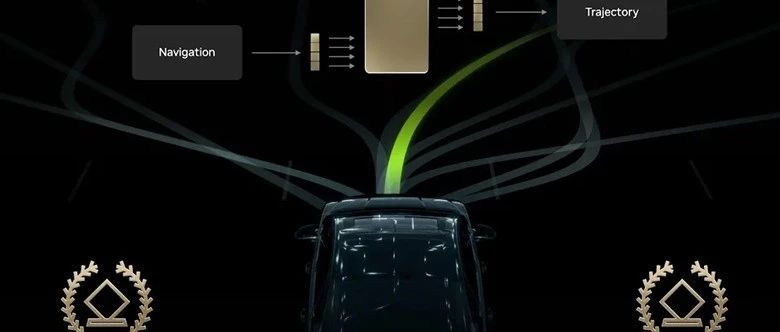
端到端自动驾驶

Search documents
自动驾驶黄埔军校,一个死磕技术的地方~
自动驾驶之心· 2025-07-06 12:30
Core Viewpoint - The article discusses the transition of autonomous driving technology from Level 2/3 (assisted driving) to Level 4/5 (fully autonomous driving), highlighting the challenges and opportunities in the industry as well as the evolving skill requirements for professionals in the field [2]. Industry Trends - The shift towards high-level autonomous driving is creating a competitive landscape where traditional sensor-based approaches, such as LiDAR, are being challenged by cost-effective vision-based solutions like those from Tesla [2]. - The demand for skills in reinforcement learning and advanced perception algorithms is increasing, leading to a sense of urgency among professionals to upgrade their capabilities [2]. Talent Market Dynamics - The article notes a growing anxiety among seasoned professionals as they face the need to adapt to new technologies and methodologies, while newcomers struggle with the overwhelming number of career paths available in the autonomous driving sector [2]. - The reduction in costs for LiDAR technology, exemplified by Hesai Technology's price drop to $200 and BYD's 70% price reduction, indicates a shift in the market that requires continuous learning and adaptation from industry professionals [2]. Community and Learning Resources - The establishment of the "Autonomous Driving Heart Knowledge Planet" aims to create a comprehensive learning community for professionals, offering resources and networking opportunities to help individuals navigate the rapidly changing landscape of autonomous driving technology [7]. - The community has attracted nearly 4,000 members and over 100 industry experts, providing a platform for knowledge sharing and career advancement [7]. Technical Focus Areas - The article outlines several key technical areas within autonomous driving, including end-to-end driving systems, perception algorithms, and the integration of AI models for improved performance [10][11]. - It emphasizes the importance of understanding various subfields such as multi-sensor fusion, high-definition mapping, and AI model deployment, which are critical for the development of autonomous driving technologies [7].

从25年顶会论文方向看后期研究热点是怎么样的?
自动驾驶之心· 2025-07-06 08:44
Core Insights - The article highlights the key research directions in computer vision and autonomous driving as presented at major conferences CVPR and ICCV, focusing on four main areas: general computer vision, autonomous driving, embodied intelligence, and 3D vision [2][3]. Group 1: Research Directions - In the field of computer vision and image processing, the main research topics include diffusion models, image quality assessment, semi-supervised learning, zero-shot learning, and open-world detection [3]. - Autonomous driving research is concentrated on end-to-end systems, closed-loop simulation, 3D ground segmentation (3DGS), multimodal large models, diffusion models, world models, and trajectory prediction [3]. - Embodied intelligence focuses on visual language navigation (VLA), zero-shot learning, robotic manipulation, end-to-end systems, sim-to-real transfer, and dexterous grasping [3]. - The 3D vision domain emphasizes point cloud completion, single-view reconstruction, 3D ground segmentation (3DGS), 3D matching, video compression, and Neural Radiance Fields (NeRF) [3]. Group 2: Research Support and Collaboration - The article offers support for various research needs in autonomous driving, including large models, VLA, end-to-end autonomous driving, 3DGS, BEV perception, target tracking, and multi-sensor fusion [4]. - In the embodied intelligence area, support is provided for VLA, visual language navigation, end-to-end systems, reinforcement learning, diffusion policy, sim-to-real, embodied interaction, and robotic decision-making [4]. - For 3D vision, the focus is on point cloud processing, 3DGS, and SLAM [4]. - General computer vision support includes diffusion models, image quality assessment, semi-supervised learning, and zero-shot learning [4].

本来决定去具身,现在有点犹豫了。。。
自动驾驶之心· 2025-07-05 09:12
Core Insights - The article discusses the evolving landscape of embodied intelligence, highlighting its transition from a period of hype to a more measured approach as the technology matures and is not yet at a productivity stage [2]. Group 1: Industry Trends - Embodied intelligence has gained significant attention over the past few years, but the industry is now recognizing that it is still in the early stages of development [2]. - There is a growing demand for skills in multi-sensor fusion and robotics, particularly in areas like SLAM and ROS, which are crucial for engaging with embodied intelligence [3][4]. - Many companies in the robotics sector are rapidly developing, with numerous startups receiving substantial funding, indicating a positive outlook for the industry in the coming years [3][4]. Group 2: Job Market and Skills Development - The job market for algorithm positions is competitive, with a focus on cutting-edge technologies such as end-to-end models, VLA, and reinforcement learning [3]. - Candidates with a background in robotics and a solid understanding of the latest technologies are likely to find opportunities, especially as traditional robotics remains a primary product line [4]. - The article encourages individuals to enhance their technical skills in robotics and embodied intelligence to remain competitive in the job market [3][4]. Group 3: Community and Resources - The article promotes a community platform that offers resources for learning about autonomous driving and embodied intelligence, including video courses and job postings [5]. - The community aims to gather a large number of professionals and students interested in smart driving and embodied intelligence, fostering collaboration and knowledge sharing [5]. - The platform provides access to the latest industry trends, technical discussions, and job opportunities, making it a valuable resource for those looking to enter or advance in the field [5].
今年,传统规划控制怎么找工作?
自动驾驶之心· 2025-07-02 13:54
Core Viewpoint - The article emphasizes the evolving landscape of autonomous driving, highlighting the integration of traditional planning and control with end-to-end systems, and the importance of adapting to industry trends for job seekers in this field [2][4][29]. Group 1: Industry Trends - The shift towards end-to-end and VLA (Vision-Language Alignment) systems is impacting traditional planning and control roles, which are still essential for safety-critical applications like L4 autonomous driving [2][4][29]. - There is a growing emphasis on combining rule-based algorithms with end-to-end approaches in job interviews, indicating a need for candidates to be proficient in both areas [3][4]. Group 2: Educational Offerings - The company has launched specialized courses aimed at addressing real-world challenges in autonomous driving planning and control, focusing on practical applications and interview preparation [5][7][10]. - The courses are designed to provide hands-on experience with industry-relevant projects, enhancing participants' resumes and job prospects [8][10][12]. Group 3: Course Structure - The curriculum covers foundational algorithms, decision-making frameworks, and advanced topics such as contingency planning and interactive planning, ensuring a comprehensive understanding of the field [20][21][24][26][29]. - The course also includes interview coaching, resume enhancement, and personalized guidance from industry experts, aimed at increasing participants' employability [31][34][36]. Group 4: Target Audience - The courses are tailored for individuals with a background in vehicle engineering, automation, computer science, and related fields, as well as those looking to transition into autonomous driving roles [37][39]. - Participants are expected to have a basic understanding of programming and relevant mathematical concepts to fully benefit from the training [38][39].
不用给理想入选ICCV高评价, 牛的是理想的工作, 不是ICCV
理想TOP2· 2025-06-29 15:06
Core Viewpoint - The article discusses the unique characteristics of the AI academic community compared to other disciplines, highlighting the rapid growth and the implications for the quality and significance of research papers submitted to top conferences [5][7][8]. Group 1: Characteristics of AI Academic Community - AI conferences are more important than journals due to the fast-paced development of AI, which makes the lengthy journal review process inadequate [5]. - The number of submissions and acceptances to top AI conferences has significantly increased over the past decade, with acceptance rates declining, indicating a surge in competition [5][7]. - The rapid increase in submissions has led to a shortage of qualified reviewers, resulting in a decline in the quality of accepted papers [8]. Group 2: Implications for Research Quality - The increase in accepted papers does not guarantee high-quality research, as many accepted papers may lack substantial contributions [8]. - The job market for AI researchers is becoming increasingly competitive, with the demand for high-quality publications rising faster than the availability of quality positions [8]. Group 3: Company-Specific Insights - Li Auto's recent achievement of having multiple papers accepted at ICCV is used as a promotional tool to showcase its advancements in assisted driving technology [9]. - The original innovation level of Li Auto's VLA is compared to DeepSeek's MoE level, indicating that few Chinese companies can achieve such a high level of innovation [11][12]. - Li Auto's approach to autonomous driving has evolved from following Tesla to developing its unique systems, particularly in the integration of fast and slow systems in its VLM [12][13].


华为车BU招聘(端到端/感知模型/模型优化等)!岗位多多~
自动驾驶之心· 2025-06-24 07:21
Core Viewpoint - The article emphasizes the rapid evolution and commercialization of autonomous driving technologies, highlighting the importance of community engagement and knowledge sharing in this field [9][14][19]. Group 1: Job Opportunities and Community Engagement - Huawei is actively recruiting for various positions in its autonomous driving division, including roles focused on end-to-end model algorithms, perception models, and efficiency optimization [1][2]. - The "Autonomous Driving Heart Knowledge Planet" serves as a platform for technical exchange, targeting students and professionals in the autonomous driving and AI sectors, and has established connections with numerous industry companies for job referrals [7][14][15]. Group 2: Technological Trends and Future Directions - The article outlines that by 2025, the focus will be on advanced technologies such as visual large language models (VLM), end-to-end trajectory prediction, and 3D generative simulations, indicating a shift towards more integrated and intelligent systems in autonomous driving [9][22]. - The community has developed over 30 learning pathways covering various subfields of autonomous driving, including perception, mapping, and AI model deployment, which are crucial for industry professionals [19][21]. Group 3: Educational Resources and Content - The knowledge platform offers exclusive rights to members, including access to academic advancements, professional Q&A sessions, and discounts on courses, fostering a comprehensive learning environment [17][19]. - Regular webinars featuring experts from top conferences and companies are organized to discuss practical applications and research in autonomous driving, enhancing the learning experience for participants [21][22].
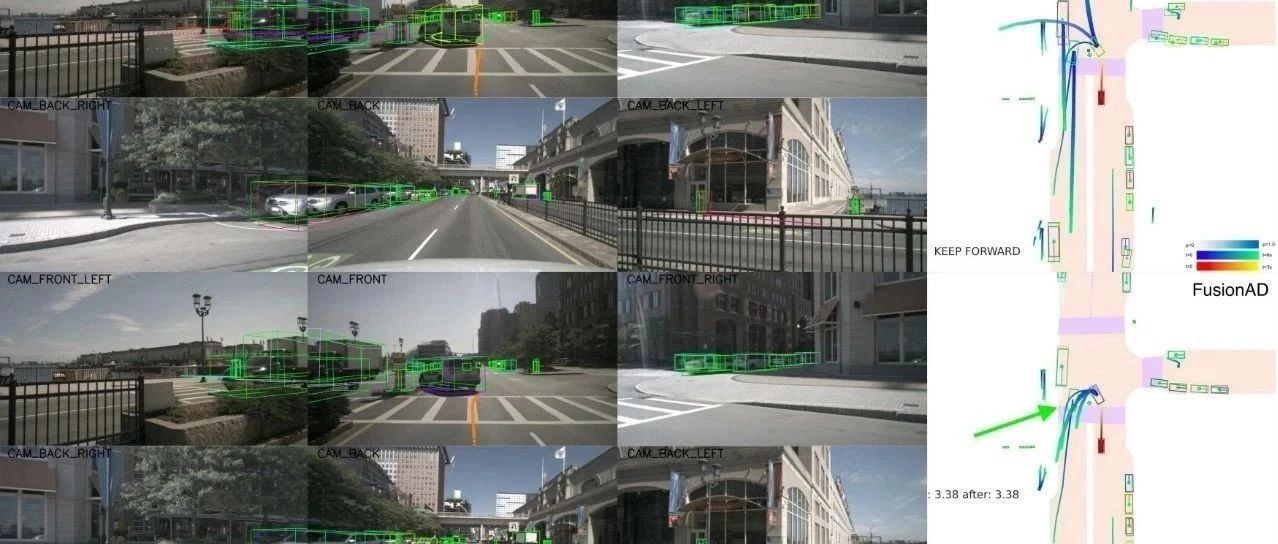
端到端系列!SpareDrive:基于稀疏场景表示的端到端自动驾驶~
自动驾驶之心· 2025-06-23 11:34
Core Viewpoint - The article discusses the limitations of existing end-to-end methods in autonomous driving, particularly the computational intensity of BEV paradigms and the inefficiency of sequential prediction and planning approaches. It proposes a new Sparse paradigm that allows for parallel processing of prediction and planning tasks [2][5]. Group 1: SparseDrive Methodology - SparseDrive adopts the core ideas from the previous Horizon Sparse series, focusing on sparse scene representation for autonomous driving [3]. - The proposed method modifies the similarities between motion prediction and planning, introducing a hierarchical planning selection strategy [5]. - The architecture includes features such as symmetric sparse perception and a parallel motion planner [5]. Group 2: Training and Performance - The training loss function for SparseDrive is defined as a combination of detection, mapping, motion, planning, and depth losses [9]. - Performance comparisons show that SparseDrive-S achieves a mean Average Precision (mAP) of 0.418, while SparseDrive-B reaches 0.496, outperforming other methods like UniAD [11]. - In motion prediction and planning, SparseDrive-S and SparseDrive-B demonstrate significant improvements in metrics such as minADE and minFDE compared to traditional methods [18]. Group 3: Efficiency Comparison - SparseDrive exhibits superior training and inference efficiency, requiring only 15.2 GB of GPU memory and achieving 9.0 FPS during inference, compared to UniAD's 50.0 GB and 1.8 FPS [20]. - The method's reduced computational requirements make it more accessible for real-time applications in autonomous driving [20]. Group 4: Course and Learning Opportunities - The article promotes a course focused on end-to-end autonomous driving algorithms, covering foundational knowledge, practical implementations, and various algorithmic approaches [29][41]. - The course aims to equip participants with the skills necessary to understand and implement end-to-end solutions in the autonomous driving industry [54][56].
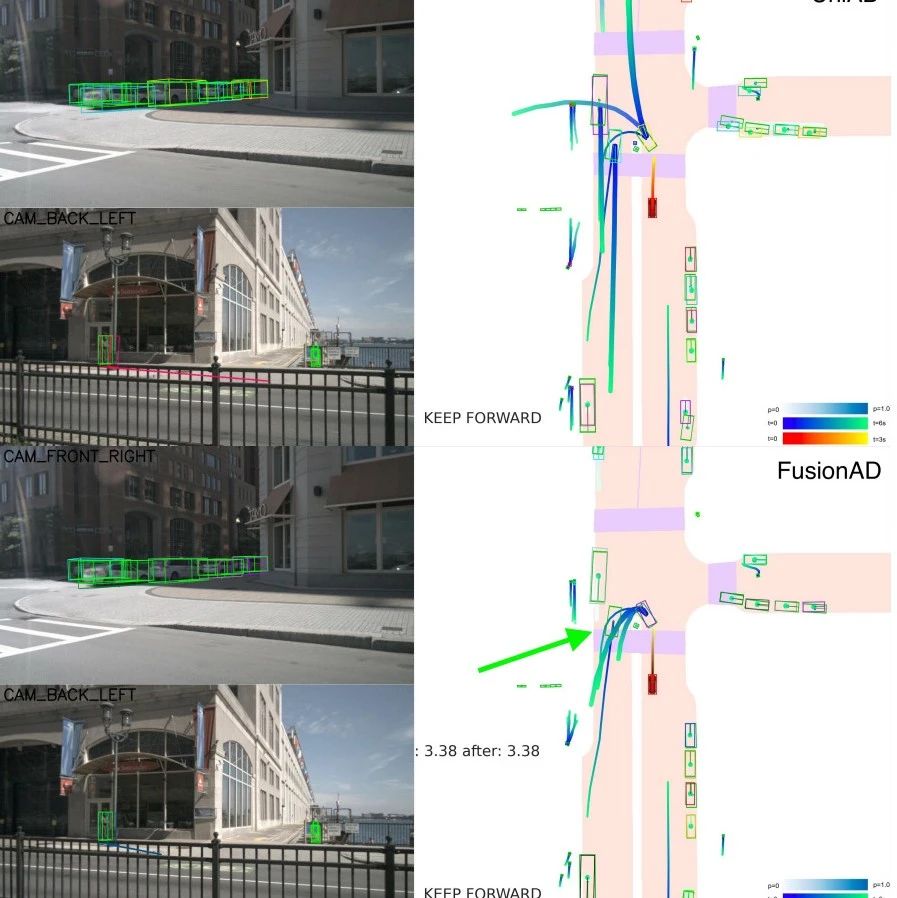
自动驾驶端到端VLA落地,算法如何设计?
自动驾驶之心· 2025-06-22 14:09
Core Insights - The article discusses the rapid advancements in end-to-end autonomous driving, particularly focusing on Vision-Language-Action (VLA) models and their applications in the industry [2][3]. Group 1: VLA Model Developments - The introduction of AutoVLA, a new VLA model that integrates reasoning and action generation for end-to-end autonomous driving, shows promising results in semantic reasoning and trajectory planning [3][4]. - ReCogDrive, another VLA model, addresses performance issues in rare and long-tail scenarios by utilizing a three-stage training framework that combines visual language models with diffusion planners [7][9]. - Impromptu VLA introduces a dataset aimed at improving VLA models' performance in unstructured extreme conditions, demonstrating significant performance improvements in established benchmarks [14][24]. Group 2: Experimental Results - AutoVLA achieved competitive performance metrics in various scenarios, with the best-of-N method reaching a PDMS score of 92.12, indicating its effectiveness in planning and execution [5]. - ReCogDrive set a new state-of-the-art PDMS score of 89.6 on the NAVSIM benchmark, showcasing its robustness and safety in driving trajectories [9][10]. - The OpenDriveVLA model demonstrated superior results in open-loop trajectory planning and driving-related question-answering tasks, outperforming previous methods on the nuScenes dataset [28][32]. Group 3: Industry Trends - The article highlights a trend among major automotive manufacturers, such as Li Auto, Xiaomi, and XPeng, to invest heavily in VLA model research and development, indicating a competitive landscape in autonomous driving technology [2][3]. - The integration of large language models (LLMs) with VLA frameworks is becoming a focal point for enhancing decision-making capabilities in autonomous vehicles, as seen in models like ORION and VLM-RL [33][39].
商汤绝影世界模型负责人离职。。。
自动驾驶之心· 2025-06-21 13:15
Core Viewpoint - The article discusses the challenges and opportunities faced by SenseTime's autonomous driving division, particularly focusing on the competitive landscape and the importance of technological advancements in the industry. Group 1: Company Developments - The head of the world model development for SenseTime's autonomous driving division has left the company, which raises concerns about the future of their cloud technology system and the R-UniAD generative driving solution [2][3]. - SenseTime's autonomous driving division has successfully delivered a mid-tier solution based on the J6M model to GAC Trumpchi, but the mid-tier market is expected to undergo significant upgrades this year [4]. Group 2: Market Dynamics - The mid-tier market will see a shift from highway-based NOA (Navigation on Autopilot) to full urban NOA, which represents a major change in the competitive landscape [4]. - Leading companies are introducing lightweight urban NOA solutions based on high-tier algorithms, targeting chips with around 100 TOPS computing power, which are already being demonstrated to OEM clients [4]. Group 3: High-Tier Strategy - The key focus for SenseTime this year is the one-stage end-to-end solution, which has shown impressive performance and is a requirement for high-tier project tenders from OEMs [5]. - Collaborations with Dongfeng Motor aim for mass production and delivery of the UniAD one-stage end-to-end solution by Q4 2025, marking a critical opportunity for SenseTime to establish a foothold in the high-tier market [5][6]. Group 4: Competitive Landscape - SenseTime's ability to deliver a benchmark project in the high-tier segment is crucial for gaining credibility with OEMs and securing additional projects [6][7]. - The current window of opportunity for SenseTime in the high-tier market is limited, as many models capable of supporting high-tier software and hardware costs are being released this year [6][8].
CVPR'25端到端冠军方案!GTRS:可泛化多模态端到端轨迹规划(英伟达&复旦)
自动驾驶之心· 2025-06-19 10:47
今天自动驾驶之心为大家分享 英伟达、复旦大学 最新的工作! GTRS:可泛化的 多模式端到端轨迹规划! 如果您有相关工作需要分享,请在文末联系我们! 自动驾驶课程学习与技术交流群事宜,也欢迎添加小助理微信AIDriver004做进一 步咨询 >>点击进入→ 自动驾驶之心 『端到端自动驾驶』技术交流群 论文作者 | Zhenxin Li等 编辑 | 自动驾驶之心 论文链接:https://arxiv.org/abs/2506.06664 Github:https://github.com/NVlabs/GTRS NVIDIA技术博客:https://blogs.nvidia.com/blog/auto-research-cvpr-2025/?ncid=so-nvsh-677066 CVPR 2025 Autonomous Grand Challenge: https://opendrivelab.com/legacy/challenge2025/index.html 点击下方 卡片 ,关注" 自动驾驶之心 "公众号 戳我-> 领取 自动驾驶近15个 方向 学习 路线 端到端自动驾驶挑战赛背景 NAVSIM v2 ...