美国经济

Search documents
认真给大家聊一聊中国经济
Sou Hu Cai Jing· 2025-08-20 15:07
Economic Overview - The article discusses the prediction by US Treasury Secretary that the Chinese economy is on the verge of collapse due to the real estate sector's hard landing, but argues that this view is misguided [1][16] - Current issues in the Chinese economy include declining real estate, massive local debt, overcapacity, declining birth rates, and income inequality [1][16] Economic Fundamentals - China's economic fundamentals are strong, with the highest trade surplus and foreign exchange reserves globally, as well as the lowest central government debt ratio [1][16] - The total household savings in China is approximately 160 trillion yuan, with net savings around 80 trillion yuan, indicating a strong capacity to endure economic fluctuations [1][2] Real Estate Market - The real estate market in China has seen a decline for four years, with some areas experiencing a 50% drop in prices, but this has not led to a panic sell-off as seen in the US [4][5] - The stability in the Chinese real estate market is attributed to the high cash flow and savings of the population, which prevents a hard landing [17][18] Urbanization and Debt - China's rapid urbanization has led to a significant increase in local government debt, exceeding 100 trillion yuan, as cities expanded quickly to accommodate rural populations [12][13] - The government is now focusing on controlling new debt and revitalizing existing assets to manage this debt effectively [20][21] Policy Responses - The government is addressing issues such as local debt, overcapacity, and declining birth rates through various policies, including limiting urban expansion and promoting orderly exit of excess capacity [22][23] - Recent initiatives to boost birth rates include financial subsidies for families and free preschool education [23][24] Economic Transition - The article emphasizes that the challenges faced by the Chinese economy are a result of rapid development and that solutions will take time, with gradual improvements expected over the next few years [47][61] - The shift in resource allocation from manufacturing to consumer support is underway, indicating a transition in economic strategy [44][46] Comparison with the US - The US economy also faces significant challenges, but its strong monetary policy and the ability to print dollars provide a buffer against economic crises [50][52] - The article suggests that while both economies have their issues, China's economic fundamentals remain robust compared to the US, which may face greater internal instability [62][63]


金信期货日刊-20250820
Jin Xin Qi Huo· 2025-08-20 01:03
Group 1: Urea Futures - The urea futures price soared on August 19, with the main contract rising by 62 yuan, or 3.53%, to close at 1789 yuan. The surge was mainly due to the unexpectedly high tender offer for urea imports by India's IPL company [3]. - On the supply side, the daily output of the urea industry remained at a high level of 190,900 tons (a week - on - week increase of 50 tons on August 5), the total enterprise inventory climbed to 917,300 tons (a week - on - week increase of 58,500 tons on July 30), and the production enterprise operating rate was 84.93% (a week - on - week increase of 1.58%), indicating high supply elasticity [3]. - On the demand side, it showed the characteristics of "weak domestic demand and uncertain exports". The operating rate of compound fertilizer plants in North and Central China increased slowly, the raw material inventory could be used for about 7 days, and the purchasing willingness was low. Agricultural demand entered a seasonal off - season, and the grass - roots stocking willingness was lacking. Although the export port inspection policy was relaxed, the actual order conversion had not increased significantly [3]. - There are differences in the market regarding the subsequent trend. The bearish view believes that urea is in a pattern with support below and suppression above, and the abundant supply pattern remains unchanged, expecting a weakening oscillation. The cautiously optimistic group points out that the current price is not high, the room for continuous decline is limited, and although one should not be overly optimistic about the upside, the export theme may still ferment [3]. Group 2: Stock Index Futures - News: Li Qiang proposed to further improve the implementation efficiency of macro - policies and stabilize market expectations. Many securities brokerage business departments saw a peak in customer consultations [7]. - Operation: The short - term market will continue to oscillate upward at a high level [7]. Group 3: Gold - The July non - farm payrolls data was significantly lower than expected, especially the significant downward revision of the data for May and June, indicating that the US economy is not as strong as expected. The probability of an interest rate cut in September has increased, which is beneficial to gold. Currently, the weekly adjustment is relatively sufficient, and it is in a short - term small - range oscillation on a platform [11]. Group 4: Iron Ore - The fundamentals are relatively strong as steel mills' profitability has improved, leading to high pig iron production. Also, under the call against involution, the state of the black industrial chain is relatively healthy, showing a resonance upward trend [15][16]. - Technically, it continued to adjust today, and it should be treated as a high - level wide - range oscillation in the near future [15]. Group 5: Glass - The macro - environment has improved and is continuously strengthening under the recovery expectation. The supply - demand situation has slightly improved, but the recovery of terminal deep - processing orders is still weak. The recent market drive mainly comes from the domestic economy [19][20]. - Technically, the lower support is effective, and a low - buying strategy should be maintained [19]. Group 6: Methanol - Last week, the methanol port inventory continued to accumulate. Although the提货 in the mainstream storage areas in East China increased slightly due to a small amount of re - exports and ship departures, the stable supply of foreign vessels led to continuous inventory accumulation. It should be treated with a bearish and oscillating view [22].
小布什政府时期的经济顾问:因曲线倒挂 支持降息50个基点
Sou Hu Cai Jing· 2025-08-15 12:14
Group 1 - Economist Marc Sumerlin stated that the Federal Reserve's federal funds rate is "too high" and that a 50 basis point rate cut is feasible due to an inverted yield curve [1] - Sumerlin emphasized that the housing market is the weakest part of the U.S. economy [1] - He does not believe there is an issue with the size of the Federal Reserve's staff, but rather that the "setup is completely wrong" [1] Group 2 - Sumerlin mentioned that the problem lies in "redundancy" within the Federal Reserve [2] - He is noted to have been a former official during the George W. Bush administration and is reportedly being considered for the position of Federal Reserve Chair [2]
瑞银示警:美股要跌!现在就是标普年内高点,年底看6100点
Zhi Tong Cai Jing· 2025-08-13 14:06
Core Viewpoint - UBS has raised its S&P 500 index targets for the end of 2025 from 5500 to 6100 and for the end of 2026 from 6100 to 6800, reflecting better-than-expected health of the U.S. economy and corporate sector [1] Group 1: Economic Outlook - UBS indicates that the worst-case scenario regarding tariffs has not materialized, and confidence in fiscal support along with a weaker dollar has alleviated profit pressures [1] - The combination of U.S. economic growth and inflation may worsen, leading to reduced profit growth expectations and increased market volatility [1] - UBS expects a short-term market decline, potentially remaining below current levels until the end of 2025, followed by a significant rebound in the second half of 2026 [1] Group 2: Upside Risks - Surprises in earnings from technology and related companies could push the S&P 500 index to 7200 [2] - Companies affected by tariffs may maintain profit margins despite increased tariffs [2] - The impact of tariffs on U.S. inflation may be less than UBS currently anticipates [2] - Consumer spending continues despite a decline in real disposable income [2] - U.S. capital expenditures and industrial production may rebound due to domestic production repatriation, foreign direct investment, and new technology applications [2] - The Federal Reserve may adopt more accommodative policies in response to tariffs than UBS expects [2] - A weaker dollar and stronger global economic growth could exceed UBS's current expectations [2] Group 3: Downside Risks - Increased tariffs could trigger retaliatory tariffs [3] - Companies that previously hoarded labor may begin large-scale layoffs, harming consumer income and spending as excess savings deplete [3] - The Federal Reserve's rate cuts may be less than expected, negatively impacting market sentiment [3] - Rising import costs could lead to a significant decline in company profit margins from high levels [3] - Confidence in the positive growth impacts of the Inflation Reduction Act, industrial repatriation, and increased direct investment may diminish [3]
美国经济:核心通胀反弹,降息可能更晚
Zhao Yin Guo Ji· 2025-08-13 11:45
Inflation Trends - The U.S. July CPI growth rate slightly decreased to 0.20% month-on-month from 0.29% in June, primarily due to falling energy prices, while the year-on-year CPI growth remained at 2.7%[6] - Core CPI month-on-month growth increased from 0.23% in June to 0.32% in July, exceeding market expectations of 0.29%, with year-on-year growth rising from 2.9% to 3.1%[6] Market Expectations - Following the CPI data release, market expectations for a rate cut in September rose from 86% to 94%, with an anticipated total cut of 60 basis points for the year[1] - The Federal Reserve is expected to maintain interest rates in September, with potential cuts in October and December[1] Core Inflation Components - Core goods prices remained stable month-on-month, while core service prices saw a significant rebound, with core services month-on-month growth rising from 0.21% to 0.48%[6] - Rent, which accounts for nearly 35% of the CPI, saw a month-on-month increase of 0.27%, returning to pre-pandemic levels[6] Employment and Economic Outlook - Non-farm employment growth has recently declined, influenced by both demand slowdown and reduced immigrant labor supply, while the unemployment rate remains low historically[1] - The inflation rate is expected to rebound in August and September, with projections indicating a year-on-year CPI growth of 2.9% to 3%[6]
3%的GDP,是美国经济的真繁荣还是假热闹?
伍治坚证据主义· 2025-08-13 03:16
Core Viewpoint - The 3.0% annualized GDP growth in Q2 2025 appears strong but is misleading, as it is significantly influenced by a sharp decline in imports, which artificially inflates the GDP figure without indicating real domestic production and consumption growth [2][5]. Economic Indicators - The more reliable indicator of economic health, "Real final sales to private domestic purchasers," shows only a 1.2% growth in Q2 2025, down from 1.9% in Q1 2025, indicating underlying economic weakness despite the headline GDP figure [5][6]. - Alaska's economic performance, which often serves as an early indicator for the U.S. economy, shows consecutive declines in real GDP for 2023 and 2024 (-1.4% and -0.1% respectively), with a further slight decline of 0.4% in Q1 2025 [6][7]. Inflation and Employment - The U.S. CPI rose by 2.7% year-on-year in July 2025, with core CPI increasing by 3.1%, suggesting inflation is under control; however, the job market is cooling, with only 73,000 non-farm jobs added in July and an increase in the unemployment rate to 4.2% [7][10]. - Labor force participation has decreased to 62.2%, indicating potential long-term challenges in the employment sector [7]. Bond Market Signals - The yield curve remains inverted, with the 3-month Treasury yield exceeding the 10-year yield, typically signaling market expectations of an economic slowdown or recession [10][12]. - The total U.S. national debt has reached $36.2 trillion, constituting 121% of GDP, with interest payments consuming 10.7% of government spending, raising concerns about fiscal sustainability [12][13]. Stock Market and Sector Performance - Despite the cautious signals from the bond market, the stock market remains buoyant, with Apple reporting Q3 revenues of $94 billion and a 12% year-on-year increase in earnings per share, driven by the AI sector's strong performance [12][14]. - However, the overall performance of other industries remains lackluster, suggesting that the stock market's optimism may not be broadly supported across sectors [14]. Alternative Assets - Gold has gained popularity as a safe-haven asset, with central banks purchasing 166 tons in Q2 2025, and 95% of reserve managers expect to continue increasing their gold holdings [14][16]. - The market for stablecoins, which reached a valuation of $220 billion in April 2025, is also noteworthy, as it may disrupt traditional banking and international currency dynamics [14]. Conclusion - The apparent 3% GDP growth is more of a superficial achievement rather than a sign of robust recovery, with underlying economic indicators and early warning signs from Alaska suggesting potential challenges ahead [16][17].
瑞银认为美国股市在2025年下半年将呈现下跌
Sou Hu Cai Jing· 2025-08-11 13:07
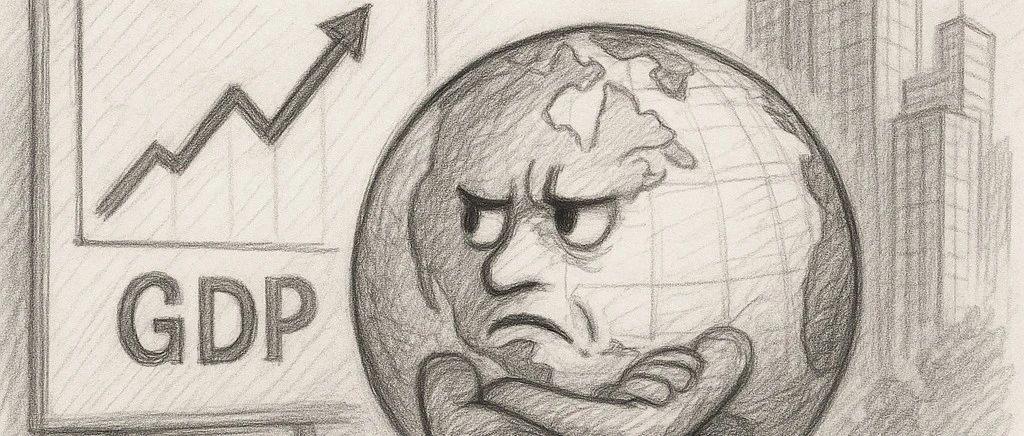
Core Viewpoint - UBS strategists predict a decline in the US stock market in the second half of 2025, with a target for the S&P 500 index at 6100 points by the end of 2025, lower than current levels [3] Economic Indicators - Recent economic data indicates a downward trend in the US economy, with signs of weakness in the job market [3] - The negative effects of President Trump's tariff policies are becoming more apparent, contributing to a more pronounced downward trend in the US economy [3] Federal Reserve and Market Response - Even if the Federal Reserve resumes interest rate cuts in the remaining months of 2025, the cautious approach of Chairman Powell and rising economic pressures may limit significant stock market gains, increasing the likelihood of declines [3] - Wall Street institutions also recognize potential downward pressure on the US stock market, though the nature of this decline—whether a moderate correction or a panic sell-off—remains to be seen [3] Market Risks - Current indicators show increasing risks in the US stock market, both in terms of index levels and investment concentration [3] - Investors are advised to exercise caution in managing their positions and avoid blindly chasing high valuations [3] Notable Investor Actions - Warren Buffett currently holds over $340 billion in cash-like assets, a historical high, signaling his warning to investors about current market risks [3] - Buffett's quote, "Only when the tide goes out do you discover who's been swimming naked," emphasizes the importance of being aware of underlying risks in the market [3]


就市论市|纳指续创新高 美股能否延续强势?
Sou Hu Cai Jing· 2025-08-11 08:35
Core Insights - Recent data indicates signs of weakening in the US economy, with new tariff policies set to impact economic growth and inflation [1] - The probability of a rate cut by the Federal Reserve in September is observed at 94.4%, suggesting potential monetary easing in response to economic pressures [1] - The US stock market experienced a volatile rebound, with the Nasdaq reaching a new historical high, raising questions about future performance amid tariff implementation and earnings reports [1] Economic Indicators - The new tariff pressures are expected to moderately elevate inflation, which may suppress economic vitality in the US [1] - There is an increasing pressure for economic slowdown, leading to expectations that the Federal Reserve may implement further rate cuts within the year [1] Market Outlook - The earnings season for US stocks is anticipated to be characterized by high-level fluctuations, with three key scenarios to monitor as the market reacts to new economic data and tariff impacts [1]
特朗普向美国法院发出严重警告,他说由于自己每天征收关税,数千亿美元正涌入美国,如果法庭裁定他的关税政策无效,那将会摧毁美国经济
Sou Hu Cai Jing· 2025-08-10 14:41
Core Viewpoint - Trump's assertion that tariffs are sending billions to the U.S. economy is misleading, as the burden of these tariffs falls primarily on American importers and consumers rather than foreign entities [2][6][10] Tariff Revenue and Economic Impact - In FY 2023, U.S. tariff revenue reached approximately $79.3 billion, nearly double the average before 2018, but this revenue is paid by U.S. importers and ultimately passed on to consumers [2] - Tariffs have been shown to protect certain domestic industries, such as a 50% increase in U.S. washing machine production post-tariff, but this has resulted in higher consumer prices, with washing machines costing an average of $86 more [6][8] Employment and Manufacturing - Despite claims of a manufacturing revival due to tariffs, U.S. manufacturing jobs actually decreased by nearly 40,000 in 2019, contradicting the narrative presented by Trump [4] - The high tariffs have led to retaliatory measures from trading partners, significantly reducing U.S. agricultural exports and resulting in historically high agricultural subsidy expenditures [6][8] Political Strategy - Trump's use of tariffs appears to be a political strategy, framing them as a means to extract money from foreign entities while simultaneously preparing to blame the judiciary if tariffs are overturned [8][10] - The narrative surrounding tariffs serves as a tool for political leverage, especially in the context of upcoming negotiations and elections [10] Public Perception and Consequences - The public may overlook the economic implications of tariffs, continuing to bear the costs at retail outlets while potentially losing jobs in export sectors [10][11]
重磅关税之下,美国经济“天没塌”,是经济学家错了吗?
Sou Hu Cai Jing· 2025-08-09 12:36
Core Viewpoint - The anticipated negative impact of tariffs on the U.S. economy has not yet materialized, leading to questions about the accuracy of economists' predictions regarding economic downturns due to tariffs [1][4][6]. Economic Impact of Tariffs - Economists predict that tariffs will ultimately be borne by consumers, leading to inflation and reduced consumer spending, which could result in a recession [3][4]. - Current economic indicators show signs of stagnation, with growth slowing and inflation rising, attributed to multiple factors rather than solely the tariffs [5][6]. Quantitative Analysis - The Yale Budget Lab forecasts a 0.5 percentage point reduction in U.S. economic growth due to tariffs, equating to a loss of approximately $150 billion, or $1,000 per household annually [6][7]. - Despite the tariffs, the U.S. economy remains relatively stable, with the stock market reaching new highs, partly due to advancements in artificial intelligence [9][10]. Market Dynamics - The impact of tariffs on the U.S. economy is mitigated by the country's diverse economy, where imports constitute only 11% of GDP, and the strength of the service sector [9][12]. - The overall effect of tariffs on inflation is evident, with prices for certain goods rising while others, like gasoline, have decreased due to global economic pressures [10][12]. Long-term Considerations - The full economic effects of tariffs will take time to manifest, and the situation may worsen as tariffs continue to be implemented [12][14]. - The challenges posed by tariffs extend beyond immediate economic losses, potentially undermining foundational aspects of U.S. growth such as trade, immigration, and innovation [13][14].