
脑机接口

Search documents
壹网壹创(300792) - 300792壹网壹创投资者关系管理信息20260308
2026-03-08 06:06
Group 1: Company Collaboration and Synergies - The merger between the company and Lianshi aims to achieve a "1+1>2" effect by integrating their strengths in AI-driven investment strategies and brand advertising, with both companies having annual spending in the tens of billions [2][3] - The collaboration is expected to enhance capabilities in SEO/GEO fields, leveraging Lianshi's AI investment system and the company's advertising strategies [2][3] - Both companies have a significant existing customer base, which can be mutually beneficial in acquiring new clients and enhancing competitive advantages [3] Group 2: Financial Performance and Growth Projections - The company anticipates a 50% growth in 2025, driven by factors such as improved gross margins through AI tools, contributions from new brands like Colgate and Watsons, and increased revenue from AI vertical applications [3][4] - For 2026, the company plans to maintain the growth momentum from 2025, focusing on light asset operations and enhancing profitability through AI empowerment [4][5] Group 3: Product and Service Diversification - The company is expanding its service offerings to include emerging sectors like brain-computer interfaces and robotics, leveraging its experience in fast-moving consumer goods [4][5] - There is a strategic focus on enhancing content generation capabilities for platforms like Douyin to drive brand growth [5] Group 4: Partnership Dynamics - The number of collaborative partners with Alibaba has decreased from ten to four, yet the share of cooperation remains unchanged, indicating a consolidation of partnerships while maintaining depth in existing collaborations [5]

电力设备与新能源行业3月第1周周报:两会关注未来能源发展,比亚迪发布闪充技术-20260308
Bank of China Securities· 2026-03-08 04:09
Investment Rating - The report maintains an "Outperform" rating for the electric equipment and new energy industry [1]. Core Insights - The report highlights that global sales of new energy vehicles are expected to grow rapidly, driving demand for batteries and materials by 2026. It emphasizes the importance of monitoring material price fluctuations, particularly due to recent export bans on lithium concentrate from Zimbabwe, which have led to increased lithium carbonate prices [1]. - In the photovoltaic sector, the report identifies "anti-involution" and "space photovoltaic" as the two main investment themes for 2026, with a focus on the benefits from increased satellite launches [1]. - The report notes a decline in prices for silicon materials and silicon wafers, which is favorable for leading manufacturers in the module segment to realize profits, with expectations of stabilization in module prices by 2026 [1]. - The wind power sector is expected to benefit from rising natural gas prices and increased demand for offshore wind in Europe, suggesting a focus on wind turbine and offshore wind directions [1]. - The energy storage sector remains in high demand, with recommendations to focus on energy storage cells and large-scale integration plants [1]. - The hydrogen energy sector is anticipated to see growth in green hydrogen demand, with a focus on downstream applications and the evolving relationship between green electricity, green hydrogen, and green fuels [1]. - The report also mentions the potential of nuclear fusion as a long-term energy development direction, recommending attention to core suppliers in this area [1]. Summary by Sections New Energy Vehicles - In February 2026, SAIC Group achieved sales of 269,400 vehicles, a year-on-year increase of 6.8%, while BYD's sales decreased by 41.1% [2][27]. - BYD launched its second-generation blade battery and fast-charging technology, allowing charging from 10% to 70% in just 5 minutes [27]. Battery Materials - The report notes significant fluctuations in battery material prices, particularly lithium carbonate, which has seen a recent increase due to supply chain disruptions [1][22]. Photovoltaic Market - The report indicates that silicon material prices have been declining, with some manufacturers negotiating lower prices due to market weakness [14][15]. - Module prices are expected to stabilize, with leading manufacturers pushing for price increases due to high-power component demand [1][18]. Wind Power - The report suggests that the urgency for energy independence in Europe will likely increase demand for offshore wind energy [1]. Energy Storage - The report highlights that the energy storage market remains robust, with energy storage cell prices stabilizing and high production capacity expected to continue [23][24]. Hydrogen Energy - The report emphasizes the importance of developing the green fuel industry to replace oil and enhance energy security, with a focus on hydrogen applications [27]. Company Announcements - Daikin Heavy Industries expects a net profit of 1.103 billion yuan in 2025, a year-on-year increase of 132.82% [29]. - Purtai plans to invest 3.5 billion yuan in a perovskite battery equipment project and 1.5 billion yuan in semiconductor equipment [29].

华创医药周观点:电生理行业近况更新 2026/03/07
华创医药组公众平台· 2026-03-07 14:48
Market Overview - The CITIC Medical Index decreased by 2.52%, underperforming the CSI 300 Index by 1.45 percentage points, ranking 14th among 30 primary industries [9] - The top ten stocks by increase this week include Yahu Medicine-U, New Harmony, Zhejiang Medicine, and others, with increases ranging from 10.42% to 15.24% [9] Industry Insights and Investment Themes - **Innovative Drugs**: China has seen a high-quality growth in the number of therapies under research, significantly outpacing the global average. The total overseas licensing amount for domestic new drugs surpassed $10 billion for the first time in 2021, indicating a robust market share for Chinese innovative drugs [12] - **Medical Devices**: 1. The pressure from centralized procurement of high-value consumables is easing, allowing for continued development and value reassessment in the industry [12] 2. The scale of medical equipment bidding in China is showing signs of recovery, with a revenue inflection point expected by Q3 2025 [12] 3. The IVD sector is experiencing a gradual clearance of policy disruptions, enhancing local market penetration [12] 4. Leading domestic manufacturers of low-value consumables are upgrading their product lines to create new growth momentum [12] 5. Emerging technologies like AI in healthcare and brain-machine interfaces are expected to drive industry transformation [12] - **Pharmaceutical Supply Chain (CXO + APIs)**: Domestic CXO companies are seeing a good performance in front-end orders, which is expected to gradually translate into earnings, heralding a new wave of innovation in the pharmaceutical supply chain [12] - **Life Sciences Services**: The industry demand is recovering, with domestic substitution deepening and overseas expansion continuing, leading to a positive revenue outlook starting from Q4 2024 [12] - **Traditional Chinese Medicine**: The market for essential medicines is expected to see significant growth, especially for unique essential medicines, while state-owned enterprise reforms are anticipated to enhance fundamentals [12] - **Pharmacies**: The sector is expected to benefit from prescription outflow and market optimization, with a notable shift towards online and offline integration [12] - **Medical Services**: The negative impact of medical reform policies is nearing its end, with the sector expected to return to a growth trajectory as the macroeconomic environment improves [12] - **Blood Products**: The approval of plasma stations is becoming more lenient, opening up further growth opportunities in the industry [12] Electrophysiology Industry Update - The demand for electrophysiology devices is expected to grow due to an increase in patients with rapid arrhythmias, driven by global aging [16] - The market for electrophysiology devices is projected to expand significantly, with the global market expected to reach $7.9 billion by 2025 and $20.1 billion by 2034, reflecting a CAGR of 11.0% [16] - In China, the electrophysiology device market is expected to grow from 15.7 billion yuan in 2025 to 42 billion yuan by 2032, with a CAGR of 15.1% [16] - The number of patients with rapid arrhythmias in China is projected to reach 28.2 million by 2024, highlighting the critical need for effective treatment options [16] - Catheter ablation is recognized as the first-line therapy for rapid arrhythmias, offering advantages such as minimal invasiveness and effective outcomes [16] Competitive Landscape - The electrophysiology market in China is still largely dominated by international giants like Johnson & Johnson, Abbott, and Boston Scientific, indicating significant room for domestic manufacturers to grow [19] - Domestic companies such as Huatai Medical and Microelectrophysiology are making strides in technology innovation and product upgrades, gradually increasing their market share [19] - The market for electrophysiology mapping products is expected to see increased competition, with domestic firms gaining ground in various segments [19] Product Development and Regulatory Landscape - The approval rate for electrophysiology mapping devices has slowed, but the proportion of domestic products is increasing [24] - The introduction of advanced technologies such as AI-assisted mapping and integrated mapping and ablation functions is expected to enhance the efficiency and effectiveness of electrophysiology procedures [24] - The regulatory environment is becoming more favorable for domestic manufacturers, facilitating the introduction of innovative products to the market [19]

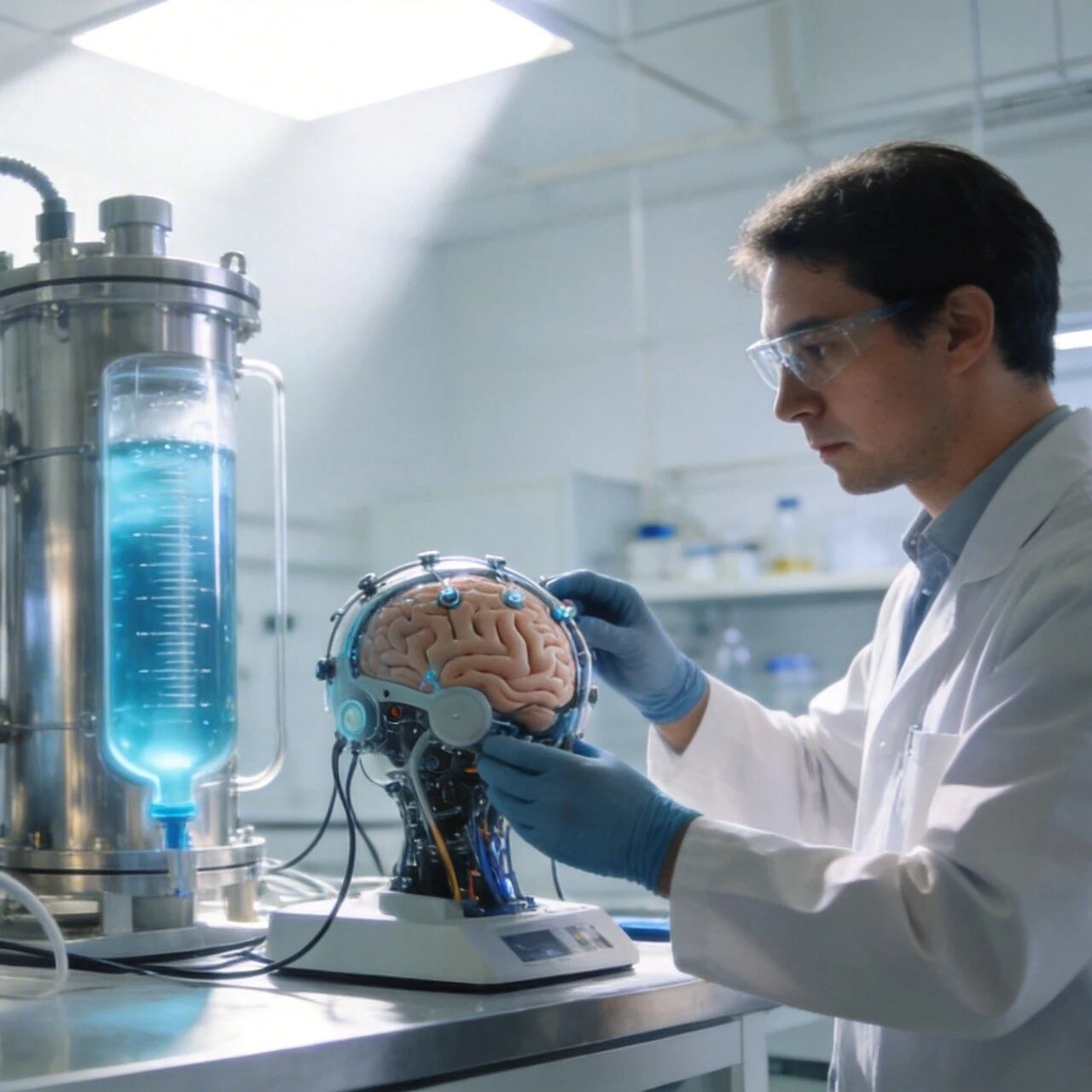
两会定调脑机发展,前沿攻关赋能产业升级
Huafu Securities· 2026-03-07 13:09
Investment Rating - The industry rating is "Outperform the Market," indicating that the overall return of the industry is expected to exceed the market benchmark index by more than 5% over the next 6 months [6][14]. Core Insights - The report highlights that brain-computer interfaces (BCIs) have emerged as a new focus in advanced manufacturing, as emphasized during the 2026 National People's Congress. The Ministry of Industry and Information Technology (MIIT) aims to integrate BCIs into the manufacturing industry to accelerate innovation and enhance productivity [3][4]. - The BCI market is projected to grow significantly, with the global market expected to reach approximately $2.62 billion in 2024 and $2.94 billion in 2025, potentially increasing to $12.4 billion by 2034, reflecting a compound annual growth rate (CAGR) of 17.35% over ten years. In China, the BCI market is anticipated to grow from 3.2 billion yuan in 2024 to 6.14 billion yuan by 2028 [5]. Summary by Sections Industry Development - The MIIT has outlined a five-pronged approach to promote the modernization of the industrial system, with a focus on stabilizing growth and enhancing innovation. BCIs are identified as a key area for technological advancement, alongside other fields such as quantum technology [3][4]. Market Potential - The report indicates that the BCI market is positioned as a critical growth area within the "14th Five-Year Plan," with expectations for BCIs to become a new economic growth point. The anticipated growth in this sector is expected to contribute significantly to the high-tech industry in China over the next decade [5]. Investment Recommendations - The report suggests monitoring specific companies within the BCI sector, including Yan Mountain Technology, Hanwei Technology, Sanbo Brain Science, and others, as potential investment opportunities due to their involvement in this rapidly evolving market [5].
16亿C轮!脑机接口赛道再现大额融资
思宇MedTech· 2026-03-07 01:10
Core Insights - Science Corporation, a U.S. neurotechnology company, completed a $230 million Series C funding round, bringing its total funding to nearly $490 million since its establishment in 2021 [2] - The company focuses on a visual restoration implant device rather than a traditional brain-computer interface (BCI), positioning itself to potentially be one of the first BCI companies to achieve commercialization [2] - This funding indicates a shift in investor interest towards commercially viable applications within the neurotechnology sector [2] Company Overview - Founded in 2021 and headquartered in Alameda, California, Science Corp was co-founded by Max Hodak, a notable figure from Neuralink [3] - The company acquired key technology through the purchase of assets from French visual neurointerface company Pixium Vision, gaining the PRIMA retinal implant system [3] Technology and Product Details - The PRIMA system consists of three components: a camera that captures images, a microchip implanted under the retina that stimulates retinal nerve signals, and a processing system [4][6] - This system operates at the retinal level rather than directly in the brain, which may facilitate regulatory approval and enhance safety [5] - The PRIMA system has received FDA Breakthrough Device designation and is pursuing CE certification in Europe [5] Market Trends - The BCI industry has seen a notable increase in funding over the past two years, with a trend shifting from conceptual BCI to clinically viable products [17] - Science Corp's funding will primarily support the commercialization of the PRIMA system and the development of its next-generation Biohybrid neural interface technology [18] - Other companies in the sector, such as Neuralink and Paradromics, have also secured significant funding, indicating a growing interest in neurotechnology [20] Implications for the Chinese Market - The BCI sector in China is rapidly developing, with several companies emerging in areas like brain signal acquisition and neuroregulation [22][23] - However, most Chinese BCI companies are still in the research or early clinical stages, with few products ready for large-scale medical application [24] - Science Corp's approach of targeting specific diseases rather than pursuing a general BCI could serve as a valuable model for Chinese companies [25]

政府报告中“点石成金”的2大机会
虎嗅APP· 2026-03-06 14:26
Core Viewpoint - The article highlights the significance of "future energy" and "brain-computer interfaces" as newly emphasized sectors in the government's work report, indicating potential investment opportunities in these areas [7][9]. Group 1: Future Energy - "Future energy" has been prioritized in the government's report, indicating its importance in future industries, with quantum technology's priority being lowered [10][11]. - Investment opportunities in future energy include hydrogen energy and nuclear fusion, with hydrogen energy being explicitly recognized as a new economic growth point [12][13]. - The hydrogen energy sector is experiencing competitive dynamics, with a surge in orders for hydrogen electrolyzers, but the market remains fragmented with many cross-industry participants [14][15]. - The potential for hydrogen fuel cells to explode in growth is noted, with manufacturing costs decreasing significantly, making them competitive with traditional fuel vehicles [16][17]. - Nuclear fusion has been included in the forward-looking layout of future industries, with significant procurement activity indicating a growing market [19][20][21]. - Companies involved in nuclear fusion are beginning to see revenue from related orders, with notable contracts contributing significantly to their overall income [23]. Group 2: Brain-Computer Interfaces - The government has officially recognized "brain-computer interfaces" as a key future industry, marking a shift in its strategic importance [25][26]. - Brain-computer interfaces (BCIs) serve as a bridge between the brain and external devices, offering revolutionary solutions for patients with movement and communication disorders [26][28]. - The current focus in the domestic market is on non-invasive BCIs, which differ significantly from the invasive technologies represented by companies like Neuralink [28][29]. - The industry is expected to evolve towards more invasive technologies, with significant clinical trials and commercialization efforts underway [30][31]. - The year 2025 is viewed as a pivotal year for the development of BCIs in China, with 2026 anticipated to be a year of commercialization [31][42]. - Investment strategies are shifting from thematic speculation to tracking verifiable milestones in commercialization and clinical progress [43].
资讯日报:美国据悉拟将 AI 芯片出口管制扩展至全球-20260306
Guoxin Securities Hongkong· 2026-03-06 11:13
Market Overview - The Hong Kong stock market showed mixed performance with the Hang Seng Index closing at 25,321, up 0.28%, while the Hang Seng Tech Index fell by 0.69% to 4,796 [3][9] - The Shanghai Composite Index increased by 0.64% to 4,109, while the Nikkei 225 rose by 1.90% to 54,246 [3][9] - The S&P 500 and Nasdaq experienced slight declines of 0.56% and 0.26%, respectively, closing at 6,870 and 22,807 [3][9] Industry Insights - The demand for AI-related electricity has significantly boosted the power equipment sector, with Northeast Electric rising by 22.11%, Dongfang Electric by 17.62%, and Shanghai Electric by 15.76% [9] - The brain-computer interface concept gained traction, with Nanjing Panda Electronics rising over 10% following the government's focus on future industries including quantum technology and brain-computer interfaces [9] - The oil and gas sector faced pressure from falling international oil prices, with Shandong Molong dropping 15.29% and Sinopec Oilfield Services declining by 11.11% [9] - The strong US dollar negatively impacted gold's safe-haven appeal, leading to declines in stocks like Zhumeng Gold and Chifeng Gold by 5.33% and 3.69%, respectively [9] - The aviation sector was hit by Middle East tensions, with China Southern Airlines and Air China falling by 4.10% and 2.79% [9] - MINIMAX reported a significant revenue increase of 158.9% year-on-year, with total revenue reaching $79.04 million [9] - The semiconductor industry is expected to see strong growth, with Broadcom projecting AI chip revenues to exceed $100 billion next year, leading to a 4.8% increase in its stock price [12]
放蒋出笼,打击伊朗
债券笔记· 2026-03-06 10:52
Group 1 - The government work report from the Two Sessions emphasizes the cultivation and growth of emerging and future industries, including future energy, quantum technology, embodied intelligence, brain-computer interfaces, and 6G technology [2] - The A-share market showed strong performance across various sectors, with funds actively investing in the areas mentioned in the Two Sessions report, although many stocks experienced a pattern of rising and then falling [2] - Global risk assets are experiencing a rebound, indicating a shift in market sentiment [2] Group 2 - The South Korean stock market's volatility is linked to its "three highs" structure: high foreign ownership, active retail investor leverage, and a significant weight in the semiconductor sector [4] - As of December 2025, foreign ownership in South Korea reached 32.9%, the highest since April 2020, with foreign stakes in major semiconductor companies like SK Hynix and Samsung Electronics at 53.8% and 52.3%, respectively [4] - Retail investors account for 80% of trading in the South Korean market, contributing to increased market fluctuations due to their tendency to engage in high-leverage trading [4] - The semiconductor sector, particularly Samsung Electronics and SK Hynix, holds a combined weight of approximately 40% in the KOSPI index, making the index highly sensitive to the semiconductor market's performance [4]

脑机接口企业术理创新完成数亿元C轮融资
机器人圈· 2026-03-06 10:18
Core Insights - The article highlights the successful completion of a multi-hundred million RMB Series C financing round by Shuli Innovation, a leading company in brain-computer interface (BCI) technology, with investments from various institutions and existing shareholders [1][3] - This financing round is seen as a strong recognition of Shuli Innovation's core technological capabilities and its ability to create a commercial ecosystem, providing critical momentum for the company's strategic upgrades [1][3] - Shuli Innovation aims to leverage this capital to advance the generational leap in BCI technology, deepen diverse industrial applications, and build a comprehensive innovation ecosystem covering multiple scenarios [1][3] Company Overview - Shuli Innovation is recognized as a national-level "specialized and innovative" small giant enterprise, a high-tech enterprise, and has established an academic workstation in Shanghai, holding over 500 independent intellectual property rights [3][5] - The company is positioned to benefit from favorable policies and strategic opportunities in the BCI industry, as outlined in the national "14th Five-Year Plan" and various governmental initiatives aimed at promoting innovation in the sector [3][5] Product and Market Position - As a leader in the non-invasive BCI sector, Shuli Innovation possesses comprehensive capabilities in "full-stack self-research, clinical transformation, and large-scale production," with products addressing central nervous system injuries, cognitive disorders, and neurodevelopmental disorders [5][6] - The company has established partnerships with top medical institutions to promote standardized clinical diagnosis and treatment, creating several national firsts in the BCI field, including the first BCI consultation clinic and the first children's BCI treatment center [5][6] Future Vision - The founder and chairman of Shuli Innovation, Dr. Wang Wei, emphasizes that BCI technology is at a historical turning point towards large-scale accessibility, aiming to create an open and win-win innovation ecosystem [6] - The company's goal is to position Chinese technology competitively on the global stage and ensure that technological breakthroughs translate into accessible products for end-users, enhancing the quality of life through technological advancements [6]

科技消费双轮驱动:2026政府工作报告学习体会
CAITONG SECURITIES· 2026-03-06 10:00
Investment Rating - The report suggests a focus on sectors such as sports events and health tourism, as well as strategic emerging industries like future energy and quantum technology [1]. Core Insights - The report outlines a pragmatic GDP growth target for 2026, set between 4.5% and 5.0%, with a fiscal policy that remains "more proactive" [1]. - It emphasizes the importance of domestic demand, proposing measures to boost consumer spending and increase government investment in livelihood projects [1]. - The report highlights the need for technological innovation, particularly in emerging industries such as integrated circuits, aerospace, and biomedicine, while prioritizing future energy [1]. - It addresses the "anti-involution" initiative and dual carbon goals, aiming for a 3.8% reduction in carbon emissions per unit of GDP [1]. - The report focuses on enhancing social welfare, particularly in employment, education, and healthcare, with an expectation of increased government spending in these areas [1]. Summary by Sections - **Economic Development Goals**: The 2026 GDP growth target is set at 4.5%-5.0%, with a fiscal deficit rate of 4% and significant allocations for special bonds and public budget expenditures [1]. - **Domestic Demand Focus**: The report continues to support consumer income growth and proposes new funds to stimulate domestic demand, particularly in the service consumption sector [1]. - **Technological Innovation**: Emphasis is placed on nurturing new industries and technologies, with future energy being prioritized, indicating a shift in strategic focus [1]. - **Environmental Goals**: The report sets a target for reducing carbon emissions and expanding the carbon trading market, indicating a market-driven approach to achieving low-carbon transitions [1]. - **Social Welfare Enhancement**: The report outlines plans to improve employment, education, and healthcare services, anticipating increased government investment to stabilize consumer confidence [1].