
乡村全面振兴

Search documents
2026年中央一号文件发布!
Xin Hua She· 2026-02-03 10:56
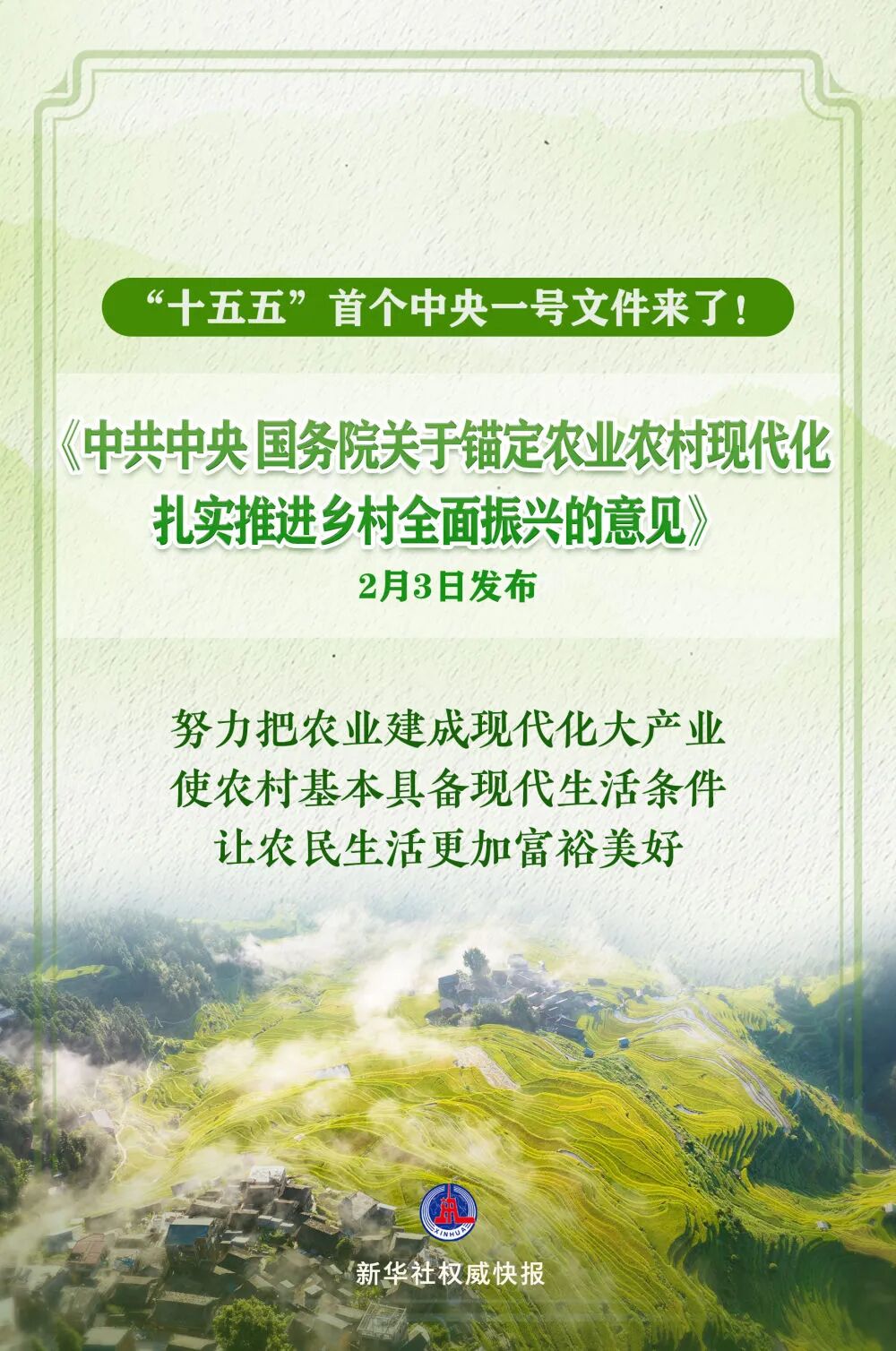
"十五五"首个中央一号文件来了! 《中共中央 国务院关于锚定农业农村现代化 扎实推进乡村全面振兴的意见》 2月3日发布 努力把农业建成现代化大产业 使农村基本具备现代生活条件 让农民生活更加富裕美好 新华社权威快报 2026年中央一号文件2月3日发布 这也是"十五五"首个中央一号文件 《中共中央 国务院关于锚定农业农村现代化 扎实推进乡村全面振兴的意见》提出 锚定农业农村现代化 以推进乡村全面振兴为总抓手 以学习运用"千万工程"经验为引领 以改革创新为根本动力 提高强农惠农富农政策效能 守牢国家粮食安全底线 持续巩固拓展脱贫攻坚成果 中共中央国务院 关于锚定农业农村现代化 扎实推进乡村全面振兴的意见 (2026年1月3日) 农业农村现代化关系中国式现代化全局和成色。"十四五"时期,农业综合生产能力迈上新台阶,脱贫攻坚成果巩固拓展,农民生活水平显著提 高,乡村全面振兴取得明显进展。"十五五"时期是基本实现社会主义现代化夯实基础、全面发力的关键时期,要加快补上农业农村领域突出短 板,加快建设农业强国。2026年是"十五五"开局之年,做好"三农"工作至关重要。要坚持以习近平新时代中国特色社会主义思想为指导,深入 贯 ...

权威快报丨2026年中央一号文件发布
Xin Hua She· 2026-02-03 10:52
2026年中央一号文件2月3日发布 这也是"十五五"首个中央一号文件 《中共中央 国务院关于锚定农业农村现代化 扎实推进乡村全面振兴的意见》提出 锚定农业农村现代化 以推进乡村全面振兴为总抓手 以学习运用"千万工程"经验为引领 第14个指导"三农"工作的中央一号文件 海报制作:贾稀荃 记者:韩佳诺、赵文君 以改革创新为根本动力 提高强农惠农富农政策效能 守牢国家粮食安全底线 持续巩固拓展脱贫攻坚成果 提升乡村产业发展水平、乡村建设水平、乡村治理水平 努力把农业建成现代化大产业、使农村基本具备现代生活条件、让农民生活更加富裕美好 为推进中国式现代化提供基础支撑 这是党的十八大以来 新华社国内部出品 ...
“十五五”首个中央一号文件发布
证券时报· 2026-02-03 10:52
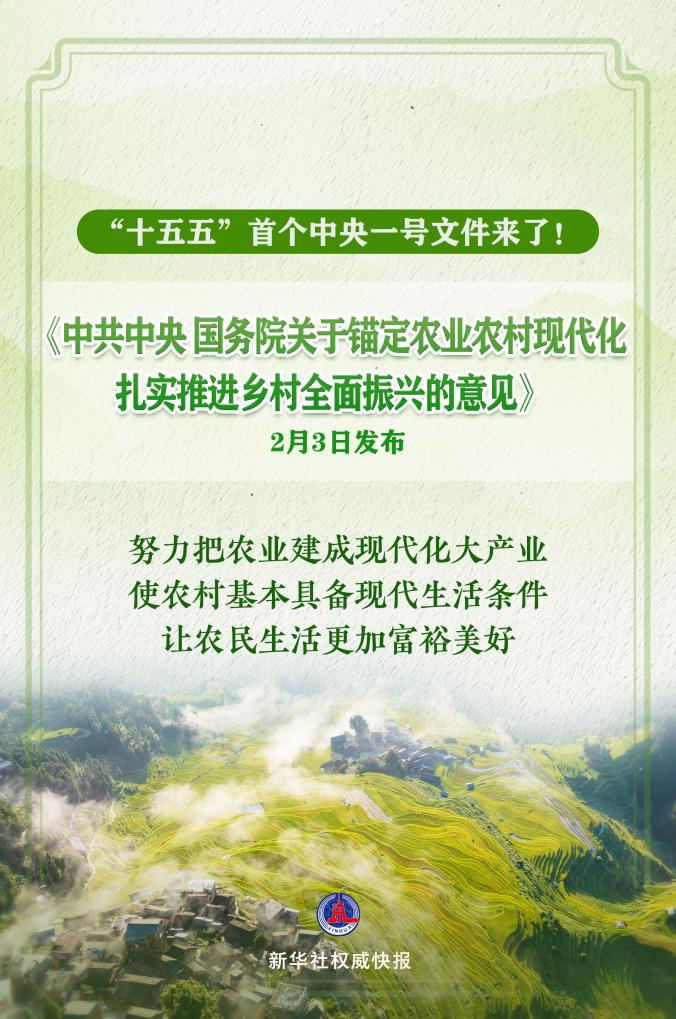
2026年中央一号文件2月3日发布,这也是"十五五"首个中央一号文件。 中共中央 国务院关于锚定农业农村现代化 扎实推进乡村全面振兴的意见 (2026年1月3日) 农业农村现代化关系中国式现代化全局和成色。"十四五"时期,农业综合生产能力迈上新台阶, 脱贫攻坚成果巩固拓展,农民生活水平显著提高,乡村全面振兴取得明显进展。"十五五"时期是 基本实现社会主义现代化夯实基础、全面发力的关键时期,要加快补上农业农村领域突出短板, 加快建设农业强国。2026年是"十五五"开局之年,做好"三农"工作至关重要。要坚持以习近平新 时代中国特色社会主义思想为指导,深入贯彻党的二十大和二十届历次全会精神,认真落实四中 全会部署,全面贯彻习近平总书记关于"三农"工作的重要论述和重要指示精神,坚持把解决好"三 农"问题作为全党工作重中之重,坚持和加强党对"三农"工作的全面领导,完整准确全面贯彻新发 展理念,坚持稳中求进工作总基调,坚持农业农村优先发展,坚持城乡融合发展,锚定农业农村 现代化,以推进乡村全面振兴为总抓手,以学习运用"千万工程"经验为引领,以改革创新为根本 动力,提高强农惠农富农政策效能,守牢国家粮食安全底线,持续巩固拓 ...

2026年中央一号文件发布:推动城乡要素双向流动 科学有序推进农业转移人口市民化
Jin Rong Jie· 2026-02-03 10:47
中央一号文件《中共中央 国务院关于锚定农业农村现代化 扎实推进乡村全面振兴的意见》发布,意见 指出,推动城乡要素双向流动。科学有序推进农业转移人口市民化,落实转移支付、新增建设用地指 标、基础设施建设投资等与农业转移人口市民化挂钩政策,推行由常住地登记户口提供基本公共服务制 度。依法维护进城落户农民土地承包权、宅基地使用权、集体收益分配权,探索建立自愿有偿退出的办 法。发展壮大乡村人才队伍,激励各类人才下乡服务和创业就业。加强乡村产业带头人和乡村治理人才 培育,因地制宜培育农创客。实施新一轮高校毕业生"三支一扶"计划。推进乡村巾帼追梦人计划、大学 生志愿服务西部计划和乡村振兴青春建功行动。 责任编辑:山上 财经频道更多独家策划、专家专栏,免费查阅>> ...
2026年中央一号文件:持续整治农村高额彩礼
Feng Huang Wang· 2026-02-03 10:42
2月3日,中央一号文件《中共中央 国务院关于锚定农业农村现代化 扎实推进乡村全面振兴的意见》发 布,意见指出,深入实施文明乡风建设工程。加强农村思想政治工作,弘扬和践行社会主义核心价值 观,广泛开展群众性宣传教育活动。统筹推动文明培育、文明实践、文明创建,推动形成向上向善的乡 村道德风尚。推进"文艺赋美乡村",丰富农村文化产品和服务供给。推进乡村文化遗产系统性保护,加 强乡村文物、传统村落、非物质文化遗产调查保护,建立以村民为主体的保护实施机制。持续推进农村 移风易俗,发挥党员干部带头和村规民约引导作用,疏堵结合、标本兼治推进突出问题综合治理。持续 整治农村高额彩礼,加强省际毗邻地区联动治理。引导树立正确的婚恋观、生育观、家庭观,培育简约 文明的婚俗文化。健全农村殡葬公共服务体系,推进农村公益性墓地建设和规范管理。 ...
2026年中央一号文件:实施农村电商高质量发展工程,推动电商平台下沉赋能
Xin Lang Cai Jing· 2026-02-03 10:41
Core Viewpoint - The document outlines the Chinese government's strategy to modernize agriculture and rural areas, emphasizing the development of county-level industries to enhance rural prosperity [1] Group 1: Agricultural Development - The strategy promotes the integration of technology, green practices, quality, and branding in agriculture [1] - It supports the development of green and efficient farming, as well as deep processing of agricultural products to create premium brands [1] - The plan encourages the comprehensive development of the agricultural industry chain [1] Group 2: E-commerce and Infrastructure - A high-quality rural e-commerce development project will be implemented to empower local platforms and improve infrastructure such as pre-cooling, storage, and processing facilities [1] - The regulation of agricultural product live-streaming sales is also highlighted [1] Group 3: Tourism and Economic Diversification - The document emphasizes the integration of agriculture, culture, and tourism, aiming to upgrade rural tourism and develop niche cultural tourism [1] - It encourages the growth of forestry and grassland industries, including the development of the under-forest economy and forest health care [1] Group 4: Economic Growth and Fair Distribution - The strategy aims to cultivate distinctive county economies and support the development of small and medium-sized enterprises [1] - It seeks to expand channels for farmers to participate in industrial development and improve mechanisms for fair sharing of industry benefits [1] - The importance of coordinated planning and scientific evaluation of industrial projects is stressed to avoid erratic growth patterns [1]
中央一号文件丨2026年中央一号文件发布 部署扎实推进乡村全面振兴
Xin Hua She· 2026-02-03 10:38
中央农村工作领导小组办公室负责人表示,要深入贯彻党的二十大和二十届历次全会精神,认真落实四 中全会部署,全面贯彻习近平总书记关于"三农"工作的重要论述和重要指示精神,推动乡村全面振兴取 得新进展、农业农村现代化再上新台阶,朝着建设农业强国目标扎实迈进。 文件提出,农业农村现代化关系中国式现代化全局和成色。坚持农业农村优先发展,坚持城乡融合发 展,锚定农业农村现代化,以推进乡村全面振兴为总抓手,以学习运用"千万工程"经验为引领,以改革 创新为根本动力,提高强农惠农富农政策效能,守牢国家粮食安全底线,持续巩固拓展脱贫攻坚成果, 提升乡村产业发展水平、乡村建设水平、乡村治理水平,努力把农业建成现代化大产业、使农村基本具 备现代生活条件、让农民生活更加富裕美好,为推进中国式现代化提供基础支撑。 新华社北京2月3日电(记者韩佳诺、胡璐)党的十八大以来第14个指导"三农"工作的中央一号文件3日 由新华社受权发布,对锚定农业农村现代化、扎实推进乡村全面振兴进行了部署。 文件题为《中共中央 国务院关于锚定农业农村现代化 扎实推进乡村全面振兴的意见》,全文共六个部 分,包括:提升农业综合生产能力和质量效益、实施常态化精准帮扶、 ...
2026年中央一号文件发布
第一财经· 2026-02-03 10:35
2026年中央一号文件2月3日发布,这也是"十五五"首个中央一号文件。 《中共中央 国务院关于锚定农业农村现代化 扎实推进乡村全面振兴的意见》提出,锚定农业农村现代 化,以推进乡村全面振兴为总抓手,以学习运用"千万工程"经验为引领,以改革创新为根本动力,提 高强农惠农富农政策效能,守牢国家粮食安全底线,持续巩固拓展脱贫攻坚成果,提升乡村产业发展水 平、乡村建设水平、乡村治理水平,努力把农业建成现代化大产业、使农村基本具备现代生活条件、让 农民生活更加富裕美好,为推进中国式现代化提供基础支撑。 这是党的十八大以来,第14个指导"三农"工作的中央一号文件。 中共中央 国务院关于锚定农业农村现代化 扎实推进乡村全面振兴的意见 (2026年1月3日) 农业农村现代化关系中国式现代化全局和成色。"十四五"时期,农业综合生产能力迈上新台阶,脱贫 攻坚成果巩固拓展,农民生活水平显著提高,乡村全面振兴取得明显进展。"十五五"时期是基本实现 社会主义现代化夯实基础、全面发力的关键时期,要加快补上农业农村领域突出短板,加快建设农业强 国。2026年是"十五五"开局之年,做好"三农"工作至关重要。要坚持以习近平新时代中国特色社会主 ...

首提“常态化精准帮扶” 专家解读2026年中央一号文件
Yang Shi Xin Wen Ke Hu Duan· 2026-02-03 10:32
Core Viewpoint - The central document emphasizes the modernization of agriculture and rural areas, aiming for comprehensive rural revitalization as a key theme for the year [1] Group 1: Agricultural Modernization - The document sets a target for agricultural modernization, focusing on strengthening the agricultural foundation and addressing shortcomings in rural modernization [1] - By 2025, China's grain production is expected to remain stable at over 1.4 trillion jin for two consecutive years, with an emphasis on enhancing agricultural production capacity and quality [1] Group 2: Continuous Support for Poverty Alleviation - The concept of "normalized precise assistance" is introduced, marking the transition from a five-year transition period to ongoing support for poverty-stricken areas and populations [2][3] Group 3: Agricultural Production and Quality - Key measures include maintaining grain planting areas, improving single yield for grain and oil crops, and aligning agricultural development with consumer demand [4] - The focus is on increasing farmers' income through various means, including enhancing the entire agricultural supply chain [5] Group 4: Employment and Income Stability - The document highlights the importance of stable income for farmers, with a target of reaching an average disposable income of 24,456 yuan per rural resident by 2025, reflecting a 6% increase from the previous year [6] - Strategies for income stability include promoting operational and wage income, as well as enhancing employment support [6][8] Group 5: Tailored Rural Development - The document stresses the need for "tailored" approaches in rural construction, considering regional differences in economic and social development [7][9] - It advocates for a differentiated path in rural development, emphasizing local advantages and ecological preservation [7]
受权发布丨中共中央 国务院关于锚定农业农村现代化 扎实推进乡村全面振兴的意见
Xin Hua She· 2026-02-03 10:31
受权发布丨中共中央 国务院关于锚定农业农村现代化 扎实推进乡村全面振兴的意见 新华社北京2月3日电 中共中央 国务院关于锚定农业农村现代化 扎实推进乡村全面振兴的意见 (2026年1月3日) 农业农村现代化关系中国式现代化全局和成色。"十四五"时期,农业综合生产能力迈上新台阶,脱贫攻 坚成果巩固拓展,农民生活水平显著提高,乡村全面振兴取得明显进展。"十五五"时期是基本实现社会 主义现代化夯实基础、全面发力的关键时期,要加快补上农业农村领域突出短板,加快建设农业强国。 2026年是"十五五"开局之年,做好"三农"工作至关重要。要坚持以习近平新时代中国特色社会主义思想 为指导,深入贯彻党的二十大和二十届历次全会精神,认真落实四中全会部署,全面贯彻习近平总书记 关于"三农"工作的重要论述和重要指示精神,坚持把解决好"三农"问题作为全党工作重中之重,坚持和 加强党对"三农"工作的全面领导,完整准确全面贯彻新发展理念,坚持稳中求进工作总基调,坚持农业 农村优先发展,坚持城乡融合发展,锚定农业农村现代化,以推进乡村全面振兴为总抓手,以学习运 用"千万工程"经验为引领,以改革创新为根本动力,提高强农惠农富农政策效能,守牢国 ...