无废城市

Search documents
永兴股份加速存量垃圾资源化助力“无废城市”建设
Zhong Zheng Wang· 2025-09-29 13:55
Group 1 - The core viewpoint of the article highlights Guangzhou's plan to build a "waste-free city" over the next decade, focusing on the reduction, resource utilization, and harmless treatment of legacy waste [1][2] - Yongxing Co., as a subsidiary of Guangzhou Environmental Investment Group, has significantly increased its waste treatment business this year, processing over 800,000 tons of legacy waste in the first half of 2025, surpassing the total for the entire year of 2024 [1] - The increase in waste processing is primarily attributed to the excavation project at the Xingfeng landfill, which is expected to handle up to 2.37 million tons of legacy waste [1] Group 2 - Guangzhou has a substantial amount of historical legacy waste, with major landfills like Xingfeng and Huadu holding approximately 48.48 million tons and 7.8 million tons of waste, respectively [2] - The city plans to select closed landfills as pilot sites for legacy waste management and land redevelopment [2] - The construction of a "waste-free city" is expected to activate market opportunities and policy support, fulfilling the demand for the reduction, resource utilization, and harmless treatment of legacy waste [2]
助力“无废城市”建设 永兴股份加速存量垃圾资源化
Zheng Quan Ri Bao Wang· 2025-09-29 13:46
Group 1 - The "Beautiful Guangzhou Construction Planning Outline (2025-2035)" aims to promote the treatment of legacy waste, focusing on "reduction, resource utilization, and harmlessness" of both legacy and stockpiled waste [1] - Guangzhou has a significant amount of historical legacy waste, with major landfills like Xingfeng and Huadu holding approximately 4,848 million tons and 780 million tons of waste respectively, along with additional landfills totaling about 1,856 million tons [1] - The city plans to select closed landfills as pilot sites for stockpiled waste management and land redevelopment [1] Group 2 - The construction of a "waste-free city" is crucial for advancing ecological civilization and aligns with the dual carbon goals, as landfills are a major source of methane emissions and occupy valuable urban land [2] - According to the 2025 semi-annual report from Yongxing Co., the company processed over 800,000 tons of stockpiled waste in the first half of the year, surpassing the total for 2024, contributing to stable growth in incineration and power generation [2] - The increase in stockpiled waste processing for Yongxing Co. is primarily from the excavation project at Xingfeng landfill, which is expected to handle up to 2,370,000 tons of stockpiled waste [2] - The comprehensive "waste-free city" initiative is expected to activate market opportunities and policy support, fulfilling the demand for waste treatment [2]
上海联交所成立固废资源交易中心:释放工业固废万亿级交易潜力
Xin Hua Cai Jing· 2025-09-29 07:22
Core Viewpoint - The establishment of the Shanghai Solid Waste Resource Trading Center aims to promote the resource utilization of industrial solid waste through market mechanisms, supporting Shanghai's goal of becoming a "waste-free city" and setting a benchmark for solid waste resource utilization in China [1][2]. Group 1: Trading Center Establishment - The Shanghai Solid Waste Resource Trading Center has been newly established, leveraging the trading system and market network of the Shanghai United Assets and Equity Exchange [1]. - The center will provide a comprehensive solution for industrial solid waste, including information release, transaction matching, and supporting services [1]. Group 2: Market Potential and Statistics - As of November 2024, 315 cities in China reported a total of 93.2 billion tons of solid waste generated in 2023, with general industrial solid waste accounting for 40.8% of this total at 38.0 billion tons [1]. - Major types of general industrial solid waste include tailings, fly ash, coal gangue, smelting slag, and furnace slag, which together account for 62.5% of the total generated [1]. Group 3: Policy and Industry Trends - The coal power industry generates over 60 million tons of solid waste annually, with fly ash production growing at a rate of 5% per year [2]. - The construction of "waste-free cities" and fiscal incentives such as immediate VAT refunds and carbon trading revenues are driving the resource transformation of enterprises [2]. Group 4: Collaboration and Future Goals - The Shanghai Trading Group and Huaneng Tendering Co., Ltd. aim to leverage their respective strengths to build and operate the industrial solid waste trading platform, promoting healthy industry development [3]. - The center will facilitate connections between waste-producing and waste-utilizing enterprises through open and fair market operations, optimizing resource allocation [2][3].
上海联交所成立固废资源交易中心,释放工业固废万亿级交易潜力
Di Yi Cai Jing· 2025-09-26 09:12
Group 1 - The Shanghai United Property Exchange's Solid Waste Resource Trading Center aims to provide a comprehensive solution for industrial solid waste through information dissemination, transaction facilitation, and supporting services, promoting resource utilization and green development in Shanghai [1][2] - As of November 2024, 315 cities in China reported a total of 93.2 billion tons of solid waste, with general industrial solid waste accounting for 40.8% of this total, amounting to 38.0 billion tons [1] - Major types of general industrial solid waste include tailings, fly ash, coal gangue, smelting slag, and furnace slag, which together represent 62.5% of the total generated [1] Group 2 - The coal power industry generates over 600 million tons of solid waste annually, with fly ash production growing at a rate of 5% per year, and over 60% of this waste is utilized in the construction materials sector [2] - Policies supporting "waste-free city" initiatives, along with tax incentives and regional collaboration mechanisms, are driving companies to accelerate their resource transformation [2] - The establishment of the solid waste resource trading center is a practical step by the Shanghai Trading Group and Shanghai United Property Exchange to support the national "dual carbon" strategy [2][3] Group 3 - Since the trial operation began on May 15, 2023, the platform has facilitated the transaction of 359.8 million tons of solid waste, utilizing a dual-price bidding method [3] - An example of this bidding process includes the sale of gypsum by Huaneng Qinxin Power Co., which had a transfer base price of -16 yuan/ton and was ultimately sold at -6.89 yuan/ton, showcasing innovative market resource allocation [3]
建行江苏省分行:为绿色转型注入金融“活水”
Zhong Guo Jin Rong Xin Xi Wang· 2025-09-26 07:01
Group 1: Green Development Initiatives - The Construction Bank of Jiangsu Province is promoting green development by innovating financial products and services to support waste and wastewater treatment, transforming waste into valuable resources [1][2] - The bank has provided significant financial support to companies like Nanjing Jiayi Digital Additive Technology Research Institute, which converts industrial waste into high-strength recycled concrete, and Jiangsu Xiangcheng Environmental Technology Co., which processes 300,000 tons of renovation waste annually [2][3] Group 2: Waste Management and Recycling - The concept of a "waste-free city" focuses on resource recycling, reduction, and harmless treatment of waste, with waste classification being a key component [3] - Companies like Taizhou Yicheng Environmental Technology Co. and Nanjing Huihe Environmental Engineering Technology Co. are receiving tailored financial solutions from the Construction Bank to enhance their operations in waste classification and medical waste disposal [3][4] Group 3: Wastewater Treatment - Urban wastewater management is crucial for building a "waste-free city," with companies like Nanjing Xiwang Wastewater Treatment Co. receiving financial support for capacity upgrades and equipment improvements [4] - The Construction Bank has facilitated the financing of a new industrial wastewater treatment plant in Changzhou, with a total investment of 450 million yuan, to address wastewater management needs [4] Group 4: Battery Recycling and Biomass Energy - Jiangsu Huayou Energy Technology Co. is focusing on lithium battery lifecycle management and has received 30 million yuan in loans to support its battery recycling initiatives [6] - Xuzhou Zhongsheng Clean Energy Co. is converting agricultural waste into biomass energy, with the Construction Bank providing 290 million yuan in loans for infrastructure development and additional 20 million yuan for operational support [6][7]

“无废城市”的绿色发展之道
Ren Min Ri Bao· 2025-09-26 03:01
Core Viewpoint - The construction of "waste-free cities" requires tailored approaches based on local conditions, but once a commitment is made, it should be pursued steadfastly until results are achieved [1][3] Group 1: Technological and Scene Innovation - The establishment of multifunctional "resource recycling stations" in Tianjin Port Free Trade Zone aims to enhance waste recycling channels and support the "waste-free city" initiative [1] - Yantai Ice Wheel Environmental Technology Co., Ltd. has achieved over 97% CO2 capture from waste gas, producing high-purity CO2 for use in food and other industries, demonstrating the potential of turning waste into valuable resources through technological innovation [1] - Chongqing Beisi Yuan New Energy Co., Ltd. processes used power batteries into compliant battery packs for various applications, showcasing how reimagining waste can lead to practical solutions [2] Group 2: Policy and Institutional Support - Shenzhen, Guangdong has developed guidelines for the construction of recycling networks, encouraging high-standard development of recycling centers to enhance resource recovery and processing [2] - Shanghai's "Waste-Free City Construction Regulations" have led to a stable 95% compliance rate in waste classification and a 43% recycling rate, illustrating the effectiveness of policy in promoting green culture and low-carbon lifestyles [2] Group 3: Collaborative Efforts - Effective ecological governance requires collaboration across regions and departments to prevent issues like illegal dumping, emphasizing the need for a systemic approach to building "waste-free cities" [3] - The process of constructing "waste-free cities" should be viewed as an opportunity to cultivate green productivity and enhance community well-being through innovation, policy support, and collaboration [3]
“无废城市”的绿色发展之道(人民时评)
Ren Min Ri Bao· 2025-09-25 22:12
Core Viewpoint - The construction of "waste-free cities" requires tailored approaches based on local conditions, but once a commitment is made, it should be pursued steadfastly until results are achieved and goals are met [1][3]. Group 1: Innovations in Waste Management - The first batch of 20 "Resource Recycling Stations" has been established in the Tianjin Port Free Trade Zone, integrating resource recycling, community services, and micro-energy networks to enhance waste collection channels [1]. - Shandong Yantai Ice Wheel Environmental Technology Co., Ltd. has improved carbon dioxide capture rates from waste gas to over 97%, producing high-purity CO2 for use in food and other industries, demonstrating the potential of technological innovation in resource conversion [1]. - Chongqing Beisi Yuan New Energy Co., Ltd. processes used power batteries into compliant battery packs for applications in communication bases and smart streetlights, showcasing the value of scene innovation in waste management [2]. Group 2: Policy and Institutional Support - Shenzhen, Guangdong has established guidelines for the construction of recycling resource collection points, encouraging high-standard development of sorting centers and transfer stations to enhance resource recovery efficiency [2]. - Shanghai has implemented the "Shanghai Waste-Free City Construction Regulations," achieving a stable household waste classification compliance rate of over 95% and a recycling rate of 43%, illustrating the effectiveness of policy in promoting green culture and low-carbon lifestyles [2]. Group 3: Collaborative Efforts in Environmental Governance - Effective ecological governance requires collaboration across administrative boundaries to prevent issues like illegal dumping, emphasizing the need for systemic thinking and coordination among departments and regions in building waste-free cities [3]. - The process of constructing "waste-free cities" should be viewed as an opportunity to cultivate and enhance green productivity while improving community well-being through innovation, policy support, and collaboration [3].
数字赋能变废为宝,来运数智土方2年创收2.7亿的成功密码!
Sou Hu Cai Jing· 2025-09-25 14:28
Core Insights - The innovative "smart earthwork" model has generated significant revenue and cost savings, with a reported income of 270 million yuan and savings exceeding 200 million yuan in municipal disposal costs over two years [1][3][5] Group 1: Industry Challenges and Solutions - Traditional earthwork disposal is often treated as construction waste, leading to high disposal costs and land occupation [3] - The smart earthwork model redefines construction waste as "recycled resources," utilizing digital technology for value reconstruction [3][5] Group 2: Technological Implementation - The company has developed a comprehensive digital support system led by a research team, featuring smart terminal devices such as unmanned sentinels and transport management tools [5] - This system enables intelligent management of the entire earthwork process, from generation to measurement, optimizing supply-demand relationships and transportation routes [5] Group 3: Economic and Social Benefits - The model has led to enhanced management efficiency, transparency, and reduced corruption risks, while also improving urban environmental quality [5][6] - It aligns with national strategies for carbon neutrality and waste-free cities, transforming scattered resources into a unified management system [5][6] Group 4: Market Expansion and Future Prospects - Following successful implementation in one region, the model is being replicated in multiple locations, with projected annual income exceeding 600 million yuan [6] - The company aims to create a new internet ecosystem for the construction waste industry, potentially nurturing unicorn enterprises in the smart waste management sector [6]

高邮泰达绿色技术助力“无废城市”建设
Zhong Guo Huan Jing Bao· 2025-09-25 02:37
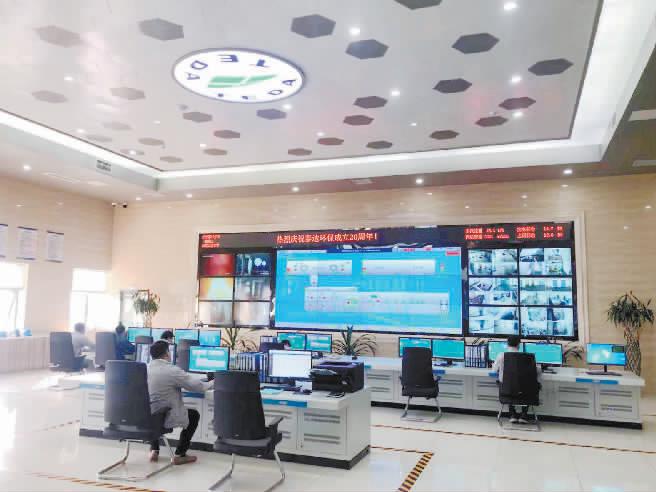
Core Insights - The project is a public-private partnership (PPP) for waste incineration and power generation in Gaoyou City, Jiangsu Province, established by Tianjin TEDA Environmental Protection Co., Ltd. and Gaoyou State-owned Assets Investment and Operation Co., Ltd. [1] - The project covers an area of 120 acres and has a total investment of 355 million yuan for the first phase, featuring two 350 tons/day incineration lines and a 15 MW turbine generator [1] - The facility is designed to process approximately 255,500 tons of municipal waste annually, generating around 100 million kWh of electricity, which equates to saving about 33,000 tons of standard coal and reducing carbon emissions by approximately 45,000 tons per year [1] Industry Trends - The solid waste treatment industry is transitioning from end-of-pipe treatment to a full-chain resource utilization model, driven by dual goals of carbon neutrality and "waste-free city" initiatives [2] - High You Tai Da is recognized as a leading brand in the ecological environment sector, having received the "National AAA-level Municipal Solid Waste Incineration Plant" title from the China Urban Environmental Hygiene Association [2] Technological Advancements - The company employs an advanced gas purification technology combining SNCR, semi-dry and dry methods, activated carbon injection, and bag dust collection, ensuring emissions are significantly below EU standards [4] - This technology is not only applied to the incineration project but also extends to leachate treatment and sludge co-disposal [4] Innovative Practices - High You Tai Da integrates into the "waste-free city" initiative by implementing a collaborative disposal model for municipal waste, industrial solid waste, and organic waste, creating a closed-loop resource recycling system [6] - The company serves as a public education base for waste classification, receiving over 3,000 visitors annually to enhance social environmental awareness [6] Strategic Upgrades - The company is evolving from a "project operator" to an "environmental service provider," leveraging advanced technologies developed at its headquarters [8] - High You Tai Da has been recognized for its operational excellence, winning the "Polar Star Cup" for two consecutive years [8] Future Outlook - The company plans to invest 49.73 million yuan in upgrading emission standards, aiming to reduce nitrogen oxide emissions to ≤80 mg/m³ and sulfur dioxide to below 30 mg/Nm³ by 2026, exceeding EU standards [10] - High You Tai Da aims to expand its operations by taking on waste disposal projects from surrounding cities, contributing to the high-quality development of the environmental protection industry in China [11]
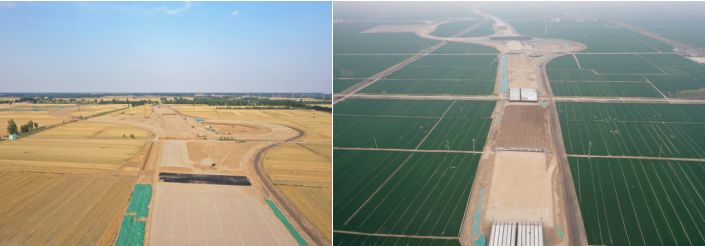
钛石膏“上路”,齐临高速变废为宝筑新途
Qi Lu Wan Bao· 2025-09-24 23:41
Core Viewpoint - The construction of the Qilin Expressway demonstrates a commitment to the national "dual carbon" strategy and the concept of "green mountains and clear waters are as valuable as mountains of gold and silver" by utilizing modified titanium gypsum waste as a roadbed material, thus promoting sustainable development and resource recycling [1][2]. Group 1: Project Overview - The Qilin Expressway, approximately 57.1 kilometers long, connects key towns in western Shandong and serves as an important transportation link between the western Shandong region and the provincial capital economic circle [1]. - The project addresses the challenges of material shortages for roadbed filling and the disposal of industrial solid waste by converting accumulated titanium gypsum waste from local titanium dioxide production into qualified roadbed filling material [1][2]. Group 2: Environmental Impact - Traditional roadbed construction methods require extensive extraction of natural soil and stone materials, which can lead to ecological damage and increased carbon emissions due to long-distance transportation [2]. - The project utilizes a mature and reliable technology for using titanium gypsum waste, which has been validated in multiple scenarios within the province, offering a cost-effective alternative to traditional filling materials [2]. Group 3: Technical Innovations - To ensure the safety and stability of the roadbed using industrial waste, a dedicated team developed a specialized curing agent and established standardized mixing processes, overcoming previous limitations of titanium gypsum [5]. - The modified titanium gypsum mixture exhibits superior performance in load-bearing capacity, water stability, and resistance to shrinkage and cracking compared to traditional materials, fully complying with high-grade highway design standards [5]. Group 4: Replicable Solutions - The Qilin Expressway project exemplifies a shift from traditional resource extraction to waste recycling, promoting a green ecological concept in highway construction [6]. - Each kilometer of the titanium gypsum roadbed reflects the spirit of "resource recycling," providing a replicable and scalable technical model for similar projects across the country [6][8].