善新贷

Search documents
躺不赢息差,银行下一个十年靠什么?
阿尔法工场研究院· 2026-03-31 11:18
Core Viewpoint - The Chinese banking industry is entering a deep transformation cycle after the "golden decade," facing pressures from macroeconomic adjustments, interest rate liberalization, stringent financial regulations, and technological disruptions [1][2][3] Group 1: Industry Challenges - The banking sector is experiencing intensified differentiation, with traditional scale expansion models becoming unsustainable [3] - Banks are facing four pressures: low interest rates, narrow interest margins, high risks, and strong regulations [2] - As of March 29, 2025, the average net interest margin of 13 disclosed banks is expected to narrow to around 1.5%, a year-on-year decline of 10 basis points, and a drop of nearly 60 basis points compared to 2020 [2] Group 2: Digital Transformation - Some banks are attempting to break through traditional business models by embracing digital transformation, with large and medium-sized banks establishing dedicated technology finance departments [4][5] - Despite the establishment of digital strategies, most banks remain at a basic stage of digitalization, focusing on replacing manual processes with digital tools [5] - Leading banks are expected to reduce operational costs by 15%-20% and improve return on equity by 4 percentage points through deep integration of AI technology into core business processes [5] Group 3: Strategic Shifts - The transition to digital and intelligent operations is no longer optional but a necessity for survival in the banking sector [6][14] - Banks like China Merchants Bank and Ping An Bank are integrating AI into their financial services, while Industrial and Commercial Bank of China is building a "Digital ICBC" ecosystem [6] - The focus on digital transformation is reflected in the financial performance of banks, with some achieving continuous revenue and profit growth [6][25] Group 4: Asset Management and Risk - The traditional asset operation model heavily relies on manual experience, making it difficult to achieve precise pricing and dynamic risk control [11] - The banking sector is facing an "asset shortage" due to a slowdown in financing demand from traditional industries and a mismatch between traditional credit evaluation systems and the characteristics of emerging industries [10][11] - Banks are increasingly recognizing the need to support technology-driven enterprises with innovative financial products that consider intangible assets [16][25] Group 5: Future Trends - The banking industry is expected to witness three major trends: the integration of digital intelligence into core business processes, the emergence of specialized sectors to avoid homogenized competition, and a shift towards serving the real economy [30][32] - The focus will shift from scale expansion to value creation, aligning with national strategies on modern industrial systems and technological innovation [33] - Banks that successfully integrate digital intelligence with core operations will gain competitive advantages, while those that remain at a basic level of digitalization may be phased out [31][36]






从2025年报看建行:凭什么建,向哪里行?
市值风云· 2026-03-29 10:46
Core Viewpoint - The article discusses the transformation of China Construction Bank (CCB) from a traditional lending institution to a comprehensive service platform that emphasizes value creation and long-term partnerships with clients, aligning with the evolving definition of "construction" in the context of China's economic development [5][24]. Financial Performance - In 2025, CCB reported revenue of 761.05 billion yuan, a year-on-year increase of 1.9%, and a net profit of 339.79 billion yuan, up 1.04% year-on-year [3]. - Key financial metrics include a net interest margin of 1.34%, return on assets (ROA) of 0.79%, return on equity (ROE) of 10.04%, and a capital adequacy ratio of 19.69% [3]. Historical Context and Evolution - Established in 1954, CCB's original mission was to oversee funding for national infrastructure projects, which were primarily physical constructions [7]. - The bank's role has evolved to encompass not just physical infrastructure but also technological innovation and digital empowerment, reflecting a shift from "physical construction" to "system construction" [8]. Strategic Transformation - CCB aims to integrate its services across various sectors, including commercial and investment banking, to better meet the complex needs of clients [10]. - The bank's management emphasizes a shift from a product-centric approach to a customer-centric model, focusing on solving client problems rather than merely selling products [12][13]. Service Model and Client Engagement - CCB's integrated service model aims to break down departmental silos, allowing for a more cohesive client experience [10]. - In 2025, CCB's non-interest income increased by 5.13%, indicating a shift towards diversified revenue streams [11]. Long-term Value Creation - CCB is committed to supporting clients throughout their entire lifecycle, offering a range of financial products tailored to different stages of business development [15]. - The bank has introduced innovative financing models, such as "equity-debt linkage," to support early-stage companies [16]. Digital Transformation - CCB is focusing on digital transformation as a core strategy, investing in advanced technologies to enhance service delivery and operational efficiency [20]. - The bank's digital infrastructure has seen significant improvements, with a 12.10% increase in computing power and the establishment of a new risk evaluation system based on technological capabilities [21][22]. Commitment to Sustainable Development - CCB's approach emphasizes long-term partnerships and shared growth with clients, aligning with its commitment to sustainable development [23]. - The bank's dividend policy reflects its focus on sustainable value creation, with a cash dividend of approximately 101.68 billion yuan in 2025 [23]. Conclusion - CCB is redefining its role in the financial sector by transitioning from a traditional lending institution to a value-creating partner, aligning its services with the evolving needs of the economy and society [24][25].
建设银行双鸭山分行:精准赋能企业发展 彰显责任担当
Zhong Guo Jin Rong Xin Xi Wang· 2026-03-25 23:10
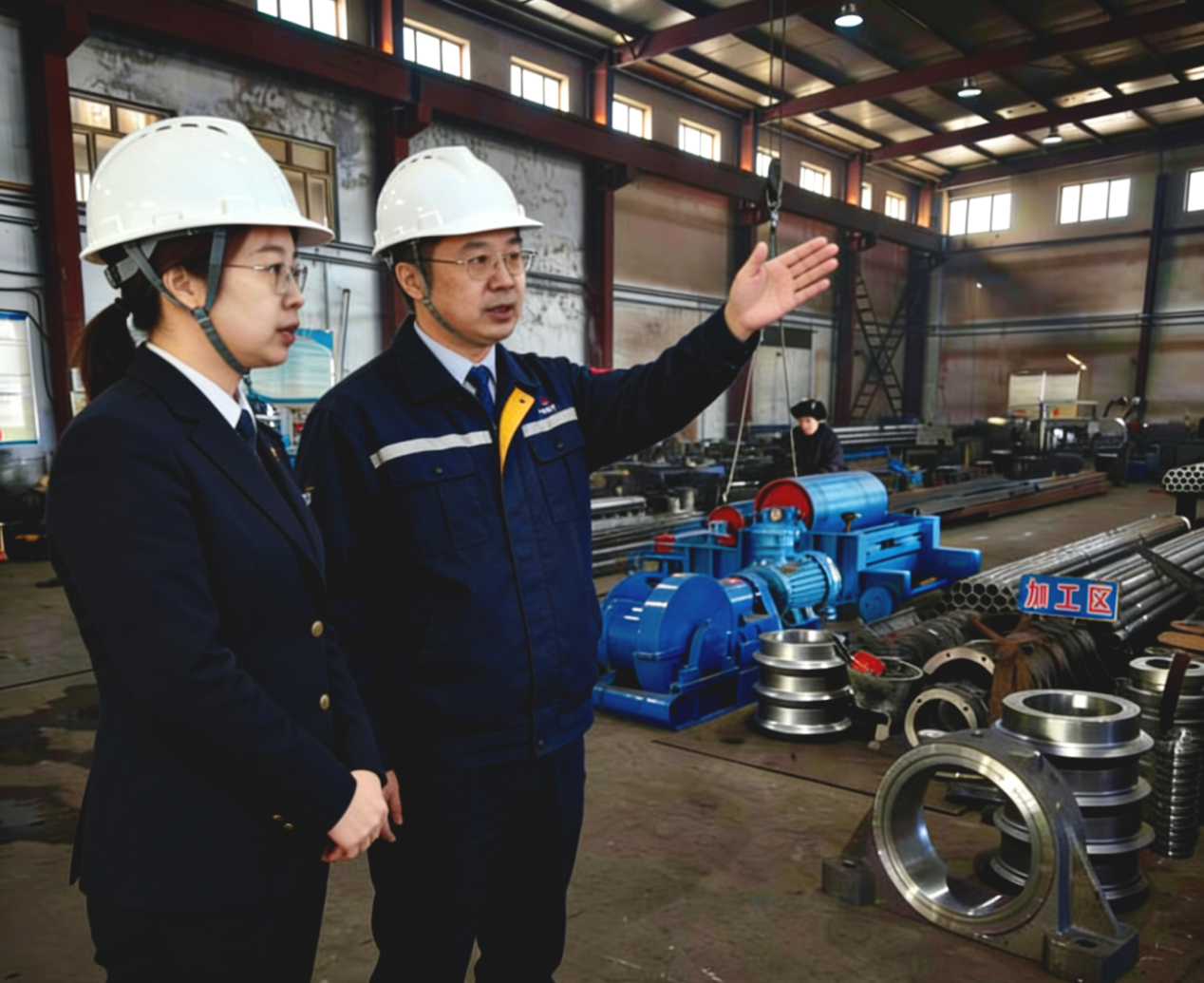
Core Viewpoint - Construction Bank's Duyashan Branch is focusing on providing precise financial support to local enterprises, enhancing their development momentum through tailored financial solutions [1][2]. Group 1: Company Overview - Jinnuo Hengye Machinery Manufacturing Co., Ltd. is a national high-tech enterprise and provincial-level specialized and innovative small and medium-sized enterprise, recognized for its patented technologies in the mining equipment manufacturing sector [2]. - The company is currently in a critical phase of technological iteration and capacity expansion, driven by increasing market orders and a need for substantial funding for research and raw material procurement [2]. Group 2: Financial Support Initiatives - Construction Bank's Duyashan Branch has developed a specialized financing solution called "Shanxin Loan," which is a pure credit working capital loan designed to meet the funding needs of specialized and innovative enterprises like Jinnuo Hengye [2]. - The bank quickly established a green approval channel, providing a timely injection of 10 million yuan in working capital loans to alleviate the company's financial pressure and support its growth [2]. Group 3: Collaborative Efforts - A government-bank-enterprise docking platform was established by the Finance Bureau and Industry and Information Technology Bureau of Lingdong District, facilitating in-depth communication and precise matching of financing needs between the bank and local enterprises [3]. - The bank aims to continue enhancing its financial services, focusing on specialized and innovative sectors, manufacturing, and small and medium-sized enterprises, to inject financial momentum into local economic development [3].
优化创新科技金融服务|金融惠民助开局
Xin Lang Cai Jing· 2026-03-08 06:18
Core Viewpoint - The article emphasizes the importance of enhancing technology financial services to support innovation and drive economic growth, particularly in the context of China's 14th Five-Year Plan and the upcoming 15th Five-Year Plan [1] Policy Guidance - Technology finance is identified as a key driver for industrial upgrading and achieving high-level technological self-reliance [2] - The People's Bank of China has mandated the construction of a multi-tiered financial service system to support key areas such as domestic demand, technological innovation, and small and medium-sized enterprises [2] - By the end of Q4 2025, 275,000 technology SMEs received loan support, with a loan approval rate of 50.2%, an increase of 2 percentage points from the previous year [2] Financial Support Mechanisms - A series of policies have been implemented since 2025 to guide long-term credit funds towards technology innovation, significantly boosting new productivity [3] - The implementation plan for high-quality development in technology finance aims to create a financial service system that aligns with technological innovation [3] - The People's Bank of China has reduced various structural monetary policy tool rates by 0.25 percentage points, increasing the re-lending quota for technology innovation and technological transformation by 400 billion yuan, totaling 1.2 trillion yuan [4] Challenges and Solutions - Despite policy advancements, technology enterprises still face financing challenges, necessitating innovative financial products and services [6] - Financial institutions are encouraged to move beyond traditional collateral requirements and assess companies based on their operational strengths and market potential [7] - Collaborative efforts between banks and enterprises are being established to facilitate financing through intellectual property pledges and other innovative mechanisms [8] Introduction of Patient Capital - The Financial Regulatory Authority has highlighted the need to cultivate patient capital to support the development of new productivity [9] - Financial Asset Investment Companies (AICs) are emerging as a significant source of patient capital, providing long-term funding solutions for technology innovation [9] - The establishment of AICs by major banks is expected to enhance the financial support for technology enterprises, particularly in the context of long-term investments [10]
金融惠民助开局丨优化创新科技金融服务
Jing Ji Ri Bao· 2026-03-08 02:54
Core Viewpoint - The article emphasizes the importance of enhancing financial services for technology innovation to support the development of new productive forces in China, particularly through policy guidance and financial support mechanisms [2][4]. Policy Guidance - Technology finance is identified as a key driver for industrial upgrading and achieving high-level technological self-reliance [2]. - The People's Bank of China has called for a multi-tiered financial service system to support key areas such as domestic demand, technology innovation, and small and medium-sized enterprises [2]. - By the end of Q4 2025, 275,000 technology-based SMEs received loan support, with a loan approval rate of 50.2%, an increase of 2 percentage points from the previous year [2]. Financial Support Mechanisms - A series of policies have been implemented since 2025 to guide medium- and long-term credit funds towards technology innovation, significantly boosting the development of new productive forces [3]. - The total loan balance for technology-based SMEs reached 3.63 trillion yuan, with a year-on-year growth of 19.8%, outpacing the growth of all loans by 13.6 percentage points [2]. Challenges and Innovations - Despite policy advancements, technology enterprises still face financing challenges, necessitating innovative financial products and services to address both enterprise financing difficulties and the transformation of financial institutions [7]. - Financial institutions are encouraged to move beyond traditional collateral requirements, focusing on evaluating the "hard strengths" of companies, such as current orders and stable supply chains [7]. Multi-Dimensional Policy Tools - The implementation of a comprehensive policy tool system is essential for supporting technology finance, including venture capital, bank credit, capital markets, and technology insurance [3]. - The introduction of technology insurance products aims to provide risk coverage for key areas such as R&D losses and patent protection, creating a multi-layered risk-sharing mechanism for technology innovation [8]. Introduction of Patient Capital - The Financial Regulatory Authority's 2026 meeting highlighted the need to cultivate patient capital to support the development of new productive forces [9]. - Financial Asset Investment Companies (AICs) are recognized as a significant source of patient capital, facilitating long-term funding for technology enterprises [9][10]. - AICs are expected to expand, providing a foundation for early, small, long-term investments in hard technology sectors [9]. Future Outlook - The expansion of AICs is likely to mobilize more funds for technology innovation, with commercial banks increasingly participating in this initiative [11]. - AICs are positioned as a core platform for integrated financial services, combining equity investment with credit support to meet the operational needs of technology enterprises [10][11].

优化创新科技金融服务
Jing Ji Ri Bao· 2026-03-07 22:31
Core Viewpoint - The article emphasizes the importance of enhancing financial services for technology innovation to support the development of new productive forces in China, particularly through policy guidance and financial support mechanisms [2][4]. Policy Guidance - Technology finance is identified as a key driver for industrial upgrading and achieving high-level technological self-reliance [2]. - The People's Bank of China has called for a multi-tiered financial service system to support key areas such as domestic demand, technology innovation, and small and medium-sized enterprises [2]. - By the end of Q4 2025, 275,000 technology-oriented SMEs received loan support, with a loan approval rate of 50.2%, an increase of 2 percentage points from the previous year [2]. Financial Support Mechanisms - A series of policies have been implemented since 2025 to guide medium- and long-term credit funds towards technology innovation, significantly boosting the development of new productive forces [3]. - The total loan balance for technology-oriented SMEs reached 3.63 trillion yuan, with a year-on-year growth of 19.8%, outpacing the growth of other loan categories by 13.6 percentage points [2]. Structural Adjustments - The implementation of the "High-Quality Development Implementation Plan for Technology Finance" aims to create a financial service system that aligns with technology innovation [3]. - The People's Bank of China has reduced various structural monetary policy tool rates by 0.25 percentage points, and increased the quota for re-loans for technology innovation and technological transformation by 400 billion yuan, totaling 1.2 trillion yuan [4]. Challenges and Innovations - Despite policy advancements, technology enterprises still face financing challenges, necessitating innovative financial products and services to address both enterprise financing difficulties and the transformation of financial institutions [6][7]. - Financial institutions are encouraged to move beyond traditional collateral requirements and assess companies based on their operational strengths and potential [7]. Collaborative Efforts - Banks are forming partnerships with local governments to facilitate connections between financial institutions and technology enterprises, utilizing methods like intellectual property pledge financing [7]. - The establishment of specialized financial institutions, such as technology banks and innovation financial departments, aims to provide comprehensive services tailored to the needs of technology-oriented enterprises [8]. Introduction of Patient Capital - The Financial Regulatory Authority has highlighted the importance of cultivating patient capital to support the development of new productive forces [9]. - Financial Asset Investment Companies (AICs) are recognized as a significant source of patient capital, facilitating long-term investments in technology innovation [9][10]. - The expansion of AICs is expected to enhance financial support for technology innovation, with several major banks already establishing their own AICs [9][10].
深耕三晋沃野 金融强县赋能 建设银行山西省分行以金融力量服务县域经济高质量发展
Jin Rong Shi Bao· 2026-03-05 01:56
Core Viewpoint - The 2026 Central Document No. 1 outlines a clear path for strengthening county economies, broadening income channels, and promoting comprehensive rural revitalization, with the China Construction Bank Shanxi Branch committed to empowering the real economy and supporting rural revitalization through targeted financial services [1] Group 1: Empowering Industrial Upgrades - The China Construction Bank Shanxi Branch focuses on the construction of characteristic professional towns and the cultivation of emerging industries, providing diversified financial products to reduce financing costs and support technological upgrades [2] - In Qingxu County, the birthplace of Shanxi's authentic vinegar, the bank has tailored comprehensive financial service plans to support the entire industrial chain, contributing to an annual output value of 7.5 billion yuan from 81 vinegar enterprises [2][3] - The bank provided 13.5 million yuan in fixed asset loans and 10 million yuan in working capital loans to support the technological transformation of a local vinegar company [3] Group 2: Deepening Specialty Agriculture - The bank emphasizes the development of specialty agriculture as a key to increasing farmers' income, focusing on various advantageous industries such as grains, fruits, and livestock [5] - In Wenxian County, the bank utilized a data-driven model to provide 3 million yuan in loans to support a pig farming project, significantly enhancing operational efficiency and economic benefits [6] - The bank has issued loans totaling 1.067 billion yuan to over 1,050 farmers across nearly 50 counties, stimulating the development of the specialty livestock industry [6] Group 3: Supporting Energy Transition - The bank integrates green finance into county development, supporting clean coal utilization, renewable energy, and circular economy projects to facilitate the energy transition [9] - A major wind and solar project in Datong, with an investment exceeding 6.28 billion yuan, received 70 million yuan in green loans from the bank within 1.5 days, marking a significant financial support for the project [10][11] - The bank has also introduced innovative financing solutions, such as forest rights mortgage loans, to activate ecological resources and support sustainable development [11][12] Group 4: Enhancing Livelihoods for Small and Micro Enterprises - The bank is committed to improving rural financial services, establishing 5,989 rural financial service points, and facilitating over 1.06 million transactions worth 528 million yuan [13][14] - The bank's initiatives include providing social security services at local points, significantly reducing the burden on rural residents [13] - The bank's support for local businesses, such as the implementation of a unified payment system for rural tourism, enhances operational efficiency and contributes to rural economic growth [16]

推进省会城市内涵式高质量发展
Jin Rong Shi Bao· 2026-02-26 05:12
Core Viewpoint - The China Construction Bank (CCB) Hunan Branch is strategically focusing on the Changsha region to enhance market competitiveness and contribute to high-quality development under low interest rate conditions [1] Group 1: Urgency - CCB Hunan Branch emphasizes the urgency of resource allocation, providing substantial financial support and targeted incentives for Changsha's grassroots outlets [2] - The branch maintains leading performance in net interest margin, cost-to-income ratio, and return on capital in the Changsha region [2] Group 2: Responsibility - Risk control is prioritized in the operational management of the Changsha region, with a focus on maintaining asset quality and implementing a multi-level risk governance system [4] - The branch has established a rigorous risk management framework, ensuring that asset quality remains among the best in the industry [4] Group 3: Mission - CCB Hunan Branch aims to lead in financial services that support the "Three Highs and Four New" development strategy, addressing financing challenges for technology-driven SMEs through innovative products [6] - The branch has achieved significant growth in technology finance, green credit, and inclusive finance, positioning itself as a leader in these sectors [6] Group 4: Major Construction - The branch has implemented a comprehensive management mechanism for major projects, providing nearly 300 billion yuan in financing to support key initiatives in Changsha [7] - CCB Hunan Branch has established deep cooperation with over 2,000 central enterprises and provincial state-owned enterprises, resulting in a significant increase in credit balance [7]
建设银行广州分行:金融向实 广州向上
Guang Zhou Ri Bao· 2026-02-25 01:21
Core Viewpoint - The China Construction Bank Guangzhou Branch is playing a pivotal role in supporting the high-quality development of Guangzhou by providing targeted financial services to key projects and industries, thereby injecting continuous momentum into the city's growth [1][2]. Group 1: Financial Support for Key Projects - The Guangzhou Branch is actively involved in financing significant urban projects, such as the Nansha Futures Industrial Park, which has a total investment of 1.867 billion yuan, and has provided 1.5 billion yuan in loans to support its development [2]. - The branch has established a task-oriented team to support 410 key projects across the city, focusing on emerging industries like low-altitude economy, marine economy, and new energy vehicles [3]. - By innovating financial service models, the branch aims to ensure that major projects have sufficient funding and can maintain momentum, thereby enhancing the manufacturing sector's confidence [3][10]. Group 2: Tailored Financial Products for Enterprises - The "Shanxin Loan" product has been introduced to support innovative enterprises like Guangzhou Shengyuancheng Automation Technology Co., which received 10 million yuan to address funding gaps for production line customization [5][6]. - The "Shanke Loan" product utilizes a "technology flow" evaluation system to provide quick credit approvals for high-tech companies, enabling a 2 million yuan loan to a semantic analysis technology firm within three days [6][7]. - The Guangzhou Branch has set a target to exceed 190 billion yuan in technology loans by the end of 2025, serving over 10,000 technology enterprises [7]. Group 3: Support for Rural and Environmental Projects - The branch has provided a 1.1 million yuan loan to an ecological environment company for rural water treatment projects, emphasizing the importance of continuous investment in environmental sustainability [11][12]. - The bank's innovative financing solutions have enabled the company to upgrade its technology and improve efficiency in ecological governance, showcasing the integration of financial support with environmental initiatives [12][13]. - The branch's green loan balance is expected to exceed 260 billion yuan by the end of 2025, reflecting its commitment to sustainable development [12]. Group 4: Enhancing Consumer Spending - The Guangzhou Branch has launched various promotional activities to stimulate consumer spending during the Spring Festival, including discounts for digital currency payments and consumer coupons [15][17]. - The bank has facilitated over 50,000 digital currency scenarios, with transaction amounts reaching 11 billion yuan, demonstrating its role in enhancing urban consumption [17]. - The bank aims to align its financial services with government policies to boost consumption in key sectors such as retail and tourism [17].
金融活水润南粤 消费赋能启新程
Sou Hu Cai Jing· 2026-02-24 02:52
Core Viewpoint - The Construction Bank of Guangdong Province is actively enhancing consumer finance services to stimulate consumption and support high-quality economic development in Guangdong, aligning with the goals of the 14th Five-Year Plan [2][11]. Group 1: Consumer Finance Initiatives - The bank has implemented a "CCB Yue Huan Xin" brand to promote consumer finance, focusing on precise policy implementation and innovative financial services [2][11]. - Over 100,000 customers have signed subsidy agreements, with a total subsidized consumption amount exceeding 680 million yuan, directly driving consumption by over 5.6 billion yuan [3][12]. - The bank has launched various promotional activities during the Spring Festival, including digital currency red envelopes and discounts, to enhance consumer spending [3][12]. Group 2: Integration of Financial Services and Local Economy - The bank is integrating financial services into local consumer scenarios, enhancing accessibility and convenience for consumers [4][13]. - In Foshan, the bank upgraded POS systems for nearly 220 merchants, facilitating international card payments and offering discounts for consumers [5][13]. - In Zhanjiang, the bank collaborated with local government to distribute consumption vouchers, revitalizing traditional markets and boosting consumer activity [5][13]. Group 3: Support for Small and Micro Enterprises - The bank focuses on the financing needs of small and micro enterprises, providing tailored loan products to address their urgent financial requirements [6][14]. - Quick loans have been issued to businesses facing cash flow challenges, such as a seafood merchant in Guangzhou who received 500,000 yuan within three days to meet increased demand [6][14]. - A food processing company received 5 million yuan to support its production line upgrade, significantly increasing its capacity [6][14]. Group 4: Building a Comprehensive Consumption Ecosystem - The bank has developed a consumption subsidy platform that integrates government subsidies, corporate discounts, and financial services, enhancing the consumer ecosystem [7][15]. - The platform has facilitated financing for over 32.49 billion yuan in consumer transactions, significantly boosting overall consumption [7][15]. - The bank is expanding its merchant network, aiming to onboard over 110,000 new merchants by 2025, allowing small businesses to benefit from the growing consumer market [7][15]. Group 5: Future Outlook - The bank plans to continue its efforts in consumer finance, focusing on precise policy implementation and enriching service offerings to stimulate market vitality [8][16]. - The bank aims to embed financial services into various aspects of daily life, including housing and healthcare, to create a more comprehensive consumer ecosystem [8][16]. - The bank's commitment to enhancing consumer finance is expected to contribute significantly to Guangdong's economic development and modernization efforts [8][16].