
数字金融

Search documents
“专业投研+科技赋能” 南方基金迈向高质量发展新征程
Cai Jing Wang· 2025-06-12 02:37
Core Viewpoint - Financial institutions are actively entering the market to enhance equity allocation, stabilize capital markets, and promote value investment, thereby contributing to the healthy and orderly development of the capital market [1] Group 1: High-Quality Development - Southern Fund has implemented the central financial work meeting's spirit, focusing on serving the real economy through five key areas: technology finance, green finance, inclusive finance, pension finance, and digital finance [2] - The company emphasizes technology finance as a core strategy for modern industrial system construction, enhancing research and asset allocation in strategic emerging industries like semiconductors, artificial intelligence, and biomedicine [2] Group 2: Green Finance and ESG Practices - Southern Fund actively practices ESG investment principles, covering over 5,100 A-share companies and 7,100 bond issuers in its ESG rating system, significantly impacting ESG performance and risk assessment [3] - The company has developed a comprehensive carbon emission database for all A-share listed companies and received two awards from UNPRI for its ESG practices [3] Group 3: Inclusive Finance and Digital Transformation - The company adheres to the "finance for the people" philosophy, enhancing investor experience through innovative platforms like "Sinan Investment Advisory" for comprehensive asset allocation solutions [3] - Southern Fund prioritizes financial technology, implementing a clear digital transformation strategy to integrate finance with digital technology, thereby improving service efficiency [4] Group 4: Value Creation and Market Stability - The introduction of the new "National Nine Articles" has improved the capital market's foundational systems and enhanced institutional investor stability [5] - Southern Fund supports the implementation of policies aimed at increasing long-term capital market participation, which is crucial for optimizing investor structure and enhancing market resilience [5] Group 5: Regulatory Framework and Future Outlook - The China Securities Regulatory Commission released an action plan for promoting high-quality development in the public fund industry, focusing on optimizing operational models and enhancing equity investment [6] - Southern Fund aims to adhere to its core asset management principles while exploring ways to support modern industrial systems and contribute to common prosperity [6]
到2027年现代服务业增加值超1300亿元
Guang Zhou Ri Bao· 2025-06-11 20:17
Core Viewpoint - The "Action Plan" aims to promote high-quality development of the modern service industry in Jiangmen City, targeting a value-added increase of over 130 billion yuan by 2027, with an average annual growth rate of 5% [1] Group 1: Development Goals - By 2027, the modern service industry is expected to achieve a value-added of over 130 billion yuan, with the establishment of various commercial zones including one 10 billion yuan zone, one 20 billion yuan zone, and three 1 billion yuan zones [1] - The plan includes the addition of 300 service projects with investments exceeding 100 million yuan, 90 service enterprises with revenues over 100 million yuan, and 30 buildings generating tax revenues exceeding 10 million yuan [1] - The total number of large-scale service enterprises is projected to reach 3,300 by 2027 [1] Group 2: Key Areas of Focus - The plan outlines 13 key areas for development, including technology services, industrial design, software information, business services, financial services, human resources, modern logistics, inspection and certification, green low-carbon services, modern commerce, cultural tourism, health and elderly care, and sports services [1][2] - Specific targets include reaching 54 large-scale technology service enterprises with revenues of 1.5 billion yuan, and establishing 1 to 3 provincial-level pilot platforms by 2027 [2] Group 3: Business Services and Financial Services - In business services, the goal is to have 200 large-scale enterprises with revenues of 6.5 billion yuan by 2027, and to facilitate international arbitration services involving 20 billion yuan [3] - The financial services sector will focus on technology finance, green finance, inclusive finance, pension finance, and digital finance [3] Group 4: Human Resources and Logistics Services - The human resources sector aims to have 50 large-scale service institutions with revenues of 2.5 billion yuan by 2027, supporting the development of a comprehensive human resources solution provider [3] - In logistics services, the plan includes the construction of logistics parks and centers, with a target of achieving a value-added of over 16 billion yuan in transportation, warehousing, and postal services, and reaching 95 large-scale enterprises [3]
马上消费与中国电子技术标准化研究院签署战略合作协议
Jing Ji Guan Cha Wang· 2025-06-11 12:43
Core Viewpoint - The strategic cooperation between Mashang Consumer and the China Electronic Technology Standardization Institute aims to promote the standardization and high-quality development of the fintech industry through a comprehensive collaboration framework [1][3]. Group 1: Strategic Cooperation - The partnership will focus on standard formulation, ecological construction, and talent cultivation in the fintech sector [1]. - Both parties will leverage their strengths to engage in comprehensive and multi-level cooperation, including the development of international, national, and industry standards [3]. - The collaboration will also involve testing, certification, and research projects in areas such as artificial intelligence, data, cloud computing, and the metaverse [3]. Group 2: Achievements and Recognition - Over the past ten years, Mashang Consumer has served over 200 million users and has received 12 significant honors, including being recognized as a national high-tech enterprise [3]. - The company has led the formulation of over 120 information technology standards and has recently initiated two international standards related to financial large language models and machine learning [2]. Group 3: Future Plans - Mashang Consumer plans to deepen its collaboration with the China Electronic Technology Standardization Institute and other ecological partners to create an open and secure ecosystem [4]. - The goal is to provide replicable and promotable "Chongqing experience" for the innovation and development of the national digital finance industry [4].
与海南自贸港同行 广发银行书写琼岛金融发展新答卷
2 1 Shi Ji Jing Ji Bao Dao· 2025-06-11 08:11
Core Viewpoint - The establishment of Hainan Free Trade Port has entered a new phase of comprehensive deepening of reform and opening up, with Guangfa Bank playing a significant role in supporting its development [1] Group 1: Financial Services System - Guangfa Bank has accelerated its efforts to introduce financial resources into Hainan, leveraging its comprehensive financial advantages as a member of China Life [2] - The bank issued a comprehensive financial service plan in 2021 to support the construction of Hainan Free Trade Port, focusing on key areas such as digital development, cross-border trade, and optimizing the business environment [2] Group 2: Financial Service Quality - Guangfa Bank has enhanced its financial services to support Hainan's regional development, demonstrating a commitment to the construction of Hainan Free Trade Port [3] Group 3: Technological and Green Finance - The Haikou branch has increased credit support for technology enterprises and strategic emerging industries, issuing loans totaling 1.58 billion yuan to tech companies [4] - The branch has also issued 78.1 million yuan in green bonds and implemented a "priority review" mechanism for green credit, achieving a 13.2% increase in green credit balance by May 2025 [4] Group 4: Social Responsibility - Guangfa Bank has supported over 5,600 households in housing projects with more than 2.2 billion yuan in credit, demonstrating its commitment to social welfare [5] - The bank has also established a special fund for hearing-impaired children and has been recognized as an advanced collective in national disability work [5] Group 5: Future Outlook - As Hainan Free Trade Port approaches a critical phase of operation, Guangfa Bank aims to integrate its "finance for the people" philosophy into its actions, contributing to the development of Hainan [6]
20多款机器人参建,北京“数字金融高地”地标建筑有新进展
Xin Jing Bao· 2025-06-10 07:40
Core Insights - The Lize Digital Financial Technology Demonstration Park project has reached a significant milestone with the completion of the last steel beam, marking the topping out of the first 5A super-class office building, transitioning from planning to reality [1] - The project is a key landmark for the "Digital China" strategy in Beijing, covering an area of approximately 67,800 square meters with a total construction area of 497,000 square meters, serving as a platform for financial technology innovation [2] Construction and Technology - The project utilizes a steel structure with a total steel usage of approximately 42,000 tons, presenting significant challenges in construction precision and component installation [2] - A "digital brain + intelligent touch" construction system has been established on-site, integrating over 20 types of intelligent construction robots with BIM technology, enhancing construction speed and efficiency [2][3] - The introduction of smart pit monitoring robots has reduced the data collection time from two days with a ten-person team to just one hour with a single operator [3] Efficiency and Cost Reduction - The establishment of a digital template processing factory on-site has enabled 24-hour continuous operation, increasing construction efficiency by 10 times and reducing costs by 10% [3] - The use of intelligent six-axis collaborative welding robots and three-dimensional scanning robots has improved construction speed while ensuring quality and safety [3] BIM Technology Application - The deep application of BIM technology acts as an "intelligent brain" for the project, facilitating real-time collaboration among various professional teams and significantly improving problem-solving efficiency [4] - For instance, issues that previously took four to five hours to resolve can now be addressed in 30 minutes through the BIM online system, enhancing efficiency by 8 to 10 times [4] Project Overview and Future Prospects - The Lize Digital Financial Technology Demonstration Park, with a total investment of 14 billion yuan, will include high-end office buildings, administrative apartments, and self-owned commercial spaces, creating a modern park that integrates industry innovation, financial services, and social life [5] - The project aims to focus on key areas such as digital currency, regulatory technology, and digital assets, establishing a new high ground for digital financial development in the capital [5]

邮储银行广西百色市分行:科技赋能 让金融服务“贷”动乡村振兴
Zheng Quan Ri Bao Zhi Sheng· 2025-06-10 07:26
长期以来,农户及个体工商户面临着"融资难、触达难"的困境。为打破这一局面,邮储银行百色市分行 积极探索科技赋能金融服务新路径,深度应用行内"数字三农"平台,让信贷服务实现精准直达。该平台 借助大数据技术,整合农户及商户的经营信息、贷款记录等多维度数据,为客户生成精准画像。系统自 动筛选出有融资潜力的客户后,客户经理可利用"一键电话""一键导航"功能主动联系客户,并结合"营 销地图"开展上门服务。 在实际服务过程中,科技赋能的优势尽显。例如,当客户到网点办理业务时,系统会通过专业评估体 系,综合考虑客户各方面情况,若符合条件便会提示"主动授信"。网点工作人员收到提示后,会针对性 地向客户推荐"极速贷"产品。客户只需在线上提交申请,短短几分钟内就能完成审批流程,便捷高效的 服务让金融支持实实在在地落到消费者手中。 本报记者 李美丽 通讯员 韦春辉 黄小崧 "以前贷款要跑银行、填资料,没想到现在一个电话就解决了!"说起这次贷款经历,经营林业综合开发 的周先生连连称赞。近日,邮储银行广西百色市分行辖内凌云县支行通过"数字三农"平台的"一键电 话"服务,从一个电话开始、短短3天就为周先生快速发放130万元贷款,及时解决 ...

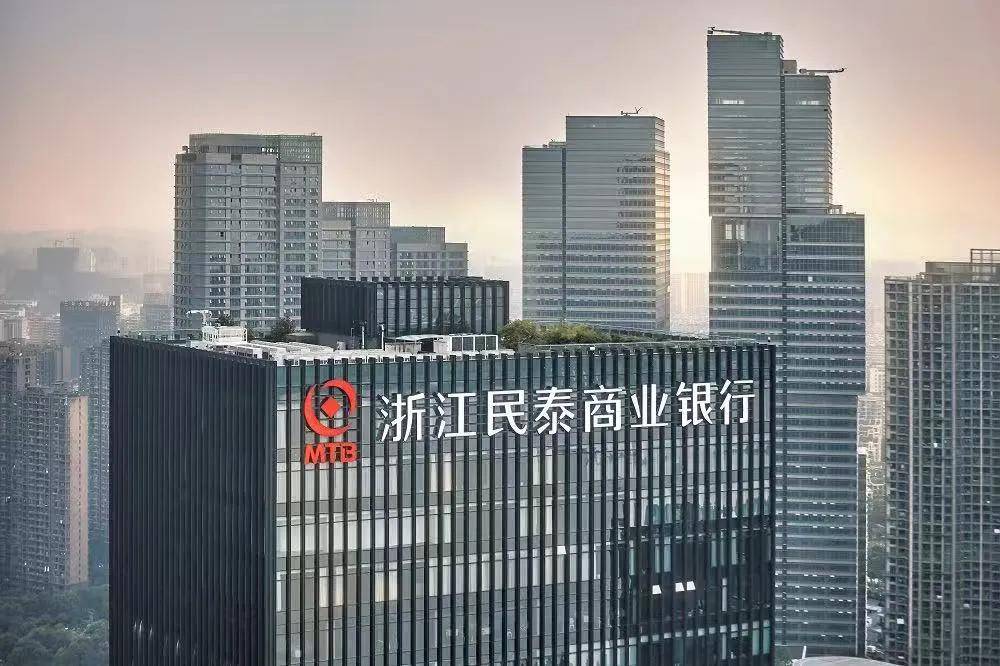
民泰银行携手华为打造自主创新云平台,开启数智化转型新征程
Sou Hu Cai Jing· 2025-06-09 14:10
Core Insights - The rapid development of the digital economy has made digital finance a strong engine for the innovation and upgrading of the financial system [1] - MinTai Bank is actively exploring new pathways for digital transformation, focusing on building an innovative cloud platform to support its financial services [3][4] Group 1: Digital Transformation and Cloud Platform - MinTai Bank is committed to a digital transformation strategy that emphasizes professional operations, technological development, comprehensive services, and refined management [4] - The bank has established 343 branches and ranked 485th in the 2024 Global Bank 1000 list by The Banker magazine [4] - The need for a self-innovative cloud platform is driven by the demand for flexible resource allocation and rapid response to various applications, including anti-money laundering and fraud detection [4][5] Group 2: Business Resilience and New Technology Applications - The increasing uncertainty of traditional technology routes necessitates a focus on business resilience, emphasizing the importance of continuity and reliability [5] - New technologies, particularly artificial intelligence, are accelerating integration with financial business scenarios, requiring a shift to distributed and cloud-native architectures [6] Group 3: Self-Developed Cloud Platform Advantages - The self-developed cloud platform utilizes various self-innovative hardware and software products, enhancing operational efficiency and providing secure and stable service guarantees [8] - Compared to traditional IT infrastructure, the new platform offers advantages such as technical leadership, service orientation, and high reliability [8] Group 4: Achievements and Recognition - Since its launch in 2022, the self-developed cloud platform has undergone two years of upgrades and now supports 83 application systems, significantly improving cost efficiency and security [9] - MinTai Bank has established a mature methodology and best practices in strategy formulation, technology stack selection, and performance optimization, earning recognition from the Ministry of Industry and Information Technology [9]

发动“数字引擎” 银行业探索服务实体新范式
Jin Rong Shi Bao· 2025-06-09 01:52
网上政务服务时常因为"信息掌握不对称、意图理解不准确、操作交互不便利"等问题"难倒"前来办事的 用户。近日,在建设银行厦门市分行的支持下,厦门市住房公积金中心全面升级住房公积金"慧聚金 巢"智能助手的大语言模型底座,在"通义千问"大语言模型基础上,同时接入DeepSeek开源大语言模 型,为用户提供"双智能"模式服务,有力提升了用户的办事体验。 "去年,我们在了解到厦门市住房公积金中心需求后,助力其利用'通义千问'大语言模型先后开通公积 金缴存查询、公积金提取等43项高频办事事项。"建行厦门市分行相关负责人告诉《金融时报》记者, 尤其是在购买一、二手房提取住房公积金,正常退休提取住房公积金等7项业务实现了"边聊边办""秒批 秒办"。 在全国住房公积金行业领域,厦门市率先实现了业务咨询办理一体化人工智能服务,此次接入 DeepSeek开源大语言模型后,通过问答信息与共享数据交叉验证,进一步提升了服务精准度。据介 绍,智能助手上线以来,该系统累计回答问题10.17万余次,自主完成160余笔"边聊边办"业务,实现 了"咨询即受理、对话即办事"智能化转型。 为了让小微企业主轻松看懂账务,厦门市一家财务管理有限公司近期 ...


邮储银行徐水支行 以金融“薪火”烹旺驴火产业
Zheng Quan Ri Bao Zhi Sheng· 2025-06-08 14:44
Core Insights - The Xu Shui donkey meat industry is experiencing rapid growth, with over 300 restaurants and an annual output value of approximately 300 million yuan [1][2] - Postal Savings Bank Xu Shui Branch is actively supporting the industry by providing tailored financial solutions to address funding shortages [1][2] Group 1: Industry Development - Xu Shui district has a significant number of donkey meat processing enterprises and livestock farmers, contributing to a billion-yuan scale industry [2] - The demand for high-quality donkey meat is increasing due to the rising brand value of "Xu Shui Donkey Fire" [2] Group 2: Financial Support - The Xu Shui Branch of Postal Savings Bank has provided a total of 5 million yuan in loans to local businesses, facilitating their expansion and modernization efforts [1] - The bank completed a loan of 1 million yuan for a key donkey farmer within just seven days, showcasing its efficiency in addressing urgent financial needs [2] Group 3: Technological Empowerment - The traditional donkey meat fire industry is undergoing digital transformation to overcome challenges such as aging customer demographics and fragmented operational data [3] - Postal Savings Bank is leveraging digital finance to enhance the industry ecosystem, offering efficient payment services and marketing support to local businesses [3]
数字金融激活宁波经济“一池春水”
Zheng Quan Ri Bao· 2025-06-08 14:42
Core Viewpoint - Digital technology is enhancing financial services, making them more efficient and supportive for enterprises, particularly in the context of foreign trade [1][2]. Group 1: Digital Financial Services - Financial institutions are increasingly adopting digital financial services to improve efficiency and innovate products, moving beyond traditional credit services to a comprehensive service model [1][2]. - The "Bobo Zhila" data platform provides diversified services in legal and tax consulting, significantly aiding foreign trade enterprises in expanding overseas markets [1]. Group 2: Challenges in Digital Finance - Digital financial services face challenges such as data silos, insufficient application of digital services by financial institutions, and limitations of intelligent systems in complex risk assessment and precise financing matching [1][2]. - These challenges hinder the ability to meet the diverse financing needs of enterprises [1]. Group 3: Solutions and Innovations - Financial institutions should collaborate with government departments to establish unified data-sharing platforms, integrating resources from various sectors to break down information silos [2]. - There is a need for enhanced data governance and analysis capabilities to provide accurate enterprise profiles, risk assessments, and product matching services [2]. - Investment in technology research and development, along with partnerships with tech companies or universities, is essential to optimize algorithms and models for better risk assessment and financing solutions [2][3]. Group 4: Specific Applications - Blockchain technology can be utilized to optimize cross-border payment and trade financing processes, reducing operational risks and improving business efficiency for foreign trade enterprises [3].