中国式现代化

Search documents
2026年全省发展改革重点任务圈定 八个着力点推动经济量质齐升
He Nan Ri Bao· 2025-12-25 23:43
一是纵深推进融入服务全国统一大市场。全面落实"五统一、一开放"基本要求,接续实施年度重点事项 攻坚,破除市场循环卡点堵点,加力建设全国统一大市场循环枢纽和国内国际市场双循环支点。二是深 入挖掘投资和消费有效需求潜力。争足用好政策性资金,抓实抓细项目建设,挖掘培育消费新增长点, 提升经济持续增长的内生动力和可靠性。三是着力构建现代化产业体系。统筹抓好传统产业转型升级、 新兴产业发展壮大、未来产业前瞻布局,开展服务业扩能提质行动,激活数智赋能引擎,发挥场景牵引 作用,深化产业园区改革。四是进一步深化改革扩大开放。加快营造一流营商环境,促进民营经济高质 量发展,深化重点领域价格改革,稳步拓展双向投资合作空间,持续深化国内区域合作。五是促进区域 协调和城乡融合发展。着力构建"一主两副、一圈两带、四域多点"城镇发展格局,落实乡村振兴重点任 务。六是稳步提升基础设施支撑能力。持续完善"空铁公水"立体交通网络,加快建设新型能源体系,推 进建设现代水网体系,完善数字基础设施体系。七是加快经济社会发展全面绿色转型。深入实施碳达峰 行动,加强重点流域生态保护治理,助力打好污染防治攻坚战。八是持续加大保障和改善民生力度。全 力稳住 ...
锚定全球坐标 激荡湾区动能
Sou Hu Cai Jing· 2025-12-25 23:36
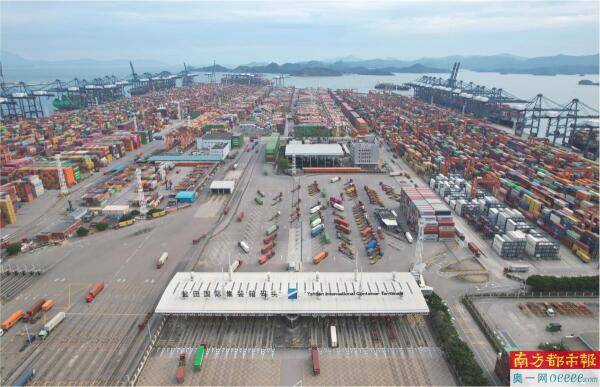
Core Viewpoint - Yantian International Container Terminal is a crucial hub for global trade, showcasing China's economic vitality and serving as a model for high-quality development in logistics and industry [4][7][17]. Development - Yantian International is recognized as the preferred port for ultra-large vessels in South China and is one of the largest container terminals globally, handling an average of one container every two seconds [4][8]. - The terminal has evolved from a small port with a throughput of 100,000 TEUs to a world-class port with over 15 million TEUs, significantly contributing to Guangdong's foreign trade [7][8]. - The port's operations are enhanced by advanced digital systems, allowing for intelligent management of logistics, resulting in industry-leading operational efficiency [9]. Environmental Initiatives - Yantian has implemented green port initiatives, including a significant shift to electric power and shore power systems, leading to a notable reduction in carbon emissions [10]. - The terminal has been recognized as the "Global Best Green Container Terminal" multiple times, highlighting its commitment to sustainable practices [10]. Connectivity - Yantian International is developing a comprehensive transportation network that connects domestic and international markets, enhancing the resilience of the Greater Bay Area's economy [11][12]. - The port facilitates rapid import and export processes, exemplified by the "Cherry Express" service that ensures fresh produce reaches consumers quickly [12]. Service Innovation - The terminal supports the transformation of Chinese manufacturing by providing tailored logistics solutions for high-value products, including electric vehicles and cultural creative products [14][15]. - Yantian has become a key channel for China's "new three samples" (electric vehicles, lithium batteries, solar cells) to enter international markets, addressing logistical challenges through innovative shipping solutions [15][16]. Future Outlook - Yantian is positioned to evolve from a traditional logistics hub to a center for marine economy innovation and green shipping, aligning with national strategies for maritime strength [17].

信长星在省管主要领导干部研讨班开班式上强调进一步学深悟透党的二十届四中全会精神奋力开创“十五五”各项事业发展新局面刘小涛主持 张义珍出席
Xin Hua Ri Bao· 2025-12-25 23:19
信长星强调,省管干部是全省各项事业发展的中坚骨干,要始终胸怀"两个大局"、牢记"国之大 者",不断提高政治能力、战略眼光、专业水平,引领带动各级干部克难关、战风险、迎挑战,推动中 国式现代化江苏新实践取得新的更大突破。 研讨班开班式以视频会议形式举行。省委常委,省人大常委会、省政府、省政协领导同志,省法院 院长,各设区市党委、人大常委会、政府、政协领导班子成员,省各部门单位主要负责同志,省属企业 高校科研院所党政主要负责同志,各县(市、区)党委政府主要负责同志等参加。 信长星结合对党的二十届四中全会精神和习近平总书记一系列重要论述的学习领会,紧扣江苏发展 实际,与大家深入交流。他指出,推动高质量发展是"十五五"时期经济社会发展的主题,要完整准确全 面贯彻新发展理念,坚持系统观念,注重因地制宜,找准自身优势与全局工作的结合点,努力在高质量 发展上继续走在前列。为人民谋幸福是贯穿我们党伟大奋斗历程的鲜明主线,要树牢以人民为中心的发 展思想,坚持尽力而为、量力而行,积极回应人民群众对美好生活的新期盼,把投资于物和投资于人紧 密结合起来,稳步推进基本公共服务均等化,推动人的全面发展、全体人民共同富裕迈出坚实步伐。推 ...
科学思想引领中国经济赢得未来
Jing Ji Ri Bao· 2025-12-25 22:08
Group 1 - The core idea of Xi Jinping's economic thought emphasizes the construction of a modern economic system that is strong, resilient, innovation-driven, and promotes coordinated development, combining effective markets with proactive government intervention for long-term national development [1][2] - High-quality development is a significant focus, shifting from a growth-speed-centric model to a sustainable and innovation-driven approach, which necessitates strengthening technological innovation and enhancing advanced manufacturing capabilities [1][2] - The concept of "green development" is highlighted, positioning ecological civilization as a crucial aspect of development, advocating for the harmony between economic growth and ecological protection [3] Group 2 - Xi Jinping's economic thought stresses the importance of balancing development and security, enhancing macroeconomic regulation, reducing financial risks, and ensuring the safety of industrial and supply chains, which aligns with the new development pattern of dual circulation [2] - The goal of common prosperity aims to ensure that development benefits all people, narrowing disparities and providing equal access to public services and opportunities, reflecting a people-centered development philosophy [2] - The leadership of the Communist Party of China is essential for promoting high-quality development and achieving common prosperity, necessitating the continuous improvement of the socialist market economy system [2][3]
银河基金: 深入贯彻全会精神 为金融强国建设贡献银河力量
Zhong Guo Zheng Quan Bao· 2025-12-25 21:55
党的二十届四中全会审议通过的《中共中央关于制定国民经济和社会发展第十五个五年规划的建议》, 明确了"十五五"时期经济社会发展的指导方针和主要目标,擘画了未来五年发展的宏伟蓝图,为深入推 进中国式现代化指明了前进方向。 强化功能发挥 在服务国家大局中彰显作为 "十五五"规划建议把坚持党的全面领导作为"十五五"时期经济社会发展必须遵循的首要原则,强调坚持 和加强党的全面领导是推进中国式现代化的根本保证。银河基金表示,公募基金要深刻领悟"两个确 立"的决定性意义,坚持党中央对金融工作的集中统一领导,确保始终沿着正确方向前进,以高质量党 建引领高质量发展。 "十五五"规划建议把大力发展金融"五篇大文章"摆在更加突出的位置,以"五篇大文章"勾画出未来五年 金融资源优化配置、服务国家战略和实体经济的系统性"施工图"。银河基金表示,公募基金作为重要的 机构投资者,在服务国家战略和实体经济方面发挥重要作用,要进一步加大对国家重大战略、重点领域 和薄弱环节的支持力度,以实际行动落实好"五篇大文章"。 银河基金践行国有金融机构的使命担当,坚决贯彻落实党中央重大决策部署。积极发挥服务国家战略领 导小组作用,持续健全服务国家战略闭环 ...
深入贯彻全会精神为金融强国建设贡献银河力量
Zhong Guo Zheng Quan Bao· 2025-12-25 21:11
● 本报记者 王宇露 银河基金坚持在科技创新领域深耕细作,持续加强研究深度与投资布局。组建科技行业投研团队,紧跟 政策导向,深入开展理论学习,加强实地调研。聚焦科技前沿产业开展前瞻性、系统化、全景式研究, 形成低空经济、人工智能产业等新质生产力系列专题报告。基于多年在科技赛道的研究积淀,银河基金 立足全产业链,在半导体、AI、机器人、信创、新能源等领域前瞻布局,形成了较为全面的投资体 系,积极陪伴有潜力的科技企业成长。同时,以银河高端装备混合发起式、银河新材料股票发起式、银 河中证机器人指数等科技细分赛道基金产品为依托,充分发挥公募基金对科技领域的价值发现作用,持 续服务新质生产力发展,推动"科技-产业-金融"深入一体融合,深化"科技银河"特色品牌。 牢记金融为民 在履行社会责任中展现形象 "十五五"规划建议把"坚持人民至上"作为经济社会发展必须遵循的重要原则。《推动公募基金高质量发 展行动方案》强调要坚持以投资者为本,牢固树立以投资者最佳利益为核心的经营理念。银河基金表 示,公募基金要牢记金融为民的初心,积极践行中国特色金融文化,将履行社会责任和企业经营发展深 度融合,不断增强人民群众获得感、幸福感。 银河 ...
中国式现代化的逻辑理路及其世界意义
Xin Lang Cai Jing· 2025-12-25 20:25
(来源:光明日报) 吴志成在《中国社会科学》2025年第10期撰文指出,现代化是特定主体在多样领域推动现代性变革的系 统过程,相同的要素构成与不同的组合配置从根本上塑造了世界现代化的共同特征和各国现代化的多彩 图景。探究中国式现代化与世界现代化之间的关系,必须立足共性与个性有机统一的辩证法,聚焦塑造 现代化基本形态的构成要素,从现代化要素构成的相似性与取值的差异性视角加以考察。因此,应统筹 历史、人民、政党、国家、社会等多重维度,以始发坐标、发展旨归、领导力量、实现载体、实践形态 为基本要素,考察中国式现代化"从何而发"的历史逻辑、"为何而生"的人民逻辑、"因何而兴"的政党逻 辑、"依何而存"的国家逻辑以及"向何而进"的社会逻辑,以此为系统论析中国式现代化的逻辑理路提供 一个体系化学理化的分析框架。 【论点摘编】 转自:光明日报 ...
水利部党组理论学习中心组学习习近平法治思想
Shui Li Bu Wang Zhan· 2025-12-25 13:52
会议强调,要把学习贯彻习近平法治思想作为当前和今后一个时期的重要政治任务,把学习贯彻习近平 法治思想同学习贯彻习近平总书记"节水优先、空间均衡、系统治理、两手发力"治水思路和关于治水重 要论述结合起来,同学习贯彻《习近平法治文选》(第一卷)、《习近平法治思想学习纲要(2025年版)》 等权威读物结合起来,学习好运用好贯穿其中的立场观点方法、道理学理哲理,不断增进对习近平法治 思想的政治认同、思想认同、理论认同、情感认同。要紧紧围绕推进中国式现代化赋予水利的使命任 务,紧紧围绕党中央对法治领域的重大部署、重要任务、重点工作,进一步健全水利法治体系,加快形 成完备的水利法律规范体系、高效的水利法治实施体系、规范的水利依法行政体系、有力的水利法治保 障体系,不断提高运用法治思维和法治方式深化改革、推动发展、化解矛盾、维护稳定、应对风险的能 力,更好发挥法治固根本、稳预期、利长远的保障作用,为确保基本实现社会主义现代化取得决定性进 展作出水利贡献。 作者:李海川程增辉责编:魏永静 会议指出,习近平法治思想是马克思主义法治理论中国化时代化的最新成果,是中国特色社会主义法治 理论的重大创新发展,是习近平新时代中国特色社会 ...
《习近平谈治国理政》第五卷在非洲引发热烈反响
Xin Hua She· 2025-12-25 13:33
Core Viewpoint - The recent promotion event for the English version of "Xi Jinping: The Governance of China" Volume V in Africa has sparked significant reactions, highlighting the importance of the series in helping the international community understand the achievements and global significance of Chinese-style modernization [1] Group 1 - The series of works by Xi Jinping is seen as beneficial for deepening the understanding of China's governance practices and modernization achievements among the international community [1] - The event facilitated exchanges of governance experiences between China and Africa, emphasizing the importance of collaboration in building a community with a shared future for humanity [1] - Attendees, including international guests, expressed that the series contributes to consolidating development consensus among the Global South [1]
“为世界提供了新的发展道路选择”
Xin Lang Cai Jing· 2025-12-25 13:18
Core Insights - The "Belt and Road Initiative" (BRI) is transforming from a theoretical concept into practical applications, providing significant opportunities for economic and social development in Arab countries [1][2] - Arab nations are deepening pragmatic cooperation with China, with these countries being China's seventh-largest trading partner and the primary supplier of crude oil [2] - Lebanon, due to its strategic location and skilled workforce, is positioned as a natural partner in the BRI, but it needs to achieve political stability and improve infrastructure for effective participation [2][3] Economic Modernization - The fundamental difference between Chinese and Western modernization lies in financing and development goals; Chinese modernization emphasizes government roles and long-term planning for common prosperity [2][3] - China combines effective market mechanisms with proactive government intervention, creating a balanced economic order that fosters both state-owned and private enterprises [3] - The experience of China in economic governance offers insights for Arab countries on finding development paths suited to their unique circumstances rather than merely replicating foreign models [3] Global Engagement - China's increasing presence on the global stage is reflected not only in its economic and technological capabilities but also in its role in providing public goods for global peace and development [3] - The BRI and other global initiatives are strengthening China's relationships with countries worldwide, enhancing cooperation and dialogue, particularly with Asian nations [3]