
多边贸易体制

Search documents
商务部部长王文涛,最新发声!
Zheng Quan Shi Bao· 2025-11-02 15:46
Group 1: Core Views - Wang Wentao emphasizes the importance of maintaining stable industrial and supply chains between China and South Korea, advocating for enhanced bilateral cooperation [2] - The discussions highlight the need for cooperation within frameworks such as the WTO and RCEP to restore negotiations on the China-Japan Free Trade Agreement [2][3] - The meetings with various trade ministers underscore a collective commitment to oppose unilateralism and protectionism while promoting multilateral trade systems [3][4][6] Group 2: Key Meetings and Discussions - Wang Wentao met with South Korean Minister of Trade, emphasizing the need for communication mechanisms to ensure supply chain stability [2] - In discussions with Japan's Minister of Economy, Wang urged for the removal of Chinese entities from Japan's export control list and stressed the importance of a rules-based international economic order [3] - The meeting with New Zealand's Trade Minister focused on enhancing bilateral economic cooperation and supporting the WTO as a central multilateral trade framework [4] - Wang's meeting with Canada's Trade Minister highlighted the complementary nature of the Chinese and Canadian economies and the importance of addressing mutual trade concerns [5][6]
中方敦促日本:尽快移出清单
财联社· 2025-11-02 14:17
Group 1 - The core viewpoint emphasizes the need for China and Japan to strengthen their economic and trade relations amidst challenges posed by unilateralism and protectionism [3] - Wang Wentao highlighted the importance of utilizing export control dialogue mechanisms to maintain stability in industrial and supply chains [3] - The Chinese side urged Japan to expedite the removal of Chinese entities from the export control end-user list [3] Group 2 - Akira Amari expressed Japan's commitment to developing constructive and stable economic relations with China [5] - Japan is willing to engage in policy dialogue to enhance mutual understanding and trust, and to expand practical cooperation [5] - Both parties aim to uphold a rules-based international economic order [5]

商务部:中方敦促日方尽快将中方有关实体移出出口管制最终用户清单
Zheng Quan Shi Bao Wang· 2025-11-02 13:15
(原标题:商务部:中方敦促日方尽快将中方有关实体移出出口管制最终用户清单) 王文涛表示,当前,单边主义、保护主义冲击国际经贸秩序,双方应相向而行,用好出口管制对话等机 制,共同维护产业链供应链稳定畅通。中方敦促日方尽快将中方有关实体移出出口管制最终用户清单。 希望双方共同维护以世贸组织为核心的多边贸易体制,推动区域经济合作进程,为世界经济注入更多稳 定性。 赤泽亮正表示,日方重视发展对华经贸关系,愿同中方构建建设性、稳定的关系,积极开展政策对话, 增进理解互信,拓展务实合作,共同维护以规则为基础的国际经济秩序。 人民财讯11月2日电,10月30日,商务部部长王文涛在韩国庆州会见日本经济产业大臣赤泽亮正,双方 就中日经贸关系等交换意见。 ...
商务部部长王文涛会见新西兰贸易部长麦克莱
Zheng Quan Shi Bao Wang· 2025-11-02 12:49
麦克莱表示,新西兰重视发展对华关系,两国在区域和多边领域始终保持密切沟通和合作。今年6月, 拉克森总理成功访华,新中两国发表了领导人会晤联合成果声明,一致同意进一步深化经贸等领域合 作。新方愿与中方深化区域经贸合作,维护以世贸组织为核心的多边贸易体制,推进世贸组织进行必要 改革。 王文涛指出,中方始终坚定支持和维护以世贸组织为核心的多边贸易体制。在当前国际经贸形势下,中 新双方应加强在世贸组织、亚太经合组织和相关区域贸易安排等框架下的沟通协作,共同反对贸易保护 主义,推动全球贸易在世贸组织框架下顺畅运行,为世界经济注入更多稳定性与确定性。 人民财讯11月2日电,10月31日,商务部部长王文涛在韩国庆州会见新西兰贸易部长麦克莱。双方就中 新经贸关系、区域经贸合作、多边贸易体制等议题进行交流。 ...
商务部部长:中方敦促日方尽快将中方有关实体移出出口管制最终用户清单
Xin Jing Bao· 2025-11-02 12:49
Core Viewpoint - The meeting between Chinese Commerce Minister Wang Wentao and Japanese Minister of Economy, Trade and Industry Akira Amari highlights the importance of maintaining stable economic and trade relations between China and Japan amidst rising unilateralism and protectionism in the global economy [1][3]. Group 1: Economic Relations - Wang Wentao emphasized the need for both countries to work together to stabilize and maintain the supply chains and industrial chains, suggesting the use of export control dialogue mechanisms [3]. - The Chinese side urged Japan to remove relevant Chinese entities from the export control end-user list as a step towards improving bilateral trade relations [3]. Group 2: Multilateral Trade System - Both parties expressed a commitment to uphold the multilateral trading system centered around the World Trade Organization (WTO) and to promote regional economic cooperation [3]. - Akira Amari indicated Japan's willingness to develop constructive and stable economic relations with China, enhancing policy dialogue and mutual understanding [3].
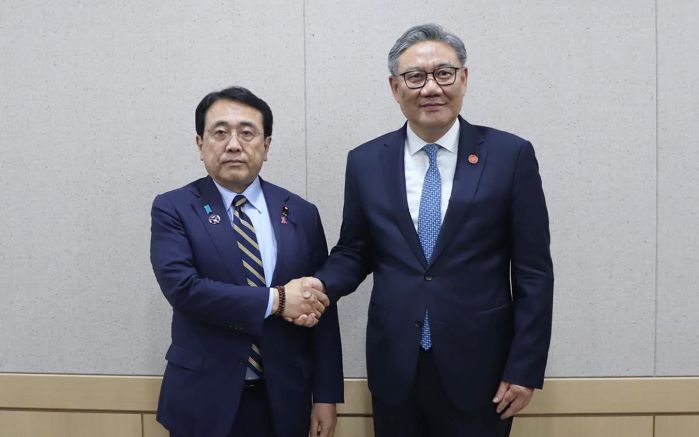
商务部部长王文涛会见日本经济产业大臣赤泽亮正
Zheng Quan Shi Bao Wang· 2025-11-02 12:45
Core Viewpoint - The meeting between China's Minister of Commerce Wang Wentao and Japan's Minister of Economy, Trade and Industry Akira Amari highlights the importance of maintaining stable and constructive economic relations between China and Japan amidst rising unilateralism and protectionism in international trade [1] Group 1: Economic Relations - Wang Wentao emphasized the need for both countries to work together to counter the impacts of unilateralism and protectionism on international economic order [1] - The Chinese side urged Japan to remove relevant Chinese entities from the export control end-user list as a step towards improving bilateral trade relations [1] Group 2: Trade Mechanisms - Both parties discussed the importance of utilizing export control dialogue mechanisms to ensure the stability and smooth operation of industrial and supply chains [1] - Akira Amari expressed Japan's commitment to developing constructive and stable economic relations with China, indicating a willingness to engage in policy dialogue to enhance mutual understanding and trust [1] Group 3: Multilateral Trade System - Both sides reaffirmed their commitment to maintaining a multilateral trading system centered around the World Trade Organization (WTO) [1] - The discussion included a focus on promoting regional economic cooperation to inject more stability into the global economy [1]
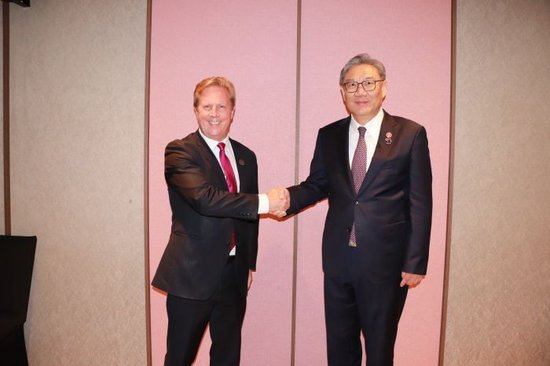
王文涛部长会见新西兰贸易部长麦克莱
Shang Wu Bu Wang Zhan· 2025-11-02 12:44
Core Points - The meeting between Chinese Commerce Minister Wang Wentao and New Zealand Trade Minister McClay emphasized the importance of enhancing bilateral economic cooperation and deepening practical collaboration across various fields [2][3] - Both parties agreed to expedite negotiations on the negative list for the free trade agreement to create better conditions for bilateral service trade development [2] - China remains committed to supporting the multilateral trade system centered around the World Trade Organization (WTO) and opposes trade protectionism [2] Summary by Categories Bilateral Relations - The leaders of China and New Zealand have agreed to place cooperation in a more prominent position within their bilateral relationship, highlighting the complementary nature of their economies and the deep integration of interests [2] - The successful visit of New Zealand Prime Minister Luxon to China in June resulted in a joint statement to further deepen cooperation in economic and other fields [2] Trade Cooperation - Both countries expressed a desire to enhance regional economic cooperation and maintain the multilateral trade system led by the WTO, with a focus on necessary reforms within the organization [3] - The emphasis was placed on strengthening communication and collaboration within frameworks such as the WTO and APEC to ensure smooth global trade operations [2][3]
何立峰与切尔内申科共同主持召开中俄总理定期会晤委员会第二十九次会议
Xin Hua She· 2025-11-02 12:22
Core Points - The meeting between Chinese and Russian officials emphasizes the strengthening of bilateral cooperation and strategic collaboration between the two countries [1] - Both sides express commitment to enhancing cooperation in various fields and oppose unilateralism and trade protectionism [1][2] Group 1: Meeting Overview - The 29th meeting of the China-Russia Prime Ministers' Regular Meeting Committee was co-chaired by Chinese Vice Premier He Lifeng and Russian Deputy Prime Minister Chernyshenko in Ningbo, Zhejiang [1] - The meeting highlighted the importance of the consensus reached by Presidents Xi Jinping and Vladimir Putin in deepening strategic cooperation [1] Group 2: Bilateral Cooperation - The two countries have seen stable development in bilateral trade and have made significant progress in key projects [1] - Both sides aim to leverage the meeting mechanism to further promote mutually beneficial cooperation across various sectors [1] Group 3: Future Directions - Russia expresses willingness to enhance cooperation levels and explore new areas of collaboration to inject new momentum into the comprehensive strategic partnership [1]
和音:汇聚合力 共享机遇
Ren Min Ri Bao· 2025-11-01 23:53
Group 1 - The core message emphasizes the importance of multilateral cooperation and the establishment of an open Asia-Pacific economy, with Xi Jinping proposing five key suggestions for mutual benefit and shared opportunities [1][2] - The suggestions include maintaining a multilateral trade system, creating an open regional economic environment, ensuring stable supply chains, promoting digital and green trade, and fostering inclusive development [1] - The successful implementation of agreements like the Regional Comprehensive Economic Partnership and the expansion of the Comprehensive and Progressive Agreement for Trans-Pacific Partnership highlight the collective efforts of Asia-Pacific economies towards open cooperation [1] Group 2 - The second phase of the meeting focused on the challenges posed by the new technological revolution, with Xi proposing three suggestions: enhancing digital empowerment, adhering to green and low-carbon principles, and ensuring inclusive sharing of benefits [2] - China proposed the establishment of a World Artificial Intelligence Cooperation Organization to provide AI public goods and promote initiatives that benefit health and women's digital literacy in the Asia-Pacific region [2] - The commitment to deepening reforms and expanding high-level opening-up in China is reiterated, emphasizing the country's role in providing new opportunities for the Asia-Pacific and the world [2] Group 3 - The upcoming "China Year" at APEC will see China hosting the 33rd informal leaders' meeting in Shenzhen, aiming to strengthen the Asia-Pacific community and promote regional growth and prosperity [3] - This initiative is positioned as a significant opportunity for collaboration among Asia-Pacific nations to create a better future [3]
共建普惠包容的开放型亚太经济
Sou Hu Cai Jing· 2025-10-31 23:25
Core Viewpoint - The speech emphasizes the need for a collaborative approach to maintain an open and inclusive economic environment in the Asia-Pacific region, advocating for multilateral trade, regional economic integration, and sustainable development practices [2][3][5]. Group 1: Multilateral Trade and Economic Cooperation - The importance of upholding a multilateral trade system centered around the World Trade Organization (WTO) is highlighted, with a call for reforms to enhance its authority and effectiveness [3][4]. - There is a push for continuous trade and investment liberalization, aiming to deepen financial cooperation and advance regional economic integration through agreements like the Regional Comprehensive Economic Partnership (RCEP) [4][5]. Group 2: Supply Chain Stability - The need to maintain stable and open supply chains is stressed, advocating for collaboration rather than fragmentation, and emphasizing the importance of connectivity within the Asia-Pacific region [4][5]. Group 3: Digital and Green Trade - The speech calls for the promotion of digital and green trade, leveraging digital technologies to facilitate cross-border trade and advocating for the removal of green barriers to expand cooperation in green industries and clean energy [4][5]. Group 4: Inclusive Development - A focus on inclusive development is presented, with an emphasis on addressing imbalances in development and ensuring that economic globalization benefits all people in the region [5][6]. - China’s commitment to providing zero-tariff treatment on 100% of products for least developed countries that have diplomatic relations with it is mentioned, showcasing efforts to support modernization in developing nations [5][6]. Group 5: China's Role in Global Trade - China's position as a leader in global trade is underscored, with its trade volume ranking first and second globally in goods and services, and a significant foreign investment attraction of over $700 billion in the past five years [6]. - The ongoing expansion of China's open-door policy and its proactive engagement in international trade standards through free trade zones is highlighted [6].