无核三原则

Search documents
中方:日本长期制造储存超需求的钚材料
中国基金报· 2025-11-22 01:53
Group 1 - The core viewpoint emphasizes China's strong opposition to Japan's potential abandonment of its "Three Non-Nuclear Principles" and the implications of Japan's military movements, which could signal a shift towards militarism and nuclear sharing arrangements [2] - Japan's historical context of producing and storing plutonium far exceeding its civilian nuclear energy needs raises concerns about its nuclear capabilities, necessitating strict international oversight [2] - The ongoing situation regarding the Fukushima nuclear accident and Japan's decision to discharge contaminated water into the ocean is met with strong resistance from China, advocating for international monitoring to prevent environmental and health risks [3] Group 2 - The article highlights the need for Japan to handle the Fukushima disaster with transparency and responsibility, addressing the technical challenges and safety risks associated with radioactive waste management [3]


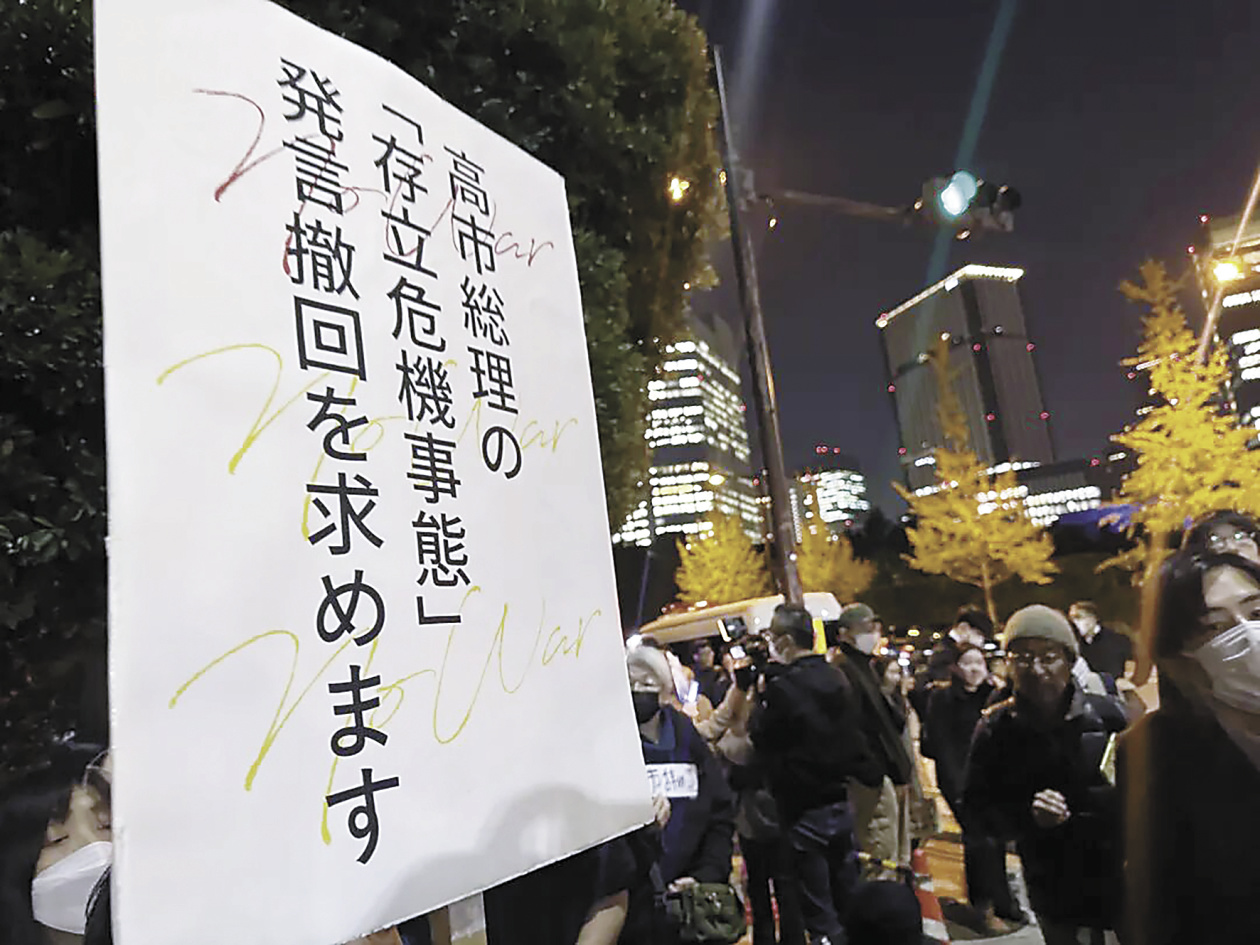
日本社会担忧受高市拖累,上千民众在首相官邸前抗议,高呼“不要让日本陷入危险”
Huan Qiu Shi Bao· 2025-11-21 22:52
Group 1 - Japan's Prime Minister Kishi Sanae's remarks on Taiwan have sparked strong criticism domestically and internationally, with China demanding a retraction of these statements [1][2][3] - Economic indicators in Japan are showing signs of decline, with a reported 3% increase in prices, raising concerns about the potential negative impact on the economy due to deteriorating Japan-China relations [1][5] - The Japanese government is facing pressure to modify its defense policies, including discussions on amending the "Three Non-Nuclear Principles" and increasing defense spending, which has raised alarms among neighboring countries [1][8] Group 2 - The Japanese economy is experiencing anxiety as various sectors are affected by the fallout from Kishi's comments, leading to the cancellation or postponement of multiple events involving Japanese artists and athletes in China [5] - A significant economic stimulus plan amounting to 21.3 trillion yen (approximately 135.4 billion USD) has been introduced by the government to address economic challenges, but concerns about fiscal deterioration are growing [6] - The market sentiment is deteriorating, with fears that Kishi's statements could lead to a loss of policy credibility, prompting potential sell-offs of Japanese assets by international investors [6]
一意孤行抑或回归理性,日本再次面临抉择(钟声)
Ren Min Ri Bao· 2025-11-21 22:12
Core Viewpoint - The actions and statements of Takashi Sato are leading Japan into a dangerous militaristic path, undermining national interests and global peace [1][2][3] Group 1: Political Implications - Takashi Sato's remarks about Taiwan potentially constituting a "survival crisis" for Japan suggest a willingness to consider military intervention, raising concerns about Japan's strategic direction [1] - Sato's approach reflects a political calculation to solidify support by promoting "China threat" narratives, using serious national policies as tools for personal political gain [2] - The rise of right-wing forces in Japan, as exemplified by Sato, poses a challenge to post-war international order and risks dragging Japan back into militarism [2] Group 2: Economic Consequences - The deterioration of Sino-Japanese relations due to Sato's rhetoric is likely to have significant economic repercussions, particularly affecting trade and tourism [3] - A decline in Chinese tourists could reduce Japan's GDP by 0.36%, translating to an economic loss of approximately 2.2 trillion yen (around 100 billion RMB) [3] - Increased market volatility and risk aversion are evident, with a notable trend of "selling Japan" in capital markets due to concerns over Japan's fiscal outlook and Sato's statements [3]
中国代表:对这样的日本,必须严加管束
第一财经· 2025-11-21 13:38
Group 1 - The core viewpoint emphasizes China's strong opposition to Japan's potential abandonment of its "Three Non-Nuclear Principles" and the implications of Japan's military movements, which raise concerns about a shift towards militarism [1][2] - Japan's government has been vague about its commitment to the "Three Non-Nuclear Principles," suggesting a possible openness to nuclear sharing arrangements and enhancing extended deterrence cooperation [1] - China urges Japan to adhere strictly to its non-proliferation obligations and to provide clear explanations to the international community regarding its nuclear policies [1] Group 2 - The article discusses the Fukushima nuclear accident, highlighting it as both a natural disaster and a man-made catastrophe, with ongoing concerns about the management of radioactive waste and the decommissioning of the plant [2] - China firmly opposes Japan's decision to discharge nuclear-contaminated water into the ocean, stressing the need for international monitoring to prevent long-term environmental and health risks [2] - The article calls for Japan to handle the aftermath of the Fukushima incident with transparency and responsibility, while the International Atomic Energy Agency (IAEA) is urged to maintain ongoing scrutiny of the situation [2]
高市早苗最新表态,中方回应
证券时报· 2025-11-21 10:11
Group 1 - The core viewpoint of the article emphasizes China's strong opposition to Japan's recent militaristic statements and actions, particularly regarding Taiwan and military exports, indicating a potential shift towards militarization in Japan [2][3][4] - Japan's Prime Minister, high市早苗, has made controversial remarks suggesting possible military intervention in Taiwan, which has provoked significant backlash from the Chinese public and government [2] - The article highlights Japan's recent military developments, including the completion of arms exports to the U.S. and discussions on revising security treaties, which may lead to a relaxation of its post-war pacifist stance [3][4] Group 2 - Japan's defense budget has seen continuous increases for thirteen consecutive years, reflecting a trend towards military expansion and a shift in defense policy [3] - The modification of Japan's arms export principles and the potential revision of the "Three Non-Nuclear Principles" indicate a move towards a more aggressive military posture, raising concerns about regional security [3][4] - The article questions Japan's intentions, suggesting that a return to militarism would be met with resistance from both the Chinese populace and the international community, ultimately leading to failure [4]

日本首次出口杀伤性武器,中方表态!
券商中国· 2025-11-21 09:24
Group 1 - The article discusses Japan's recent military actions, including the completion of the sale of "Patriot" missiles to the United States, marking its first export of lethal weapons since relaxing its arms export restrictions [1] - Japan's defense budget has seen a continuous increase for thirteen consecutive years, and the government is considering revising three security agreements, which may include changes to its "Three Non-Nuclear Principles" and an increase in defense spending [1] - The spokesperson expresses concern that Japan's military expansion and potential nuclear sharing arrangements contradict its stated goal of a nuclear-free world, suggesting a shift towards militarism [1] Group 2 - The article highlights Japan's historical obligations as a defeated nation post-World War II, which included complete disarmament and restrictions on military capabilities [1] - The spokesperson questions Japan's intentions behind its military buildup and potential abandonment of peace commitments, warning that such actions would not be accepted by the Chinese people or the international community [1]
日本首次出口杀伤性武器,中方:意欲何为?
财联社· 2025-11-21 07:59
Core Viewpoint - Japan is increasingly expanding its military capabilities and loosening restrictions on arms exports, raising concerns about its intentions and potential return to militarism [1] Group 1: Japan's Military Expansion - Japan has completed the return of "Patriot" missile systems to the U.S., marking its first export of lethal weapons since relaxing arms export restrictions [1] - The Japanese government has been increasing its defense budget for 13 consecutive years and has passed new security laws to allow for collective self-defense [1] - The modification of Japan's arms export principles indicates a significant shift towards a more aggressive military posture [1] Group 2: International Implications - Japan's actions contradict its stated goal of establishing a nuclear-free world, as it seeks to enhance deterrence cooperation and potentially revise its "Three Non-Nuclear Principles" [1] - The international community, particularly China, expresses strong opposition to Japan's militarization and potential revival of militaristic policies, emphasizing that such actions would disrupt post-war international order [1]

日本首次出口杀伤性武器并讨论修改“无核三原则”,外交部回应
Xin Lang Cai Jing· 2025-11-21 07:44
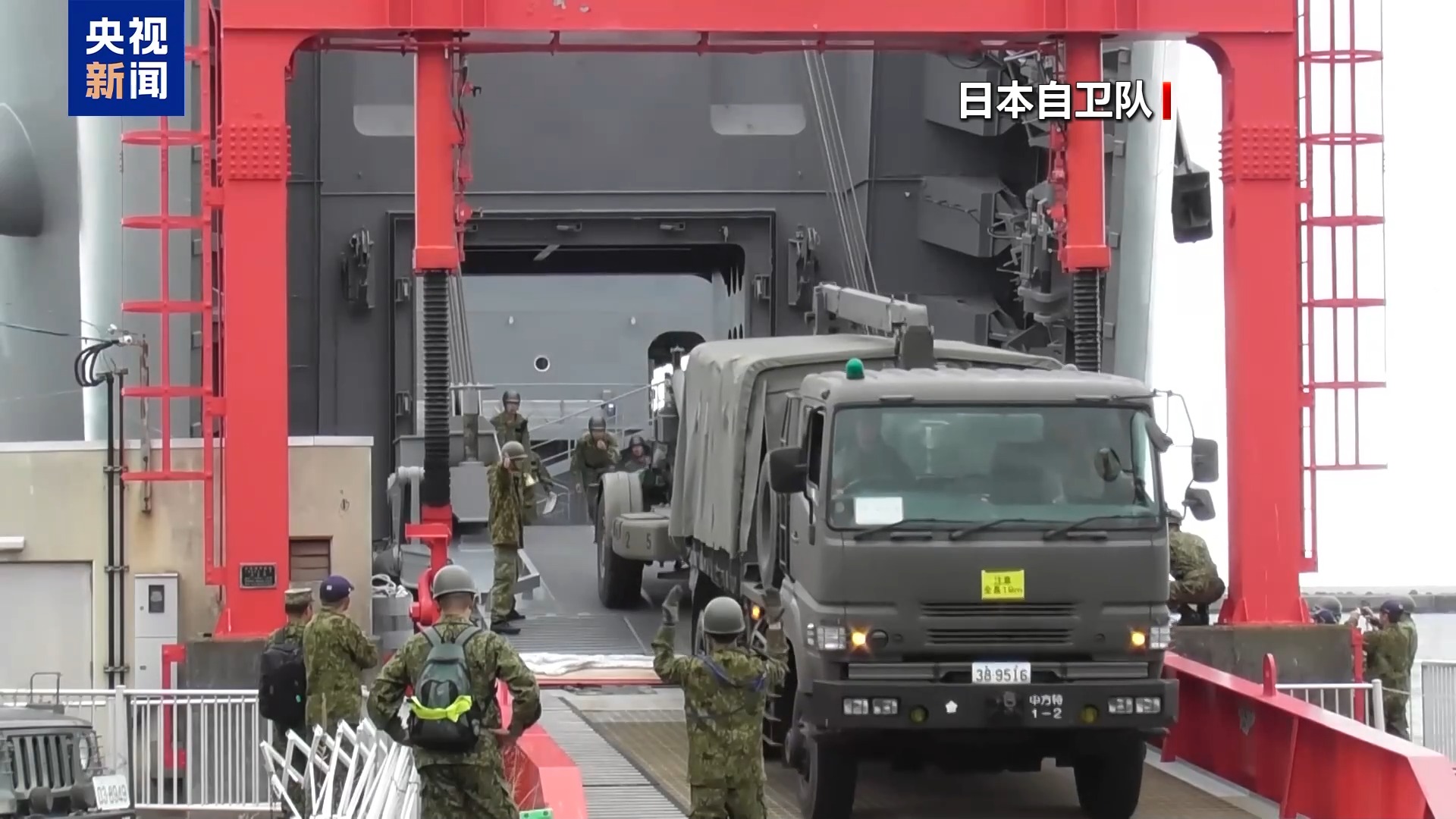
11月21日,外交部发言人毛宁主持例行记者会。 "人们不禁要问,日本究竟意欲何为?如果日本想重走军国主义的老路,背弃和平发展承诺,破坏战后 国际秩序,中国人民不会答应,国际社会不会允许,最终只能以失败告终。"她说。 智通财经记者 杨文钦 谢瑞强 毛宁表示,二战胜利后,《开罗宣言》《波茨坦公告》《日本投降书》等国际法律文件,对日本作为战 败国的义务作出了明确规定,包括完全解除武装,不得维持能使其重新武装的产业。然而,日本近年来 不断自我松绑,扩张军力,防卫预算13连增,通过了新安保法案解禁集体自卫权,将"武器出口三原 则"修改为"防卫装备转移三原则",不断放宽武器出口限制,甚至开始出口杀伤性武器。 毛宁指出,日本宣称要建立无核武器世界,却大举强化延伸威慑合作,甚至谋求修改"不制造、不拥 有、不运进核武器"的"无核三原则",为实现核共享安排打开方便之门。这些动向表明日本正在突破专 守防卫,加紧重新武装。 凤凰卫视记者提问,据报道,日本政府日前完成向美国返销"爱国者"防空导弹。这是日方对武器出 口"松绑"后,首次出口杀伤性武器。另有消息称,日本自民党开始讨论修订三份安保条约文件,其中包 括修改"无核三原则",增加国 ...
视频丨民间埋怨 学界斥责 多国批判 高市错误言论陷四面楚歌
Yang Shi Xin Wen· 2025-11-21 07:39
Group 1 - The Chinese government has urged Japan to retract erroneous statements made by Prime Minister Kishi Sanae and to fulfill commitments to China, emphasizing the need for actions that reflect these commitments [1][6] - Japanese citizens held protests demanding the retraction of Kishi's statements and opposing the government's push to amend the pacifist constitution [2][4] - Criticism from various sectors in Japan, including scholars and the public, highlights the sensitivity of Kishi's remarks regarding historical issues and the Taiwan situation, with calls for her to apologize and resign [5][7][10] Group 2 - The Japanese fishing industry is facing significant challenges due to China's suspension of imports of Japanese seafood, which was attributed to Kishi's comments, with reports indicating that China previously accounted for 20% of Japan's seafood exports [6] - The political ramifications of Kishi's statements have led to urgent meetings among local governments and industry stakeholders to assess the impact on the fishing sector [6] - Scholars have expressed concerns that Kishi's remarks could damage the political foundation of Japan-China relations and lead to Japan's diplomatic isolation [11][12] Group 3 - International criticism has emerged regarding Kishi's statements, with commentators suggesting that her remarks serve domestic political purposes while undermining Japan's international relations [12][13] - Experts have warned that Kishi's comments could provoke historical sensitivities in Asia and potentially lead to a resurgence of militaristic sentiments, which could harm Japan's diplomatic standing [10][11] - The need for Japan to reaffirm its commitment to the One China principle has been emphasized by international observers, who argue that Kishi's statements are counterproductive to regional stability [12][13]
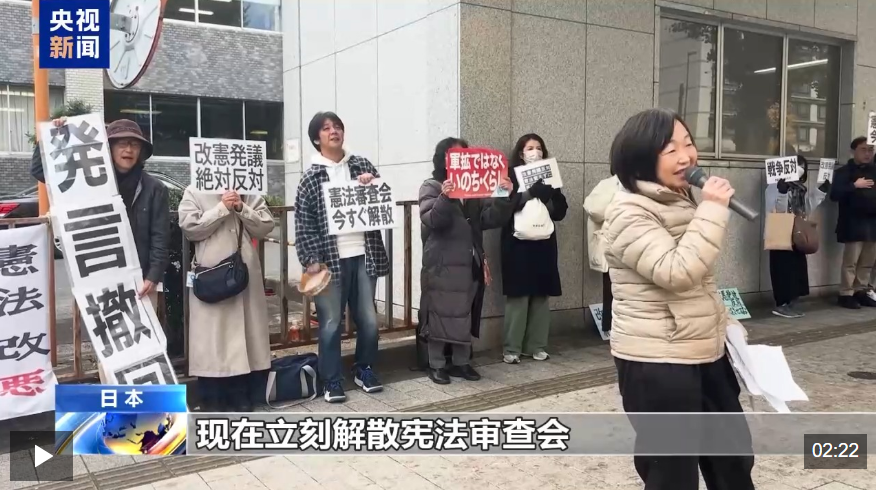
视频丨日本有识之士:高市错误言论损害日中关系 冲击日本经济
Yang Shi Xin Wen Ke Hu Duan· 2025-11-21 06:02
Group 1 - The remarks made by Japanese Prime Minister Sanae Takaichi have severely damaged Japan-China relations, causing significant impact on the Japanese economy [1][3] - Takaichi's comments disregard the core principles of the normalization of Japan-China diplomatic relations, leading to confusion within Japan's economic sector [3] - Japan's economy heavily relies on its relationship with China, which is its largest trading partner, and any deterioration in this relationship could have profound effects on Japanese society [3] Group 2 - Takaichi's intention to amend the "Three Non-Nuclear Principles" is viewed as a serious escalation compared to former Prime Minister Shinzo Abe's push for new security laws in 2015, which already violated the constitution [5] - Legal scholars in Japan have previously indicated that the new security laws breached constitutional limits, particularly Article 9, allowing Japan to exercise "collective self-defense," which was widely regarded as unconstitutional [7] - The current situation surrounding Takaichi's statements and actions is considered dangerous and serious, extending beyond mere errors [7]