
中国式现代化

Search documents
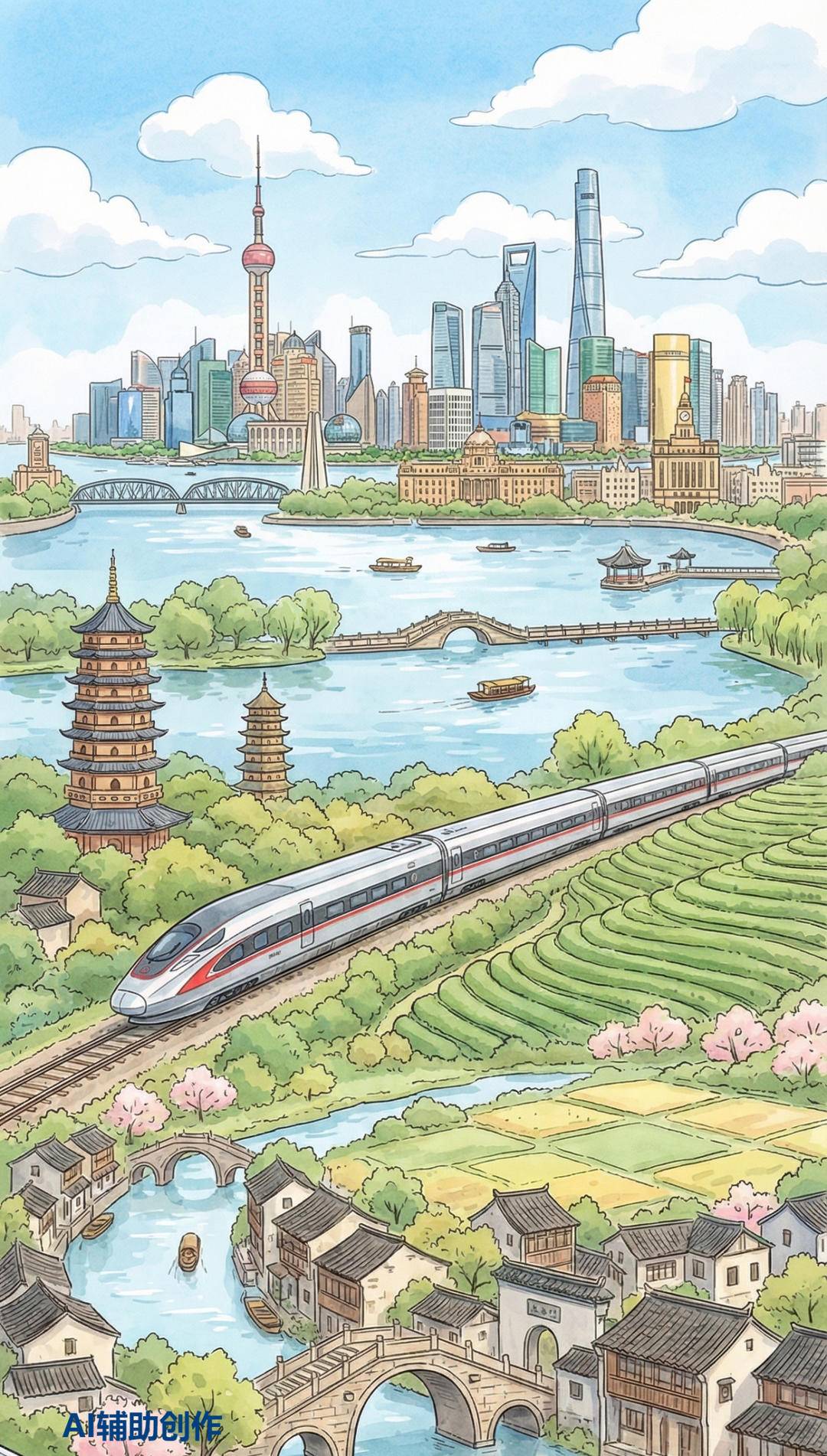
【评论】长三角铁路年客流破9亿人次,展现高质量发展的强劲脉动
Yang Zi Wan Bao Wang· 2025-12-25 09:11
截至12月18日,长三角铁路今年旅客发送量已超过9亿人次,创下年度历史新高。这一数据较去年增长超3800万人次,增幅超过4%。自2017年突破6亿、 2019年突破7亿、2023年突破8亿人次以来,长三角铁路客运量持续攀升,展现出区域经济社会发展的旺盛活力与强大韧性。 长三角铁路客运量的历史性突破,不仅标志着运输能力的飞跃,更深刻反映了区域高质量发展的强劲脉搏。随着铁路网络持续加密、服务品质不断升级, 一个内部联系更紧密、要素流动更高效、发展动能更协同的长三角,必将为中国式现代化建设贡献更为坚实的区域范例。(作者:陈盈锦) 校对盛媛媛 客流新高印证区域经济强大韧性。客运量的稳步增长,直观反映了长三角区域经济的活跃程度与内在韧性。在复杂的外部经济环境下,持续攀升的人员大 规模、高频次流动,直接对应着区域内商务合作、产业协同、消费提振及社会文化交流的紧密与频繁。这一数据的积极表现,不仅是国内大循环在关键区 域畅通运行的有力证明,也清晰传递出市场主体与社会公众对区域未来发展的稳定信心,构成了观察中国经济微观活力的重要窗口。 精细运营与惠民举措提升出行体验。这一成绩的取得,源自运营模式的持续优化与服务理念的切实转变。 ...

以深圳实践建构中国经济理论——“中国经济发展理论与深圳实践”丛书发布
Jing Ji Guan Cha Wang· 2025-12-25 07:44
第三,深圳实践有着独特的制度创造,而不只是制度创新。制度创新体现了制度的演进,而制度创造一 定是独特的。社会主义基本经济制度在深圳体现得非常鲜明,即公有制为主体、多种所有制经济共同发 展,按劳分配为主体、多种分配方式并存,社会主义市场经济体制等作为社会主义基本经济制度。这样 的制度创造,在深圳体现得非常明显。 第四,深圳实践的一般意义还体现在持续开放。人类从传统向现代转变,就是从封闭走向开放。深圳的 开放不仅是对外开放,面向各类科技人才、各类企业开放;深圳也对内开放,对国内有志于创业的人开 放,对受体制束缚的人开放,对渴望发挥自己能力的人开放。 刘守英说,深圳实践的最大价值是其一般意义,尤其是在东方大国、在社会主义制度下如何实现一般意 义上的现代化,深圳可以是一个范本。而深圳实践也有望在经济理论上作出贡献,深圳实践不仅是摆脱 贫困的发展经济学。在新发展阶段,还蕴含着强国经济学的实践基础。 来自国内多所科研机构与高校的专家学者参加了会议,对上述成果的出版表示祝贺,就深圳经验的理论 和实践价值进行深入研讨。中国人民大学经济学院教授刘守英说,深圳实践体现了中国式现代化的一般 意义,或者说世界意义。深圳有很多独特创新 ...
抓住机遇做强做优主业 助力经济金融高质量发展 访中国信达党委书记、董事长张卫东
Jin Rong Shi Bao· 2025-12-25 03:56
Core Viewpoint - The 20th Central Committee's Fourth Plenary Session emphasizes the need for financial asset management companies to align with the "14th Five-Year Plan" to accelerate the construction of a financial powerhouse and promote high-quality economic and financial development [1][5]. Group 1: Political Leadership and Risk Management - Strengthening political leadership and adhering to the Party's guidance is fundamental, as the "14th Five-Year Plan" highlights the importance of the Party's comprehensive leadership in shaping policies and promoting reforms [2]. - The company recognizes that preventing and mitigating risks is essential for its operations, focusing on compliance and sustainable high-quality development [2][6]. Group 2: Opportunities in Financial Asset Management - The financial bad asset market presents significant potential for development during the "14th Five-Year Plan," as financial institutions will continue to improve asset quality and accelerate the clearance of existing risks [3]. - The company aims to leverage its expertise in resolving distressed projects and supporting the reform of small and medium-sized financial institutions to enhance its role in risk mitigation [3][6]. Group 3: Supporting the Real Economy - The company is committed to supporting the real economy by increasing financial support for key sectors and addressing challenges faced by struggling enterprises through asset revitalization and restructuring [4][7]. - The "14th Five-Year Plan" encourages optimizing traditional industries and fostering new and future industries, which aligns with the company's strategy to assist traditional energy companies in their low-carbon transitions [5][7]. Group 4: Strategic Initiatives for Financial Development - The company plans to enhance its political awareness and integrate the Party's leadership into all aspects of its governance, ensuring alignment with national strategies [5][6]. - It will focus on resolving financial bad asset risks and providing comprehensive solutions for local governments, particularly in real estate and debt management [6][7].
坚守初心担使命 奋进金融强国新征程 ——南方基金深入学习贯彻党的二十届四中全会精神
Zhong Jin Zai Xian· 2025-12-25 03:20
Group 1 - The core message emphasizes the importance of the 14th Five-Year Plan in accelerating the construction of a financial powerhouse, with South Fund committing to implement the spirit of the conference as a major political task [1][2] - South Fund aims to enhance high-quality development through political leadership, focusing on serving the modernization of China, the real economy, and the capital market [2] - The company is dedicated to fostering a high-quality financial talent pool and promoting a unique financial culture to support its development [2] Group 2 - The 14th Five-Year Plan highlights the need for a more inclusive and adaptable capital market, with South Fund taking on the mission of promoting market stability and health [3] - South Fund plans to focus on developing equity funds to enhance market vitality and efficiency, aligning with national strategic directions [3][4] - The company aims to create a "long money, long investment" ecosystem to stabilize the capital market and support long-term financing for enterprises [4] Group 3 - South Fund is committed to enhancing its international competitiveness and contributing to a more open and inclusive capital market, aligning with the 14th Five-Year Plan's emphasis on high-level openness [5] - The company has launched various international investment products and established a presence in Hong Kong to facilitate overseas investment in Chinese assets [5] Group 4 - South Fund is focused on developing five key areas: technology finance, green finance, inclusive finance, pension finance, and digital finance, as outlined in the 14th Five-Year Plan [6][7] - The company aims to enhance its capabilities in serving the real economy and national strategies through systematic investment research and product design [7][8] Group 5 - South Fund is dedicated to improving its services in wealth management and pension business, with a focus on enhancing customer experience and expanding its client base [8] - The company is actively involved in educational initiatives to promote financial literacy and encourage participation in pension systems [8] Group 6 - The company is advancing its digital transformation and AI applications to enhance operational efficiency and service quality, aligning with the strategic goals of the 14th Five-Year Plan [9] - South Fund is developing a comprehensive digital platform to integrate investment research and improve data utilization [9]
南方基金:坚守初心担使命 奋进金融强国新征程
Zhong Guo Jing Ji Wang· 2025-12-25 03:13
Core Viewpoint - The article emphasizes the commitment of Southern Fund to implement the spirit of the 20th Central Committee of the Communist Party of China, focusing on high-quality development and the construction of a financial power during the 14th Five-Year Plan period [1][2]. Group 1: Political Leadership and High-Quality Development - Southern Fund aims to unify thoughts and actions based on the spirit of the 20th Central Committee, enhancing the company's high-quality development through deepening party leadership [2]. - The company integrates the value pursuit of "serving the country through finance" into its development process, focusing on supporting the modernization of China, the real economy, and the capital market [2]. - The company emphasizes the importance of investing in human resources, attracting high-quality talent, and promoting a financial culture that aligns with national characteristics [2]. Group 2: Capital Market Functionality - The 14th Five-Year Plan highlights the need for a more inclusive and adaptable capital market, which is crucial for enhancing the service quality of the capital market and supporting new productive forces [3]. - Southern Fund is committed to developing equity funds to enhance market vitality and efficiency, recognizing their role in optimizing the investor structure [3]. - The company plans to create a product matrix centered around broad-based equity indices and thematic strategies, aligning with the trend of index investment [3]. Group 3: Long-Term Investment Ecosystem - Southern Fund aims to promote a "long money, long investment" ecosystem to stabilize the capital market, recognizing the inherent value investment attributes of long-term funds [4]. - The company has been serving pension funds for 23 years, managing nearly 1 trillion yuan in pension assets and over 300 annuity clients, contributing positively to the capital market [4]. Group 4: Internationalization and Openness - Southern Fund prioritizes internationalization as a key business strategy, aiming to support China's high-level capital market openness [5]. - The company has launched the first domestic equity QDII public fund and participated in various cross-border investment initiatives, establishing itself as a significant player in the Hong Kong market [5]. Group 5: Financial Support for Economic Development - The company is focused on developing technology finance, green finance, inclusive finance, pension finance, and digital finance, aligning with the strategic directions of the 14th Five-Year Plan [7]. - Southern Fund is enhancing its investment research capabilities to support the integration of technological and industrial innovation, aiming to identify breakthrough technologies [7]. Group 6: Customer-Centric Financial Services - The company is committed to enhancing the diversity and accessibility of its financial services, serving over 220 million clients and achieving a 58% growth in the past five years [8]. - Southern Fund is transforming towards a buyer advisory model and actively engaging in investor education initiatives to improve financial literacy [8]. Group 7: Digital Transformation and AI Integration - Southern Fund is focusing on digital transformation as a core capability, developing a comprehensive digital platform to enhance operational efficiency and customer experience [9]. - The company is leveraging AI applications to improve data quality and business integration, aiming for a more intelligent and comprehensive service delivery [9]. Conclusion - Southern Fund is dedicated to contributing to the construction of a financial power by enhancing its asset management capabilities and supporting the stability of the financial system, guided by the principles of the 14th Five-Year Plan [10].
坚守初心担使命 奋进金融强国新征程——南方基金深入学习贯彻党的二十届四中全会精神
Xin Lang Cai Jing· 2025-12-25 03:12
Core Viewpoint - The 20th Central Committee's Fourth Plenary Session has set clear requirements and strategic deployments for accelerating the construction of a financial power during the "14th Five-Year Plan" period, providing fundamental guidelines for effective financial work during this period [1][11]. Group 1: Political Leadership and High-Quality Development - The "14th Five-Year Plan" is a critical period for advancing Chinese-style modernization and building a financial power, with the company emphasizing the importance of political leadership and high-quality development [2][12]. - The company aims to integrate the spirit of the plenary session into its operations, focusing on serving the national strategy, the real economy, and the capital market's high-quality development [2][12]. - The company is committed to enhancing its organizational structure by attracting high-quality talent and promoting a unique financial culture [2][13]. Group 2: Focus on Core Responsibilities and Capital Market Functionality - The "14th Five-Year Plan" emphasizes improving the inclusiveness and adaptability of the capital market, which is essential for enhancing the market's service quality and supporting new productive forces [3][14]. - The company plans to focus on developing equity funds to enhance market vitality and efficiency, recognizing their importance in optimizing the investor structure [3][14]. - The company aims to create a product matrix centered around broad-based equity indices and thematic strategies, aligning with the trend of index investment [3][14]. Group 3: Long-Term Investment Ecosystem - The company is dedicated to fostering a "long money, long investment" ecosystem to enhance market stability, which is crucial for maintaining national financial security [4][15]. - The company has been serving pension funds for 23 years, currently managing nearly one trillion yuan in pension assets and serving over 300 pension clients [4][15]. Group 4: Internationalization and Open Capital Market - The company prioritizes internationalization as a key business strategy, aiming to support China's high-level capital market opening [5][16]. - The company has launched the first domestic equity QDII public fund and has been actively involved in various cross-border investment initiatives [5][16]. Group 5: Contribution to Key Financial Areas - The company is focused on developing technology finance, green finance, inclusive finance, pension finance, and digital finance, which are essential for supporting high-quality economic development [6][17]. - The company aims to enhance its investment research capabilities to align with the strategic goals of the "14th Five-Year Plan" [6][17]. Group 6: Enhancing Customer Experience and Financial Literacy - The company is committed to improving the diversity and accessibility of its financial services, serving over 220 million clients with a 58% growth in the past five years [8][19]. - The company is actively engaged in investor education initiatives to enhance financial literacy among the public [8][19]. Group 7: Digital Transformation and AI Integration - The company is focusing on digital transformation and AI applications as core capabilities, aiming to create a comprehensive digital platform for investment research [9][20]. - The company is developing a cloud-native system to enhance the integration of investment research and improve data quality and user experience [9][20].
张卫东:抓住机遇做强做优主业 助力经济金融高质量发展
Jin Rong Shi Bao· 2025-12-25 03:09
党的二十届四中全会对"十五五"时期加快建设金融强国提出明确要求、作出战略部署,为扎实做 好"十五五"时期金融工作提供了根本遵循。 作为第一家完成"股改—引战—上市"的全国性金融资产管理公司,中国信达资产管理股份有限公司 (以下简称"中国信达")如何贯彻落实党的二十届四中全会精神,抓住时代机遇,助力金融强国建设和 经济金融高质量发展?对此,《金融时报》记者采访了中国信达党委书记、董事长张卫东。 《金融时报》记者:党的二十届四中全会是在向第二个百年奋斗目标进军的新征程上举行的一次十 分重要的会议。能谈谈您对党的二十届四中全会精神的理解和体会吗? 张卫东:党的二十届四中全会对于进一步凝聚起全党全国各族人民磅礴力量,为以中国式现代化全 面推进强国建设、民族复兴伟业而团结奋斗,具有重大意义,也为新时代金融资产管理公司高质量发展 指明了方向。 强化政治引领,坚持党的领导是根本要求。"十五五"规划建议指出,要坚持党的全面领导,提高党 把方向、谋大局、定政策、促改革能力。中国信达深刻认识到,推动金融高质量发展,最根本是要深刻 领悟"两个确立"的决定性意义,坚决做到"两个维护",加强党中央对金融工作的集中统一领导,把思想 和行 ...

扬文化之帆 铸债券铁军 在服务“国之大者”中争当行业排头兵
申万宏源证券上海北京西路营业部· 2025-12-25 02:09
Core Viewpoint - The article emphasizes the significant role of the fixed income financing team at Shenwan Hongyuan in supporting China's economic development through innovative financial solutions and strategic initiatives, particularly in the realms of technology, rural revitalization, and the Belt and Road Initiative [1][2][4][6]. Group 1: Technology and Innovation - The fixed income financing team is committed to enhancing high-quality development of new productive forces by embracing innovation and improving professional service capabilities, particularly in response to the launch of the "technology board" in the bond market [2][3]. - The team faced challenges in sourcing quality projects that met regulatory requirements for the first batch of technology innovation bonds, leading to a rigorous project screening process that resulted in successful bond issuance [3]. Group 2: Rural Revitalization - The team actively supports rural revitalization and the construction of a beautiful China by responding to social needs and fulfilling corporate social responsibility, exemplified by the issuance of the first rural revitalization project revenue bonds in Jiangning [4][5]. - The financing efforts have led to multiple industry-first rural revitalization bonds, establishing the company as a leading player in this sector [5]. Group 3: Belt and Road Initiative - The fixed income financing team has played a crucial role in facilitating the Belt and Road Initiative by developing innovative bond products that align with national resource security and long-term funding needs, such as the issuance of bonds for the Simandou iron ore project [6][7]. - The company has consistently ranked among the top three in industry underwriting for two consecutive years, demonstrating its commitment to supporting the Belt and Road Initiative [7].

广州市领导干部会议召开
Guang Zhou Ri Bao· 2025-12-25 01:31
近日,中央批准:冯忠华同志任广州市委书记;免去郭永航同志的广东省委常委、广州市委书记职务, 中央另有任用。 黄坤明宣读中央决定并讲话 冯忠华出席 郭永航主持 12月24日,广州市领导干部会议召开,宣布中央关于广州市委主要负责同志调整的决定。省委书记黄坤 明出席会议,宣读中央决定并讲话。省委常委、组织部部长、广州市委书记冯忠华出席会议,郭永航主 持会议,广州市市长孙志洋出席会议。 护"两个确立"、坚决做到"两个维护";始终坚持实干笃行,紧紧围绕习近平总书记赋予的使命任务,紧 扣加快实现老城市新活力、"四个出新出彩",锚定"排头兵、领头羊、火车头"标高追求,全力拼经济, 持续增活力,突出兴产业,聚力抓城乡,牢牢守底线,扎实推进广州高质量发展、现代化建设,奋力在 新起点上增创新优势、实现新突破;牢牢坚守人民情怀,走好走实新时代党的群众路线,牢固树立和践 行正确政绩观,下大力气保障和改善民生,切实做到人民城市人民建、人民城市为人民;坚定扛起政治 责任,坚持和加强党的全面领导、深入推进全面从严治党,坚持把党的政治建设摆在首位,推动党的创 新理论武装走深走实,持续加强干部队伍建设,努力把全市各级党组织锻造得更加坚强有力; ...
我省授予丁洪磊等10人“最美退役军人”、刘铮等10人“最美拥军人物”称号
Liao Ning Ri Bao· 2025-12-25 01:21
Core Viewpoint - The recognition of "Most Beautiful Retired Soldiers" and "Most Beautiful Supporters of the Military" in Liaoning Province aims to promote the exemplary role of retired soldiers and enhance the social atmosphere of valuing national defense and respecting the military [1][2] Group 1 - Ten individuals were awarded the title of "Most Beautiful Retired Soldiers" in Liaoning Province, including Ding Honglei, Wang Zhongxiang, and others, to highlight their contributions and stories [1] - Ten individuals received the title of "Most Beautiful Supporters of the Military," such as Liu Zheng and Guan Deqiang, recognizing their dedication to patriotic and military support work [1] - The initiative aims to foster a strong sense of military-civilian unity and encourage retired soldiers to continue contributing to national and local development [1] Group 2 - The provincial authorities encourage the awardees to cherish their honors and continue to uphold the glorious traditions of the People's Army, aiming for further achievements in their respective fields [2] - The broader community is urged to take these individuals as role models, emphasizing the importance of gratitude and commitment to the revitalization of Northeast China [2] - The initiative aligns with the goals of advancing national construction and the rejuvenation of the nation, contributing to the modernization of Liaoning Province [2]