人民币国际化

Search documents
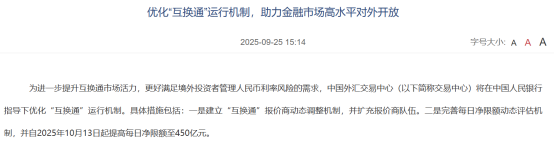
邢自强:全面社保改革有望激活10万亿美元内需市场,是人民币国际化基石
凤凰网财经· 2025-09-25 12:46
Core Viewpoint - The forum "Phoenix Bay Area Financial Forum 2025" emphasizes the theme of "New Pattern · New Path" and aims to explore development opportunities amidst changing circumstances [1] Group 1: Economic Insights - Morgan Stanley's Chief Economist for China, Xing Ziqiang, highlighted that social security reform can promote a unified national market and boost consumption, which is essential to break the current low-price cycle and enhance corporate profitability [2] - Xing proposed that a more robust social security network would alleviate concerns for vulnerable groups, thereby reducing the overall precautionary savings rate and unleashing consumption potential [2] - He estimated that comprehensive social security reform could increase the consumption share of GDP from less than 40% to around 45% by the end of the 14th Five-Year Plan, creating an internal consumption market worth approximately $10 trillion [2] Group 2: Funding Strategies - Xing identified two key pathways to secure funding for social security improvements: increasing the dividend payout ratio of state-owned enterprises and adjusting the fiscal expenditure structure to focus more on human investment rather than infrastructure [2] - He emphasized that the government has the capacity to undertake these investments, labeling them as the most cost-effective economic investments [2] Group 3: Currency Internationalization - The core of RMB internationalization lies in the combination of "Dao" (principle) and "Shu" (method), suggesting that substantial structural reforms are necessary to break the low-price cycle and enhance the returns on RMB assets [2] - Achieving this would create a solid foundation for the application of financial infrastructures like stablecoins, aiming for a long-term goal of efficiency through effective strategies [2]

数字人民币国际运营中心落沪 探索有利监管的资产数字化创新
2 1 Shi Ji Jing Ji Bao Dao· 2025-09-25 12:28
Core Insights - The establishment of the Digital Renminbi International Operation Center in Shanghai marks a significant step in the infrastructure development for cross-border digital payment and the internationalization of the Renminbi [1][2][6] - The center aims to enhance the efficiency, security, and cost-effectiveness of cross-border payment solutions, thereby fostering new business models and products [3][7] Group 1: Digital Renminbi Platforms - The Digital Renminbi International Operation Center has developed three main business platforms: cross-border digital payment platform, blockchain service platform, and digital asset platform, which are interconnected through a common blockchain infrastructure [1][4][5] - The cross-border digital payment platform focuses on supporting the internationalization of the Renminbi and addressing pain points in traditional cross-border payments [4][5] - The blockchain service platform is designed to facilitate standardized blockchain transactions and on-chain digital Renminbi payment services, while the digital asset platform supports the compliant issuance, registration, custody, and trading of digital assets [4][5] Group 2: Impact on Shanghai's Financial Landscape - The operation of the Digital Renminbi International Operation Center is expected to inject strong momentum into the construction of Shanghai as an international financial center, enhancing its global financial resource allocation capabilities [2][6][7] - The center will promote financial technology innovation in Shanghai, leveraging blockchain and smart contracts to enable real-time settlement and programmable transactions in cross-border payments [3][7] - The establishment of the center will improve the financial infrastructure in Shanghai, facilitating cross-border connectivity with domestic and international financial systems [6][7] Group 3: Global Financial Integration - The Digital Renminbi International Operation Center is positioned to enhance the international influence of the Renminbi and optimize the digital Renminbi ecosystem, contributing to the development of a dual domestic and international operational framework [5][8][9] - The center's operations will support the growth of digital financial innovation and attract related fintech companies to Shanghai, further solidifying its status as a global financial technology hub [6][9]

香港证监会和香港金管局联合公布《固定收益及货币市场发展路线图》
Shang Hai Zheng Quan Bao· 2025-09-25 12:23
Core Viewpoint - The Hong Kong Securities and Futures Commission and the Hong Kong Monetary Authority have jointly released a roadmap aimed at establishing Hong Kong as a global center for fixed income and currency markets, focusing on enhancing demand and liquidity while promoting innovation [1] Group 1: Key Measures - The roadmap outlines ten key measures centered around four pillars: primary market issuance, secondary market liquidity, offshore RMB business, and new-generation infrastructure [1] - Proposed measures include issuing government bonds to lead market development and promoting Hong Kong's advantages to targeted issuers and investors [1] - Implementation of an over-the-counter fixed income and currency derivatives system is also part of the roadmap [1] Group 2: Future Policy Direction - The roadmap will serve as a blueprint for the future policy-making and implementation efforts of the Hong Kong Securities and Futures Commission and the Hong Kong Monetary Authority over the coming years [1] - Strengthening the fixed income and currency market is deemed crucial for enhancing Hong Kong's status as an investment and fundraising center [1] Group 3: Strategic Goals - The Hong Kong Monetary Authority aims to further solidify Hong Kong's position as a leading offshore RMB business hub while promoting innovation in response to market changes [1] - The authority will leverage opportunities arising from trends such as RMB internationalization and the digitalization of fixed income and currency markets [1]
独家专访盛松成:中国居民储蓄将更多流向金融投资
2 1 Shi Ji Jing Ji Bao Dao· 2025-09-25 11:41
Group 1: Market Trends - The Chinese capital market is experiencing a value reshaping, with significant increases in major indices: Shanghai Composite Index up 14.96%, Shenzhen Component Index up 29.11%, ChiNext Index up 51.09%, Hang Seng Index up 32.03%, and Hang Seng Tech Index up 42.77% as of September 25 [1] - There is a shift in Chinese residents' savings towards financial investments, particularly in quality projects that can generate stable cash flows, aligning with national strategic directions in new infrastructure, consumption infrastructure, and urbanization [1][9] Group 2: Monetary Policy - The People's Bank of China (PBOC) is expected to maintain a proactive fiscal policy complemented by moderately loose monetary policy, with room for future interest rate cuts, although significant cuts are not anticipated in the short term [2][8] - The PBOC's approach is to ensure liquidity while considering both domestic and international economic conditions, with a focus on maintaining the stability of the RMB exchange rate [2][5] Group 3: Asset Management Industry - The asset management industry in China is evolving, with a notable increase in the issuance of public REITs, particularly in new infrastructure projects, although the overall proportion remains low [10][11] - The global asset management landscape is changing, with Shanghai rising to fifth place in the global asset management center ranking, driven by advancements in digital infrastructure and asset management technology [12][13] Group 4: Investment Opportunities - New investment opportunities are emerging in sectors aligned with technological innovation and high-quality development, which are expected to attract more private capital [9][10] - The shift in investment focus from real estate to diversified financial assets is seen as a response to the changing economic landscape, with an emphasis on projects that can provide stable cash flows [9][10] Group 5: Global Economic Context - The international economic environment, including the U.S. Federal Reserve's interest rate policies, is influencing China's monetary policy and the RMB's exchange rate, with expectations of continued RMB appreciation in the medium to long term [2][20] - The rise of gold as a strategic asset is noted, driven by geopolitical tensions and U.S. debt issues, indicating a potential long-term trend in investment strategies [17][18]
数字人民币国际运营中心正式运营,其跨境金融基础设施体系已初步构建
Feng Huang Wang· 2025-09-25 11:41
Core Insights - The Digital Renminbi International Operation Center's business platform was officially launched in Shanghai, marking a significant step in enhancing cross-border digital payment capabilities [1][3] - The People's Bank of China emphasizes the necessity of upgrading the currency and payment systems in the digital era, aiming to provide innovative solutions for global cross-border payment systems [1] - The establishment of the business platform aligns with Shanghai's goal of becoming an international financial center, enhancing the internationalization of the Renminbi [3] Group 1 - The Digital Renminbi International Operation Center is responsible for building and operating cross-border and blockchain infrastructure for the digital renminbi [4] - The center aims to promote cross-border connectivity with domestic and foreign financial infrastructures, facilitating the international operation of the digital renminbi [4] - The launch of the business platform is seen as a concrete measure to facilitate cross-border payments and enhance the efficiency of regulatory processes [1][3] Group 2 - The People's Bank of China has established three principles for the cross-border infrastructure of legal digital currencies: "no loss, compliance, and interoperability" [1] - The center will continue to support the digital renminbi's international operation, providing robust assistance for cross-border trade and investment facilitation [1] - Shanghai's relevant departments are encouraged to leverage the business platform to expand the application scenarios and usage of the digital renminbi [3]
提高每日净限额!“互换通”运行机制迎优化
Sou Hu Cai Jing· 2025-09-25 11:36
交易中心明确,未来将继续在央行指导下,与两地基础设施、境内外市场参与者紧密合作,持续优 化"互换通"机制安排,助力中国金融市场高水平对外开放和人民币国际化进程。 责编:杨喻程 排版:汪云鹏 具体措施包括建立"互换通"报价商动态调整机制,并扩充报价商队伍。完善每日净限额动态评估机制, 并自2025年10月13日起提高每日净限额至450亿元。 自2023年5月15日上线以来,"互换通"为境外投资者开展人民币资产配置提供了便利、高效的利率风险 管理工具,交易清算等机制安排运转顺畅,境内外投资者积极踊跃参与,业务量持续上升。截至2025年 8月底,已有来自15个国家和地区的82家境外投资者累计达成人民币利率互换交易1.5万余笔、名义本金 8.15万亿元。 2024年5月,"互换通"机制安排迎来优化,推出以国际货币市场结算日为支付周期的利率互换合约、历 史起息的利率互换合约及合约压缩功能等。今年5月,"互换通"机制得到进一步优化,包括延长合约期 限、扩充产品谱系等。 随着国际投资者对人民币利率互换的兴趣不断提升,对"互换通"产品需求不断增加。此前已有部分市场 机构建议,扩大"互换通"交易限额,丰富"互换通"产品种类,满 ...
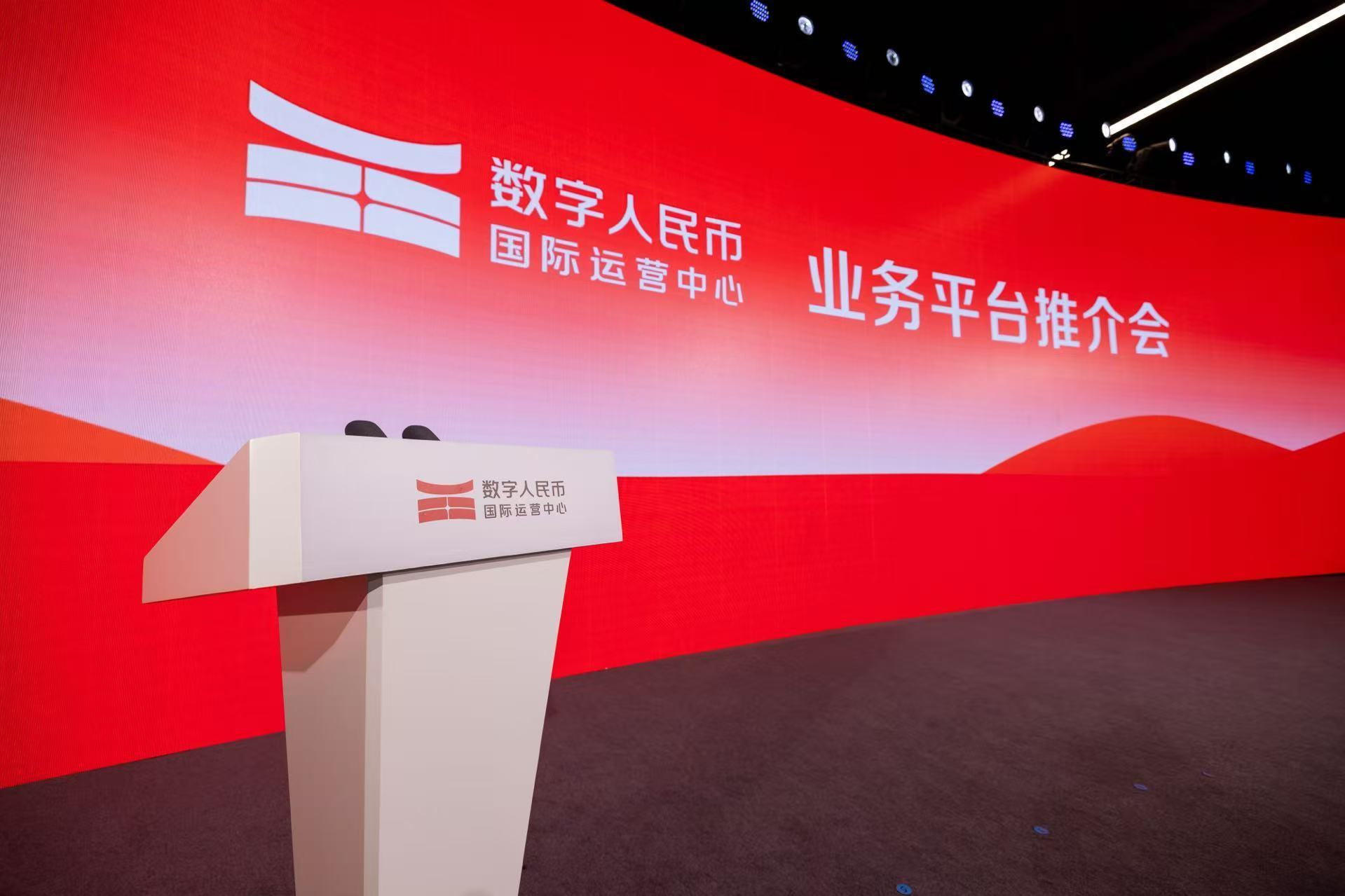
“互换通”运行机制将优化:扩充报价商队伍 提高每日净限额至450亿元
Zheng Quan Ri Bao Wang· 2025-09-25 11:28
Core Insights - The China Foreign Exchange Trading Center announced on September 25 measures to enhance the "Swap Connect" market's vitality and better meet the needs of overseas investors in managing RMB interest rate risks [1] Group 1: Operational Enhancements - A dynamic adjustment mechanism for "Swap Connect" quote providers will be established, and the pool of quote providers will be expanded [1] - A daily net limit dynamic assessment mechanism will be improved, with the daily net limit set to increase to 45 billion RMB starting from October 13, 2025 [1] Group 2: Market Impact - Since its launch on May 15, 2023, "Swap Connect" has facilitated efficient interest rate risk management for overseas investors in RMB asset allocation [1] - As of the end of August 2025, 82 overseas investors from 15 countries and regions have conducted over 15,000 RMB interest rate swap transactions, with a nominal principal amount of 8.15 trillion RMB [1] Group 3: Future Outlook - The trading center will continue to optimize the "Swap Connect" mechanism in collaboration with the People's Bank of China and market participants, supporting the high-level opening of China's financial market and the internationalization of the RMB [1]
提高每日净限额!“互换通”运行机制迎优化
券商中国· 2025-09-25 11:13
为进一步提升内地与香港利率互换市场互联互通合作(下称"互换通")市场活力,中国外汇交易中心(下 称"交易中心")9月25日发布消息称,将在中国人民银行指导下优化"互换通"运行机制。 责编:杨喻程 排版:汪云鹏 校 对: 杨舒欣 百万用户都在看 大爆发!两大利好来袭! 盘中,集体异动!刚刚,见证历史! 见证历史!集体大涨! 杀疯了!9万亿元! 突然!尾盘,多只牛股异动!发生了什么? 违法和不良信息举报电话:0755-83514034 邮箱:bwb@stcn.com 具体措施包括建立"互换通"报价商动态调整机制,并扩充报价商队伍。完善每日净限额动态评估机制,并自 2025年10月13日起提高每日净限额至450亿元。 自2023年5月15日上线以来,"互换通"为境外投资者开展人民币资产配置提供了便利、高效的利率风险管理工 具,交易清算等机制安排运转顺畅,境内外投资者积极踊跃参与,业务量持续上升。截至2025年8月底,已有 来自15个国家和地区的82家境外投资者累计达成人民币利率互换交易1.5万余笔、名义本金8.15万亿元。 2024年5月,"互换通"机制安排迎来优化,推出以国际货币市场结算日为支付周期的利率互换合约 ...

数字人民币国际运营中心正式运营 形成三大业务平台
Shang Hai Zheng Quan Bao· 2025-09-25 10:52
Core Insights - The digital renminbi international operation center's business platform was officially launched in Shanghai, marking a significant step in enhancing cross-border payment systems and digital currency infrastructure [1][2][3] Group 1: Digital Renminbi International Operation Center - The center aims to provide open, inclusive, and innovative solutions for improving the global cross-border payment system, adhering to the principles of "no loss, compliance, and interoperability" [1] - The center has established a preliminary cross-border financial infrastructure system for the digital renminbi [1] - The center is managed by the People's Bank of China Digital Currency Research Institute, focusing on building and operating cross-border and blockchain infrastructure [3] Group 2: Business Platforms - The digital renminbi international operation center has developed three main business platforms: cross-border digital payment platform, blockchain service platform, and digital asset platform [2] - The cross-border digital payment platform aims to support the internationalization of the renminbi and address pain points in traditional cross-border payments [2] - The blockchain service platform supports standardized blockchain transaction switching and on-chain digital renminbi payment services, while the digital asset platform facilitates compliant issuance, registration, custody, and trading of digital assets [2] Group 3: Strategic Importance - The establishment of the digital renminbi international operation center in Shanghai aligns with the city's goal of becoming a leading international financial center [2] - The center is expected to enhance the safety, stability, and convenience of the business platform, thereby supporting the deep integration of finance and the real economy [2]
“互换通”运行机制迎优化!提高每日净限额至450亿元
Zheng Quan Shi Bao· 2025-09-25 10:35
随着国际投资者对人民币利率互换的兴趣不断提升,对"互换通"产品需求不断增加。此前已有部分市场 机构建议,扩大"互换通"交易限额,丰富"互换通"产品种类,满足日益增长的境外投资者需求。 为进一步提升内地与香港利率互换市场互联互通合作(下称"互换通")市场活力,中国外汇交易中心(下称 交易中心)9月25日发布消息称,将在中国人民银行指导下优化"互换通"运行机制。具体措施包括建 立"互换通"报价商动态调整机制,并扩充报价商队伍。完善每日净限额动态评估机制,并自2025年10月 13日起提高每日净限额至450亿元。 交易中心明确,未来将继续在央行指导下,与两地基础设施、境内外市场参与者紧密合作,持续优 化"互换通"机制安排,助力中国金融市场高水平对外开放和人民币国际化进程。 "互换通"运行机制迎优化。 自2023年5月15日上线以来,"互换通"为境外投资者开展人民币资产配置提供了便利、高效的利率风险 管理工具,交易清算等机制安排运转顺畅,境内外投资者积极踊跃参与,业务量持续上升。截至2025年 8月底,已有来自15个国家和地区的82家境外投资者累计达成人民币利率互换交易1.5万余笔、名义本金 8.15万亿元。 202 ...