金融市场对外开放

Search documents
中国银行协助摩科瑞发行首单熊猫债
Jin Rong Shi Bao· 2026-03-26 00:25
Group 1 - The core viewpoint of the article highlights the successful issuance of Panda bonds by Mokerui Energy Group, facilitated by the Bank of China, marking Mokerui's debut in the Panda bond market [1] - The issuance represents a significant advancement for the Bank of China in expanding direct financing channels for international high-quality enterprises [1] - The Panda bond market is experiencing new development opportunities due to the ongoing high-level opening of China's financial market, attracting more quality foreign issuers [1] Group 2 - Since 2025, the Bank of China has successfully assisted various high-quality foreign issuers, including Barclays, Morgan Stanley, CIMB, and Henkel Group, in achieving breakthroughs in Panda bond financing [1]

财政部延续两项境外机构投资相关债券利息免税优惠政策
第一财经· 2026-01-15 14:20
Core Viewpoint - The Ministry of Finance and the State Taxation Administration of China have announced the extension of tax exemption policies for interest income from bonds held by foreign institutional investors in the domestic bond market, effective from January 1, 2026, to December 31, 2027 [3][4]. Group 1: Tax Policies - From January 1, 2026, to December 31, 2027, interest income from bonds held by foreign institutional investors in the domestic bond market will be exempt from corporate income tax and value-added tax [3]. - From August 8, 2025, to December 31, 2027, interest income from foreign-issued government bonds and local government bonds will be exempt from value-added tax for foreign institutional investors [3]. - The previous announcement indicated that from August 8, 2025, value-added tax would be reinstated on interest income from newly issued government bonds, local government bonds, and financial bonds, but the new policy provides an exemption for foreign investors [3]. Group 2: Market Impact - The ongoing tax exemption policies are expected to lower the holding costs for foreign institutional investors, thereby increasing their returns and attracting more investment into China's bond market [4]. - The increasing participation of foreign investors in China's financial market is seen as a significant factor in promoting the opening up of the bond market and the internationalization of the Renminbi [4].

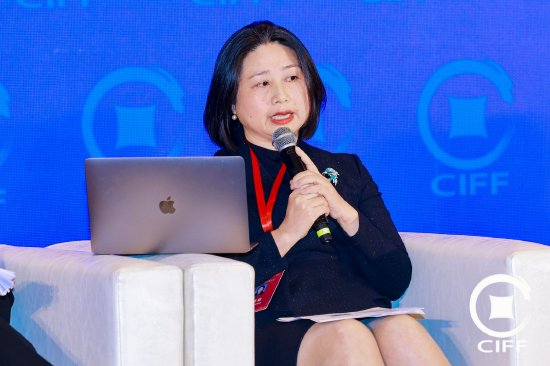
华东政法大学李文莉:上海推动自贸离岸债发展,有利于推进人民币国际化进程
Xin Lang Cai Jing· 2025-12-22 07:25
Core Viewpoint - The 22nd China International Financial Forum held in Shanghai focuses on building an intelligent financial ecosystem in the digital economy era [1][5] Group 1: Development of Offshore Bonds - Shanghai's advantages in promoting free trade offshore bonds include the formation of a market, evidenced by over 130 billion yuan in offshore bond issuance [3][7] - The integration of FT accounts with offshore bonds, initiated in 2014, has been successfully replicated in other regions like Tianjin, Guangdong, and Shenzhen since 2019 [3][7] Group 2: Significance of Offshore Bonds - Promotes the opening of financial markets by aligning offshore bonds with international rules, facilitating global financial resource aggregation [4][7] - Advances the internationalization of the Renminbi by encouraging the issuance of offshore bonds denominated in Renminbi, meeting global investors' demand for Renminbi assets [4][7] - Supports the construction of a new development pattern characterized by dual circulation, leveraging the free trade zone to connect domestic and international markets [4][7] Group 3: Financial Security and Stability - The Central Clearing Company plays a crucial role in the issuance, registration, custody, clearing, and valuation of offshore bonds, enhancing financial security [8] - The option to designate the Shanghai Financial Court as an arbitration institution helps mitigate jurisdictional risks [8] - This framework allows for better control over the innovation practices of financial market openness, contributing to national financial security and stability [8]
QFI首用国债作为商品期货保证金 我国期货市场对外开放再进一步
Xin Lang Cai Jing· 2025-12-19 01:22
Core Viewpoint - The collaboration between Dalian Commodity Exchange (DCE) and Central Securities Depository and Clearing Co., Ltd. marks the first instance of qualified foreign institutional investors (QFII and RQFII) using government bonds as margin for commodity futures trading, indicating a significant step in the high-quality opening of China's financial infrastructure to foreign capital markets [1][2]. Group 1 - The new business fills a gap for foreign investors in using government bonds as margin for commodity futures, providing valuable experience for future scaling [1][2]. - This initiative broadens the usage scenarios for RMB bonds for foreign investors, effectively reducing trading costs and promoting the integration of the bond and futures markets [1][2]. - The operational management head from the futures company emphasized that this initiative provides a new approach to serve foreign clients, with DCE and the Central Clearing Company playing a crucial role in ensuring smooth business operations [3]. Group 2 - The successful implementation of using government bonds as margin for commodity futures is a key measure in advancing the strategy of opening up the financial market, enhancing the international attractiveness and competitiveness of both the futures and bond markets [3]. - DCE and the Central Clearing Company plan to further enhance their international service levels, focusing on the core needs of foreign investors, and continue to promote institutional innovation and service upgrades [3].

QFI首次使用国债作为商品期货保证金
Qi Huo Ri Bao Wang· 2025-12-18 17:10
Core Viewpoint - The collaboration between the Dalian Commodity Exchange (DCE) and the Central Government Securities Depository and Clearing Co., Ltd. marks the first instance of qualified foreign institutional investors (QFII and RQFII) using government bonds as margin for commodity futures trading, indicating a significant step in the high-quality opening of China's financial infrastructure to foreign capital markets [1]. Group 1 - The new business practice fills a gap for foreign investors in using government bonds as margin for commodity futures, providing valuable experience for future scaling of this service [1]. - This initiative broadens the usage scenarios for RMB-denominated bonds for foreign investors, effectively reducing trading costs and promoting the integration of the bond and futures markets [1]. - The successful implementation of this business is a key measure to enhance the international attractiveness and competitiveness of the futures and bond markets in China [1]. Group 2 - The DCE and the Central Clearing Company plan to further enhance their international service levels, focusing on the core needs of foreign investors, and continue to promote institutional innovation and service upgrades [1].
财政部在港成功发行40亿美元主权债券
2 1 Shi Ji Jing Ji Bao Dao· 2025-11-06 04:42
Core Insights - The Ministry of Finance successfully issued $4 billion in sovereign bonds in Hong Kong, with a strong market response and a total subscription amount of $118.2 billion, indicating a 30-fold oversubscription [2] - The issuance included $2 billion in 3-year bonds at an interest rate of 3.646% and $2 billion in 5-year bonds at 3.787%, with the 5-year bonds seeing a subscription multiple of 33 times [2][3] - Morgan Stanley acted as the joint lead underwriter, marking the seventh issuance of U.S. dollar sovereign bonds since 2017, reflecting China's commitment to further opening its financial markets [3] Market Response - The bonds attracted a diverse range of international investors, with 53% from Asia, 25% from Europe, 16% from the U.S., and 6% from the Middle East, showcasing broad geographical interest [2] - Investor types included sovereign wealth funds (42%), banks and insurance companies (24%), asset management funds (32%), and dealers (2%), indicating a healthy mix of institutional participation [2] Strategic Implications - The issuance is expected to enhance the international perception of China's economic transformation and high-quality growth, as long-term institutional investors typically focus on fundamentals and long-term value [3] - The regular issuance of U.S. dollar sovereign bonds is anticipated to provide a critical pricing benchmark for Chinese enterprises seeking to raise funds overseas, thereby reducing their financing costs and uncertainties [3] - The deepening collaboration between sovereign bond issuance and Chinese enterprises' overseas financing needs is likely to elevate China's financial market influence alongside the global competitiveness of Chinese companies [3]

《海外资管机构赴上海投资指南(2025版)》发布,今年有这些要点更新!(附全文下载)
Di Yi Cai Jing· 2025-10-16 01:40
Group 1: Core Insights - The Shanghai Fund Industry Association is set to update the "Guidelines" for the fifth time in 2025, aiming to enhance the construction of Shanghai as an international financial center and promote high-level, institutional openness in the capital market [1] - The "Guidelines" have been revised annually since their inception in 2020, providing policy guidance and practical advice for overseas asset management institutions looking to operate in Shanghai [1] Group 2: Financial Market Opening - The internationalization of the Renminbi is progressing steadily, with cross-border Renminbi settlement reaching 64.1 trillion yuan in 2024, a year-on-year increase of 22.5% [1] - The Renminbi Cross-Border Payment System (CIPS) has expanded its reach to 189 countries and regions, with 1,690 participants [1][12] Group 3: Financial Center Development - Shanghai's financial market is leading in scale, with the financial industry's added value reaching 807.27 billion yuan in 2024, accounting for 15% of the city's GDP [4][18] - The total trading volume in Shanghai's financial market was 365.03 trillion yuan, reflecting an 8.2% growth [4][18] Group 4: Foreign Investment Participation - As of June 2025, foreign institutions held a total of 4.23 trillion yuan in the interbank bond market, with 893 foreign institutions approved for Qualified Domestic Institutional Investor (QDII) status [3][14] Group 5: Fund Industry Development - By the end of 2024, China's open-end public fund assets reached 3.98 trillion USD, ranking fourth globally, with public fund assets surpassing 34 trillion yuan by June 2025 [6][20] - The scale of equity funds (stock and mixed funds) within open-end funds reached 8.42 trillion yuan by June 2025, marking a year-on-year growth of 26% [7][20] Group 6: Shanghai Fund Industry Leadership - As of June 2025, Shanghai had 75 public fund management institutions, with 5,129 public fund products and a management scale of 12.74 trillion yuan, all ranking first in the country [10][27] - The number of registered private fund managers in Shanghai reached 3,701, managing 40,500 funds with a total scale of 5.10 trillion yuan, also leading nationally [10][33] - Notably, 43 out of 89 hundred-billion securities private funds are based in Shanghai, representing 48% of the total [10][33]

首日成交58亿 头部券商银行落地 首批跨境债券回购交易
2 1 Shi Ji Jing Ji Bao Dao· 2025-10-15 12:27
Core Insights - The cross-border bond repurchase business has officially launched, with major securities firms like CICC and CITIC Securities quickly responding and executing initial trades totaling 5.8 billion yuan on the first day [1][5][6] - The People's Bank of China, the China Securities Regulatory Commission, and the State Administration of Foreign Exchange issued a joint announcement to support foreign institutional investors in conducting bond repurchase transactions in the Chinese bond market [1][6] - This initiative aims to deepen financial market openness and facilitate liquidity management for foreign investors, following the launch of offshore RMB bond repurchase business by the Hong Kong Monetary Authority earlier this year [1][6] Summary by Sections Cross-Border Bond Repurchase Launch - The cross-border bond repurchase business allows foreign institutions to conduct repurchase transactions using RMB-denominated bonds as collateral, providing a significant financing avenue in both onshore and offshore RMB markets [1][6] - The first day of trading saw a total transaction volume of 5.8 billion yuan, indicating strong market interest and participation [1][5] Participation of Major Firms - CICC and CITIC Securities were among the first to act as market makers for the cross-border repurchase business, successfully executing multiple transactions on the launch day [2][3] - CICC emphasized its commitment to supporting the internationalization of the RMB and contributing to the high-level opening of financial markets [2][3] Involvement of Financial Institutions - Other major banks, including Bank of China, Industrial and Commercial Bank of China, and Agricultural Bank of China, also participated actively in the cross-border bond repurchase market, facilitating initial trades [5][6] - The participation of various types of foreign institutional investors, including central banks and asset management firms, was noted, with a diverse range of bond types being traded [5][6] Market Impact and Future Outlook - The initiative is expected to enhance the attractiveness of RMB-denominated bonds and optimize the Qualified Foreign Institutional Investor (QFII) system, reinforcing Hong Kong's status as an international financial center [6] - The ongoing expansion of the cross-border bond repurchase business is anticipated to continue, with potential for more firms to qualify as market makers by 2026 [4][6]


“互换通”今日起每日净限额提高至450亿元
Zheng Quan Ri Bao· 2025-10-12 16:12
Core Insights - The "Swap Connect" mechanism is being optimized to enhance the interconnectivity of the interest rate swap market between mainland China and Hong Kong, which is expected to attract more international capital and improve market liquidity [1][2]. Summary by Sections Mechanism Optimization - The daily net limit for the "Swap Connect" will be increased from 20 billion to 45 billion yuan starting October 13, 2025, allowing for greater participation from foreign investors and better management of interest rate volatility risks [1]. - A dynamic assessment mechanism for the daily net limit will be implemented to adjust quota allocations based on market supply and demand, preventing trading interruptions due to insufficient quotas [1][3]. Market Participation and Growth - Since its launch on May 15, 2023, the "Swap Connect" has seen a steady increase in transaction volume and the number of participating investors, with 82 foreign investors from 15 countries and regions engaging in over 15,000 transactions totaling a nominal principal of 8.15 trillion yuan by August 2025 [2]. Pricing and Efficiency Improvements - The establishment of a dynamic adjustment mechanism for market makers will enhance pricing efficiency by introducing more financial institutions capable of market-making, thereby reducing the market influence of any single institution and narrowing bid-ask spreads [3]. - Future optimization directions include expanding product types to introduce more interest rate derivatives, improving cross-border collaboration efficiency, and refining market maker evaluation standards [3][4].
事关中国债券市场,三部门发文力挺
21世纪经济报道· 2025-09-27 00:29
Core Viewpoint - The announcement by the People's Bank of China, the China Securities Regulatory Commission, and the State Administration of Foreign Exchange supports foreign institutional investors in conducting bond repurchase transactions in the Chinese bond market, enhancing liquidity management and promoting the internationalization of the RMB [1][3][11]. Group 1: Announcement Details - As of August 2025, 1,170 foreign institutions from 80 countries hold approximately 4 trillion RMB in Chinese bonds, indicating a growing interest in the market [3][11]. - The announcement allows all foreign institutional investors, including central banks, sovereign wealth funds, and various financial institutions, to participate in bond repurchase transactions [4][5]. - The new rules aim to align China's bond repurchase practices with international standards, facilitating clearer rights and obligations in transactions [7][8]. Group 2: Market Impact - The introduction of bond repurchase transactions is expected to enhance the attractiveness of RMB-denominated bonds and strengthen Hong Kong's status as an international financial center [5][11]. - The bond repurchase mechanism will provide foreign investors with a more flexible and efficient liquidity management tool, thereby expanding the depth and breadth of the Chinese bond market [8][11]. - The People's Bank of China has emphasized the importance of balancing openness and security in the financial market, which is crucial for the high-level opening of the bond market [9][12]. Group 3: Future Developments - The announcement is part of a broader initiative to enhance cross-border investment and financing convenience, including expanding the swap market and increasing the daily trading limit for net transactions [12][13]. - The People's Bank of China is also working to make Chinese bonds widely accepted as eligible collateral in global markets, further integrating the RMB into international finance [13].