
绿色环保

Search documents
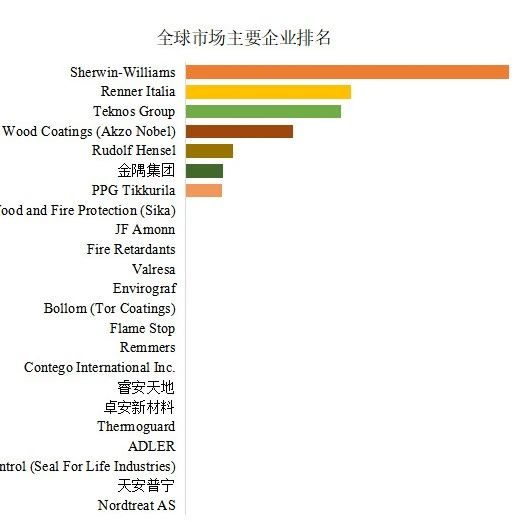
全球木材防火涂料市场前10强生产商排名及市场占有率(2024年)
QYResearch· 2025-08-13 09:25
Core Viewpoint - Wood fire retardant coatings are essential for reducing the flammability of wood surfaces, slowing flame spread, and minimizing smoke during fires, with increasing applications in residential, commercial, and industrial buildings due to heightened safety and environmental awareness [1][2]. Industry Overview - The wood fire retardant coatings industry has evolved from simple fire treatments in ancient times to modern high-tech multifunctional coatings, driven by technological innovation and market demand [2]. - The market has seen significant growth since the mid-20th century, particularly in high-rise buildings and public spaces, reflecting the ongoing pursuit of safety in construction [2]. Market Dynamics - Global manufacturers of wood fire retardant coatings exhibit a diverse landscape, with international companies like Sherwin-Williams and Akzo Nobel dominating the high-end market, while Chinese firms leverage cost advantages to expand their market share [3]. - By 2024, the top 10 manufacturers are expected to hold over 50% of the global market share, indicating a competitive environment influenced by stricter environmental regulations and personalized demands [3]. Regional Development Characteristics - The market in Europe is primarily driven by stringent fire safety regulations and environmental policies, focusing on eco-friendliness and multifunctionality, while Asia, particularly China and Japan, sees rapid growth due to urbanization and infrastructure development [4]. - By 2024, Europe is projected to be the largest consumer market for wood fire retardant coatings, accounting for over 40% of the market share, followed by the Asia-Pacific and North America [4]. Product Segmentation - Water-based coatings dominate the market, representing over 80% of the share due to their environmental benefits, while solvent-based coatings account for less than 20% [4][11]. - The commercial building sector is the primary demand source, holding approximately 66.5% of the market share [12]. Market Size and Growth Projections - According to QYResearch, the global wood fire retardant coatings market is expected to reach $350 million by 2031, with a compound annual growth rate (CAGR) of 4.4% in the coming years [5].

宁夏中宁县200MW/400MWh储能电站一次并网成功
中关村储能产业技术联盟· 2025-08-10 15:10
Group 1 - The core viewpoint of the article highlights the successful integration of the 200MW/400MWh shared energy storage project in Ningxia, which is a significant energy initiative for the region [2] - The project occupies approximately 30 acres and features advanced technology, including 40 sets of 5MW/10MWh liquid-cooled storage units and industry-leading battery cell technology [2] - Upon commissioning, the project is expected to generate an annual discharge of 117 million kWh, sufficient to meet the annual electricity needs of nearly 40,000 households [2] Group 2 - The environmental impact of the project is substantial, with an estimated reduction of 31,800 tons of standard coal combustion and a decrease of 575,600 tons of CO2 emissions annually, equivalent to planting approximately 3.144 million trees [2] - The article mentions the upcoming "10th Energy Storage Western Forum" scheduled for August 19-20, 2025, in Hohhot, Inner Mongolia, which will include various related events [3] - The Ningxia "Document No. 136" outlines pricing for energy storage, with existing rates at 0.2595 yuan/kWh and incremental rates ranging from 0.18 to 0.2595 yuan/kWh [6]

荣耀刘小军:供应链减排成未来关键战场
Zhong Guo Jing Ying Bao· 2025-08-09 12:01
Core Insights - The article emphasizes the importance of green environmental practices and industry responsibility in the consumer electronics sector, highlighting that collaboration across the entire supply chain is essential for achieving significant results in sustainability efforts [1][3]. Group 1: ESG Strategy and Goals - Honor has set ambitious goals to achieve carbon neutrality in its own operations by 2040 and across its entire value chain by 2050, marking green environmental practices as a top priority in its ESG strategy [3][4]. - The 2024 ESG report identifies green environmental initiatives as the primary focus, with a structured approach to achieving carbon neutrality [3][4]. Group 2: Carbon Emission Data - Honor's carbon emissions are predominantly from Scope 3, which accounts for 98.76% of total emissions, indicating that upstream and downstream activities are critical areas for reducing carbon footprints [2][4]. - The company has identified that 80% of its carbon emissions stem from the manufacturing process, with electricity usage contributing 66% of that segment [6]. Group 3: Supply Chain Management and Challenges - Data collection is highlighted as a significant challenge in reducing emissions within the supply chain, with Honor having completed an initial assessment of carbon emissions data for 80% of its suppliers [6][7]. - Honor employs a tiered supplier management strategy to enhance data transparency and support suppliers in identifying and reducing their carbon emissions [7]. Group 4: Collaboration and Support for Suppliers - The company is focused on empowering suppliers to build sustainable reduction capabilities, providing training and support to help them manage their carbon emissions effectively [7]. - Honor is exploring collective purchasing of green electricity to alleviate cost pressures on smaller suppliers who may struggle with the financial implications of transitioning to cleaner energy sources [7].
永兴股份: 永兴股份公司章程
Zheng Quan Zhi Xing· 2025-08-08 16:23
General Provisions - The company aims to protect the legal rights of shareholders, employees, and creditors, and to regulate its organization and behavior according to relevant laws [1][2] - The company was established as a joint-stock company and registered with the Guangzhou Market Supervision Administration [1][2] - The company received approval from the China Securities Regulatory Commission for its initial public offering of 150 million shares, with a total registered capital of RMB 900 million [1][3] Business Objectives and Scope - The company's business objective is to implement new development concepts, prioritize quality and efficiency, and enhance core competitiveness while ensuring shareholder value [4][5] - The registered business scope includes solid waste management, sales of environmental protection equipment, and investment activities [4][5] Shares - The company issues shares in the form of stocks, with each share having a par value of RMB 1.00 [5][6] - The total number of shares is 900 million, all of which are ordinary shares, with 750 million shares issued to founders at the establishment [5][6] - The company can increase its capital through various methods, including issuing shares to unspecified or specific objects and distributing bonus shares [6][7] Shareholder Rights and Responsibilities - Shareholders have rights to dividends, voting, and supervision of company operations, and they must comply with laws and the company's articles of association [8][9] - Shareholders holding more than 3% of shares for over 180 days can request access to the company's accounting records [9][10] - Shareholders must not abuse their rights to harm the company or other shareholders' interests [12][13] Shareholder Meetings - The company holds annual and temporary shareholder meetings, with specific procedures for calling and conducting these meetings [16][17] - Shareholders can propose agenda items and must be notified of meeting details in advance [22][23] - The company must maintain accurate records of meetings, including attendance and voting results [28]
“好材料”重塑家居生活体验
Ke Ji Ri Bao· 2025-08-08 09:13
Group 1: Material Innovations in Home Renovation - The use of innovative materials such as diatomaceous inorganic dry powder wall materials is transforming living experiences by enhancing indoor humidity regulation and comfort [1][2] - Environmentally friendly wall materials developed by China Building Materials Academy can effectively address formaldehyde pollution and moisture issues, creating a healthier indoor environment [2] - New antibacterial coatings developed by China Building Materials Academy can achieve over 99% antibacterial and antiviral rates, significantly reducing chemical pollution and cross-infection risks in enclosed spaces [3] Group 2: Smart Glass Technologies - Smart electrochromic glass can dynamically adjust its light transmission from 2% to 65%, reducing glare and UV exposure while decreasing air conditioning energy consumption by over 40% [4][6] - Cadmium telluride (CdTe) photovoltaic glass can convert light energy into electricity, combining the functions of traditional glass and solar panels, thus promoting sustainable building practices [5][6] Group 3: Advanced Wall Solutions - The "Luban Universal Board" developed by Beixin Group can significantly shorten wall decoration time, allowing for immediate occupancy after installation [7] - The heating board, based on graphene heating technology, provides both decorative and heating functions, enabling quick installation and efficient temperature control [7] Group 4: Insulation and Safety Materials - Foam ceramics developed by Jiangxi New Materials Company offer superior fire resistance and insulation properties, improving energy efficiency and safety in building renovations [8] - The low thermal conductivity of foam ceramics can enhance indoor temperature stability by approximately 30% in winter, addressing common issues of noise and moisture in older buildings [8]

2025年中国光学增亮膜行业上下游分析、市场规模、竞争格局及发展趋势研判:下游需求推动行业规模增长,未来薄型化是其重要发展方向[图]
Chan Ye Xin Xi Wang· 2025-08-08 01:15
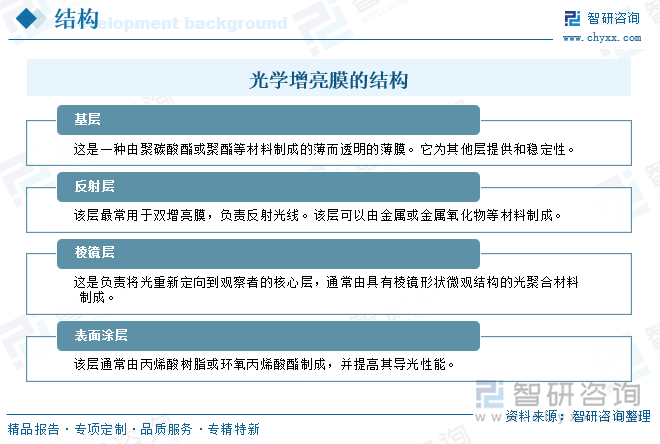
Core Viewpoint - The optical enhancement film market is experiencing growth driven by increasing demand for display quality in electronic products such as smartphones, tablets, and laptops, with the market size in China expected to reach 6.57 billion yuan in 2024, a year-on-year increase of 10.1% [1][14]. Group 1: Industry Overview - Optical enhancement film, also known as prism film or BEF, is a crucial component in LCD backlight modules, enhancing display brightness and controlling viewing angles [3][14]. - The film is widely used in various electronic devices, including smartphones, LCD TVs, digital cameras, and automotive displays [3][6]. - The industry is supported by a growing demand in emerging applications such as automotive displays and smart home devices [1][14]. Group 2: Market Dynamics - The optical enhancement film market in China is projected to grow from 28 billion yuan in 2015 to 56.6 billion yuan in 2024, reflecting a robust demand driven by the booming downstream panel industry [12]. - The smartphone sector is a significant end-user of optical enhancement films, with China's smartphone shipments expected to reach 286 million units in 2024, a year-on-year increase of 5.54% [10]. Group 3: Competitive Landscape - The optical enhancement film industry in China is highly competitive, with key players including Ningbo Jizhi Technology Co., Ltd., Ningbo Changyang Technology Co., Ltd., and Daoming Optics Co., Ltd. [16][17]. - Companies are under pressure to improve product quality and innovate to meet consumer demands [16]. Group 4: Industry Trends - The industry is moving towards thinner products to meet the demand for lightweight and high-definition displays, with ultra-thin optical enhancement films being developed [21]. - There is a trend towards functional composite films that integrate multiple optical functions to reduce costs and improve assembly efficiency [22]. - Environmental considerations are becoming increasingly important, with a shift towards green production technologies and recycling practices in the optical enhancement film sector [24].


鼎汉技术: 2024年度向特定对象发行A股股票募集资金使用可行性分析报告(修订稿)
Zheng Quan Zhi Xing· 2025-08-07 11:22
Group 1 - The company plans to raise a total of 224.21 million yuan through a private placement, with the net proceeds intended to supplement working capital [1] - The company's main business focuses on the rail transit sector, including ground electrical equipment, vehicle electrical equipment, intelligent solutions, and after-sales operation and maintenance [1][2] - The rail transit equipment industry is characterized as technology-intensive and capital-intensive, necessitating sufficient working capital for daily R&D, business expansion, and operations [1][2] Group 2 - As of March 2025, the company's interest-bearing liabilities (excluding lease liabilities) are approximately 1.355 billion yuan, with short-term loans around 917 million yuan, posing significant challenges for financial management [2] - The issuance of shares is expected to enhance the company's financial strength, alleviate funding pressure, and improve the capital structure, thereby increasing liquidity and operational safety [2][4] - The controlling shareholder's participation in the private placement is anticipated to strengthen the foundation for the company's development and enhance investor confidence in the secondary market [2][4] Group 3 - The funds raised will be used entirely to supplement working capital, which aligns with regulatory requirements and is expected to improve the company's asset-liability structure and support operational development [4][5] - The issuance is projected to enhance the company's core competitiveness and sustainable operational capacity, thereby benefiting long-term shareholder interests [4][5] - The company's governance structure will remain compliant with listing standards, ensuring independence in operations and management [5][6]

中建西部建设集团第八(上海)申请绿色胶凝材料及其制备方法和应用专利,减轻水泥导致的环境压力
Jin Rong Jie· 2025-08-02 10:26
Group 1 - The company, China State Construction West Group (Shanghai) Co., Ltd., has applied for a patent for a "green cementing material and its preparation method and application" with publication number CN120398476A, filed on October 2024 [1] - The green cementing material consists of composite materials (120-180 kg), cement (120-180 kg), water (100-150 kg), and a water-reducing agent (3-10 kg), with specific components including modified biochar (80-140 kg), graphitic carbon nitride (2-20 kg), and silica fume (24-36 kg) [1] - The invention aims to reduce environmental pressure caused by cement by substituting part of the cement with graphitic carbon nitride and biochar, which also has a high carbon sequestration potential and can degrade pollutants in the environment [1] Group 2 - China State Construction West Group (Shanghai) Co., Ltd. was established in 2021 and is primarily engaged in the non-metallic mineral products industry, with a registered capital of 170 million RMB [2] - The company has made investments in 2 enterprises, participated in 8 bidding projects, and holds 28 patent records, along with 6 administrative licenses [2]

让绿色业务成为增长极
Jing Ji Ri Bao· 2025-08-02 00:36
Core Insights - The company aims to transform into a modern industrial group with a focus on quality, professionalism, high-end services, precision, digitalization, and sustainability in 2024 [1][2] Group 1: Technological Advancements - The company has developed an intelligent production line capable of operating over 1,200 molds simultaneously, producing 5,300 prefabricated components daily, which is nearly three times more efficient than traditional lines [1] - The "Key Technologies and Applications for the Super Long Deep-Buried Qinling Tunnel" project was recognized as one of the top ten technological innovations in the construction industry, addressing significant challenges in tunnel construction [2] - The company achieved international leading standards in tunnel construction, overcoming over 4,000 rock bursts and 600 water inflows [2][3] Group 2: Green Transformation - The company has established a "4S shop" for shield machines, significantly reducing energy consumption and material costs, with energy savings of nearly 60% and material savings of about 70% during the remanufacturing process [4] - A passive building project in Tianjin achieved zero energy consumption and zero carbon emissions, utilizing insulation technology and photovoltaic systems to offset energy use [6] Group 3: Community and Infrastructure Development - The company is actively involved in community service projects, such as the construction of a new traditional Chinese medicine hospital in Tianjin, aimed at improving local healthcare facilities [7] - The company has undertaken over 20 ecological restoration projects in Xiong'an New Area, implementing various measures for environmental improvement [8] - The company has developed a vacuum sewage treatment system in rural areas, benefiting over 19,000 households and enhancing local ecological conditions [8]
苏州固锝:子公司拟取得苏州谱曜51%股权
Zheng Quan Shi Bao Wang· 2025-08-01 11:45
Core Viewpoint - Suzhou Gude (002079) announced a strategic acquisition and capital increase involving its subsidiary Suzhou Jingyin, enhancing its stake in Suzhou Puyao to 51% and reinforcing its position in the renewable energy sector [1] Group 1: Transaction Details - Suzhou Jingyin signed a share transfer agreement to acquire 35% of Suzhou Puyao from Suzhou Lingsheng for 3.2725 million yuan [1] - Following the share transfer, Suzhou Jingyin will invest an additional 3.0528 million yuan to subscribe to Suzhou Puyao's newly increased registered capital of 2.612 million yuan [1] - The total transaction amount is 6.3253 million yuan, which will result in Suzhou Jingyin holding a majority stake in Suzhou Puyao [1] Group 2: Strategic Implications - Suzhou Puyao is positioned as a comprehensive service provider in the renewable energy sector, focusing on the investment and construction of distributed photovoltaic power stations for commercial use [1] - The transaction aligns with the company's commitment to green and environmentally friendly business practices [1] - This acquisition is expected to enhance the company's competitiveness in the renewable energy market [1]
