
绿色化

Search documents
闲置物品循环增值了啥
Xin Lang Cai Jing· 2026-01-09 00:10
Group 1 - The core viewpoint of the articles emphasizes the rapid growth of the second-hand goods market in China, with a projected transaction volume of 1.69 trillion yuan in 2024, reflecting a year-on-year growth of 28% and a six-year average compound annual growth rate of 12% [1] - The circulation of idle goods not only represents industrial growth but also achieves broader "value addition," as items that would otherwise be discarded can continue to be used and appreciated through second-hand transactions [1] - The efficiency enhancement in various industries is highlighted, with companies adopting models that combine online and offline sales, ensuring quality assurance and improving customer experience, thus driving foot traffic and transaction efficiency [1] Group 2 - The articles discuss the integration of new development concepts into everyday life, emphasizing the importance of updating ideologies to promote green development and environmental contributions through the circulation of idle goods [2] - The concept of "统筹" (coordination) is identified as a key theme in recent practices, showcasing how markets can adapt to both domestic and international demands while enhancing economic quality through innovation and structural reforms [2] - The transformation of consumer attitudes towards idle goods reflects broader changes in quality, efficiency, and motivation, which are essential drivers of high-quality development [3]
中经评论:“两新”激发中国制造新动能
Jing Ji Ri Bao· 2026-01-09 00:03
Group 1 - The "Two New" policy aims to optimize support for the manufacturing sector, enhancing investment growth in equipment manufacturing, consumer goods, and information technology, while promoting the transformation of Chinese manufacturing towards high-end, intelligent, and green development [1] - The demand for equipment updates is significant, with a 12.2% year-on-year increase in investment in equipment and tools from January to November 2025, contributing 1.8 percentage points to overall investment growth [1] - The first batch of 625 billion yuan in special bonds for consumer goods replacement has been allocated ahead of schedule, indicating strong governmental support for the initiative [1] Group 2 - The old-for-new consumption policy has opened new market opportunities for Chinese manufacturing, with sales of related products expected to exceed 2.6 trillion yuan in 2025, including over 11.5 million vehicles and 129 million home appliances [2] - The "Two New" policy not only stimulates investment and consumption but also drives quality upgrades in Chinese manufacturing, leading to improved production efficiency and profitability [2] - The shift towards smart and green products is evident, with nearly 60% of replaced vehicles being new energy vehicles and over 90% of replaced home appliances being energy-efficient [3] Group 3 - The optimization of the "Two New" policy is expected to invigorate small and medium-sized enterprises (SMEs) by lowering investment thresholds and streamlining application processes, thus enhancing their competitiveness [3] - The policy encourages a collaborative upgrade across the supply chain, fostering a virtuous cycle of demand and supply, which is essential for the sustainable growth of the manufacturing sector [3] - The dual focus on investment and consumption through the "Two New" policy is set to accelerate China's transition from a manufacturing power to a manufacturing stronghold [4]
广西做优做强工业经济 形成十大千亿元级支柱产业
Jing Ji Ri Bao· 2026-01-08 21:43
Group 1 - The core viewpoint of the articles highlights Guangxi's commitment to implementing the "Industrial Strong Guangxi" strategy, focusing on expanding investment, optimizing structure, and enhancing efficiency in the industrial economy [1][2] - During the "14th Five-Year Plan" period, Guangxi's industrial economy is expected to achieve significant growth, with the total industrial output value projected to reach 2.7 trillion yuan by 2025, an increase of 900 billion yuan over five years [1] - The industrial added value is anticipated to account for over 27% of the regional GDP, marking an increase of nearly 4 percentage points over five years, establishing the industrial sector as a cornerstone of economic development in the region [1] Group 2 - Guangxi has established ten pillar industries, with the non-ferrous metal industry expected to double its output value to over 450 billion yuan by 2025, while the steel and food industries are projected to exceed 300 billion yuan [1] - The region is also focusing on digital and green transformation, with over 5,000 enterprises implementing smart upgrades and nearly 10,000 completing digital diagnostics during the "14th Five-Year Plan" [1] - Guangxi aims to enhance high-quality industrial development by integrating artificial intelligence with manufacturing, promoting technological and industrial innovation, and improving the green low-carbon development system [2]
培优育厚产业“硬家底”
Xin Lang Cai Jing· 2026-01-08 20:05
Core Viewpoint - The development of the economy relies on the foundation of the real economy, with a focus on building a modern industrial system that reflects the unique advantages of Inner Mongolia as a priority for high-quality development and national modernization efforts [1] Group 1: Industrial Upgrade - Industrial upgrading is fundamentally a process of reshaping the industrial ecosystem and optimizing resource allocation through reform [1] - Emphasis on leveraging existing strengths and enhancing traditional industries such as energy, chemicals, metallurgy, equipment manufacturing, and strategic resources through smart, green, and integrated approaches [1] - The agricultural, pastoral, and cultural tourism resources in Inner Mongolia have the potential to develop into significant industries, requiring improvements in quality and brand creation [1] Group 2: Expanding New Industries - The key to expanding new industries lies in embracing reform to strengthen emerging industries and cultivate future industries [2] - There is a need to align with trends in green low-carbon technologies and the rapid iteration of artificial intelligence, focusing on growing sectors like new energy, new materials, and green computing [2] - Inner Mongolia's rich application scenarios in low-altitude economy, autonomous driving, and artificial intelligence are crucial for seizing future development opportunities [2] Group 3: Future Outlook - By taking advantage of strengths, addressing weaknesses, and enhancing efficiency, Inner Mongolia is poised to achieve significant industrial transformation and the emergence of new driving forces [3]
振芯科技三名董事抛出增持计划 传递“稳发展”信号
Zhong Guo Jin Rong Xin Xi Wang· 2026-01-08 12:24
Core Viewpoint - The management team of Zhenxin Technology demonstrates confidence in the company's future development through stock buybacks and strategic planning, particularly in the context of the "14th Five-Year Plan" focusing on "AI + hardware empowerment" [1][2][6]. Group 1: Stock Buyback and Management Confidence - Zhenxin Technology announced that its directors plan to increase their holdings in the company by investing between RMB 5.1 million and RMB 10.2 million within six months [1]. - The management's decision to buy shares reflects their confidence in the company's strategic direction and governance capabilities, especially following a court ruling regarding the company's control structure [5][6]. Group 2: Strategic Focus and Development Plans - The company aims to focus on "AI + hardware empowerment" during the "14th Five-Year Plan" period, targeting rapid growth in sectors such as integrated circuits, high-end chips, and intelligent applications [2]. - Zhenxin Technology has transitioned from a hardware supplier to a provider of comprehensive intelligent systems and services, launching several leading products in communication, satellite applications, and autonomous platforms [2]. Group 3: Technological Foundation and Market Position - Over its 22 years, Zhenxin Technology has built a robust product matrix in RF communication, Beidou navigation, and video image processing, ensuring high reliability in complex environments [3]. - The company reported a revenue of over RMB 240 million from its integrated circuit business in the first half of 2025, marking a 30% increase year-on-year [3]. - In the Beidou navigation sector, the company achieved over RMB 170 million in revenue, a 73% increase compared to the previous year [3]. Group 4: Research and Development Investment - Zhenxin Technology places a strong emphasis on innovation, with 63% of its workforce dedicated to R&D, and has seen a compound annual growth rate of 20% in R&D expenses since 2019 [4]. - In the first three quarters of 2025, the company reported revenues of RMB 736 million, a year-on-year increase of 30.56%, and a net profit of RMB 92.78 million, up 30.79% [4].

舜禹股份:舜禹股份系水务行业的国家高新技术企业
Zheng Quan Ri Bao Zhi Sheng· 2026-01-08 10:35
Core Viewpoint - Shunyu Co., Ltd. is a national high-tech enterprise in the water industry, focusing on the full lifecycle management of water supply and wastewater treatment services, providing comprehensive smart water solutions from source to tap and from wastewater to reclaimed water [1] Group 1: Company Overview - The company emphasizes the integration of digital technologies such as IoT and big data analysis into its product development, production management, and service delivery [1] - Shunyu Co., Ltd. is committed to promoting smart and green initiatives within its existing industrial framework [1] Group 2: Strategic Focus - The company is actively researching opportunities in the upstream and downstream of the industry chain and related emerging fields [1] - Decisions will be made based on thorough evaluations of technological pathways, market prospects, and team integration feasibility, adhering to principles of professionalism and stability [1]
报告:海尔连续17年居全球大型家用电器品牌零售量第一
Ren Min Wang· 2026-01-08 03:24
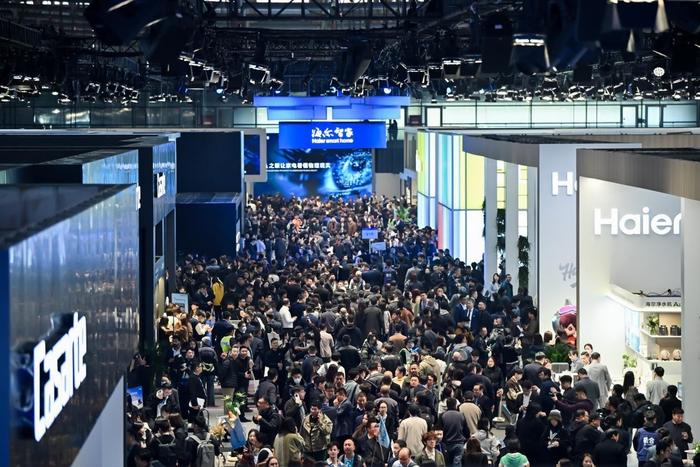
Core Insights - Haier has maintained its position as the world's leading brand in large home appliances for 17 consecutive years, with a global market share increase from 6.3% to 12.1% since 2009, demonstrating robust growth and resilience [1] - The company's growth is attributed to its smart home strategy, transitioning from merely selling appliances to providing a platform service ecosystem that enhances user experience through software-defined scenarios [1] Group 1: Strategic Framework - Haier's success is a result of its user-centric "126" strategy, which includes one innovative channel (smart home), two major platforms (customer platform and user lifecycle platform), and six capabilities (globalization, high-end, digitalization, intelligence, ecology, and greenness) [2] - The globalization aspect focuses on enhancing capabilities across sales, marketing, service, logistics, procurement, R&D, and manufacturing, allowing for localized product adaptations based on regional needs [2] Group 2: High-End and Digital Transformation - The high-end strategy emphasizes leadership through technological innovation, with products like the "Lazy Three-Tub Washing Machine" achieving significant sales milestones shortly after launch [5] - Digital transformation aims for "extreme efficiency," enhancing user experience through a fully digitized process that allows for synchronized delivery and installation, significantly reducing delivery times [5][6] Group 3: Intelligent and Ecological Innovations - Haier's approach to intelligence involves moving from product intelligence to scenario intelligence, integrating AI capabilities into home appliances for enhanced user interaction and automation [6] - The ecological strategy connects over 66 million resources to provide comprehensive services across various life scenarios, extending smart living from home to travel [6] Group 4: Commitment to Sustainability - Haier integrates ESG principles into its governance, offering green products that exceed energy efficiency standards, with commitments to achieve global carbon neutrality by 2050 [6]


南网储能探索智能化、绿色化、融合化发展新范式
Zhong Guo Fa Zhan Wang· 2026-01-07 21:32
Core Viewpoint - The Nanning Pumped Storage Power Station in Guangxi is set to be fully operational by the end of 2025, marking a significant step in the construction of a new power system in Guangxi as part of the national "14th Five-Year Plan" [1] Group 1: Project Overview - The Nanning Pumped Storage Power Station has an installed capacity of 1.2 million kilowatts, featuring four 300,000-kilowatt pumped storage units, making it the first independent pumped storage project in China to be approved, constructed, and put into operation within a single five-year plan [1] - Once operational, the power station is expected to consume up to 2.5 billion kilowatt-hours of clean energy annually, resulting in a reduction of carbon dioxide emissions by 2.2 million tons [1] Group 2: Technological Innovations - The project has introduced advanced construction technologies, including the use of a tunnel boring machine (TBM) named "Nanning No. 1," which is the first application of the world's most advanced tunneling equipment in the pumped storage sector in South China [2] - The construction of the self-draining tunnel was completed in 460 days, achieving a precision breakthrough with a total length of 5,099 meters [2] Group 3: Construction Efficiency - A new water storage method combining "large flow pumping" and "small flow stabilization" was adopted for the first time in the country, allowing for rapid water transfer to the upper reservoir, achieving efficiency over 20 times that of natural rainfall [3] - The total volume of earth and stone excavation for the project reached 19 million cubic meters, with the installation of a dedicated battery swap station for electric heavy trucks, promoting green construction practices [3]

连云港引进首条智能化印刷生产线
Xin Hua Ri Bao· 2026-01-07 19:03
Core Viewpoint - The establishment of a high-end pharmaceutical packaging production base in Xilian Industrial Park represents a significant advancement in the printing industry of Lianyungang, marking the first intelligent production line in the region [1] Group 1: Project Overview - The project has a total investment of 260 million yuan [1] - It is equipped with advanced printing equipment, including Heidelberg 8+1, and will feature three offset printing lines, two drug instruction printing lines, and two self-adhesive label printing lines [1] - The project aims to produce pharmaceutical boxes, self-adhesive labels, drug instructions, and various social printing packaging services [1] Group 2: Economic Impact - The project is expected to create hundreds of job opportunities [1] - It will attract related enterprises in packaging materials and logistics, contributing to the establishment of a comprehensive publishing and printing industry ecosystem in the Haizhou District [1] Group 3: Strategic Significance - The project is facilitated by the Wuxi Lianyungang working team, promoting the development of a high-end intelligent printing industry system in Lianyungang [1] - It aims to drive the comprehensive upgrade of the printing industry towards greening, digitization, and intelligence [1] - This initiative exemplifies the deepening collaboration between Wuxi and Lianyungang, fostering regional coordinated development [1]

“掘金”2026年传统产业转型机遇
Zheng Quan Ri Bao· 2026-01-07 17:10
Group 1 - The core viewpoint emphasizes the importance of deep collaboration among policy guidance, clear pathways, and capital empowerment to unlock transformation opportunities in traditional industries [1] - Continuous policy support provides clear guidance for the transformation of traditional industries and establishes a reliable framework for capital market participation [1] - The transformation of traditional industries is driven by dual forces of digitalization and greening, with specific policies expected to be introduced by 2026 to support digital upgrades in key sectors [1] Group 2 - Focusing on the new quality productivity track is crucial for identifying high-potential targets in traditional industry transformation [2] - Traditional industry upgrades involve reconstructing the value chain through digitalization, greening, and high-end development rather than simple equipment replacement [2] - Capital markets are increasingly favoring companies that combine "hard technology + sustainability" as they provide long-term funding support for traditional enterprises [2] Group 3 - The strengthening of policy and regional collaboration is creating a window of opportunity for the development of industrial clusters [2] - By 2026, capital markets are expected to favor traditional industry companies with core technological breakthroughs, clear transformation paths, green financing capabilities, and high-quality information disclosure [2] - Investment and financing will focus on companies listed on the Sci-Tech Innovation Board, Growth Enterprise Market, and Beijing Stock Exchange that are undergoing transformation upgrades [2]