
芯片研发

Search documents
雷军:小米芯片跑分超300万,不可能上来就吊打苹果
Guan Cha Zhe Wang· 2025-05-22 13:01
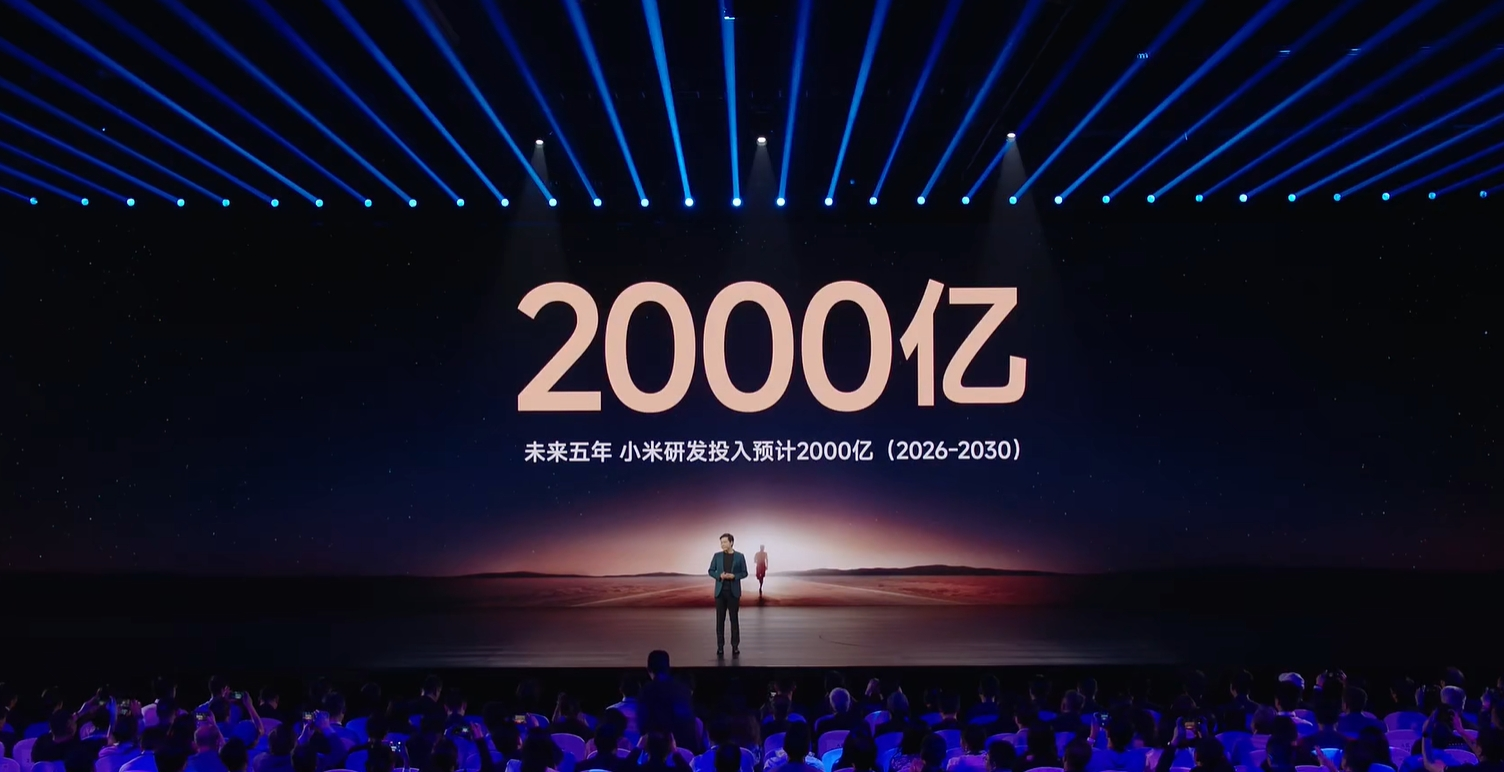
Core Insights - Xiaomi held its 15th anniversary strategic product launch event on May 22, introducing its first self-developed 3nm flagship processor, "Xuanjie O1" [1] - CEO Lei Jun emphasized that while Xiaomi aims to compete with Apple, it acknowledges the challenges of reaching Apple's top-tier status [1] - The "Xuanjie O1" chip features a die area of 109mm and utilizes second-generation 3nm process technology with 19 billion transistors [3] Product Launch - The Xiaomi 15S Pro was launched, featuring the "Xuanjie O1" chip, a 6.73-inch 2K display, and a 6100mAh battery, with prices starting from 5499 yuan [5] - Lei Jun expressed confidence in the performance of the Xiaomi 15S Pro after personal testing [5] R&D Investment - Xiaomi plans to invest an additional 200 billion yuan in research and development over the next five years (2026-2030) [7] - Since restarting its large chip development in 2021, Xiaomi has committed to a minimum investment of 500 billion yuan over ten years, with approximately 102 billion yuan already spent in the past five years [7]



小米发布会直击:玄戒O1芯片登场、芯片要对标苹果,首款SUV小米YU 7发布
Xuan Gu Bao· 2025-05-22 12:43
Group 1: Product Launches - Xiaomi held its 15th anniversary strategic product launch event, introducing several new products including the Xiaomi SoC chip "Xuanjie O1," Xiaomi 15S Pro, Xiaomi Pad 7 Ultra, and the first SUV "Xiaomi Yu7" [1] - The Xiaomi 15S Pro features advanced gaming capabilities with a cooling system and supports 4K night video [6] - The Xiaomi Pad 7 Ultra is the company's first tablet with an OLED screen, offering a 14-inch display and supporting various file formats for seamless integration with the Apple ecosystem [11][13] - The Xiaomi Yu7 SUV is positioned as a luxury high-performance vehicle with unique design features and multiple color options [18] Group 2: Chip Development - The self-developed 3nm "Xuanjie O1" flagship processor is designed to compete with Apple's chips, featuring 190 billion transistors and a compact size of 109mm² [2] - Xiaomi plans to invest 200 billion RMB in R&D over the next five years, doubling its previous five-year investment of 102 billion RMB [4] - The development of the Xuanjie O1 chip has been challenging, with over 13.5 billion RMB invested in R&D as of April this year and a team of over 2,500 people [4] Group 3: Pricing and Features - The starting price for the Xiaomi 15S Pro is 5,499 RMB, while the Xiaomi Pad 7 Ultra starts at 5,699 RMB for the 256GB version [6][16] - The Xiaomi Watch 4 features a self-developed baseband with a long battery life of 9 days in eSIM scenarios, priced from 1,299 RMB [15] Group 4: Home Appliances - Xiaomi also launched five new smart home appliances, including the Pro series air conditioner, French refrigerator, dual-zone washing machine, washing and drying set, and the S98 television, all of which support national subsidies [19]
小米自研芯片发布,细节全披露
半导体行业观察· 2025-05-22 12:27
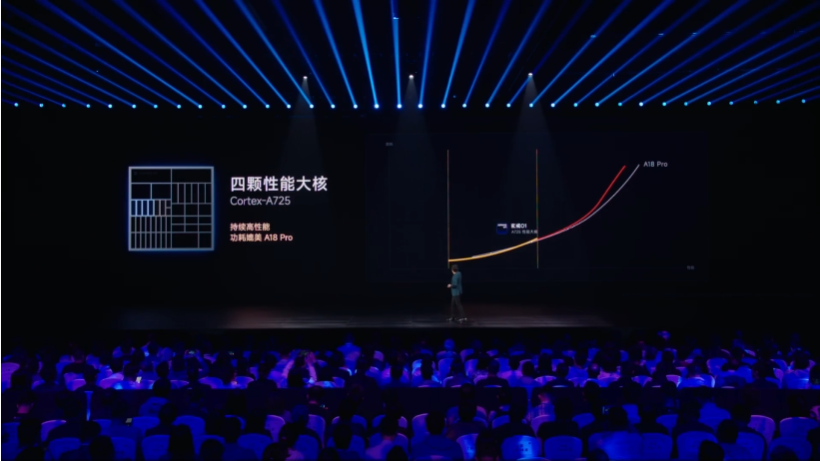
Core Viewpoint - Xiaomi has officially launched its self-developed flagship chip "XringO1," which integrates advanced technology and aims to compete with leading chip manufacturers like Qualcomm and MediaTek [1][5]. Group 1: Chip Development Journey - Xiaomi's chip development journey began in 2014 with the establishment of the "Panghu" project, leading to the release of the "Panghu S1" in 2017, which was positioned as a mid-range mobile chip [3][4]. - The initial phase, referred to as the "Songguo period," saw Xiaomi's first chip, the Panghu S1, which utilized a 28nm process and featured an 8-core architecture [3][4]. - After facing setbacks, Xiaomi paused the development of large SoCs and shifted focus to smaller chips, leading to the creation of several peripheral chips like the Panghu C, P, G, and T series [4][5]. Group 2: Resumption of Large Chip Development - In early 2021, Xiaomi made a significant decision to restart its large chip development, establishing the Shanghai Xuanjie Technology Co., Ltd. to focus on mobile SoCs [4][5]. - The company invested over 13.5 billion RMB in the development of the XringO1 chip over four years, with a projected investment of over 6 billion RMB for the current year [5]. Group 3: Technical Specifications of XringO1 - The XringO1 chip is built on TSMC's N3E process, featuring a "4-cluster 10-core" design with a total of 19 billion transistors [1][5]. - The CPU configuration includes 2 super-large Arm X925 cores, 4 performance cores A725, 2 efficiency cores A725, and 2 ultra-efficiency cores A520, while the GPU consists of a 16-core G925 [1][5]. - The chip also integrates Xiaomi's self-developed ISP, NPU, and PMIC, enhancing its overall performance and capabilities [1][11]. Group 4: Innovations and Performance Enhancements - The XringO1 chip employs advanced techniques such as AI optimization and a four-level low-power architecture to achieve high performance and low power consumption [7][8]. - The ISP integrated into the chip has undergone multiple iterations, with the latest version, C4, featuring advanced capabilities for image processing [10][11]. - The NPU in the XringO1 boasts a computing power of 44 TOPS, supporting various AI applications and enhancing overall device performance [10][11]. Group 5: Future Prospects and Challenges - Xiaomi is actively working on developing its own 5G modem, with previous efforts leading to the creation of a self-developed 4G modem for smartwatches [13]. - The company aims to balance the high costs associated with advanced chip manufacturing through sales of its diverse product range, including IoT devices and smartphones [13].
小米玄戒O1芯片登场!雷军:对标苹果,大家不要指望我们一上来就碾压苹果!未来五年小米研发将投入预计2000亿
Mei Ri Jing Ji Xin Wen· 2025-05-22 12:24
Group 1 - The core message of the news is that Xiaomi is making significant advancements in its chip development, aiming to compete with top-tier companies like Apple, with a focus on its newly launched Xiaomi 15S Pro featuring the self-developed flagship SoC chip, Xuanjie O1 [2][3][4] - Xiaomi plans to invest 200 billion yuan in research and development over the next five years (2026-2030) [1] - The Xuanjie O1 chip boasts impressive specifications, including a chip area of 109mm², over 300 million comprehensive benchmark scores, and 190 billion transistors using the second-generation 3nm process technology [2][3] Group 2 - The company has been working on chip development since September 2014, with a history of 11 years in the field, facing numerous challenges and setbacks [4] - Xiaomi's chip team has grown to over 2,500 members, with a budget exceeding 6 billion yuan for chip research and development this year [4] - The company acknowledges the difficulty of creating high-end chips and aims to achieve first-tier performance levels, although it recognizes the existing gap compared to Apple's technology [3][4]
小米战略发布会一个细节,雷军让全场动容
Sou Hu Cai Jing· 2025-05-22 12:18
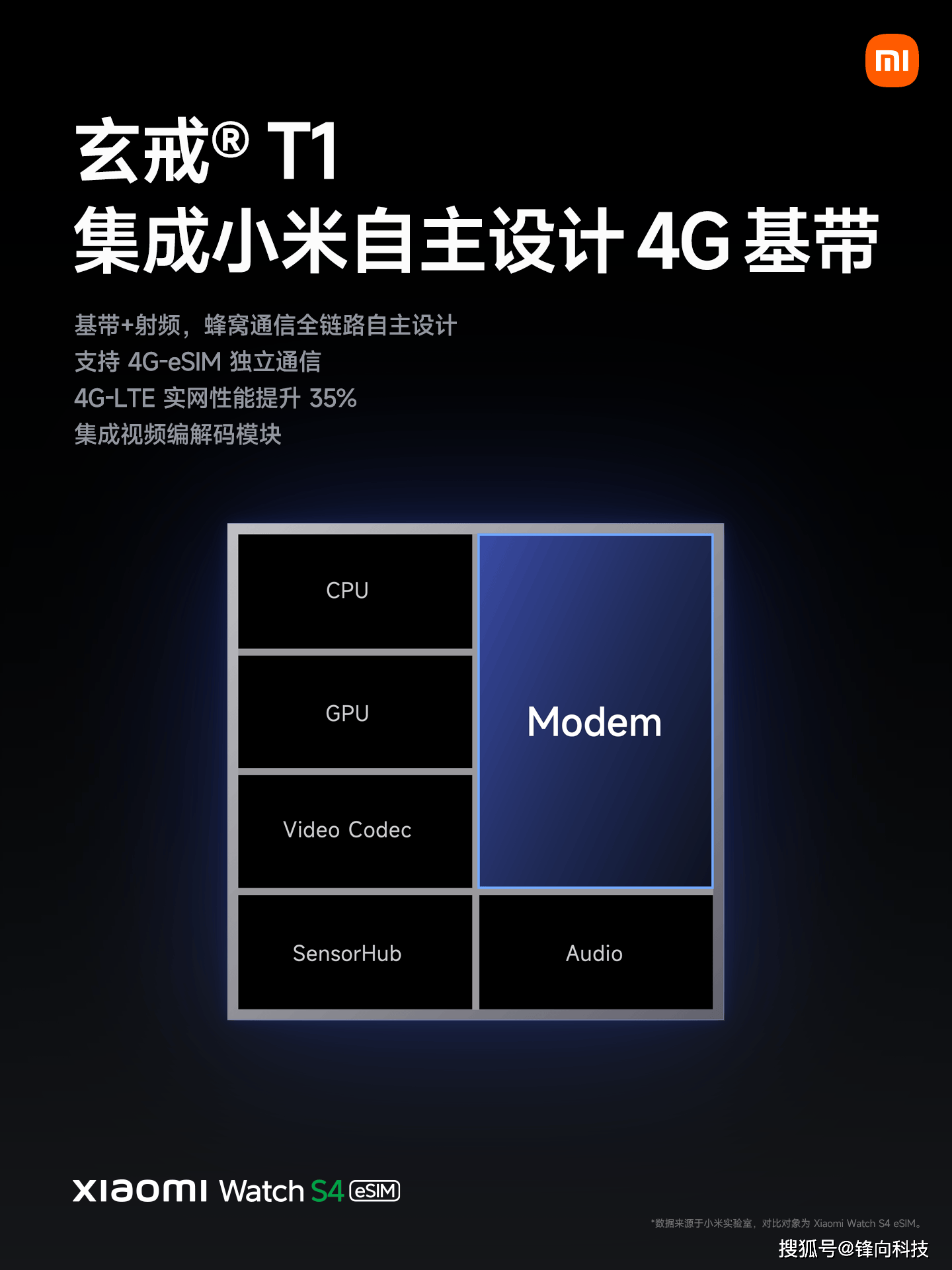
Group 1 - Xiaomi has developed its own flagship smartphone SoC, smartwatch processor, and 4G baseband technology, showcasing significant advancements in its chip development capabilities [3] - The Xiaomi Watch S4 features the self-developed Xiaomi Xuanjie T1 processor and integrates Xiaomi's proprietary 4G baseband, marking a significant achievement in the industry [3] - Lei Jun emphasized the importance of Xiaomi's commitment and investment in chip development, sharing stories about the challenges faced in this journey [6] Group 2 - Lei Jun highlighted the pricing strategy for the Xiaomi 15S Pro, noting that if 100,000 units are sold, the R&D cost per chip would reach $1,000, indicating that the selling price does not cover the chip development costs, leading to losses on this model [6] - Despite the financial challenges, Xiaomi remains dedicated to its chip development efforts, with Lei Jun stating that newcomers will face skepticism but must persist through difficulties [6] - Xiaomi ranks among the top three in domestic chip investment, underscoring the significance of its financial commitment to this sector [9]
小米雷军:芯片是我们必须攀登的高峰,也是绕不过去的一场硬仗
Mei Ri Jing Ji Xin Wen· 2025-05-22 12:05
Core Viewpoint - Xiaomi's journey in chip development began in September 2014, with a focus on becoming a significant player in the technology sector, emphasizing the necessity of chip production for its growth and competitiveness [2] Group 1: Chip Development History - Xiaomi initiated its chip development with the launch of the "Surge S1" in 2017, which was based on a 28nm process and used in the Xiaomi 5c smartphone, but faced challenges in market sustainability [2] - The company shifted its focus to developing smaller, specialized chips after the initial setback, successfully commercializing several self-developed chips since 2021, which include functionalities for image processing, power management, and signal enhancement [2] Group 2: Investment and Resources - Over the past four years, Xiaomi has invested 13.5 billion yuan (approximately 1.9 billion USD) in its chip development efforts, with a dedicated team of over 2,500 people [2] - The company's research and development budget for chips exceeds 6 billion yuan (approximately 840 million USD) for the current year, highlighting its commitment to this sector [2] Group 3: Future Aspirations - Xiaomi aims to establish itself as a leading hardcore technology company, viewing chip development as a critical challenge that must be overcome to achieve this goal [2] - The recent announcement of the new flagship SoC chip, "Xuanjie O1," marks a significant step in Xiaomi's ongoing chip development strategy [2]
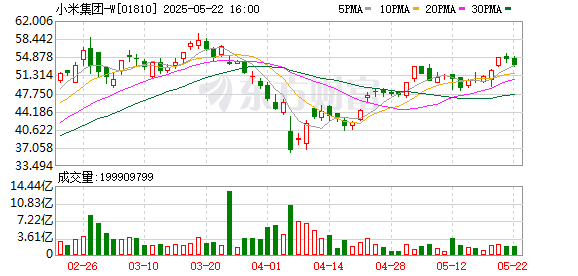
小米发布会直击:小米芯片要对标苹果,未来五年再投入2000亿研发费用
news flash· 2025-05-22 11:38
Core Viewpoint - Xiaomi has launched the Xiaomi 15S Pro smartphone, starting at a price of 5499 yuan, featuring the new "Xuanjie O1" 3nm flagship processor [1] Group 1 - The starting price of the Xiaomi 15S Pro is set at 5499 yuan [1] - The device is equipped with the "Xuanjie O1" 3nm flagship processor, indicating a focus on advanced technology and performance [1]
雷军:小米做大芯片过程非常艰难 一直没有对外讲过
Sou Hu Cai Jing· 2025-05-22 08:57
Group 1 - The core message emphasizes the challenges and long-term commitment of the company in developing its own chips, particularly the "玄戒O1" [1][3] - The company has invested over 135 billion RMB in chip development over the past four years, with a team of more than 2,500 people dedicated to this effort [5][7] - The company plans to continue investing in chip development for at least ten years, with a minimum investment of 500 billion RMB [5] Group 2 - The company initially began its chip development journey 11 years ago in 2014, launching its first mobile chip "澎湃 S1" in 2017 [5] - After a pause in developing large-scale SoC chips, the company shifted focus to smaller chips, including fast charging and battery management chips [5] - The company has set high goals for the "玄戒" project, aiming for the latest process technology and top-tier performance and efficiency [5][7]

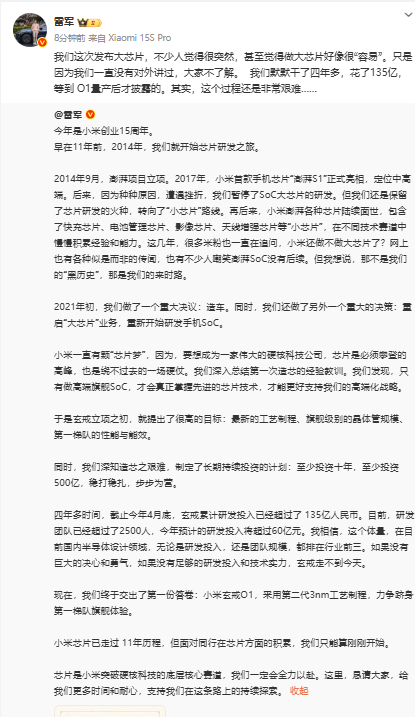
雷军:造芯片过程很艰难,默默干了四年多,花了135亿
news flash· 2025-05-22 08:12
2014年9月,澎湃项目立项。2017年,小米首款手机芯片"潮群51"正式亮相,是位中高 端。后来,因为种种原因,遭遇挫折,我们暂停了SoC大芯片的研发。但我们还是保留 了芯片研发的火种,转向了"小芯片"路线。再后来,小米腾邢台和达片陆续面世,包含 了快充芯片、电池管理芯片、影像芯片、天线增强芯片等"小芯片",在不同技术费道中 僵僵积累经验和崩力。这几年,很多米粉也一直在追问,小米还做不做大芯片了?网上 也有各种似是而非的传闻,也有不少人嘲笑澎湃SoC没有后续。但我想说,那不是我们 的"黑历史",那是我们的来时路。 2021年初,我们做了一个量大决议:造车。同时,我们还做了另外一个量大的决策:量 启"大芯片"业务,量新开始研发手机SoC。 小米一直有颗"拉护梦",因为,要想成为一家伟大的硬核科技公司,这片是必须舞登的 高峰,也是绕不过去的一场硬仗。我们深入总结第一次造芯的经验被训。我们发现,只 有做高端旗舰SoC,才会真正掌握先进的芯片技术,才能更好支持我们的高端化战略。 雷军微博发文:我们这次发布大芯片,不少人觉得很突然,甚至觉得做大芯片好像很"容易"。只是因为 我们一直没有对外讲过,大家不了解。 我们默默 ...
小米(01810)预告战略新品发布会 玄戒O1自研芯片+小米15S Pro+首款SUV将亮相
智通财经网· 2025-05-22 06:14
Group 1 - Xiaomi will hold a strategic new product launch event at 7 PM, introducing the new SoC chip "Xuanjie O1," flagship smartphone Xiaomi 15S Pro, Xiaomi Pad 7 Ultra, and the first SUV model Xiaomi YU7 [1] - The "Xuanjie O1" chip is a major highlight of the event, with over 13.5 billion RMB invested in R&D and a team of over 2,500 people dedicated to its development [1][2] - The YU7 SUV is positioned as a mid-to-large pure electric SUV with a length close to 5 meters and a wheelbase of 3000 mm, featuring a maximum range of 820 km and 800V fast charging capabilities [2] Group 2 - The "Xuanjie O1" chip utilizes a second-generation 3nm process with 19 billion transistors, featuring an "1+3+4" octa-core design and performance metrics that rival Snapdragon 8 Gen 3 [2] - The chip achieved an AnTuTu score of over 1.92 million and has AI computing power of 40 TOPS, with Geekbench 6 scores of 3119 for single-core and 9673 for multi-core performance [2] - The YU7 SUV enhances connectivity with Xiaomi's ecosystem, supporting features like UWB keyless entry and integration with smart home devices [2]