两个结合

Search documents
奚洁人:忠诚的智慧和力量|上海“马克思主义理论突出贡献专家”系列访谈
Xin Lang Cai Jing· 2025-12-19 04:18
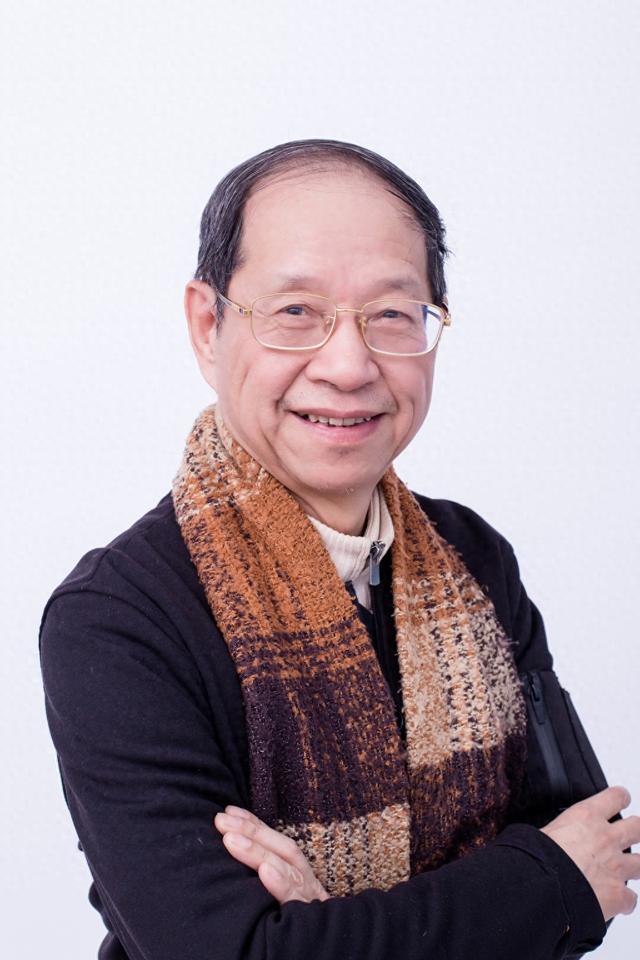
Core Viewpoint - The article discusses the establishment of the "Shanghai Marxist Theory Discipline Development Support Plan (2025-2027)" aimed at promoting the study and dissemination of Xi Jinping's Thought on Socialism with Chinese Characteristics for a New Era, highlighting the recognition of experts in Marxist theory and their contributions to education and research [1]. Group 1: Recognition and Contributions - The "Shanghai Marxist Theory Discipline Development Support Plan" has recognized 10 experts for their outstanding contributions to Marxist theory, 9 as distinguished teachers, and 29 as key young and middle-aged talents [1]. - The series of interviews with recognized experts aims to showcase their significant contributions to the construction and academic development of Marxist theory in higher education [1]. Group 2: Personal Journey and Academic Focus - The expert, Xi Jieren, has a long-standing commitment to the study of Marxist theory, having received numerous national awards for his work, including recognition from the Central Propaganda Department and the National Press and Publication Administration [5]. - Xi's journey into Marxist theory began in his youth, influenced by Mao Zedong's teachings, leading to a lifelong dedication to the subject through various academic and leadership roles [6][7]. Group 3: Theoretical Insights and Methodology - Xi emphasizes the importance of integrating Marxist theory with practical work, advocating for a dual approach that combines theoretical study with real-world application [6][9]. - The concept of "two combinations," which refers to integrating Marxism with Chinese realities and traditional culture, is highlighted as a significant theoretical framework in contemporary Chinese political discourse [9][10]. Group 4: Educational Philosophy and Leadership Development - The article discusses the importance of loyalty to Marxism in educational settings, emphasizing the need for leaders to be committed to Marxist principles and the socialist core values [17][18]. - Xi has initiated various forums and educational programs aimed at enhancing leadership skills among youth, focusing on the importance of Marxist theory in contemporary leadership practices [22][23].

1 恪守“两个结合” 培育中国特色金融文化
Zheng Quan Shi Bao· 2025-12-18 06:04
"两个结合"是我们党推进理论创新、实践创新的根本遵循,深刻体现了党的领导和中国特色社会主义制 度的韧性与活力。中国特色金融文化作为"两个结合"在金融领域的具体实践,将马克思主义金融理论与 当代中国金融实际深度融合,是推动金融高质量发展、坚定不移走好中国特色金融发展之路的重要支 撑。 中国特色金融文化倡导的"五要五不"理念,以马克思主义立场观点方法为理论根基,以"要"明确价值导 向、以"不"严明执业底线,紧扣证券行业服务实体经济、防范化解金融风险的核心使命,深度挖掘中华 优秀传统文化中"诚信为本、守正创新、审慎稳健、义利兼顾、合规守纪"的精神内涵,将"两个结合"的 理论要求转化为金融行业可落地、可执行的实践纲领。 西部证券党委书记、董事长徐朝晖 文化兴则国运兴,文化强则民族强。当前,我国正处在以中国式现代化全面推进中华民族伟大复兴的关 键时期,文化自信作为民族复兴的精神力量,其重要性愈发凸显。立足新发展阶段、贯彻新发展理念、 构建新发展格局,培育与中国式现代化目标相适配、与金融发展规律相契合的中国特色金融文化,已成 为金融领域践行文化理念、厚植文化自信的关键任务,更是推动金融高质量发展、建设金融强国的必然 要求 ...
恪守“两个结合” 培育中国特色金融文化
Zheng Quan Shi Bao· 2025-12-17 22:43
Core Viewpoint - The importance of cultural confidence in the context of China's modernization and the development of a distinctive financial culture that aligns with national strategies and financial regulations is emphasized [1][10]. Group 1: Theoretical Foundations - The integration of Marxist principles with China's specific realities forms the theoretical foundation of the distinctive financial culture [3][10]. - The leadership of the Communist Party is crucial in guiding the construction of this financial culture, ensuring alignment with national strategies and the welfare of the people [4][10]. - The financial culture's mission is to serve the real economy, establishing a clear responsibility for the financial industry [5][10]. Group 2: Practical Implementation - The financial sector is encouraged to innovate financing tools and optimize models to support key areas like advanced manufacturing and technological innovation [5][10]. - Measures to prevent the trend of capital moving away from the real economy are highlighted, including enhanced regulation and market transaction standards [5][10]. Group 3: Cultural Integration - The second integration emphasizes the fusion of Marxist principles with traditional Chinese culture, enhancing the financial culture's identity and relevance [6][10]. - The financial culture aims to draw from traditional values, promoting integrity, innovation, and compliance within the industry [7][10]. - The focus on serving the people's needs and ensuring financial development aligns with traditional Chinese values of benefiting the populace [8][10]. Group 4: Systematic Support - A comprehensive system and mechanism are necessary to support the development of this financial culture, ensuring effective implementation of the two integrations [11][10]. - The importance of a robust evaluation and incentive system is stressed to encourage financial institutions to adopt these cultural principles in their operations [11][10].

张允熠:中国化的马克思主义要始终保持蓬勃的生机与活力|上海“马克思主义理论突出贡献专家”系列访谈
Xin Lang Cai Jing· 2025-12-16 04:31
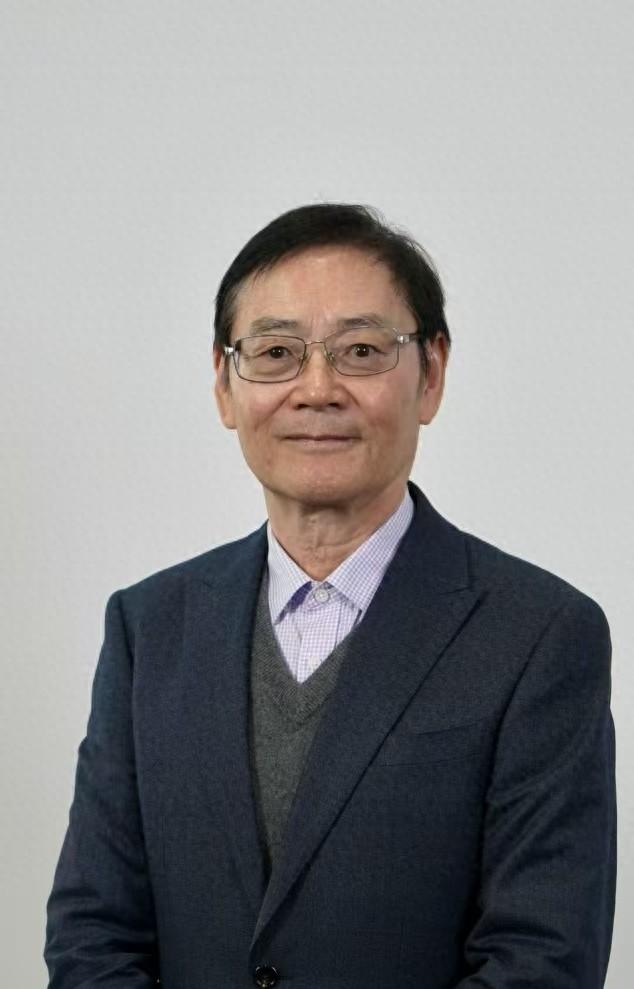
Core Viewpoint - The article discusses the establishment of the "Shanghai Marxist Theory Discipline Development Support Plan (2025-2027)" aimed at promoting the study and dissemination of Xi Jinping's Thought on Socialism with Chinese Characteristics for a New Era, emphasizing the importance of Marxist theory in education and its integration with Chinese culture [1]. Group 1: Development of Marxist Theory - The plan includes recognition of 10 experts for outstanding contributions to Marxist theory, 9 teaching masters, and 29 young and middle-aged backbones in the field [1]. - The initiative is guided by various Shanghai municipal departments, aiming to create a stronghold for Marxist theory education and research [1]. Group 2: Individual Contributions - Zhang Yunyi, a prominent figure in Marxist theory research, has received numerous accolades and emphasizes the collective nature of such honors, attributing his success to institutional support [5][6]. - Zhang's academic journey began with a focus on political education, leading to a long career in teaching and researching Marxist theory, influenced by his mentor [6]. Group 3: Integration of Chinese Culture and Marxism - Zhang discusses the significance of integrating Marxism with Chinese culture, highlighting that Marxism has been adapted to fit the Chinese context, which is crucial for its acceptance and application [7][10]. - He argues that Marxism has absorbed valuable elements from human civilization, including Chinese cultural aspects, which is essential for understanding its development [8][10]. Group 4: Educational Approaches - Zhang advocates for a comprehensive educational approach, emphasizing the need for students to connect various fields of knowledge, such as philosophy, history, and literature, to enhance their understanding of Marxism [20][21]. - He stresses the importance of quality teaching materials and the role of teachers in engaging students actively in the learning process [22][23].
学习时报:自觉做党的创新理论的笃信笃行者
Bei Jing Ri Bao Ke Hu Duan· 2025-12-03 03:17
Core Viewpoint - The article emphasizes the importance of ideological unity and theoretical strength within the Communist Party of China (CPC) as essential for its cohesion and effectiveness in achieving national goals [1][3][24]. Group 1: Ideological Construction - The CPC has historically emphasized ideological construction as a unique advantage and historical experience, which is crucial for its development and resilience [3][4]. - Xi Jinping highlights that the advanced nature of a Marxist party is primarily reflected in its ideological and theoretical advancement, which is vital for maintaining unity and direction [3][5]. - The importance of ideological education and theoretical armament is underscored as a primary task in the political life of the party [18][19]. Group 2: Theoretical Innovation - The article discusses the necessity of continuous theoretical innovation to adapt Marxism to contemporary Chinese realities, emphasizing the "two combinations" approach [9][10]. - Xi Jinping's thought is presented as a significant theoretical contribution that reflects the latest developments in Marxism and guides the CPC's practices [11][12]. - The CPC's commitment to integrating traditional Chinese culture with Marxist principles is highlighted as a pathway for theoretical advancement [9][10]. Group 3: Practical Application - The article stresses that the effectiveness of theoretical frameworks is contingent upon their practical application in addressing real-world challenges [15][16]. - Examples of successful local governance initiatives illustrate how theoretical principles can be translated into effective policies and practices [16][17]. - The CPC's achievements in poverty alleviation and environmental sustainability are cited as evidence of the successful application of its ideological and theoretical frameworks [17][21]. Group 4: Global Perspective - The CPC's approach to modernization is framed as a contribution to global governance and human progress, showcasing its commitment to a shared future for humanity [21][23]. - Xi Jinping's global initiatives, such as the Belt and Road Initiative, are presented as efforts to foster international cooperation and development [23][24]. - The article concludes by asserting that the CPC's ideological strength and theoretical advancements position it as a leader in addressing global challenges and contributing to a better world [22][24].
“两翼齐飞”助推文化和科技深度融合
Zhong Guo Qing Nian Bao· 2025-11-23 00:38
Core Viewpoint - The integration of technology and culture is essential in the AI era, emphasizing the need for cultural innovation and scientific spirit to thrive in international competition [1][2][10] Group 1: Cultural Innovation and Technology Integration - The Chinese government aims to stimulate cultural innovation and development through the integration of technology, particularly artificial intelligence [1][2] - The "Two Wings Theory" proposed by Xi Jinping highlights the equal importance of scientific popularization and technological innovation in achieving innovative development [2][10] Group 2: The Role of Science and Technology in Cultural Development - The concept of "Four Powers" (thought leadership, spiritual cohesion, value appeal, and international influence) is crucial for cultural construction in the context of AI [3][10] - Science popularization is identified as a key method for disseminating scientific ideas and enhancing societal unity [3] Group 3: Enhancing International Influence through Cultural Exchange - The use of AI technologies can facilitate cross-cultural communication and enhance the global influence of Chinese culture and technological achievements [4][9] - The promotion of a global community through cultural exchange is emphasized, with a focus on overcoming cultural barriers and fostering mutual understanding [9] Group 4: Building a New Ecosystem for Cultural Development - AI is reshaping the cultural development ecosystem, necessitating a transformation from mere knowledge transmission to cultural shaping [5][10] - The establishment of intelligent and precise science communication networks is essential for effective dissemination of scientific knowledge [7] Group 5: Strengthening Cultural Confidence through Tradition and Modernity - The integration of Marxist principles with traditional Chinese culture is vital for addressing new challenges in cultural construction and scientific popularization in the AI era [8] - The exploration of traditional cultural wisdom can enhance modern scientific spirit and contribute to innovative cultural products [8]
新视野 | 深刻理解和把握文化主体性
Zhong Yang Ji Wei Guo Jia Jian Wei Wang Zhan· 2025-11-18 01:44
Group 1 - The event "2025 Overseas Chinese Media Tour in Anhui" aims to showcase the unique charm of Chinese culture to the world through 16 overseas Chinese media outlets visiting locations like Huangshan and Xuancheng [2] - Xi Jinping emphasized the importance of cultural subjectivity for a culture to stand firm and reach far, which reflects a nation's self-awareness and proactive spirit in cultural development [2][3] - The relationship between "culture" and "道" (Dao) is crucial in Chinese culture, where "文" (Wen) embodies the moral and ethical teachings that guide societal behavior [4][5] Group 2 - The concept of "志于道" (aspiring to the Dao) is foundational in Chinese culture, representing the pursuit of ideals and the importance of moral integrity in personal and societal conduct [6][7] - The integration of "文" (Wen) and "道" (Dao) has become a cultural consensus, emphasizing the role of literature and art in moral education and societal transformation [4][5][6] - The principle of "守正创新" (upholding integrity and innovating) is highlighted as essential for strengthening cultural subjectivity and confidence in the face of global challenges [9][10][11]
近百名专家学者江西弋阳研讨“新文化新使命”
Zhong Guo Xin Wen Wang· 2025-11-02 08:37
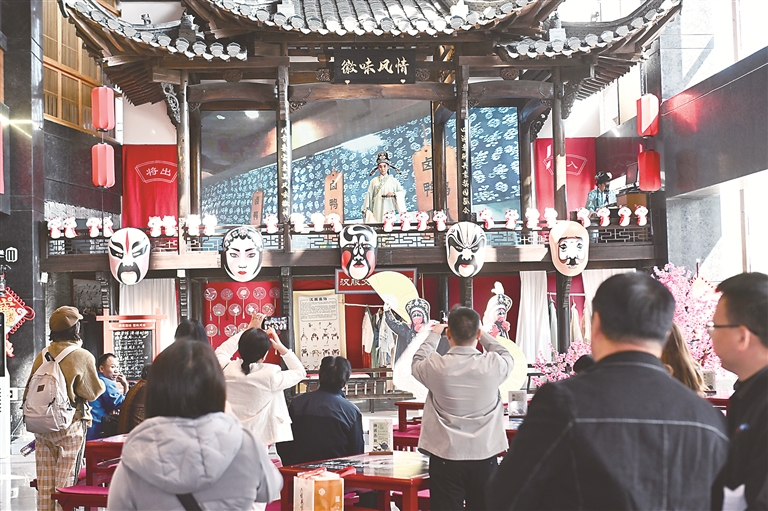
Core Insights - The seminar held in Yiyang, Jiangxi, focused on "New Culture, New Mission," with participation from experts and scholars from various institutions, aiming to foster cultural innovation and development [1][2] Group 1: Cultural Development Initiatives - Jiangxi has been enhancing its cultural foundation and industry through higher standards, greater efforts, and practical measures [1] - The seminar aimed to generate impactful research outcomes that possess theoretical and practical significance [1] Group 2: Academic Perspectives - Experts emphasized the importance of integrating Marxism with traditional Chinese culture to adapt to contemporary conditions [2] - The relationship between culture and urban development was highlighted, suggesting that local cultural characteristics can drive high-quality development and governance [2] Group 3: Research Contributions - The seminar received nearly 500 paper submissions, with 55 selected for presentation, indicating a strong academic interest in cultural studies [2]
把学问写在城市发展年轮中 上海市哲学社会科学优秀成果奖颁奖
Jie Fang Ri Bao· 2025-11-01 01:35
Core Points - The 17th Shanghai Philosophy and Social Sciences Outstanding Achievement Award ceremony was held on October 31, recognizing various awards including the Excellent Achievement Award for Innovative Theories of the Party and the Academic Contribution Award [1] - The meeting emphasized the significant role of philosophy and social sciences in advancing national rejuvenation through Chinese-style modernization and in the process of building Shanghai into a modern socialist international metropolis [1] - Participants were encouraged to uphold the ideals of learning to promote the Party's innovative theories and to actively engage in the development of a new realm of Chinese philosophy and social sciences [2] Group 1 - The meeting highlighted the importance of philosophy and social sciences in serving the country and the people, urging scholars to produce excellent results that contribute to urban development and national service [1] - Scholars were called to focus on major national issues and the needs of the city and its people, integrating their academic work into the practical development of the country [1] - The need for continuous innovation in knowledge, theory, and methodology was stressed, with an emphasis on producing original and subjective viewpoints [2] Group 2 - The meeting called for scholars to maintain high personal and academic standards, emphasizing the importance of moral integrity in their contributions to the nation and society [2] - There was a strong encouragement for scholars to write their academic contributions into the fabric of the nation and the hearts of the people, reflecting a commitment to societal development [1][2]

把中华文明瑰宝呵护好、弘扬好、发展好
Ren Min Ri Bao· 2025-10-12 22:10
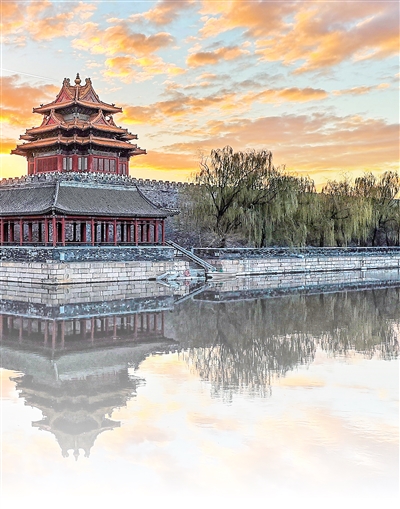
Core Viewpoint - The Palace Museum, celebrating its 100th anniversary in 2025, is a significant cultural symbol of China, representing the preservation and promotion of Chinese civilization and heritage [42][43][47]. Group 1: Historical Significance - The Palace Museum was established on October 10, 1925, and has since become a cultural landmark for the Chinese people and a treasure of human civilization [46][47]. - Over its 100 years, the museum has witnessed and adapted to significant changes in Chinese society, reflecting the intertwined fate of the nation and its cultural heritage [53][54]. - The museum houses over 1.95 million artifacts, showcasing the richness of Chinese material culture and spiritual pursuits [49]. Group 2: Cultural Exchange and Modernization - The museum serves as a bridge for cultural exchange, hosting exhibitions that highlight interactions between Chinese and Western civilizations [50]. - Recent initiatives include the "Digital Palace Museum," which aims to enhance public engagement through technology and creative cultural products [55]. - The museum's expansion includes new facilities and exhibitions, such as the "Hundred Years of Guardianship" exhibition, which features 200 artifacts and attracts global visitors [51][52]. Group 3: Future Aspirations - The Palace Museum aims to continue promoting cultural prosperity and building a strong cultural nation, aligning with the broader goals of Chinese modernization [58][59]. - The next decade is expected to see further developments in cultural heritage preservation and public engagement, enhancing the museum's role in contemporary society [57][58].