
产业集中度提升

Search documents
002193被证监会立案!这一需求有望反弹,业绩持续增长股仅10只
Zheng Quan Shi Bao· 2025-10-15 00:27
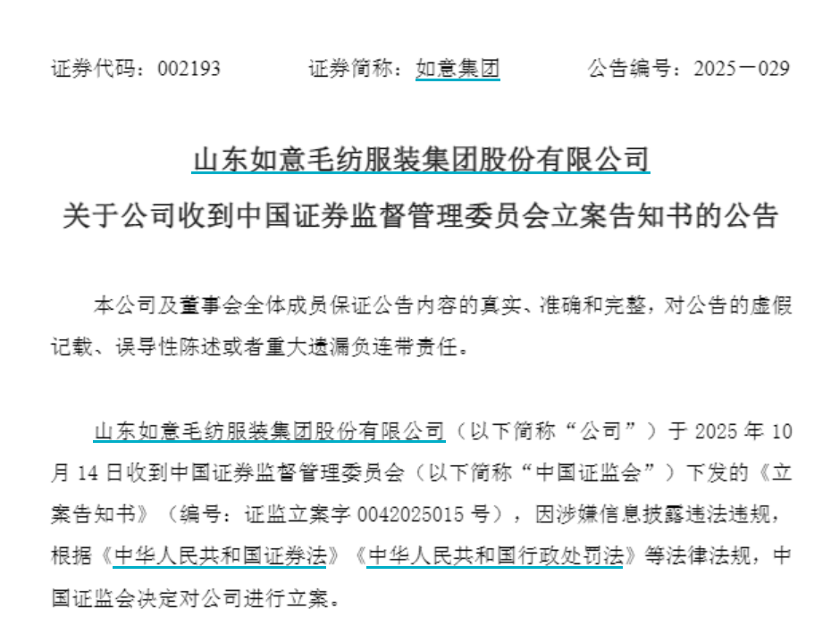
Group 1: Industry Outlook - The World Steel Association forecasts a moderate rebound in global steel demand in 2026, with an expected increase of 1.3% to reach approximately 1.772 billion tons [5][6] - In 2025, global steel demand is projected to remain stable at around 1.75 billion tons, unchanged from 2024 [5] - The growth in 2026 is driven by strong trends in several regions, with a slowdown in the decline of steel demand in China and robust growth in developing economies such as India, Vietnam, Egypt, and Saudi Arabia [6] Group 2: Company Performance - Ru Yi Group announced that it received a notice from the China Securities Regulatory Commission regarding an investigation for suspected information disclosure violations, but the company stated that its operations remain normal and the investigation will not have a significant impact [1] - As of September 30, 2025, Ru Yi Group reported a total market capitalization of 1.521 billion yuan and a significant year-on-year revenue decline of 32.25%, with a net loss of approximately 95.73 million yuan for the first half of 2025 [3] - Several steel companies are expected to see continued growth in performance, with 10 steel concept stocks averaging a 29.62% increase in share price this year, outperforming the Shanghai Composite Index [7][8] Group 3: Financial Projections - Institutions predict that 10 steel concept stocks will experience sustained growth in 2025 and 2026, with specific companies like Guangdong Mingzhu expected to see a net profit increase of 858.45% to 1.63 billion yuan [8] - A table of projected net profits for various steel companies shows significant expected growth rates, with Huazhong Steel projected to have a 75.04% increase in net profit for 2025 [9]


利好来了,重磅发布!
Zheng Quan Shi Bao· 2025-09-22 15:13
Core Viewpoint - The steel industry is set to benefit from a significant policy initiative aimed at stabilizing growth and promoting high-quality development, with a target of approximately 4% annual growth in value added over the next two years [1][2]. Group 1: Policy Framework - The "Steel Industry Stabilization Growth Work Plan (2025-2026)" was jointly issued by five government departments, focusing on structural adjustments and high-quality development [2][3]. - The plan emphasizes a problem-oriented and goal-oriented approach, proposing 10 specific measures across five key areas [2][3]. Group 2: Key Measures - The plan includes precise control of production capacity and output, with a focus on supporting advanced enterprises and phasing out inefficient capacity [2][3]. - It promotes the development of low-carbon steelmaking processes, such as electric arc furnaces and hydrogen metallurgy, through differentiated support for capacity replacement [2][3]. - The plan mandates that by the end of 2025, over 80% of steel production capacity must complete ultra-low emission transformations [6]. Group 3: Industry Management and Innovation - Steel enterprises will be classified and managed in tiers, encouraging resource allocation towards leading companies [3]. - The plan aims to enhance the supply of high-end products by fostering collaboration among steel companies, upstream and downstream enterprises, and research institutions [3][4]. Group 4: Investment and Digital Transformation - The plan calls for the modernization of equipment and the promotion of digital transformation within the industry, including the establishment of evaluation standards for digitalization [4][7]. - It encourages the adoption of advanced technologies and the development of intelligent manufacturing processes [4][7]. Group 5: Monitoring and Support - The plan outlines organizational, policy, and operational support measures to ensure the effective implementation of the growth strategy [7]. - Continuous monitoring and capacity warning mechanisms will be established to maintain industry stability [7]. Group 6: Market Outlook - Analysts predict a gradual recovery in steel demand as seasonal changes occur, with a potential reduction in inventory levels [7]. - The industry is expected to enter a performance cycle focused on profitability, driven by increased production restrictions and a shift towards high-quality development [7].
国泰海通:钢铁行业基本面有望逐步修复 维持“增持”评级
智通财经网· 2025-09-08 02:57
Core Viewpoint - The steel industry is expected to gradually recover as seasonal demand shifts, with inventory likely entering a reduction phase. The supply side is beginning to clear due to prolonged industry losses, indicating a potential improvement in the steel industry's fundamentals. Long-term trends suggest increased industry concentration and high-quality development, benefiting companies with product structure and cost advantages [1][3]. Demand and Supply Analysis - Steel demand has decreased, with apparent consumption of five major steel products at 8.2783 million tons, down 299,400 tons week-on-week. Inventory rose to 15.007 million tons, an increase of 328,200 tons. The operating rate of blast furnaces among 247 steel mills was 80.4%, down 2.8 percentage points [1]. - The average gross profit for rebar was 179.4 CNY/ton, down 52 CNY/ton, while hot-rolled coil gross profit was 135.4 CNY/ton, down 36 CNY/ton. The profitability rate for 247 steel companies was 61.04%, a decrease of 2.6% [2]. - The real estate sector's ongoing decline is expected to reduce its negative impact on steel demand, while demand from infrastructure and manufacturing is anticipated to grow steadily. Steel exports maintained year-on-year growth from January to July [3]. Supply Expectations - The steel industry has been experiencing losses since Q3 2022, with nearly 40% of steel companies still in the red. The recent policy framework aims to reduce production while supporting advanced enterprises and phasing out inefficient capacities [3]. - The expectation for supply contraction remains, with the steel industry's fundamentals likely to improve gradually [3]. Long-term Outlook and Recommendations - The long-term trend indicates that industry concentration will increase, promoting high-quality development. Companies with superior product structures and cost advantages are expected to benefit significantly. Leading companies will have enhanced competitive advantages and profitability due to stricter environmental regulations and carbon neutrality initiatives [4]. - Recommended companies include Baosteel, Hualing Steel, Shougang, and low-cost firms like Fangda Special Steel and New Steel. Additionally, companies with competitive advantages and high dividends such as CITIC Special Steel and Yongjin Co., as well as high-barrier material companies, are highlighted [4].

国泰海通:钢铁板块需求边际回升 钢厂库存维持下降
智通财经网· 2025-09-01 07:08
Core Viewpoint - The steel industry is rated as "overweight" by Guotai Junan, with expectations of faster supply contraction and industry progress if supply policies are implemented [1]. Demand and Supply Analysis - Demand for steel has increased, with apparent consumption of five major steel products reaching 8.5777 million tons, a week-on-week increase of 4.78 thousand tons. Inventory levels remain low at 14.6788 million tons, despite a week-on-week increase of 26.84 thousand tons [1]. - The operating rate of blast furnaces in 247 steel mills is at 83.2%, a slight decrease of 0.16 percentage points week-on-week, indicating a potential shift in demand as the season changes [1]. - The construction sector's demand for steel is expected to stabilize, while demand from infrastructure and manufacturing is anticipated to grow steadily [3]. Profitability Trends - The average gross profit for rebar has decreased to 231.5 CNY/ton, down 12.2 CNY/ton week-on-week, while hot-rolled coil gross profit has dropped to 171.5 CNY/ton, a decrease of 30.2 CNY/ton [2]. - The profitability rate of 247 steel companies is at 63.64%, reflecting a week-on-week decline of 1.3% [2]. Supply Outlook - The steel industry has been experiencing losses since Q3 2022, with over 30% of steel companies still in the red. However, market-driven supply adjustments are beginning to emerge [3]. - The Ministry of Industry and Information Technology is expected to release a plan to stabilize growth in key industries, which may accelerate supply contraction in the steel sector [3]. Recommendations - Companies with leading technology and product structures such as Baosteel, and those with continuous product upgrades like Hualing Steel and Shougang, are recommended. Low-cost and flexible steel companies such as Fangda Special Steel and New Steel are also highlighted [4]. - Companies with low valuations and high dividends, such as CITIC Special Steel and Yongjin Co., are noted for their competitive advantages [4]. - Upstream resource companies with long-term advantages, including Hebei Steel Resources and Erdos, are recommended due to the anticipated recovery in demand [4].
多方面因素助力部分钢铁公司中报盈利改善
Zheng Quan Ri Bao· 2025-08-26 16:40
Group 1 - As of August 26, 2025, 22 listed companies in the steel industry reported their mid-year results, with 12 companies achieving over 100% year-on-year growth in net profit, despite 11 of them experiencing a decline in operating revenue [1] - For instance, Tianjin Youfa Steel Pipe Group Co., Ltd. reported a revenue of 24.888 billion yuan, a decrease of 5.81% year-on-year, while net profit reached 287 million yuan, an increase of 160.36% [1] - The main reasons for the revenue decline but profit improvement include significant reductions in raw material costs, industry self-discipline in production control, and optimization of product structure towards high-end products, with high-value-added products accounting for 35% to 40% of the industry [1] Group 2 - In the first half of 2025, prices for raw materials such as iron ore and coking coal saw significant declines, with the 62% Australian fines index at $93.55 per dry ton, down 7.28% from the beginning of the year, and coking coal prices dropping by 19.70% [2] - Companies have managed to reduce supply pressure through self-discipline in production, which has provided some support for steel prices, while optimizing product structures has led to lower inventory and improved profitability [2] - Looking ahead, the steel industry is expected to experience a "turning point," with the overall market potentially improving, contingent on effective production control and the recovery of domestic demand, particularly from the manufacturing sector [2]
钢铁ETF(515210)昨日净流入超0.8亿,产业集中度与需求企稳受关注
Mei Ri Jing Ji Xin Wen· 2025-08-21 02:40
Group 1 - The long-term development trend of the steel industry is the improvement of industry concentration and high-quality development, with steel companies that have product structure and cost advantages benefiting [1] - Under the backdrop of stricter environmental regulations, ultra-low emission transformations, and carbon neutrality, leading companies will see their competitive advantages and profitability become more pronounced [1] - Demand for steel in infrastructure and manufacturing is expected to grow steadily, with steel exports maintaining year-on-year growth from January to July, indicating that steel demand is gradually stabilizing [1] Group 2 - The steel ETF (515210) tracks the CSI Steel Index (930606), which selects listed companies involved in both ordinary and special steel businesses from the A-share market to reflect the overall performance of related listed companies [1] - The index constituents cover upstream and downstream enterprises in the steel industry chain, with holdings primarily concentrated in the raw materials sector and evenly distributed across the Shanghai and Shenzhen stock exchanges [1] - Investors without stock accounts can consider the Guotai CSI Steel ETF Connect C (008190) and Guotai CSI Steel ETF Connect A (008189) [1]
国泰海通:盈利率环比回升 持续看好钢铁板块布局机会
Zhi Tong Cai Jing· 2025-07-30 09:09
Core Viewpoint - The steel industry is expected to gradually reach a bottom, with supply-side adjustments beginning to emerge, and potential government policies could accelerate this process [1] Group 1: Demand and Supply Analysis - The apparent consumption of five major steel products was 8.6813 million tons last week, a decrease of 19,800 tons week-on-week; however, total inventory remains at a near historical low of 13.365 million tons, down 11,600 tons [2] - The operating rate of blast furnaces among 247 steel mills was 83.46%, unchanged week-on-week, while electric furnace operating rates increased by 3.21 percentage points to 62.18% [2] - The demand from the real estate sector is declining, but the negative impact on overall demand is expected to weaken gradually, with stable growth anticipated in infrastructure and manufacturing sectors [4] Group 2: Profitability and Cost Trends - The average gross profit per ton for rebar increased to 330.1 CNY, up 131.5 CNY week-on-week, while hot-rolled coil gross profit rose to 244.1 CNY, an increase of 113.5 CNY [3] - The profitability rate of 247 steel companies rose to 63.64%, an increase of 3.47% week-on-week, indicating a potential recovery in industry profitability [3] Group 3: Future Outlook - The industry is expected to gradually stabilize in demand, with a projected increase in supply-side adjustments if government policies are implemented [4] - The Ministry of Industry and Information Technology is set to introduce plans to promote structural adjustments and eliminate outdated production capacity in key industries, including steel [4]
硅业分会:上半年多晶硅基本达到产销平衡;百川股份:实控人已正常履职 | 新能源早参
Mei Ri Jing Ji Xin Wen· 2025-07-20 23:17
Group 1 - Shareholder Xinhui Investment of Boqian New Materials plans to reduce its stake by up to 2.616 million shares, representing no more than 1% of the company's total share capital, through block trading within three months after the announcement [1] - The reduction may raise concerns about shareholder confidence in the company, potentially putting short-term pressure on the stock price, but the small percentage and extended time frame suggest limited long-term impact [1] - The company needs to stabilize investor expectations through subsequent performance [1] Group 2 - In the first half of 2025, the silicon industry chain has seen market prices persistently below production costs, leading to widespread losses among production enterprises [2] - The overall operating rate of the top five polysilicon companies was 42.2%, with the lowest operating load at only 24.1% [2] - Through production cuts and load reductions, the polysilicon market has nearly reached a balance between supply and demand, which may help eliminate outdated capacity and enhance industry concentration in the long run, despite ongoing short-term profitability pressures [2] Group 3 - Baichuan Co., Ltd. announced that its actual controller and chairman, Zheng Tiejiang, has returned to work and is able to fulfill his duties normally [3] - Zheng Tiejiang, who holds 14.19% of the company's shares, was previously under investigation, raising market concerns [3] - The resolution of this issue may enhance the stability of the company's governance structure and boost investor confidence, although the long-term impact on the company's development remains to be seen [3]


国泰海通:钢铁行业总库存重回降势 龙头竞争优势与盈利能力凸显
Zhi Tong Cai Jing· 2025-05-20 08:25
Group 1 - The steel industry maintains an "overweight" rating, with a long-term trend towards increased industry concentration and high-quality development, benefiting companies with product structure and cost advantages [1] - Steel demand has increased on a month-on-month basis, with total inventory decreasing, indicating a recovery from previous accumulation [2] - The average gross profit per ton for rebar and hot-rolled coil has risen, reflecting improved profitability in the industry [3] Group 2 - Domestic steel demand is expected to stabilize gradually, with a reduction in the negative impact from the real estate sector and continued support from infrastructure [4] - Supply-side weaknesses are highlighted, with some steel companies experiencing cash flow losses, leading to potential production cuts in 2024 and 2025 [4] - The National Development and Reform Commission has proposed ongoing control of crude steel production, indicating a push for industry consolidation and improved profitability [4]
国泰海通:钢铁行业供需双降 持续看好板块低位布局机会
智通财经网· 2025-05-13 07:50
Group 1 - The steel industry is rated "overweight" by Guotai Junan, with a long-term trend towards increased industry concentration and high-quality development, benefiting companies with product structure and cost advantages [1] - Last week, the apparent consumption of five major steel products was 8.452 million tons, a decrease of 1.2566 million tons week-on-week, while total inventory rose to 14.7607 million tons, an increase of 289,700 tons [1] - The operating rate of blast furnaces among 247 steel mills was 84.62%, up 0.29 percentage points week-on-week, indicating a slight recovery in production capacity [1] Group 2 - The average gross profit per ton for rebar was 192.3 CNY, down 39.7 CNY week-on-week, while the average gross profit for hot-rolled coil was 67.2 CNY, down 34.7 CNY [2] - The profitability rate of 247 steel companies was 58.87%, an increase of 2.59 percentage points week-on-week, suggesting a potential recovery in industry profitability [2] - Iron ore inventory at 45 ports was 142.39 million tons, a decrease of 640,000 tons week-on-week, indicating a potential easing of supply constraints [2] Group 3 - The negative impact of the real estate sector on steel demand is expected to diminish, while infrastructure investment will continue to support demand stability [3] - There is a possibility of further production cuts or even shutdowns in the supply side due to cash flow issues among smaller steel companies [3] - The National Development and Reform Commission has proposed continued regulation of crude steel production in 2025, aiming for industry consolidation and long-term profitability recovery [3]

