人才培养体系

Search documents
专访南方科技大学副校长金李: 促进“四链”融合 构建更具活力的国家创新体系
Zheng Quan Shi Bao· 2025-09-03 18:24
Core Viewpoint - China is transitioning from "catching up" to "running together" and even "leading" in the global technology innovation landscape, presenting both opportunities and challenges in areas such as research result transformation, startup financing, and high-end talent cultivation [1] Group 1: Challenges in the Integration of the Four Chains - The integration of the innovation chain, industry chain, capital chain, and talent chain faces four major challenges: insufficient linkage between the innovation chain and industry chain, a shortage of key talent, inadequate support for early-stage tech companies, and a lack of diverse application scenarios in the industry chain [1][2] - The current disconnection between research outcomes and market needs leads to low transformation efficiency, highlighting the need for better alignment between research and industry [5] Group 2: Systematic Solutions Proposed - A "tropical rainforest" ecosystem for technology innovation should be established to enhance the overall success rate of the innovation ecosystem rather than focusing solely on individual projects [2] - The talent chain support system needs optimization, including the establishment of market-oriented technology transfer personnel incentives and better integration of technology transfer roles within universities and enterprises [2][3] - A comprehensive financial service system covering the entire lifecycle of technology enterprises should be developed, including optimizing government guidance funds and encouraging financial product innovation [3][8] Group 3: Mechanisms for Effective Research Result Transformation - The low transformation rate of research results is primarily due to policy execution issues, a fragmented research ecosystem, and a lack of specialized institutions and talent [5][6] - Three key areas for improvement include optimizing policy services, enhancing the role of enterprises in the research process, and improving transformation capabilities through public service platforms [6][7] Group 4: Talent Mobility and Institutional Innovation - To facilitate talent mobility between academia and industry, flexible personnel management systems should be explored, allowing researchers to engage in entrepreneurship or part-time roles in enterprises [7] - Middle and small enterprises should be supported through institutional innovations to attract talent, such as promoting "technology vice president" roles and establishing overseas talent workstations [7] Group 5: Encouraging Long-term Capital Investment - A systematic layout for a technology finance system should focus on cultivating long-term capital and diversifying venture capital development to support technology enterprises [8][9] - Recommendations include relaxing investment limits for long-term funds in equity markets, encouraging diversified investment strategies, and developing secondary market funds to enhance investment returns [9][10]
人才告急下的新能源汽车发展隐忧
Zhong Guo Chan Ye Jing Ji Xin Xi Wang· 2025-08-25 23:43
Core Viewpoint - The rapid development of China's new energy vehicle (NEV) industry is facing a severe challenge due to a talent shortage, with a projected gap of 1.03 million professionals by 2025 [1][2] Group 1: Talent Shortage - The Ministry of Industry and Information Technology predicts a talent gap of 1.03 million in the NEV sector by 2025, while only 12% of the 4 million automotive maintenance workers have received training in new energy skills [1] - 60% of automotive maintenance workers are unable to service new energy vehicles, and there is an 85% shortage of dual-certified talent in high-voltage electricity and intelligent networking [1] - The current educational system is lagging behind technological advancements, with 78% of school-enterprise collaborations merely superficial, leading to graduates facing outdated skills [1] Group 2: Structural Crisis - The industry's focus on the shortage of skilled workers overlooks a more significant issue: the lack of high-end research and development talent [2] - Traditional automotive talent is being attracted to higher-paying positions in sectors like artificial intelligence and big data, exacerbating the talent drain [2] - Companies with insufficient innovation capabilities or management issues struggle to provide career development opportunities, leading to further talent loss [2] Group 3: Solutions and Recommendations - A "dynamic capability regeneration system" is needed to address the talent crisis, moving beyond traditional models of policy support and school-enterprise partnerships [2] - The establishment of a "living textbook" mechanism, led by automotive companies, vocational schools, and industry associations, is recommended to ensure course content is updated quarterly [2] - Implementing a "technical shortage index" for targeted tax incentives and training funding for critical positions is suggested, along with regional training centers to retain talent in less developed areas [3] Group 4: Sustainable Competitive Advantage - Building a closed-loop ecosystem of "talent cultivation-capability regeneration-value transformation" is essential for sustainable competitive advantage in the NEV sector [4] - The industry must prioritize talent ecosystem development over technological metrics like battery density and chip computing power [4] - Advanced smart factories require skilled personnel to operate effectively, highlighting the importance of talent development [4]
老挝枢纽变电站焕新升级 中老合作南北联动提质电力动脉
Zhong Guo Dian Li Bao· 2025-07-11 08:17
Core Viewpoint - The establishment of the Laos National Transmission Network Co., Ltd. and the successful completion of comprehensive upgrades at the Naxaythong and Luang Prabang 2 substations signify a significant enhancement in Laos' national power grid, focusing on equipment, management, and cultural improvements [1][6]. Equipment Renewal - The Naxaythong and Luang Prabang 2 substations are critical hubs in Laos' national transmission network, with comprehensive upgrades initiated in January. The project team identified 54 equipment defects, including 37 new and 17 historical issues, through pre-testing and inspections [2][3]. - Safety issues such as direct current grounding and discrepancies in secondary wiring diagrams were addressed, and advanced sealing techniques were applied to 260 terminal boxes to mitigate risks from rain and small animals [2][3]. Management Innovation - The project team developed a series of core management standards and operational guidelines tailored to the substations, laying a solid foundation for standardized management in Laos' power grid [3][4]. - A closed-loop control mechanism was established for defect management, ensuring a systematic approach to equipment maintenance and operational safety [3][4]. Talent Development - A multi-layered training system was created to enhance the professional skills and safety awareness of maintenance personnel, including the establishment of a "China-Laos Craftsman Alliance" for immersive learning experiences [4][5]. - Specialized training programs were implemented for local employees in China, covering theoretical and practical aspects, with rigorous assessments to ensure mastery of essential skills [4][5]. Image Update - The comprehensive upgrades resulted in a significant transformation of the substations' appearance, enhancing safety features and overall aesthetics [6][7]. - New signage systems and safety reminders were installed to minimize operational errors, reinforcing the principle of "safety first" in all work processes [6][7].
着力构建人才自主培养体系
Zhong Guo Hua Gong Bao· 2025-06-27 02:21
Core Viewpoint - Tianjin Bohai Chemical Group is focusing on talent development and innovation to drive high-quality growth, implementing various strategies to enhance its workforce and operational efficiency [1][2][4]. Group 1: Talent Development Strategies - The company has launched the "Talent Cultivation Project," establishing a three-tier talent matrix to nurture core personnel [2]. - A job rotation training mechanism has been implemented, with 266 participants in four training sessions since February 2023 [2][3]. - Bohai has formed partnerships with academic institutions to create a talent ecosystem, including scholarships and joint training programs [2]. Group 2: Training and Skill Enhancement - Bohai has established a vocational training center, aiming to enhance skills through a closed-loop training and certification process [4]. - The company promotes a "mentor-mentee" system to facilitate knowledge transfer and skill development among employees [4]. - Annual training programs reach over 100,000 participants, including various skill competitions to showcase talent [4]. Group 3: Incentives and Innovation - Bohai has introduced an excess profit reward system to motivate employees and enhance value creation [6][7]. - The "Project Leader" initiative encourages innovation by rewarding key contributors to successful projects with a percentage of net profits [7]. - A risk collateral mechanism for new projects has been established, linking project success to employee incentives [7]. Group 4: Outcomes and Impact - The talent development initiatives have led to promotions and enhanced capabilities among employees, with several individuals advancing to management roles [5]. - The innovative incentive mechanisms have increased employee engagement and fostered a culture of innovation, addressing critical challenges faced by the company [8].
高尔乐博士加入衡昇质谱,助力ICP-MS技术再升级
仪器信息网· 2025-05-08 07:56
Core Viewpoint - The article highlights the significant addition of Dr. Gaole, an ICP-MS expert, to Hengsheng Mass Spectrometry, aiming to enhance the company's inorganic mass spectrometry technology support and drive growth in sectors such as food and environmental protection [1][3]. Group 1: Dr. Gaole's Background and Role - Dr. Gaole holds a Ph.D. in Environmental Science from the Chinese Academy of Sciences and has extensive experience in ICP-MS technology applications in environmental and biological sample analysis [5]. - His previous roles included technical support and inorganic solutions management at companies like Bruker and Yena, where he was responsible for pre-sales technical support, post-sales application training, and market development [5]. - At Hengsheng Mass Spectrometry, Dr. Gaole will lead the inorganic mass spectrometry technical support team, focusing on sectors such as food, environmental protection, and geology to achieve new performance targets [5][7]. Group 2: Technical Support and Talent Development - Hengsheng Mass Spectrometry recognizes the increasing demand for solid technical support as its performance reaches new heights, and Dr. Gaole's expertise will strengthen the company's professional capabilities in the ICP-MS field [7]. - The company emphasizes the importance of recruiting and nurturing technical talent through a structured training system, which provides targeted development opportunities for employees at various career stages [10]. - This talent development framework aims to ensure a sustainable talent pipeline, enhancing the company's core competitiveness in high-end mass spectrometry technology [10].


厚植行业根基 践行使命担当——国富期货以人才沃土铸就发展韧性
Zheng Quan Shi Bao Wang· 2025-04-30 05:59
Core Viewpoint - Talent is increasingly recognized as a strategic asset in the financial industry's transformation, with Guofu Futures emphasizing a people-centric approach to talent development as a core driver of company growth [1] Group 1: Party Building Leadership - Guofu Futures integrates party building with talent strategy, conducting eight specialized learning meetings in 2024 focused on innovative theories and industry regulations [2] - The company engages in immersive red education for party members and collaborates with local party branches to enhance practical skills through community service projects [2] - The party branch has received multiple honors for its effective leadership in talent cultivation and community engagement [2] Group 2: Professional Foundation - The average age of employees at Guofu Futures is 33.5 years, with 72% holding a bachelor's degree or higher, and many possessing professional qualifications in finance [3] - The company implements a "daily training + weekly training" system, conducting over 40 specialized training sessions annually, including courses on professional English and AI tool applications [3] - Guofu Futures collaborates with universities to promote futures knowledge, reaching over 500 students and hiring 28 recent graduates in the past three years [3] Group 3: Ethics and Compliance - Guofu Futures emphasizes professional ethics and compliance throughout its talent development process, adhering to industry regulations and conducting annual compliance audits [4] - The company provides training on ethical practices and compliance, ensuring 100% participation and passing rates among employees [4] - A robust compliance management system has helped the company maintain a record of zero major compliance risk incidents [4] Group 4: Incentives and Constraints - Guofu Futures has established a market-oriented compensation system and a deferred bonus mechanism to enhance long-term motivation [5][6] - The company promotes a flat management structure and various communication channels to ensure employee engagement and rights protection [6] - A special fund encourages employees to obtain financial qualifications, with 17 employees recognized for their contributions in the past year [6] Group 5: Future Orientation - Guofu Futures aims to further enhance its talent cultivation system, focusing on professional and international talent development while reinforcing compliance and risk management [7] - The company is committed to supporting the real economy and contributing to high-quality development in the futures industry [7]
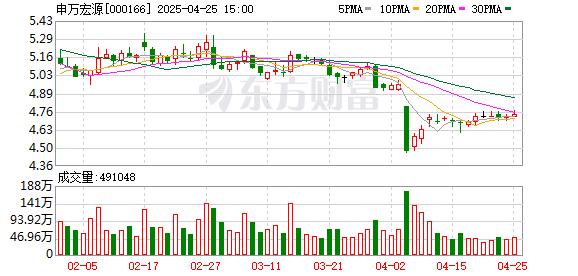
申万宏源将迎新所长
Zheng Quan Ri Bao· 2025-04-27 08:11
Core Viewpoint - The Shanghai Shenwan Hongyuan Securities Research Institute is set to appoint Wang Sheng as the new director, reflecting a strategic internal promotion aimed at enhancing leadership and research capabilities in response to market demands [2][3]. Group 1: Leadership Changes - Wang Sheng, currently the chief strategy analyst and deputy general manager, will be promoted to the director of Shenwan Hongyuan Research Institute [2]. - This internal promotion is part of a broader strategy to strengthen the leadership team and enhance the research institute's strategic layout [3]. Group 2: Youthful Management Trend - The research institute has seen a significant trend towards a younger management team, with several key appointments of analysts born in the 1980s and 1990s [4]. - Recent appointments include Liu Yang as assistant general manager and Zhao Wei as deputy general manager, both from the younger generation [4]. Group 3: Talent Development Strategy - Shenwan Hongyuan Research Institute has optimized its selection and training mechanisms for backup personnel, resulting in a younger average age among its leadership team [5]. - The institute has established a comprehensive talent development system, including training courses and mentorship programs, to ensure sustainable team development [5]. Group 4: Business Model Transformation - Since 2019, the research institute has initiated an internal transformation to align with the parent company's strategic shift, moving from a commission-based income model to a diversified revenue model [6]. - The revenue structure is evolving, with a gradual increase in the proportion of income from securities investment consulting and internal business collaboration, although commission income remains the primary source [6].