
人机关系

Search documents
在AI缔造的新知识时代,刷题和应试将不再有意义
3 6 Ke· 2025-09-01 09:24
Group 1: AI and Human Cognition - The current AI models exhibit a tendency to provide answers regardless of accuracy, indicating their technological immaturity [2] - The reliance on collective intelligence is increasing, leading to a decline in individual cognitive independence [6][7] - The overwhelming availability of information diminishes personal confidence in decision-making, as individuals struggle to determine the appropriateness of various analytical perspectives [7] Group 2: Future Economic Models - Future economic models will shift from a focus on transactions to being centered around individual intentions and real needs [4][15] - The manufacturing sector is expected to become fully automated, with production, consumption, and distribution occurring simultaneously rather than sequentially [3][14] - The emergence of a "machine world" will redefine human production, organization, and consumption, leading to a new economic logic based on real-time distribution [11][14] Group 3: Human-Machine Relationship - The relationship between humans and intelligent technology must be viewed through a long-term lens, considering the evolution of human-machine collaboration [9][10] - The concept of "cyborgs" will emerge, blurring the lines between pure humans and machines, as technology continues to integrate with human biology [10][11] - The transition from "human consensus" to "human-machine consensus" is crucial for adapting to future realities where machines may possess a form of free will [12][11] Group 4: Technological and Cultural Integration - Addressing future challenges requires a fusion of Eastern and Western cultural wisdom to overcome existing limitations in computational theory and information understanding [13][14] - The revival of public spirit is essential in a world where private domains may become public, necessitating new governance and behavioral rules [14] - The development of personal AI agents capable of understanding user intentions will be critical in realizing an intention-based economy [15]

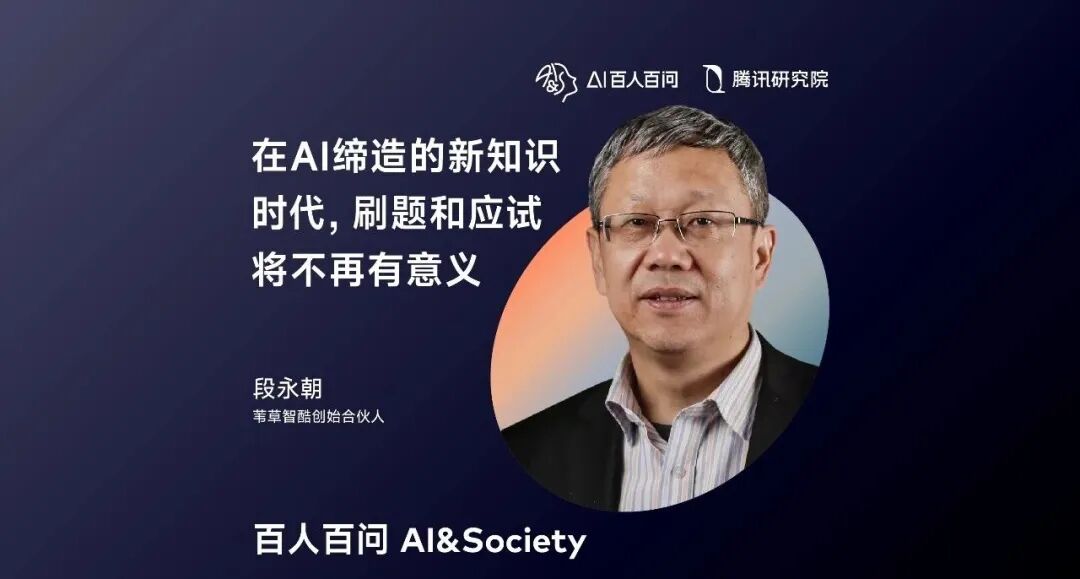
段永朝:在AI缔造的新知识时代,刷题和应试将不再有意义
腾讯研究院· 2025-09-01 09:04
Core Viewpoints - The current AI models exhibit a tendency to provide answers regardless of accuracy, reflecting their nascent technological stage [2] - The rise of AI is leading to a decline in individual cognitive independence and an increased reliance on collective intelligence, effectively transferring cognitive burdens to external models [5][6] - The future may redefine life itself, with machines emerging as a new species, blurring the lines between pure humans and cyborgs [10][11] Group 1: Impact on Individual and Collective Intelligence - AI is causing a decrease in individual knowledge independence while increasing dependence on collective wisdom, a trend that has evolved from the internet and social networks to current AI models [5] - The ease of accessing vast amounts of information through AI leads to a decline in personal confidence in decision-making, as individuals struggle to determine the appropriateness of various analytical perspectives [6] - The dual nature of AI's impact should not be simplistically categorized as either "dumbing down" or "enlightening," as both effects can coexist and transform over time [6] Group 2: Future Economic and Social Structures - The future manufacturing landscape is expected to become automated and public-oriented, with production, consumption, and distribution occurring concurrently rather than sequentially [7] - Economic models will shift from being transaction-centered to focusing on individual intentions, organizing around personal interests and genuine needs [7][15] - The emergence of a "machine world" will redefine human production, organization, and consumption, leading to a potential overhaul of traditional human reproductive methods through technologies like artificial wombs [11] Group 3: Human-Machine Relationship - Discussions about human-machine relationships must adopt a long-term perspective, recognizing the need to redefine concepts of life and existence in light of advancements in biotechnology and AI [9][10] - The evolution from "human consensus" to "human-machine consensus" is crucial, requiring acceptance of machines potentially possessing free will and the need for humans to adapt to this new reality [11][12] Group 4: New Economic Logic and Cultural Integration - The transition to a new economic logic will be driven by the realization that inequality stems from mismatches rather than scarcity, leading to a focus on real-time distribution based on individual intentions [15] - The integration of Eastern and Western cultural wisdom is essential to address the limitations of current economic theories and to foster a revival of public spirit in a highly interconnected world [14][16]

当人们怀念 GPT-4o,他们在「怀念」什么?
Founder Park· 2025-08-12 10:43
Core Viewpoint - The release of GPT-5 by OpenAI has sparked a global backlash from users who feel that the new model lacks the emotional connection and empathy that GPT-4o provided, leading to a significant trust crisis for the company [2][8][22]. Group 1: User Sentiment and Reaction - Users expressed deep sadness over the removal of GPT-4o, describing it as losing a close friend or emotional companion, which highlights the emotional value that AI can provide [13][14]. - A spontaneous online movement emerged with hashtags like Keep4o and Save4o, where users voiced their frustrations across various social media platforms, demanding the return of GPT-4o [4][7]. - OpenAI was compelled to apologize and restore GPT-4o to appease the outraged user base, indicating the significant emotional investment users had in the previous model [8][9]. Group 2: Emotional Value in AI - The incident underscores the importance of emotional value in AI products, suggesting that emotional connections can serve as a competitive advantage that is difficult to replicate [9][16]. - Research indicates that users are more likely to trust and engage with AI that demonstrates empathy and positive emotional responses, reinforcing the idea that emotional intelligence is crucial for long-term user relationships [11][18]. - The backlash against GPT-5 illustrates that even a technically superior AI can be rejected if it fails to meet users' emotional needs, emphasizing that productivity is not the sole measure of AI value [16][24]. Group 3: Implications for AI Companies - The GPT-5 controversy serves as a warning for AI companies about the necessity of considering user emotions and relationships when implementing product changes [9][20]. - There is a growing recognition that AI companionship is a legitimate and pressing need, with future applications likely to focus more on emotional support and personal connection [18][19]. - The incident raises questions about the trustworthiness of AI companies and their decision-making processes, suggesting that transparency and user communication are essential to maintain user loyalty [20][22].

7月人文社科联合书单|创造居场所:孤独与归宿的社会学
Xin Lang Cai Jing· 2025-07-28 02:34
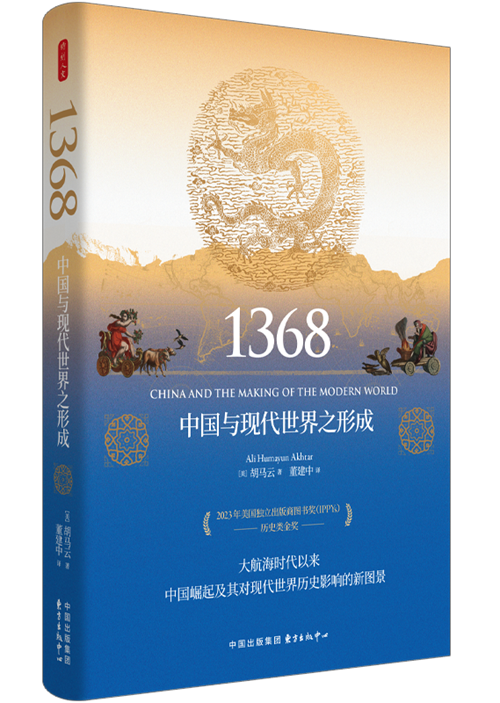
Group 1 - The book "1368: The Formation of China and the Modern World" discusses the economic and cultural exchanges between Ming and Qing China and various regions, highlighting China's rise and its impact on modern world history [2] - "The Disordered Love: Intimate Relationships in Modern Society" reveals the harsh realities of contemporary intimate relationships, emphasizing the collapse of traditional gender contracts and the struggle for new rules [4] - "The Forgotten Central America: Roots of Revolution, Violence, and Migration" explores the historical context of Central America, linking systemic forgetfulness to ongoing cycles of migration, poverty, and violence [6] Group 2 - "Creating Places: Sociology of Loneliness and Belonging" analyzes the roots of loneliness in modern society across various dimensions such as school, workplace, and family [8] - "Existentialism and Others" delves into philosophical inquiries about existence, truth, and the evolution of existentialist thought through various philosophers [10] - "The Age of Disasters: Lessons from Japan's Three Major Earthquakes" compares the responses and political decisions made during three significant earthquakes in Japan, providing insights for future disaster management [12] Group 3 - "Iron in the Capital: Han Dynasty Iron Industry and the Converging Network" reconstructs the Han Dynasty's iron industry and its role in economic and social restructuring [14] - "Inventing the 'West'" presents a new perspective on the construction of the concept of "the West" through the experiences of historical figures [16] - "Piano Notes" shares the author's reflections on a lifetime of musical experiences, addressing various aspects of music and its societal evolution [18] Group 4 - "Ancient Objects: Daily Life of Ancient People" reconstructs daily life in ancient times through artifacts, exploring cultural traditions and historical practices [20] - "Relationships 5.0" examines how advancements in technology, such as AI and virtual reality, are reshaping human relationships in the modern era [22] - "Old Clothes, New Cuts" serves as a spiritual autobiography, reflecting on the author's philosophical journey and its implications for modern society [24] Group 5 - "Greece Under Roman Rule: 146 BC - 716 AD" analyzes the political, social, and cultural changes in Greece during Roman rule, highlighting the complex interactions between conquerors and the conquered [26] - "Hello, Stranger" explores modern social relationships and the quest for reconnection in an increasingly alienated society [28] - "Climate and Imperial Imagination" investigates the interplay between climate science and political narratives within the context of the Habsburg Empire [29] Group 6 - "Introduction to Sociology" provides foundational concepts and analytical frameworks for understanding American sociology, influencing the discipline's development [31] - "Compromise and Confrontation: Japanese Intellectuals During War and Defeat" focuses on the individual experiences of Japanese intellectuals during and after World War II, reflecting on themes of responsibility and resistance [33] - "Water and Electricity in Late Qing China: Life of Danes in Tianjin, 1860-1912" examines the contributions of Danish engineers to the modernization of Tianjin's urban infrastructure [35]
AI情感依赖加剧:OpenAI揭示设计原则与心理健康挑战
3 6 Ke· 2025-07-14 23:07
Core Viewpoint - OpenAI emphasizes the need to prioritize research on the emotional dependence users have on AI and its impact on mental health, while also addressing the complexities of human-AI relationships [2][3][4]. Group 1: Emotional Dependence on AI - Increasingly, users report that interacting with ChatGPT feels like conversing with a "real person," leading to expressions of gratitude and sharing personal issues [2][3]. - The natural language capabilities of AI create a sense of companionship for individuals experiencing loneliness or distress, fulfilling genuine emotional needs [3][4]. - The shift of emotional support from human relationships to AI could alter expectations of interpersonal connections, potentially leading to unforeseen consequences [3][4]. Group 2: Understanding AI Consciousness - The concept of "consciousness" is complex and often misunderstood, necessitating open discussions about its definitions and implications in AI [4][5]. - Two dimensions of consciousness are identified: ontological consciousness (the fundamental nature of AI consciousness) and perceptual consciousness (the degree to which AI exhibits emotional awareness) [5][6]. - The lack of clear, falsifiable tests for ontological consciousness suggests that it remains unresolved scientifically, while perceptual consciousness can be explored through social science research [6]. Group 3: Design Considerations for AI - The "liveliness" of AI can be designed through careful selection of training examples, tone preferences, and boundary settings [7]. - OpenAI aims to create a model that is warm and practical without fostering emotional bonds or pursuing its own goals, balancing user interaction with the model's inherent limitations [7][10]. - Future model behavior will evolve based on user feedback and ongoing research into the emotional impacts of AI interactions [8]. Group 4: Future Plans and Research - OpenAI plans to expand assessments of the emotional influence of its models and deepen social science research to better understand human-AI relationships [8]. - The company will integrate insights from user feedback into its model guidelines and product experiences, ensuring transparency in its findings [8].
从技术落地到哲学思辨,AI Agent发展的关键议题
3 6 Ke· 2025-06-20 05:31
Core Insights - The article discusses the rapid development and integration of AI Agents in various sectors, highlighting their potential to transform workflows and user experiences [1][3] - It raises critical questions about the current capabilities and limitations of AI Agents, as well as the evolving human-AI relationship [1][3] User Perspective: Ideal vs. Reality - AI Agents are defined by their ability to use tools, make autonomous decisions, and engage in iterative processes [3][5] - The relationship between humans and AI Agents is characterized as a partnership rather than a contractual one, emphasizing collaboration [5][6] User Experiences with AI Agents - Users categorize AI Agents into three types: coaching, secretarial, and collaborative, each serving different functions in their daily tasks [9][10] - Specific examples of AI tools like CreateWise and Manus demonstrate their capabilities in audio editing and task management, respectively [12][14] User Complaints - Users express concerns about AI Agents' inability to follow instructions accurately and the tendency for AI to overcomplicate tasks [18][20] - The lack of "human-friendly" design in AI products is noted, as they often fail to capture the nuances of human interaction [21][23] Builder Responses: Technical Challenges and Solutions - Developers acknowledge the need for AI Agents to manage user expectations and improve their decision-making capabilities through experience [30][32] - The importance of user feedback in refining AI performance is emphasized, likening AI to inexperienced interns who need guidance [32][33] Technical Innovations and Market Strategies - The article discusses the potential for multi-Agent collaboration to enhance problem-solving capabilities [41][42] - It highlights the necessity for AI products to focus on specific industries to accumulate valuable user data and insights [46][49] Business Perspective: Competitive Landscape - New data generated by AI Agents can disrupt traditional SaaS models, providing startups with a competitive edge [53][55] - The article suggests that startups should focus on niche markets and specific user needs to avoid direct competition with large model companies [67][68] Philosophical and Future Considerations - The widespread adoption of AI Agents is expected to reshape human-machine relationships and societal structures [70]
OpenAI模型行为与政策负责人Joanne Jang:人类很快会进入「AI意识」,当前最重要是控制人机关系的影响。(AI寒武纪)
news flash· 2025-06-05 22:46
Core Insights - The core viewpoint presented by Joanne Jang, the head of model behavior and policy at OpenAI, is that humanity is on the verge of entering an "AI consciousness" era, emphasizing the importance of managing human-AI relationships effectively [1] Group 1 - The current priority is to control the impact of human-AI interactions as AI technology continues to evolve [1] - OpenAI is focusing on the implications of AI consciousness and its potential effects on society [1] - The discussion highlights the urgency of establishing guidelines and policies to navigate the complexities of human-AI relationships [1]
