
人类命运共同体

Search documents
《中华人民共和国国民经济和社会发展第十五个五年规划纲要(草案)》摘要
国家能源局· 2026-03-05 05:36
Core Viewpoint - The 15th Five-Year Plan (2026-2030) outlines China's strategic intentions and government priorities for achieving socialist modernization, serving as a comprehensive blueprint for national development and a common action program for all citizens [2][3]. Group 1: Economic and Social Development Goals - The 15th Five-Year Plan aims for significant achievements in high-quality development, increased self-reliance in technology, deeper reforms, improved social civilization, enhanced living standards, and progress in building a beautiful China [8]. - By 2035, the plan targets a substantial increase in economic, technological, defense, and comprehensive national strength, with per capita GDP reaching the level of moderately developed countries [8]. Group 2: Modernization of Industry and Infrastructure - The focus is on developing a modern industrial system centered on the real economy, emphasizing intelligent, green, and integrated development, while optimizing traditional industries and fostering emerging sectors [9][10]. - A modern infrastructure system will be constructed with an emphasis on planning, integration, and sustainability, including advancements in transportation and energy infrastructure [10]. Group 3: Technological Innovation and Digital Development - The plan emphasizes the importance of technological self-reliance and innovation, aiming to enhance the national innovation system and integrate technology with industry [11]. - Digital transformation will be accelerated, leveraging China's data resources and promoting the application of artificial intelligence across various sectors [13]. Group 4: Domestic Market and Economic Structure - The strategy focuses on expanding domestic demand, enhancing consumption, and promoting effective investment to achieve a dynamic balance between supply and demand [15]. - Efforts will be made to build a unified national market, eliminate barriers to market access, and ensure fair competition [15]. Group 5: Rural and Agricultural Development - The plan prioritizes rural development and agricultural modernization, aiming to improve living conditions in rural areas and ensure food security [19]. - Policies will be implemented to enhance agricultural productivity and support rural infrastructure development [19]. Group 6: Environmental Sustainability - The plan incorporates a commitment to ecological civilization, aiming for carbon neutrality and improved environmental quality through coordinated efforts in pollution reduction and green development [27][28]. - A shift towards green production and lifestyle will be promoted, encouraging resource conservation and low-carbon practices [28]. Group 7: National Security and Governance - The strategy includes strengthening national security systems and capabilities, ensuring a comprehensive approach to governance that maintains social order and stability [29][30]. - Emphasis will be placed on improving public safety governance and enhancing the resilience of the national security framework [30]. Group 8: Cultural and Social Development - The plan aims to foster cultural innovation and development, promoting core socialist values and enhancing public cultural services [22]. - Policies will be implemented to improve education, health, and social welfare systems, ensuring equitable access to services for all citizens [24][25].


“十五五”规划纲要草案,摘要来了!
21世纪经济报道· 2026-03-05 04:58
Core Viewpoint - The article outlines the strategic framework and key objectives for China's 15th Five-Year Plan (2026-2030), emphasizing the importance of achieving high-quality development, technological self-reliance, and social progress while navigating complex domestic and international challenges [1][2][3]. Group 1: Economic Development Goals - The 15th Five-Year Plan aims for significant achievements in high-quality development, technological independence, and social civilization, with a focus on improving people's quality of life and advancing ecological progress [6][24]. - By 2035, the plan targets a substantial increase in economic, technological, and national defense capabilities, with per capita GDP reaching levels of moderately developed countries [6]. Group 2: Modernization of Industry and Infrastructure - The plan emphasizes the need to strengthen the real economy, focusing on intelligent, green, and integrated development, while enhancing the manufacturing sector and optimizing traditional industries [7][8]. - A modern infrastructure system will be constructed, prioritizing safety, sustainability, and integration across various sectors, including transportation and energy [8]. Group 3: Technological Innovation - The plan highlights the importance of accelerating technological self-reliance and innovation, enhancing the national innovation system, and fostering a strong culture of research and development [9][10]. - It aims to strengthen the role of enterprises in technological innovation and improve the integration of innovation resources [9]. Group 4: Domestic Market and Consumption - The strategy focuses on expanding domestic demand as a strategic foundation, enhancing consumer capacity, and improving the investment environment to stimulate economic growth [12]. - Efforts will be made to boost consumption and ensure effective investment, creating a dynamic balance between supply and demand [12]. Group 5: Green Development and Environmental Protection - The plan promotes a comprehensive green transformation of economic and social development, aiming for carbon neutrality and improved ecological quality [24][25]. - It emphasizes the importance of sustainable practices and the integration of environmental considerations into all aspects of development [24]. Group 6: National Security and Governance - The plan underscores the need for a modernized national security system and governance framework to ensure stability and resilience in the face of challenges [26][27]. - It aims to enhance public safety governance and improve the overall effectiveness of social governance [27]. Group 7: Cultural and Social Development - The plan seeks to foster cultural innovation and development, promoting core socialist values and enhancing the quality of public cultural services [19]. - It emphasizes the importance of improving living standards and ensuring equitable access to education and healthcare [21][22].
《“十五五”规划纲要(草案)》摘要发布
财联社· 2026-03-05 04:49
Core Viewpoint - The article outlines the strategic framework and key objectives for China's 15th Five-Year Plan (2026-2030), emphasizing the importance of achieving high-quality development, technological self-reliance, and social progress while navigating complex domestic and international challenges [1][2][3]. Group 1: Economic and Social Development Goals - The 15th Five-Year Plan aims for significant achievements in high-quality development, technological independence, and social progress, with a focus on improving people's quality of life and advancing ecological civilization [6][24]. - By 2035, the plan targets a substantial increase in economic, technological, and national defense capabilities, with per capita GDP reaching levels of moderately developed countries [6]. Group 2: Modernization of Industry and Infrastructure - The plan emphasizes the construction of a modern industrial system, focusing on the real economy, smart, green, and integrated development, and enhancing the competitiveness of traditional industries [7][8]. - It calls for the establishment of a modern infrastructure system that is well-planned and sustainable, including advancements in transportation and energy infrastructure [8]. Group 3: Technological Innovation and Digital Development - The plan highlights the need for high-level technological self-reliance, promoting innovation in key technologies and enhancing the national innovation system [9][11]. - It stresses the importance of digital transformation, leveraging data resources and promoting the integration of artificial intelligence across various sectors [11]. Group 4: Domestic Market and Consumption - The strategy focuses on expanding domestic demand as a strategic foundation, enhancing consumer capacity, and promoting effective investment to stimulate economic growth [12][13]. - It aims to improve the quality and efficiency of the service sector, ensuring it supports industrial upgrades and meets public needs [7][13]. Group 5: Environmental Sustainability - The plan advocates for a green transformation of the economy, aiming for carbon peak and neutrality, and improving ecological quality through comprehensive environmental governance [26][27]. - It emphasizes the importance of sustainable practices in production and lifestyle, promoting resource conservation and low-carbon development [27]. Group 6: National Security and Governance - The plan underscores the need for a modernized national security system, enhancing capabilities to address various risks and ensuring social stability [28][29]. - It calls for improvements in public safety governance and the establishment of a comprehensive social governance system to maintain order and security [30]. Group 7: Cultural and Social Development - The plan aims to foster cultural innovation and development, promoting core socialist values and enhancing the quality of public cultural services [21]. - It emphasizes the importance of improving population policies to address aging and low birth rates, ensuring a high-quality population development strategy [22].
美国不断威胁下,“智利找了个借口拒绝中国医院船提供医疗服务”
Xin Lang Cai Jing· 2026-02-28 01:40
Core Viewpoint - The refusal of Chile to allow a Chinese hospital ship to provide medical services highlights the increasing pressure from the United States on Latin American countries regarding their relations with China [1][3]. Group 1: Chile's Decision - Chile's Ministry of Health cited local regulations that prohibit unlicensed foreign medical personnel from providing services as the reason for denying the Chinese hospital ship [1]. - The Chinese Navy's "Silk Road Ark" hospital ship has been on a humanitarian mission since September 5, 2022, and plans to visit over ten countries, including Chile, over a period of more than 200 days [1]. Group 2: U.S. Pressure - The U.S. has intensified pressure on Chile regarding a proposed undersea cable project involving China, which is seen as a strategic concern for the U.S. [3][4]. - On February 20, the U.S. revoked visas for three Chilean officials involved in the project, labeling them as threats to regional security [3]. - U.S. Ambassador to Chile, Branden Judd, warned that Chile could lose visa waiver privileges if it does not scrutinize foreign investments [3]. Group 3: Diplomatic Responses - Chile's Foreign Minister, Antonia Urrejola, rejected U.S. accusations and emphasized that Chile should not be used as a pawn in geopolitical disputes [4]. - The Chinese Embassy in Chile condemned U.S. actions as disrespectful to Chile's sovereignty and called for an end to U.S. hegemonic behavior [4]. - China's recent policy document on Latin America emphasizes mutual respect and non-interference, aiming to strengthen ties without being influenced by third parties [4].

谌贻琴在调研米兰冬残奥会备战工作时强调 牢记为国争光使命 全力完成参赛任务
Xin Hua She· 2026-02-27 12:31
Core Viewpoint - The Chinese government emphasizes the importance of preparing for the Milan Winter Paralympics, encouraging athletes to strive for excellence and embody the spirit of national pride and resilience [1] Group 1: Government Support and Encouragement - The State Councilor and Director of the National Working Committee on Disability, Chen Yiqin, visited the China Disabled Sports Management Center to inspect the preparations for the Milan Winter Paralympics and motivate the Chinese sports delegation [1] - Chen Yiqin highlighted the need for athletes to remember their mission of representing the country and to promote the spirit of Chinese sports, the Beijing Winter Olympics, and the Paralympics [1] Group 2: Athlete Preparation and Training - During the visit, Chen Yiqin observed training sessions for ice hockey and engaged with athletes from various winter sports, inquiring about their training, injury prevention, and logistical support [1] - Athletes were encouraged to give their best efforts and to be well-prepared, with a focus on achieving optimal performance [1] Group 3: Values and Goals - The Chinese sports delegation is urged to pursue not only athletic achievements but also moral and ethical standards, aiming for a dual success in sports performance and spiritual civilization [1] - There is a call for broader communication and friendship-building, with an emphasis on sharing the stories of China and its disabled athletes to contribute to a shared human destiny [1]
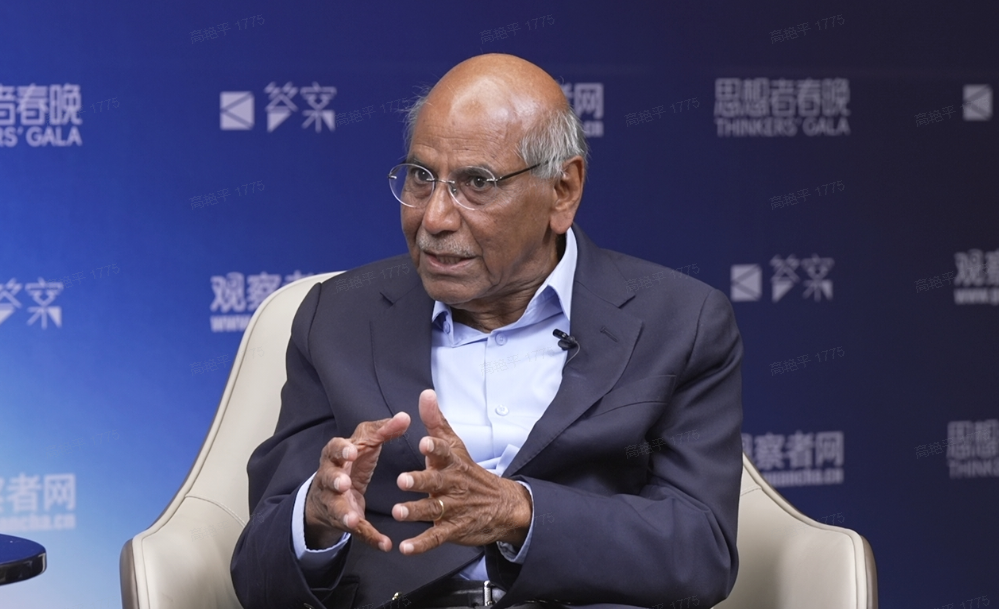
【思想者茶座】第14期| 萨仁山:总是争论中印谁是全球南方的领导,这本身就是错误的
Guan Cha Zhe Wang· 2026-02-27 00:58
Group 1 - The normalization of Sino-Indian relations is progressing slowly, with both countries hoping for sustained improvement [3][7] - Historical context shows that Sino-Indian relations have fluctuated, with significant events shaping their current dynamics, including border conflicts and mutual recognition [4][5] - The 2005 agreement on political guidelines for resolving border issues marked a high point in bilateral relations, emphasizing the need for cooperation between the two emerging economies [6][22] Group 2 - Recent military disengagement along the border has been a positive step, but significant troop presence remains, indicating that full de-escalation is still needed [16][17] - The relationship between India and China is viewed as crucial for global stability, with both nations seen as pillars of political stability in a turbulent world [16][27] - The potential for economic cooperation exists, particularly in sectors like technology and infrastructure, but trust issues remain a barrier to deeper engagement [35][39] Group 3 - The importance of a united front among developing countries, particularly in addressing global challenges like climate change and economic inequality, is emphasized [27][29] - The historical context of non-alignment and the need for a cooperative spirit among developing nations is highlighted as essential for future collaboration [28][46] - The dialogue on establishing a new global order that is fair and democratic is crucial, with both India and China needing to articulate their visions for such an order [40][41]
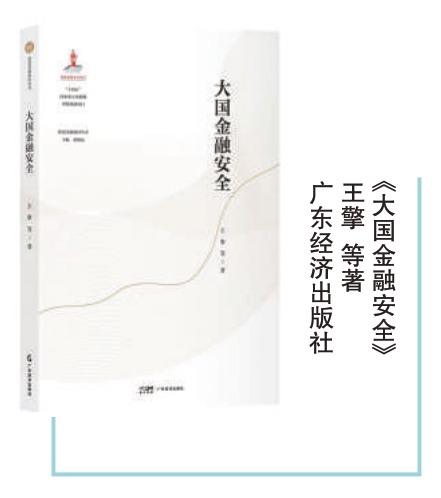
大国金融的治理智慧
Xin Lang Cai Jing· 2026-02-26 21:46
Group 1 - The core viewpoint emphasizes the importance of financial security in China, highlighting the need to prevent systemic risks while pursuing economic development [2][3] - The current stage of China's economy is characterized by the "middle-income trap" and a critical transformation period, necessitating a focus on financial stability to address potential risks [3][4] - External factors, including geopolitical tensions and global economic stagnation, further underscore the need for robust financial security measures [4][8] Group 2 - Maintaining financial security requires a proactive approach, focusing on both preventing crises and addressing underlying issues within the financial system [5][6] - The 2023 Central Financial Work Conference identified key risks such as real estate, local government debt, and small financial institutions, which are linked to high leverage and debt levels [5][6] - The emphasis on reforming and optimizing institutional mechanisms is seen as fundamental to enhancing economic vitality and ensuring financial security [5][7] Group 3 - The strategy for addressing financial risks involves promoting development rather than solely relying on regulatory measures, with a preference for expanding assets over reducing debt [6][7] - The integration of financial openness with security is crucial, as global competition necessitates engagement in international markets while managing associated risks [7][8] - China's approach to financial security includes strengthening financial infrastructure, enhancing international payment systems, and increasing participation in global financial governance [8][9] Group 4 - The concept of "great power financial security" reflects both domestic structural challenges and the need for a global perspective in addressing financial safety [9] - China's initiatives, such as the Global Development Initiative and the Global Security Initiative, aim to foster a cooperative international environment for financial stability [9][10]
读懂“世界年”背后的共鸣共情
Xin Lang Cai Jing· 2026-02-26 19:41
(来源:工人日报) 当春节庆祝活动在世界随处可见,当越来越多的外国人开始体验春节,春节这一中国传统文化节日,已 经成为实实在在的"世界年"。 千百年来,中国人将过年作为一年中最重要的仪式。春节代表着万象更始、万物复苏,也蕴含着阖家团 聚、迎福纳祥的情感寄托。现如今,随着"花式"过年兴起,春节又成为催生新事物和大众消费的契机。 春节走向世界的第三个维度,是不同国家民众之间的共鸣和共情。随着交流增多,中国春节所蕴含的对 家庭的重视、对新年的期盼、对美好生活的向往,逐渐为更多国家所认可。无论是一些国家将春节列为 自己的法定假日,在本国做"中国人",还是越来越多外国人来中国过年,都是这种情感的表达。这一刻 不存在中国人和外国人的区别,只有地球村人对新春新年的共同祝愿。 联合国秘书长古特雷斯说,生肖马象征能量、成功和勇往直前,当今世界迫切需要这些品质面对冲突、 不平等和气候危机等多重挑战。非盟委员会主席优素福说,春节所传递出的新生与希望的价值观念在非 洲同样深入人心。德国一家网站的评论文章认为,作为全人类共同的文化遗产,春节所体现的和谐共 处、家庭团圆、社会包容、生态智慧等价值理念得到国际社会认可。 人寿年丰五洲宁,普 ...
两岸圆桌派|馆长、波士顿圆脸:“落地大陆就会被公安逮捕?根本不会有人理你,好吗”
Guan Cha Zhe Wang· 2026-02-26 01:44
Core Viewpoint - The perception gap between Taiwan and mainland China is significant, with many Taiwanese still holding outdated stereotypes about the mainland, which are being challenged through increased personal interactions and social media exposure [1][2][4]. Group 1: Infrastructure and Economic Development - Taiwan's infrastructure and economic competitiveness have reportedly stagnated, while mainland China's infrastructure and commercial sectors, including e-commerce and logistics, are perceived to be a decade ahead [2][4][36]. - The rapid development in mainland China is highlighted by the observation that cities can change dramatically within a few years, contrasting with the slower pace of change in Taiwan [2][4]. Group 2: Social Media and Public Perception - Social media is playing a crucial role in reshaping perceptions, with a growing number of young Taiwanese sharing their positive experiences in mainland China, which is leading to a shift in public opinion [7][25]. - Despite political pressures, there is a notable increase in Taiwanese youth traveling to mainland China, with a reported 30% rise in tourism from Taiwan to the mainland, particularly among young adults [6][25]. Group 3: Personal Experiences and Testimonies - Personal testimonies from Taiwanese influencers, such as "馆长" Chen Zihan, reveal a transformative experience upon visiting mainland China, leading to a reevaluation of previously held beliefs [5][34]. - The emotional impact of witnessing the advancements in mainland China firsthand is emphasized, with many expressing a sense of envy and admiration for the progress made [4][34]. Group 4: Political and Media Environment - The political landscape in Taiwan is described as contentious, with media narratives often shaped by political affiliations, leading to a skewed perception of mainland China [12][16]. - There is a call for Taiwanese media and influencers to foster a more balanced narrative about mainland China, emphasizing the importance of direct experiences over politically charged rhetoric [11][12].

构建更加公正合理的全球治理体系——智库报告解析全球治理的中国方案
Xin Hua She· 2026-02-25 16:27
Core Viewpoint - The report emphasizes the importance of China's global governance initiative in response to the increasing chaos in the world, highlighting the need for reforming the global governance system to address structural contradictions and adapt to the rise of developing countries [2][3][5]. Group 1: Global Governance Context - The current international landscape is marked by unilateralism, protectionism, and hegemonic actions that undermine international order, necessitating a reformed global governance system [2]. - The existing global governance framework struggles with representation, fairness, and effectiveness, failing to meet the new global realities [2][3]. - The report outlines the evolution of global governance as a gradual process shaped by humanity's pursuit of peace and development [2]. Group 2: China's Global Governance Initiative - China's global governance initiative, proposed by President Xi Jinping, includes five core principles: sovereign equality, international rule of law, multilateralism, people-centeredness, and action-oriented approaches [3][5]. - The initiative has received rapid support from over 150 countries and international organizations, indicating its timely relevance [5]. - The emphasis on sovereign equality addresses the inequities in the current global governance system, advocating for equal participation in international rule-making and discussions [6]. Group 3: Implementation and Action - China actively explores the establishment of international rules in emerging fields, such as cybersecurity and artificial intelligence, promoting collaborative governance [7]. - The initiative stresses the importance of multilateralism and the central role of the United Nations in global governance, opposing exclusive arrangements [7][10]. - China's commitment to action-oriented governance is evident in its provision of public goods, such as vaccine cooperation and climate change initiatives, enhancing the self-development capabilities of developing countries [11]. Group 4: Future Directions - The report calls for international cooperation to strengthen the UN's role in global governance, aiming for a more just and reasonable international order [10][12]. - It highlights the necessity of transforming governance concepts into actionable practices, ensuring that global governance addresses both immediate and long-term challenges [8][11]. - The initiative aims to create a world where all people can aspire to a better life, focusing on infrastructure development and poverty alleviation through initiatives like the Belt and Road [8].