
会员体系

Search documents
锅圈(2517.HK):三季度收入增长坚挺;下半年开店提速
Ge Long Hui· 2025-11-05 05:03
Core Insights - The company reported a strong revenue growth for Q3 2025, with revenues estimated between 1.85 billion to 2.05 billion RMB, representing a year-on-year increase of 13.6% to 25.8% [1] - The total revenue for the first three quarters of 2025 is projected to be between 5.09 billion to 5.29 billion RMB, reflecting a year-on-year growth of approximately 18.5% to 23.2% [1] - Core operating profit for Q3 is expected to be between 65 million to 75 million RMB, showing a significant year-on-year increase of 44.4% to 66.7% [1] Revenue and Profitability - The core operating profit margin for the period is estimated to be around 3.5% to 3.7%, which is an improvement of 0.7 to 0.9 percentage points year-on-year, indicating better store operations [1] - The company aims to exceed its target of opening over 1,000 new stores in 2025, with 361 new stores added in Q3 alone, bringing the total to 10,761 stores by the end of September [1] Market Expansion and Product Diversification - The company is enhancing customer loyalty through an optimized membership system, expecting to surpass 60 million members in the second half of the year [1] - The product range has expanded significantly, with the revenue share from barbecue rising from less than 5% to 22% over four years, alongside the introduction of eight product categories to meet home dining needs [2] - The SKU count has increased from 66 in 2020 to 412 in 2024, with 95% being self-developed, showcasing a strong focus on supply chain control and cost optimization [2] Financial Confidence and Future Projections - The company has demonstrated confidence in its growth by executing three share buyback announcements since 2024, with each buyback not exceeding 100 million HKD [2] - The management plans to distribute dividends of 200 million and 190 million RMB for the full year of 2024 and the first half of 2025, respectively, while maintaining a healthy cash flow [2] - Revenue growth is projected at 22.7% and 20.3% for FY25E and FY26E, respectively, with net profit growth expected to be 85.6% and 26.3% for the same periods [2]
锅圈(02517):三季度收入增长坚挺,下半年开店提速
ZHONGTAI INTERNATIONAL SECURITIES· 2025-11-03 09:20
Investment Rating - The report maintains a "Buy" rating for the company with a target price of HKD 5.17 [6]. Core Insights - The company reported a robust revenue growth of approximately RMB 1.85 billion to RMB 2.05 billion for Q3 2025, representing a year-on-year increase of 13.6% to 25.8% [1]. - The total revenue for the first three quarters is estimated to be between RMB 5.09 billion and RMB 5.29 billion, reflecting a year-on-year growth of about 18.5% to 23.2% [1]. - Core operating profit for Q3 is projected to be between RMB 65 million and RMB 75 million, showing a significant year-on-year increase of 44.4% to 66.7% [1]. Summary by Sections Revenue Growth and Store Expansion - The company added 361 new stores in Q3, bringing the total to 10,761 stores by the end of September, an increase of 611 stores compared to the end of 2024 [2]. - The company aims to exceed its target of opening over 1,000 new stores for the year, particularly during the peak hot pot sales season in Q4 [2]. Product Diversification - The company has successfully developed barbecue as a second growth category, increasing its revenue contribution from less than 5% to 22% in the first half of 2025 [3]. - The product range has expanded to cover eight categories, including beverages and single-serving meals, with a significant increase in SKU count from 66 in 2020 to 412 in 2024, with 95% being self-developed [3]. Financial Performance and Shareholder Returns - The company has consistently repurchased shares since 2024, with each repurchase not exceeding HKD 100 million, indicating management's confidence in the company's future [4]. - The company plans to distribute dividends of RMB 200 million and RMB 190 million for the full year of 2024 and the first half of 2025, respectively, while maintaining a healthy cash flow [4]. - Revenue is expected to grow by 22.7% and 20.3% for FY25E and FY26E, respectively, with net profit growth projected at 85.6% and 26.3% for the same periods [4].
帐篷与床车:黄金周酒店业「消失的客人」
3 6 Ke· 2025-10-29 00:26
Core Insights - The hotel industry is experiencing a significant downturn, with young consumers opting for camping and car sleeping instead of traditional hotel stays, reflecting a shift in consumer behavior and spending patterns [1][3][35] - Despite an increase in domestic travel during the holiday period, average per capita spending has decreased, indicating a trend towards consumption downgrade [4][10] Group 1: Holiday Spending and Hotel Occupancy - During the recent holiday, the average occupancy rate for hotels in major cities was only 58%, with economy hotels dropping below 50% [3][10] - The average per capita spending during the holiday was 911 yuan, translating to less than 114 yuan per person per day, a 13% decrease compared to the previous year [4][10] - The drastic price hikes in economy hotels have made them unaffordable for many, leading to a preference for camping as a more cost-effective option [5][9] Group 2: Price Trends in the Hotel Industry - Prices for economy hotels have surged, with some hotels seeing increases of over 30%, while luxury hotels have maintained more stable pricing [8][9] - For example, the price of a room at a budget hotel increased from 202 yuan to 930 yuan within a few days, highlighting the volatility in pricing during peak travel times [7][9] - The disparity in pricing strategies has created a situation where luxury hotels are perceived as more cost-effective compared to economy options [9][10] Group 3: Industry Challenges and Structural Changes - The hotel industry is facing a structural crisis, with both high-end and budget hotels experiencing declining demand [11][16] - Major hotel groups have reported negative growth in revenue per available room (RevPAR), indicating widespread financial strain across the sector [12][16] - The reliance on franchise models is being challenged as operational costs for franchisees rise, leading to potential instability in the business model [19][20] Group 4: Adaptation and Transformation Strategies - Hotel groups are increasingly looking to diversify their revenue streams by enhancing supply chain efficiencies and developing retail operations [22][24] - For instance, a hotel group has successfully integrated retail sales into its business model, significantly boosting revenue from non-hotel services [24][26] - The focus is shifting towards building direct relationships with consumers through loyalty programs and personalized experiences, moving away from dependence on online travel agencies (OTAs) [27][31] Group 5: Future Outlook - The current trends indicate a fundamental transformation in the hotel industry, where success will depend on the ability to integrate various services and create emotional connections with consumers [35] - The industry is moving towards a model that prioritizes supply chain efficiency and customer loyalty over traditional metrics like room count and location [35]




几家消费品牌上市招股书中提到的会员运营,是利润引擎
3 6 Ke· 2025-10-21 12:11
Core Insights - The article highlights the increasing emphasis on "private domain" strategies among consumer brands, particularly in their IPO filings, indicating a shift towards deeper user asset management and digitalization in the consumer industry [1][10]. Group 1: Financial Performance - Eight Horse Tea has built the largest private domain traffic pool in the tea industry with "26 million members + 40.9 million online fans," maintaining its position as the top seller in the Tmall Oolong tea category for ten consecutive years [2]. - Encountering Small Noodles has developed a digital system that has accumulated 22.1 million members, achieving a remarkable repurchase rate of 44.5%, significantly higher than the average of 30% in the Chinese fast food industry [2][9]. - Both brands demonstrate that when member assets and repurchase data form a closed loop, private domain operations evolve from a cost center to a profit engine, justifying higher valuations in the capital market for digitally advanced companies [2]. Group 2: Digitalization and Technology - Both brands focus on self-developed digitalization as a core pillar, transforming digitalization from a cost item to a growth item through quantifiable investments and technological restructuring [3][4]. - Eight Horse Tea integrates digitalization across the entire production and supply chain, with significant investments in smart production lines and a commitment to allocate 10% of its IPO proceeds to digital enhancements [3]. - Encountering Small Noodles emphasizes "smart digitalization," utilizing a standardized system to quantify traditional cooking processes, thereby improving operational efficiency and reducing costs [4]. Group 3: Private Domain Operations and User Value - Eight Horse Tea creates a "city living room" experience to enhance high-end tea culture and social interactions, achieving a revenue contribution of 64.2% from offline stores, while online channels have accumulated over 40.9 million fans [6][8]. - Encountering Small Noodles focuses on 24-hour operations in transportation hubs, with nighttime revenue accounting for 35% of total sales, and employs a data platform to enhance user engagement and retention [7][9]. - Both brands illustrate that effective private domain operations require not only diverse traffic sources but also unified data management and scenario-based applications to maximize customer value [7]. Group 4: Membership Systems and Lifecycle Management - Membership is a recurring theme in the filings of both brands, emphasizing the importance of aligning customer segments with industry scenarios to enhance profitability [8]. - Eight Horse Tea's membership strategy targets high-end consumers, resulting in a net profit margin increase from 9.1% in 2022 to 11.3% in the first half of 2025, with a projected net profit of 224 million yuan in 2024 [8]. - Encountering Small Noodles has established a benchmark in the fast food industry with a membership scale of 22.1 million and a significant order volume, supported by a digital system that enhances product quality and customer experience [9][10]. Group 5: Market Positioning and Valuation Logic - Eight Horse Tea targets the high-end tea market, leveraging a "full-channel experience + premium membership" strategy to create brand value, with valuation centered on the depth of membership assets [11]. - Encountering Small Noodles focuses on the fast food market, achieving scale through "standardized efficiency + prepaid membership," with valuation driven by store growth and profitability [11]. - The growth data from both brands provide differentiated reference samples for consumer service brands transitioning from regional operations to capital markets [11].
本土酒店出海,为何热衷“首攻”东南亚?
3 6 Ke· 2025-10-15 03:12
Core Insights - Huazhu Group's brand, Qianxi, is accelerating its expansion in Southeast Asia, with recent signings in Kuala Lumpur and Phnom Penh, marking a significant step in its overseas strategy [1][2] - The Southeast Asian market is becoming a testing ground for domestic hotel brands seeking global presence, driven by increasing business travel and tourism from China [5][6] Group 1: Qianxi's Southeast Asia Expansion - Qianxi has signed three new hotels in Southeast Asia, with locations in Kuala Lumpur and Phnom Penh, targeting business and leisure travelers [1][2] - The Kuala Lumpur hotel will feature 101 rooms and is set to open in Q4 2026, while the Phnom Penh hotel aims to become a benchmark in the CBD area, opening in Q2 2026 [2] - The strategy involves analyzing local market trends and consumer demands, indicating a shift from mere acquisitions to a more nuanced approach in overseas expansion [2] Group 2: Market Dynamics and Opportunities - The Southeast Asian tourism landscape is changing, with Vietnam becoming the top destination for Chinese tourists, receiving 3.5 million visitors in 2025, a 44% increase [5] - Recent visa policies in Southeast Asia have facilitated travel for Chinese tourists, enhancing the potential customer base for Qianxi hotels [6] - The growing demand for quality accommodations is driven by a young population, with over 50% under 30 years old, and a rapidly expanding middle class [7][8] Group 3: Competitive Landscape and Strategic Approaches - Domestic hotel groups are increasingly looking to Southeast Asia as a new growth market amid intense competition in the domestic market [9][15] - The first wave of expansion involved partnerships and franchise models, while the current phase sees more direct investments and brand establishment [9][10] - Companies like Jinjiang and Huazhu are diversifying their brand offerings and leveraging local partnerships to enhance their market presence [11][12] Group 4: Technological and Operational Innovations - The integration of digital systems and localized operations is becoming a competitive advantage for hotel groups entering Southeast Asia [14] - Huazhu's establishment of a global headquarters in Singapore aims to streamline operations and adapt to local market needs [3] - The focus on a robust membership system and localized marketing strategies is essential for building brand recognition and customer loyalty in new markets [13][15]

美团会员6个月,本地生活的价值底座是什么?
36氪· 2025-09-30 13:08
Core Viewpoint - Meituan continues to enhance its membership benefits, focusing on user experience and emotional connection, while maintaining a free membership model to attract a broader user base [3][4][6][14]. Membership Benefits Upgrade - As of September 30, Meituan's membership benefits have been upgraded, introducing new features centered around "priority queuing" and "worry-free services" [4][10]. - New benefits include "1-on-1 urgent delivery," "airport fast track," and "priority car dispatch," aimed at reducing waiting times for members [4][11]. - The "Membership Center" has been revamped for easier access to benefits and activities, enhancing user experience [4][14]. Membership System Characteristics - Meituan's membership system, launched on March 31, aims to cover various local lifestyle scenarios without charging fees, differentiating it from other platforms that focus on high-net-worth users [6][7][14]. - The system is designed to create a sense of belonging and recognition among users, moving beyond just cost-saving features [15][16]. User Engagement and Recognition - The emotional connection with the membership system has strengthened, as evidenced by user engagement metrics, with over 10 million users achieving membership level upgrades by Q2 2025 [15][16]. - The introduction of exclusive experiences, such as concert viewing benefits, has further enhanced user loyalty and social sharing [15][16]. Business Implications - The membership system serves as a foundational infrastructure for Meituan and its merchants, allowing for refined user segmentation and targeted marketing strategies [18][20]. - By leveraging a large user base of 770 million, Meituan aims to help merchants optimize their marketing resources and reduce price competition [19][20]. Future Outlook - Meituan's membership system is envisioned as a "super interface" that connects various lifestyle services, enhancing user engagement and driving cross-business sales [24][26]. - The long-term goal is to create a widely accepted membership card that offers discounts and benefits across multiple sectors, positioning Meituan as a leader in the local lifestyle market [26].

中国版 “黑卡”?美团阿里靠吃喝玩乐杀出血路,狂分2000亿大蛋糕
Sou Hu Cai Jing· 2025-09-17 13:10
Core Insights - American Express has established a significant business moat by defining high-spending consumer groups, suggesting a potential market opportunity for Chinese companies like Meituan and Alibaba to replicate this model with their premium membership programs [1][15] - The concept of a "Chinese version of the black card" is emerging, as Meituan and Alibaba introduce membership systems that reward higher spending with more benefits, targeting high-value users [1][15] Group 1: Membership Comparison - The membership systems of Alibaba and Meituan primarily focus on spending amounts, which may inadvertently include "flashy spenders" who do not represent long-term valuable customers [4][5] - American Express's black card holders are not only high spenders but also possess significant assets and social resources, indicating that spending alone may not equate to true high net worth [3][5] Group 2: Data Utilization - Alibaba and Meituan have the advantage of comprehensive consumer data across various sectors, allowing for a more accurate reflection of a consumer's spending ability compared to a single credit card statement [6] - The platforms can refine their member selection process over time through accumulated data, enhancing the precision of their high-value customer identification [6] Group 3: Merchant Relationships - Concerns exist regarding whether Alibaba and Meituan can achieve the same pricing power with merchants as American Express, given their existing relationships with millions of businesses [6][8] - The collaboration model between Alibaba/Meituan and merchants is likely to be voluntary, where merchants offer exclusive benefits in exchange for access to high-value customers, rather than being forced to pay high fees [9][8] Group 4: Market Dynamics - The sensitivity of domestic merchants to costs poses challenges for implementing a high-fee model similar to American Express, as seen in past resistance to increased delivery fees [8] - The membership systems of Alibaba and Meituan are not intended to replace existing loyalty programs from airlines or hotels but rather to act as connectors that enhance the value of those memberships [13][11] Group 5: Future Potential - The lack of a robust credit card ecosystem in China presents an opportunity for internet platforms to fill this gap, with the potential to create a significant commercial value of $200 billion if they can establish trust and loyalty across various consumer scenarios [15][1]



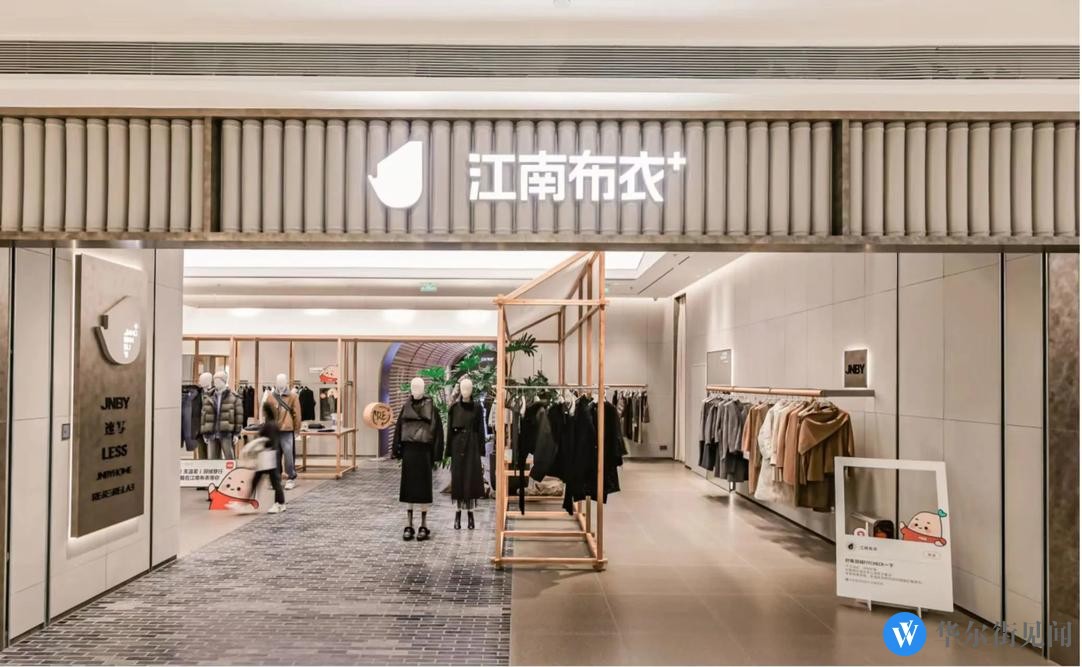
江南布衣挺住了
Hua Er Jie Jian Wen· 2025-09-12 10:21
Core Viewpoint - The clothing industry in 2025 is experiencing a dichotomy, with outdoor sports brands thriving while traditional fashion apparel faces significant challenges. Jiangnan Buyi has reported a unique performance amidst this landscape, showcasing growth in revenue and net profit despite industry headwinds [2][3]. Financial Performance - Jiangnan Buyi's revenue for the fiscal year ending June 30, 2025, increased by 4.6% to 5.548 billion yuan, with net profit rising by 6.0% to 898 million yuan. The gross margin remained high at 65.6%, indicating strong brand premium and cost control capabilities [2][3]. - The mature brand JNBY saw a revenue increase of 2.3% to 3.013 billion yuan, accounting for 54.3% of total revenue. The growth brand segment experienced a slight decline of 0.5% to 2.174 billion yuan, representing 39.2% of total revenue. Newly acquired emerging brands reported a remarkable revenue increase of 107.4% to 361 million yuan, rising from 3.3% to 6.5% of total revenue [2][3]. Membership System - Jiangnan Buyi's core membership system is a key driver of high-quality growth, contributing over 80% of total retail sales. Active membership accounts increased to over 560,000, with those spending over 5,000 yuan exceeding 330,000 [3][6]. - The retail sales from members reached 4.86 billion yuan, contributing over 60% of offline retail sales [3]. Strategic Direction - The company aims to achieve a sales target of 10 billion yuan by 2026, aligning with its strategic planning despite the changing industry landscape [3][4]. - Jiangnan Buyi plans to continue optimizing its designer brand and product mix through self-incubation and acquisitions, enhancing design and R&D capabilities [3][4]. Channel Expansion - As of June 30, 2025, Jiangnan Buyi operated 2,117 independent retail stores globally, up from 2,025 the previous year, with the majority located in mainland China, Hong Kong, and Taiwan [4]. - The company has successfully established 22 multi-brand collection stores to increase brand exposure and provide more growth services [5]. Inventory Management - Inventory increased by 24.2% to 932.6 million yuan, attributed to supporting business growth and increased new product stocking, as well as the impact of last year's warm winter on sales [13][14]. Future Growth Engines - The company anticipates that the primary growth drivers over the next three years will stem from existing brands, particularly emerging brands, while maintaining a cautious approach to acquisitions [16][17].
企业数字化营销数字化转型企业战略营销管理解决方案(91页 PPT)
Sou Hu Cai Jing· 2025-09-03 01:10
Core Insights - The article emphasizes the transformation of digital marketing in the post-internet era, focusing on "Marketing 5.0" as a core framework that integrates private traffic operations, the CIDR model, membership systems, and multi-channel collaboration to assist companies in upgrading from traditional marketing to precise, full lifecycle management [1][6]. Group 1: Marketing Evolution - Marketing has evolved from 1.0 (product-oriented) to 5.0 (private traffic era), addressing the challenges of a "marketing jungle" characterized by rapid new media iterations and dispersed traffic [1][31]. - The shift in focus is from "building products" to "counting customers," emphasizing customer numbers and consumption frequency, and managing growth through a customer pyramid structure [1][6]. Group 2: CIDR Model and Membership System - The CIDR model (Contact-Identify-Data-React) serves as the core integration framework, covering customer touchpoints across various scenarios and utilizing CRM/SCRM for customer segmentation and data collection [2][14]. - Membership systems are designed based on annual spending, offering benefits such as discounts and points, with a suggested point system of 1 point per 1 yuan spent, balancing costs and perceived customer value [2][12]. Group 3: Multi-Channel Marketing and Private Traffic Operations - Multi-channel marketing and private traffic operations are identified as key implementation paths, utilizing technologies like QR codes and location-based services for precise customer engagement [3][39]. - Social media marketing is centered around customer needs, focusing on community engagement, relevant content creation, and user-driven interactions to stimulate customer advocacy [3][8]. Group 4: Data Integration and Effectiveness Evaluation - The strategy emphasizes the importance of data integration and effectiveness evaluation, advocating for the use of big data analytics to identify high-value customers and assess marketing effectiveness through metrics like Customer Lifetime Value (CLV) [3][39]. - The ultimate goal is to achieve a sustainable growth strategy through precise brand marketing, interactive virtual and physical integration, and seamless transaction platform connections [3][8].

老铺黄金(06181):1H25收入与利润高增,渠道拓展与海外布局并进
Haitong Securities International· 2025-09-02 06:31
Investment Rating - The report maintains an "Outperform" rating for Laopu Gold [2][9]. Core Insights - In the first half of 2025, Laopu Gold achieved significant revenue and profit growth, with operating revenue reaching RMB 12.354 billion, up 251.0% year-on-year, and attributable net profit of RMB 2.268 billion, up 285.8% year-on-year, resulting in a net margin of 18.4% [3][13]. - The company is expanding its channels and international presence, with domestic revenue of RMB 10.758 billion (87.1% of total revenue) and overseas revenue of RMB 1.597 billion (12.9% of total revenue), reflecting year-on-year increases of 232.8% and 456%, respectively [5][15]. - Laopu Gold's membership base has surged, with 480,000 loyal members as of June 2025, indicating a strong consumer base that overlaps significantly with high-end luxury brands [8][16]. Financial Performance - Revenue and profit forecasts for 2025-2027 are projected at RMB 26.964 billion, RMB 35.524 billion, and RMB 41.782 billion, representing year-on-year growth rates of 217.0%, 31.7%, and 17.6%, respectively [9][18]. - The company plans to declare an interim dividend of RMB 9.59 per share for 2025, with a total payout ratio of 72% [3][13]. Market Position and Strategy - Laopu Gold's core revenue is primarily from gold jewelry, driven by strong consumer demand for high-value pieces, while the management sees significant growth potential in gold artifacts among high-net-worth individuals [4][14]. - The company adheres to a fully self-operated model, targeting top-tier shopping malls and accelerating its internationalization efforts, including the opening of its first overseas store in Singapore [5][15][17]. - Management emphasizes that the brand's premium positioning is maintained despite participating in promotional activities, which are seen as necessary collaborations with malls [4][14]. Membership and Customer Base - The company has established a high-end customer management department to enhance consumer loyalty both domestically and internationally, with a focus on high-net-worth individuals [8][16]. - The average transaction values for overseas clients are significantly higher than those in mainland China, indicating a lucrative market opportunity [17].