偷税漏税

Search documents
商标哥:税务部门曝光6起网红和网店偷税案件,合法经营才能走得更远
Sou Hu Cai Jing· 2025-11-10 00:46
Core Insights - The recent exposure of tax evasion cases among internet celebrities and online stores highlights significant issues within the booming influencer economy, revealing a dark side behind the glamorous facade [1][2] - Tax evasion is not merely a minor issue but a serious legal violation that undermines public services and creates an unfair competitive environment for compliant businesses [2] - The industry has examples of compliant operations, demonstrating that legal business practices lead to long-term success and consumer trust [3] Group 1: Tax Evasion Cases - Six tax evasion cases were recently exposed, with notable amounts of unpaid taxes and penalties, including a case where an influencer owed 1.41 million yuan in taxes, resulting in a total of 2.6889 million yuan in penalties [1] - The scale of tax evasion is alarming, with some influencers using various methods to evade taxes, such as private transactions through WeChat and Alipay, and creating shell companies for fraudulent invoicing [1] Group 2: Regulatory Response - The tax authorities are enhancing their monitoring capabilities using big data to track influencers' income and transactions, making it increasingly difficult to evade taxes [2] - New regulations require platforms to report influencers' income data, effectively closing loopholes for hidden income [2] Group 3: Industry Practices - There are positive examples within the industry, such as top influencer Li Jiaqi's team, which employs tax consultants and consistently declares taxes, and a clothing store owner who issues invoices for every order, gaining a reputation for compliance [3] - The exposure of tax evasion cases serves as a warning to industry participants that legal compliance is essential for sustainable success, and that focusing on quality content and services is more beneficial than exploiting tax loopholes [3]
个人存取款5万元登记再调整,意味着什么?银行员工透露详情
Sou Hu Cai Jing· 2025-10-13 18:05
Core Viewpoint - The recent fluctuations in the economy and the ongoing pandemic have led to increased public anxiety regarding personal income stability and employment prospects, resulting in a significant rise in personal savings in China, which now totals 227.21 trillion yuan, making China the leader in global deposit scale [1] Group 1: Regulatory Changes - The People's Bank of China (PBOC) has introduced a new regulation requiring commercial banks to inquire about the source and purpose of personal deposits exceeding 50,000 yuan, with detailed customer information to be recorded [4] - The regulation aims to combat money laundering, telecom fraud, illegal fundraising, and tax evasion, thereby maintaining the overall stability and security of the financial system [6] Group 2: Public Reaction - The new regulation has sparked discussions and dissatisfaction among depositors, who feel that their financial privacy is being infringed upon by the banks' inquiries into the purpose of large withdrawals [3] Group 3: Adjustments to the Regulation - Following the implementation of the regulation, the PBOC has adjusted the threshold for reporting large transactions, with some regions increasing the limit to 100,000 yuan or more, to balance regulatory effectiveness and operational efficiency [8] - The adjustments also reflect a consideration for depositor privacy, acknowledging that large cash withdrawals may involve sensitive personal matters [8] - The initial 50,000 yuan threshold was deemed to potentially overwhelm bank staff with excessive workload, prompting the need for a more manageable standard [8] Group 4: Future Regulatory Strategies - The PBOC is advancing its digital currency strategy as a means to enhance financial regulation, with digital yuan transactions being traceable, thus providing a robust tool for preventing financial crimes [9] - Digital yuan can facilitate transactions even in areas lacking traditional network coverage, expanding its application and offering more flexible regulatory options [9]

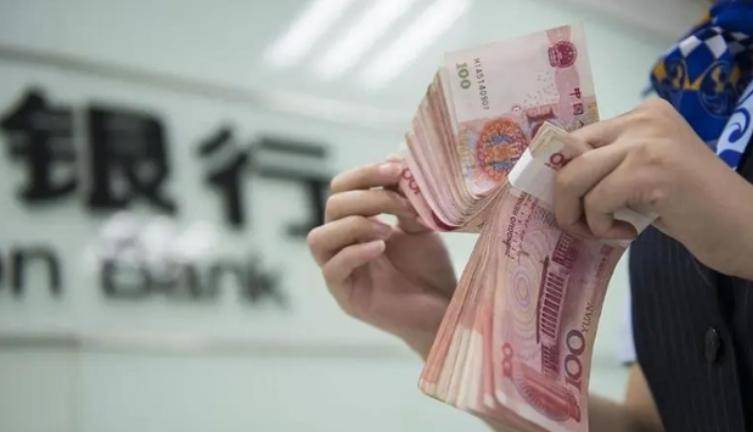
税务部门曝光6起加油站偷税案件 其中一起拒不执行税务机关处理决定被追究刑事责任
Jing Ji Guan Cha Bao· 2025-09-28 09:20
Core Insights - The article highlights the exposure of six tax evasion cases involving gas stations across various regions in China, emphasizing the legal actions taken by tax authorities against these entities [1][2][3] Summary by Categories Tax Evasion Cases - Six gas stations were identified for tax evasion, including locations in Jilin, Henan, Shanxi, Jiangsu, Jiangxi, and Hunan [1] - The cases involved various methods of tax evasion, such as using third-party payment software, transferring funds to personal accounts, and destroying sales logs to hide revenue [1] Financial Impact - From January to August 2025, tax authorities investigated 3,042 high-risk gas stations, recovering a total of 2.943 billion yuan in taxes, late fees, and fines [1] - Specific cases included a gas station in Longzheng that evaded 3.0812 million yuan in taxes and was fined a total of 6.6245 million yuan [2] - Another case involved a gas station in Changchun that evaded 7.6381 million yuan in taxes, resulting in a total penalty of 14.3053 million yuan [3] Legal Consequences - One gas station faced criminal charges for refusing to comply with tax authority decisions, highlighting the serious legal repercussions of tax evasion [2] - Legal experts noted that failure to pay taxes after a tax authority's notification could lead to criminal charges under Chinese law [3]
这类车票不能计入差旅费!
蓝色柳林财税室· 2025-09-14 11:16
Core Viewpoint - The article clarifies the types of transportation tickets that cannot be classified as travel expenses for reimbursement purposes, emphasizing the distinction between travel expenses and other categories such as employee education expenses and welfare expenses [2][3][8]. Summary by Sections Definition of Travel Expenses - Travel expenses refer to costs incurred by employees when traveling for business purposes outside their regular work location, including intercity transportation, accommodation, meal allowances, and local transportation [3]. Tax Deduction for Transportation Costs - As of April 1, 2019, taxpayers can deduct the input tax from the output tax for domestic passenger transport services purchased [4]. Conditions Where Transportation Tickets Cannot Be Classified as Travel Expenses - **Condition 1**: Tickets for employees attending external training cannot be classified as travel expenses but rather as employee education expenses, as per the relevant regulations [7][8]. - **Condition 2**: Tickets for employees returning home during holidays cannot be classified as travel expenses but are considered welfare expenses, according to the guidelines on employee welfare funds [9][12]. - **Condition 3**: Tickets reimbursed for clients' business trips cannot be classified as travel expenses but fall under business entertainment expenses, as defined in tax enforcement practices [13][14]. Relevant Regulations - The article references several regulations that govern the classification of expenses, including the Ministry of Finance and State Taxation Administration guidelines on employee education and welfare expenses [15].

刘晓庆被举报偷税漏税,官方公布调查结果!本人发声!
证券时报· 2025-08-08 03:55
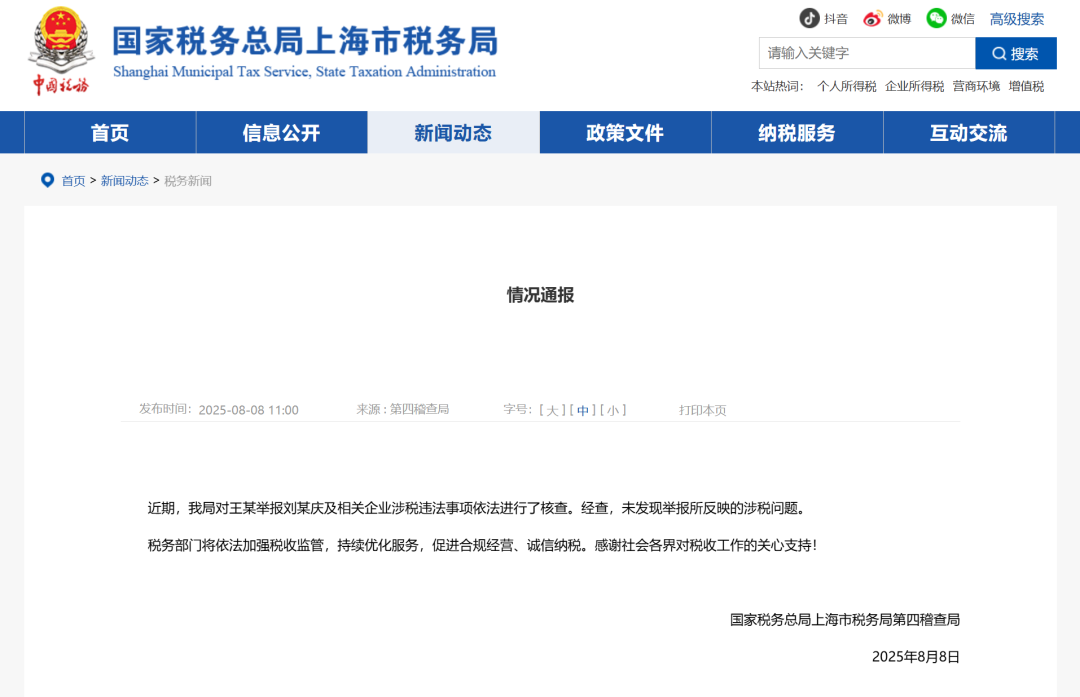
Core Viewpoint - Liu Xiaoqing has been cleared of tax-related allegations following an investigation by the Shanghai Municipal Taxation Bureau, which found no evidence supporting the claims made against her [3][8]. Group 1: Investigation Findings - The Shanghai Municipal Taxation Bureau's Fourth Inspection Bureau conducted an investigation based on a report from an individual named Wang, which alleged tax violations by Liu Xiaoqing and her associated enterprises. The investigation concluded that no tax issues were found [3]. - Liu Xiaoqing publicly stated that she has always complied with tax laws and emphasized the importance of lawful tax payment as a civic duty [6]. Group 2: Allegations Details - Prior reports indicated that the allegations involved Liu Xiaoqing allegedly converting a loan of 3.3 million yuan into personal income through her small enterprise, Shanghai Yixi Cultural Media Center, by issuing invoices with a 6% VAT rate to evade over 27% personal income tax [8]. - The enterprise was accused of lacking a physical operating location, employees, and social security payment records, suggesting potential invoice fraud to avoid taxes [8].

刘晓庆被举报偷税漏税,官方通报:未发现举报所反映的涉税问题!刘晓庆最新发声
Mei Ri Jing Ji Xin Wen· 2025-08-08 03:33
Group 1 - The Shanghai Municipal Taxation Bureau confirmed that an investigation into tax-related allegations against Liu Xiaoqing and related enterprises found no evidence of wrongdoing [1][4] - Liu Xiaoqing publicly stated her commitment to lawful tax practices and expressed gratitude for the support from the community regarding tax matters [1][5] - The allegations included claims that Liu Xiaoqing's company improperly converted a loan of 3.3 million yuan into personal income while evading higher personal income tax rates [5] Group 2 - The tax authority emphasized its ongoing efforts to enhance tax regulation and promote compliance among taxpayers [1] - Liu Xiaoqing denied any acquaintance with the accuser and labeled the allegations as malicious [5] - The tax authority's investigation was initiated following a report from an individual named Wang, who alleged tax evasion practices by Liu Xiaoqing's enterprise [4][5]
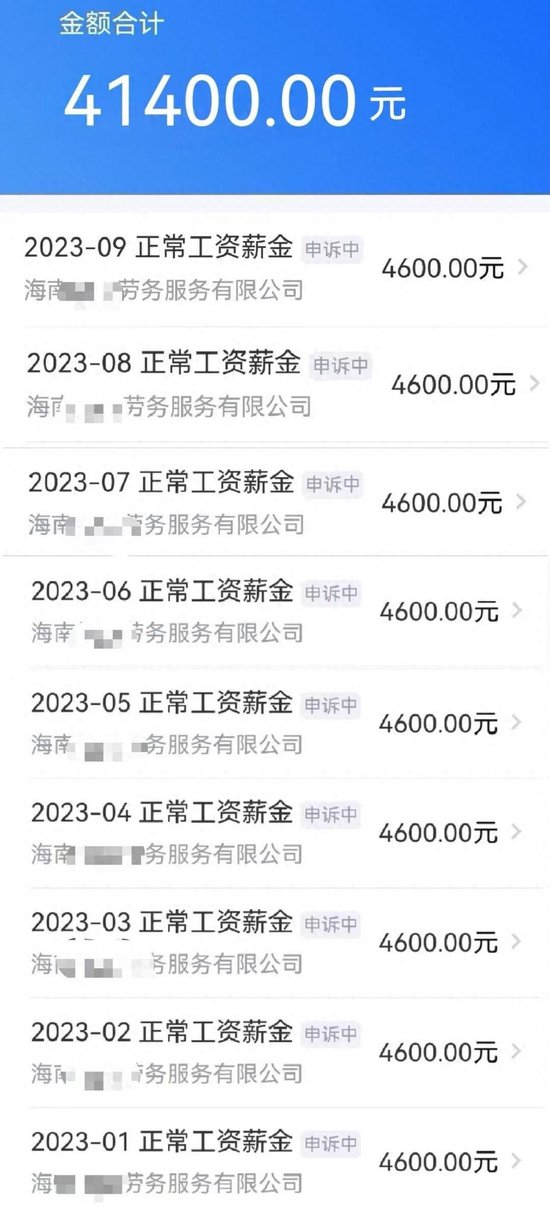
没工作却在领工资?男子投诉个人信息被冒用,海南税务部门认定情况属实但问题仍未解决
Xin Lang Cai Jing· 2025-06-12 05:27
Core Points - A case of identity theft involving Mr. Wang from Chifeng, Inner Mongolia, who discovered that his personal information was used by a labor service company in Hainan to falsely report wages and evade taxes [1][3] - The labor service company was identified as a non-compliant entity by the Haikou National High-tech Industrial Development Zone Tax Bureau, which confirmed the validity of Mr. Wang's claims and removed his income and tax declaration records from the system [1][9] - Mr. Wang's identity was allegedly misused to create fictitious salary records amounting to over 100,000 yuan (approximately 15 million USD) over a two-year period [1][3] Company and Industry Summary - The labor service company in question has been recognized as a non-normal entity as of March 1, 2024, indicating potential issues with compliance and legitimacy in its operations [1][9] - The case highlights the risks associated with identity theft in the labor sector, where personal information can be exploited for fraudulent financial activities [3][4] - The involvement of tax authorities and the judiciary underscores the regulatory framework in place to address such fraudulent activities, with the case being transferred to the appropriate jurisdiction for further legal proceedings [7][9]
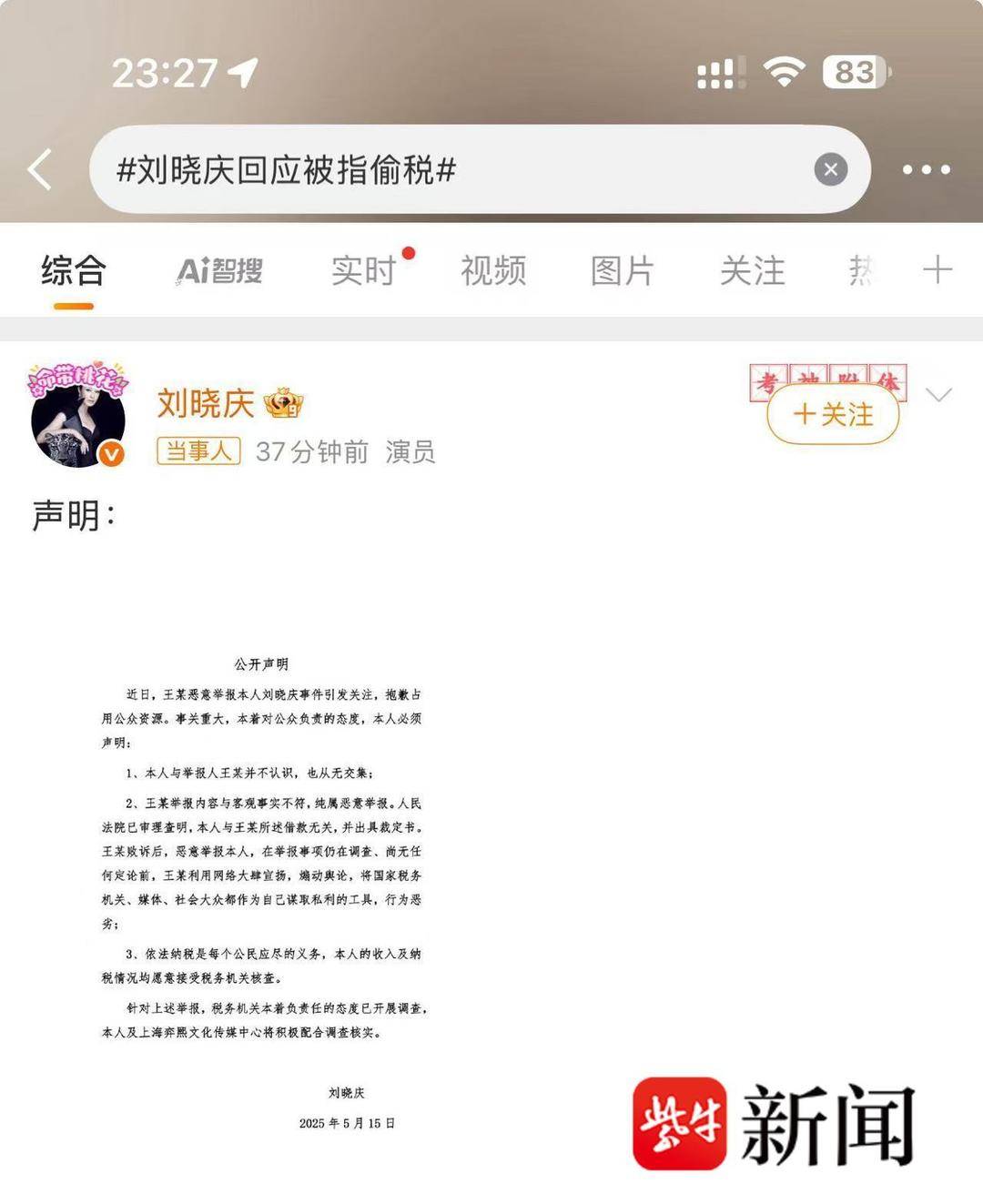
刘晓庆发文回应被举报偷税,举报偷税人申请追加刘晓庆债务被驳回
Yang Zi Wan Bao Wang· 2025-05-16 07:58
Core Viewpoint - The recent tax evasion allegations against Liu Xiaoqing have sparked significant public interest, with Liu denying the accusations and asserting that the claims are malicious and unfounded [1][3][5]. Group 1: Allegations and Responses - Liu Xiaoqing publicly denied the tax evasion allegations, stating that the court has confirmed she is not related to the loan mentioned by the accuser, Wang [1][7]. - Wang claims that he was informed by Liu's business partner about financial troubles within Liu's jewelry company, which led to a loan agreement [1][9]. - Liu emphasized her commitment to lawful tax payment and expressed willingness to cooperate with tax authorities for verification [5][7]. Group 2: Legal Proceedings - Wang has initiated legal action against Liu's jewelry company for loan repayment, with a court ruling in his favor regarding the loan of 3 million yuan [9][12]. - The court has also ordered Liu's jewelry company to cease using her name and likeness in its branding and marketing, along with compensating her for damages [14]. - Recent reports indicate ongoing investigations by the Shanghai tax authority into the allegations made by Wang against Liu and her associated enterprises [16][18].
刘晓庆回应被举报涉嫌偷漏税!
证券时报· 2025-05-15 15:42
Core Viewpoint - The article discusses the recent allegations against actress Liu Xiaoqing regarding tax evasion, highlighting her denial of the accusations and the legal context surrounding the case [1][3][5]. Group 1: Allegations and Response - Liu Xiaoqing issued a statement denying any connection with the accuser, Wang, and labeled the allegations as malicious [1][3]. - The court has ruled that Liu Xiaoqing is not related to the loan mentioned by Wang, who lost the case and subsequently made the allegations [3][5]. - Liu Xiaoqing expressed her willingness to cooperate with tax authorities for an investigation into her income and tax payments [3][5]. Group 2: Historical Context - The allegations have reignited public interest in Liu Xiaoqing's past tax issues, including a significant tax evasion case in 2002 where she was detained for 422 days [6]. - Liu Xiaoqing's previous company was found guilty of tax evasion exceeding ten million yuan, leading to her sister-in-law's imprisonment [6]. - The current allegations suggest that Liu Xiaoqing has a history of tax-related penalties, indicating a pattern of legal issues regarding taxation [6].

刚刚,刘晓庆“逃税”举报人发声,透露更多内幕
凤凰网财经· 2025-05-15 14:21
Core Viewpoint - Liu Xiaoqing is embroiled in a tax evasion scandal, with allegations of tax fraud involving her jewelry company and a loan of 3.3 million yuan [1][2][5]. Group 1: Allegations and Legal Proceedings - A citizen named Wang reported Liu Xiaoqing for suspected tax evasion, leading to an investigation by the Shanghai Taxation Bureau [2][5]. - The allegations involve a loan of 3.3 million yuan from Liu Xiaoqing's jewelry company, which was allegedly transferred to her personal account under the guise of an endorsement fee [5][6]. - Liu Xiaoqing's jewelry company has faced multiple lawsuits related to borrowing issues, with a recent court ruling ordering the company to repay 3.6599 million yuan [10][13]. Group 2: Company Background and Financial Issues - Liu Xiaoqing's jewelry company was established in November 2018, with a registered capital of 10 million yuan, and has been facing financial difficulties, including employee salary issues [7][8]. - The company was listed as a tax abnormal entity by the tax authorities, which can lead to penalties and restrictions on tax filings [8][9]. - Liu Xiaoqing has previously been involved in a tax evasion case in 2002, which resulted in her being detained for 422 days [17]. Group 3: Current Developments and Public Response - As of the latest updates, Liu Xiaoqing has not publicly responded to the allegations, and her jewelry company has been reported to be in a state of operational irregularity [4][18]. - The ongoing investigation and negative publicity may impact Liu Xiaoqing's current television projects, raising concerns about potential cancellations or withdrawals [20].