
减量提质

Search documents
2025剧集年终总结:剧王缺席,反而是好事?
3 6 Ke· 2025-12-21 23:25
Core Insights - The 2025 Chinese drama market has shifted away from a single dominant "king" drama, with multiple series capturing attention across different audience segments [3][22] - The overall trend indicates a diversification of viewership and a more competitive landscape among top dramas, with no single series achieving overwhelming popularity [3][6] Market Performance - In 2025, the average viewership for top dramas ranged from 4.2 million to 6.8 million, with "Bai Huai" and "Cang Hai Chuan" leading at 6.7827 million and 6.6457 million respectively, showing a close competition [5][6] - The gap in viewership between the top-ranked dramas and others has narrowed, indicating a more balanced market where multiple series can thrive [6][10] Audience Engagement - The top dramas of 2025 displayed a clear stratification in audience ratings, with scores ranging from 5.3 to 8.0 on Douban, reflecting a diverse range of viewer preferences [8][10] - High-quality productions and engaging narratives are essential for maintaining long-term viewer loyalty, while the ability to spark discussions and controversies has become crucial for rapid popularity [8][21] Genre Trends - The distribution of genres among top dramas shows a near-equal split between historical and contemporary themes, with both moving towards more niche and specialized content [10][12] - Traditional tropes in historical dramas are declining, giving way to more complex narratives that incorporate elements of intrigue, suspense, and character development [10][19] Platform Strategies - iQIYI led the market with five entries in the top 10, focusing on suspense and reality genres to enhance its brand value [12] - Youku successfully positioned itself in the male-oriented and hardcore genre segments with four top entries, strengthening its brand identity [12] - Tencent Video's strategy revolves around capturing social sentiments and creating discussions around its dramas, exemplified by "Xu Wo Yao Yan" [14] Industry Evolution - The industry is moving towards a "reduce quantity, improve quality" approach, concentrating resources on fewer projects with clear potential for success [15][17] - Recent regulatory changes have provided more creative freedom for long-form narratives, allowing for deeper storytelling and character development [17][19] Future Outlook - The 2026 market is expected to focus on grand narratives and complex character portrayals, with historical and period dramas seen as promising avenues for success [26] - Upcoming projects are anticipated to blend contemporary themes with historical contexts, aiming to resonate with collective audience sentiments [23][25]






2025年,消失了200多家村镇银行
经济观察报· 2025-12-21 04:15
Core Viewpoint - The article highlights the accelerated trend of mergers and acquisitions among rural banks in China, with over 200 banks being absorbed or acquired since 2025, indicating a significant increase compared to 2024 [2]. Group 1: Mergers and Acquisitions - Since 2025, more than 135 rural banks have been absorbed and over 85 have been acquired, totaling over 200, which marks a substantial rise from 2024 [2]. - By the end of 2024, the total number of rural banks in China was 1,538, a decrease of 98 from the end of 2023 [2]. - Regions such as Sichuan and Hubei have seen over 20 rural banks absorbed or acquired, while provinces like Hunan, Guangdong, Hainan, and Hebei have seen more than 10 [2]. Group 2: Reform Models - The main models for the mergers and acquisitions of rural banks are "village to branch" and "village to division," with local rural commercial banks often initiating the absorption [4]. - Notably, major state-owned banks, including ICBC and ABC, have begun participating in these acquisitions, with ICBC being the first to initiate a "village to branch" acquisition [4][5]. - ICBC's acquisition of Chongqing Bishi Rural Bank was completed in September 2025, marking a significant step for state-owned banks in this sector [4]. Group 3: Financial Health and Support - State-owned banks are currently exhibiting stable financial indicators, and their involvement in rural bank reforms is expected to have minimal impact on their operations [5]. - Regulatory authorities are likely to provide substantial policy support to state-owned banks participating in the reform of rural financial institutions [5]. Group 4: Bankruptcy Cases - The article notes that while rural banks have shown weaknesses in risk control, bankruptcies are rare, with only two rural banks reported to have gone bankrupt by 2025 [7][8]. - Dalian Jinzhou Lianfeng Rural Bank was approved for bankruptcy proceedings in July 2025, becoming the second rural bank to do so [8]. - The first rural bank to declare bankruptcy was Liaoning Taizihe Rural Bank, which suffered significant losses due to fraudulent loans [11]. Group 5: Structural Reforms - The focus for 2025 is on the orderly advancement of rural bank reforms to mitigate risks, especially in economically weaker regions where local banks face urgent challenges [13]. - The China Banking Association's report indicates that rural banks are undergoing structural reorganization through mergers, acquisitions, and dissolutions to improve quality and reduce risks [13]. - In 2024, the number of rural banks decreased by 99, accounting for nearly 50% of the total reduction in banking institutions that year [13]. Group 6: Opportunities for Initiating Banks - For initiating banks, the reform and restructuring of rural banks can present new opportunities, as seen with Changshu Bank, which has actively absorbed rural banks [15]. - The bank's chairman noted that the high-quality development of rural banks offers new growth opportunities and helps optimize resource allocation [15]. - The central economic work conference emphasized the need for small financial institutions to reduce quantity while improving quality, indicating a strategic direction for the sector [15].

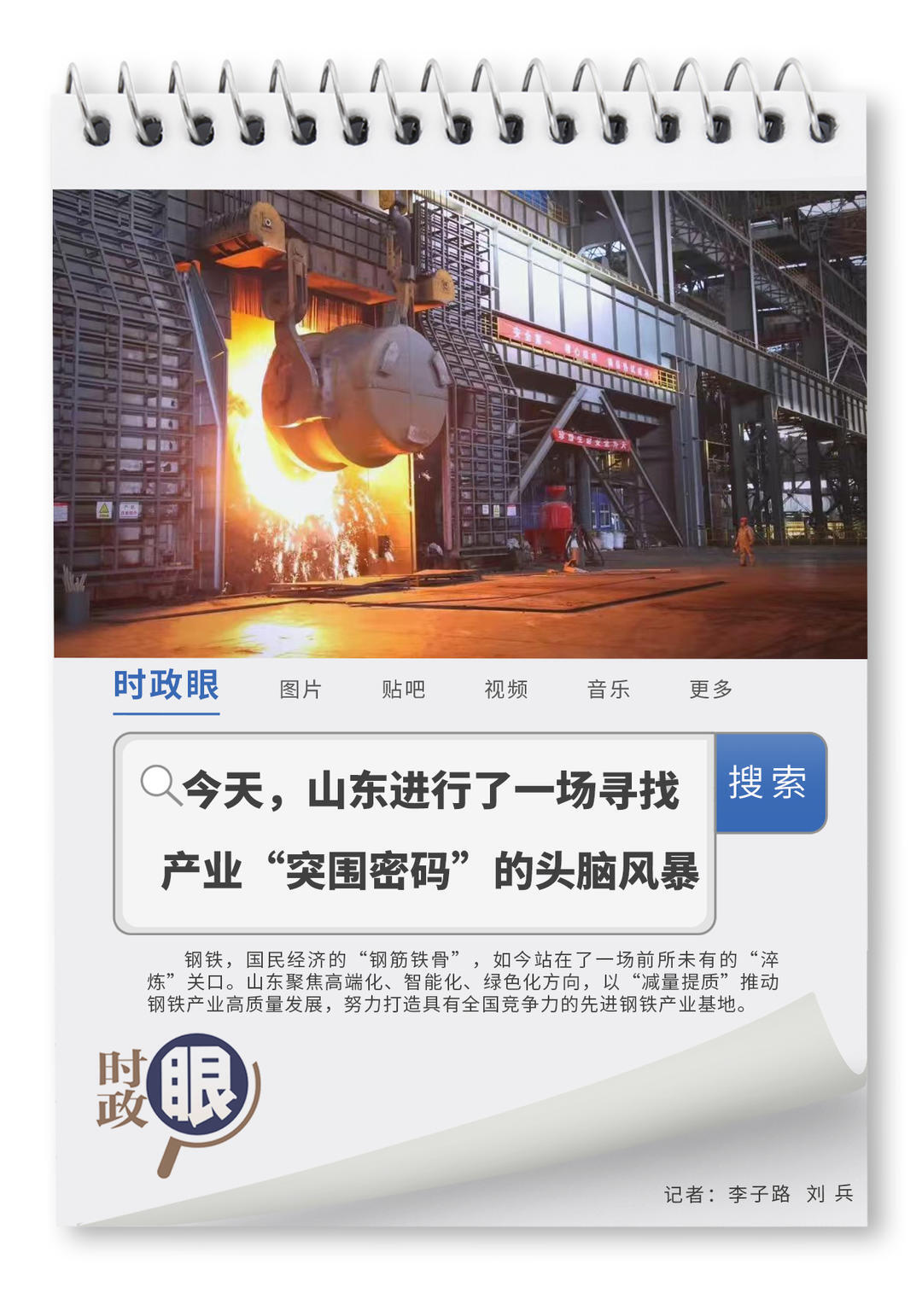
时政眼|今天,山东进行了一场寻找产业“突围密码”的头脑风暴
Da Zhong Ri Bao· 2025-11-05 11:18
Core Viewpoint - The Shandong steel industry is at a critical juncture, focusing on high-end, intelligent, and green development to enhance competitiveness and address structural challenges in the sector [2][6]. Group 1: Industry Challenges - The steel industry is facing unprecedented challenges, with domestic steel consumption reaching a ceiling and traditional demand from construction declining [3]. - The industry is struggling with low profits, with national profits at 830.3 billion yuan for the first seven months of the year, indicating instability in the development foundation [4]. - There is a significant mismatch between excess low-end capacity and insufficient high-end supply, exacerbated by global trade tensions [3]. Group 2: Strategic Directions - The Shandong steel industry is adopting a "reduction and quality improvement" strategy, as outlined in the national plan for 2025-2026, aiming for an average annual growth of around 4% in industry value added [2][6]. - The focus is on three key areas: high-end products, intelligent manufacturing, and green transformation, which are seen as essential for the industry's future [7][8]. - Companies are encouraged to innovate and enhance product quality to gain market share, moving away from low-end production [7]. Group 3: Technological and Environmental Initiatives - Digital transformation and green low-carbon initiatives are identified as critical drivers for the industry's evolution, with companies like Yongfeng Group aiming to transition from manufacturing to service-oriented models [5][6]. - The industry must comply with stringent environmental regulations, with over 80% of steel production capacity required to achieve ultra-low emissions by the end of 2025 [5][7]. - The integration of AI, industrial internet, and big data into steel production processes is expected to enhance efficiency and reduce costs [7]. Group 4: Future Outlook - The transformation of the Shandong steel industry serves as a benchmark for traditional industries, demonstrating that embracing change can lead to successful upgrades and sustainable growth [8][9]. - Other traditional sectors in Shandong, such as chemicals and textiles, are also undergoing similar transformations driven by new technologies and concepts [9].

中钢国际工程技术股份有限公司2025年第三季度报告
Shang Hai Zheng Quan Bao· 2025-10-29 21:31
Core Viewpoint - The company reported a significant decline in third-quarter revenue and net profit due to a strategic shift in the domestic steel industry towards "reducing quantity and improving quality," leading to a 31.14% decrease in revenue and a 40.46% drop in net profit compared to the same period last year [5]. Financial Performance - The company’s third-quarter operating revenue decreased by 31.14% year-on-year [5]. - The net profit attributable to shareholders fell by 40.46% compared to the same quarter last year [5]. - The financial report for the third quarter was not audited [3][7]. Corporate Governance - The board of directors and senior management confirmed the accuracy and completeness of the quarterly report, taking legal responsibility for any misstatements or omissions [2][5]. - The board meeting to approve the third-quarter report was held on October 29, 2025, with all members present [8][9]. Project and Order Status - As of the reporting period, the company had no significant awarded but unsigned orders [22]. - The progress of major unfinished projects was affected by national policy adjustments and social issues in overseas locations, leading to delays [24][26].

南农晨读 | 十字花科 聚势绽放
Nan Fang Nong Cun Bao· 2025-10-29 01:00
Group 1 - Guangdong Province has announced a list of pilot projects for modern agricultural industry support, with a total funding of 195 million yuan for the years 2024-2025 [3][5][6] - The pilot projects involve eight initiatives across seven cities in Guangdong, aimed at enhancing agricultural development [4][5] - The public announcement period for these projects is from October 24 to October 30, 2025 [4][5] Group 2 - The 7th World Hakka Business Conference will be held in Meizhou from November 23 to 25, 2023, focusing on global business collaboration for high-quality development [9][10][11] - The conference will feature 11 activities aimed at attracting investment, regional cooperation, and cultural exchange [10][11][12] Group 3 - The 21st China International Grain and Oil Expo will take place from October 30 to November 1, showcasing the ecological advantages of Qingyuan's silk rice [16][17][19] - Qingyuan silk rice is positioned as a key component of Guangdong's agricultural industry, highlighting its brand development at the expo [18][19][20] Group 4 - The citrus industry in Guangxi is undergoing a transformation, with a projected reduction in planting area from 9 million mu to a stable range of 4.5 to 5 million mu by 2025 [22][24][25] - This shift represents a move towards quality improvement in the citrus sector [24][25] Group 5 - The "Xingning Pigeon" brand is emerging as a significant player in the meat pigeon market, integrating supply chains and innovating in pre-prepared dishes [28][35][36] - This brand is seen as a model for driving local economic development and rural revitalization through agricultural innovation [36][37] Group 6 - Zhanjiang is recognized as a core production area for shrimp, with a focus on both breeding and processing, and is expanding its supply chain globally [39][42][43] - A seafood promotion event was held in Guiyang, showcasing Zhanjiang's strengths in the shrimp industry [40][43]

广西柑桔: 一场关于生死的冷思考
Nan Fang Nong Cun Bao· 2025-10-28 04:03
Core Viewpoint - The Guangxi citrus industry is facing significant challenges, transitioning from a period of rapid growth to one of potential decline, driven by overproduction, disease threats, and market volatility [4][5][20]. Industry Status: From Glory to Dilemma - Guangxi citrus, once thriving, has seen its planting area peak at over 9 million acres, now expected to stabilize between 4.5 to 5 million acres by 2025, marking a shift towards "reduction and quality improvement" [4][19]. - The rise of Guangxi's citrus industry coincided with the decline of Guangdong's due to Huanglongbing disease, leading to a rapid market capture [8][10]. - Prices for sugar oranges have plummeted from a peak of 8 yuan per jin in 2017 to fluctuating between 1-2 yuan per jin from 2018 to 2022, causing many farmers to neglect orchard management [13][14][19]. - The industry is at a crossroads, with structural overcapacity, disease threats, and a lack of post-harvest processing and brand influence posing significant risks [20][23]. Huanglongbing: The Silent Battle in Orchards - Huanglongbing disease has led to widespread tree removals, with estimates suggesting a reduction of at least 1 million acres from peak levels [26]. - The disease, spread by psyllids, causes yellowing leaves and stunted fruit, leading to tree death within 3-5 years [28]. - Current prevention methods are inadequate, relying on sterile seedlings, insecticides, and tree removal, with no effective treatment available [31][32]. - The incidence of Huanglongbing has increased by 12% year-on-year, with some orchards reporting over 30% infection rates [34]. Structural Issues: The Perils of Monoculture - The Guangxi citrus industry is increasingly characterized by monoculture, heightening market risks and disease spread [39][56]. - The concentration of late-maturing varieties has led to market pressure, with over 70% of the crop falling into this category [57]. - Experts warn that the current trend of planting popular varieties like Jin Qiu sugar oranges may lead to a repeat of past mistakes seen with sugar oranges and Wokan [58]. Path to Breakthrough: Winning Through Quality - Despite challenges, Guangxi's citrus industry retains unique advantages, including a favorable climate for year-round supply and a rich variety of cultivars [68]. - The government is investing in disease control and seedling subsidies, with a 300 million yuan fund allocated for 2025 [69]. - Experts recommend cautious expansion, prioritizing the renovation of old orchards, and focusing on high-quality, early-maturing varieties [70]. - The future direction of the industry emphasizes quality over quantity, scientific planting over blind following trends, and long-term planning over short-term profits [75].
村镇银行如今还能否发挥“鲶鱼效应”?
Jin Rong Shi Bao· 2025-08-21 04:56
Core Insights - The reform of village banks characterized by "reduction" is accelerating in 2025, with over a hundred village banks being merged, acquired, or dissolved this year alone, surpassing the total number for 2024 [1][4] - The journey of village banks has seen a shift from rapid establishment to a focus on quality and efficiency, driven by regulatory changes and market dynamics [5][6] Summary by Sections Reform Background - The reform of village banks began to show signs in 2018 with the introduction of investment management-type village banks and the "multi-county one bank" model aimed at optimizing management and enhancing financial services in underdeveloped areas [2][3] - The establishment threshold for village banks is relatively low, leading to a general characteristic of low total capital, with many banks having assets below 1 billion RMB [3] Management and Structural Changes - The investment management model allows for better resource allocation and management efficiency, addressing the limitations of small-scale operations [3][4] - The number of village banks has been decreasing since 2022, with a notable increase in mergers and acquisitions as part of the reform strategy [4][5] Market Dynamics and Challenges - Village banks were initially established to invigorate rural financial markets, but some have deviated from their intended purpose, impacting their growth potential [6][7] - The competitive landscape has shifted, with larger banks entering rural markets, although village banks primarily face competition from rural credit institutions [8] Future Directions - The ongoing reforms aim to optimize the financial ecosystem in rural areas, with a focus on efficient resource allocation through mergers [8][9] - There is a need for tailored management systems for village banks to enhance their operational effectiveness and adapt to local market conditions [9][10]
“减量提质”成中小银行发展趋势
Jing Ji Wang· 2025-07-31 06:32
Core Insights - The recent downgrades of the credit ratings of Shanxi Yuci Rural Commercial Bank and Hunan Changde Rural Commercial Bank reflect significant operational pressures and deteriorating asset quality in the banking sector [2][5] - The trend of "reducing quantity and improving quality" has emerged as a key strategy for small and medium-sized banks to enhance governance and pursue differentiated operations based on regional economic characteristics [9][10] Rating Downgrades - On July 17, China Chengxin International downgraded Hunan Changde Rural Commercial Bank's credit rating from AA to A+ due to rising non-performing loan rates and asset quality concerns, with non-performing loans exceeding 4.8% by the end of 2024 [2][3] - The bank's overdue loans rose to 11.4%, and its provision coverage ratio fell to around 95%, below regulatory requirements [2] - Shanxi Yuci Rural Commercial Bank also faced a downgrade from A+ to BB- earlier in May, with a reported non-performing loan rate soaring to 34.43% and a capital adequacy ratio dropping to -21.26% [3][5] Market Reactions - The auction of large bank shares has seen a lack of interest, with significant shares of Langfang Bank failing to attract bids despite being offered at a discount [6][7] - Multiple small and medium-sized banks have had their shares listed for judicial auction, often at prices significantly below their assessed values, indicating a cooling market for bank equities [6][7] Industry Trends - The banking sector is undergoing adjustments amid economic transformation, with limited prospects for profit growth and increased operational challenges for small banks [7][8] - The number of small banks exiting the market has surged, with 184 banks merging or dissolving by May, a sevenfold increase from the previous year [8] - Regulatory reforms and market-driven exits are accelerating, with a focus on enhancing the resilience of small financial institutions [8] Strategic Recommendations - Small and medium-sized banks are encouraged to improve corporate governance, enhance risk management, and develop differentiated business strategies to achieve high-quality growth [9][10] - Emphasizing the importance of effective information disclosure and innovative financial products will be crucial for these banks to adapt to market demands [10]

钢铁行业面临“减量提质”关键转型期
Zhong Guo Chan Ye Jing Ji Xin Xi Wang· 2025-05-19 22:26
Core Viewpoint - The steel industry is currently facing a challenging environment characterized by excess supply over demand, necessitating a shift towards production reduction and quality improvement to enhance overall efficiency and profitability [1][2][3]. Group 1: Industry Performance - In Q1 2025, China's crude steel production reached 259 million tons, a year-on-year increase of 0.6%, while apparent consumption fell to 230 million tons, down 1.2% year-on-year [1]. - The financial performance of steel enterprises showed improvement, with total revenue of 1.436 trillion yuan, a decrease of 6.61%, and total profits of 21.583 billion yuan, a year-on-year increase of 108% [2]. - The industry is experiencing a weak balance in the market, with expectations of low demand, low prices, and low profitability in 2025 [6]. Group 2: Strategic Directions - The industry is transitioning from a phase of "incremental development" to "reduction in quantity and optimization of stock," emphasizing the need for strategic discipline to avoid overproduction [4][5]. - The Chinese steel industry aims to maintain a long-term position as the largest domestic steel market, focusing on quality over quantity and adhering to the "three determinations and three non-pursuits" principle [3][5]. - Companies are encouraged to innovate and diversify their product offerings, such as developing advanced materials and energy-efficient steel, to adapt to market changes and enhance competitiveness [7]. Group 3: Future Outlook - By 2035, China's crude steel production is projected to stabilize between 800 million to 900 million tons, with a focus on controlling new capacity and optimizing existing resources [5]. - The industry is expected to face ongoing challenges from supply-demand imbalances, necessitating a commitment to technological innovation and green transformation [6]. - The steel sector is urged to leverage artificial intelligence and digital technologies to facilitate its transition towards high-quality development and structural adjustments [6][7].
钢铁业进入减量提质发展新阶段
Jing Ji Ri Bao· 2025-05-18 21:53
Core Viewpoint - The steel industry in China is showing signs of recovery with improved profitability and stable production, supported by favorable economic conditions and strategic initiatives by companies [1][2][3]. Group 1: Industry Performance - In the first quarter, the total profit of the black metal smelting and rolling industry reached 7.51 billion yuan, turning from loss to profit year-on-year [1]. - Key steel companies reported significant profit increases: Baosteel achieved a net profit of 2.434 billion yuan, up 26.4% year-on-year; CITIC Special Steel reported 1.384 billion yuan, up 1.76%; Nanjing Steel's profit was 578 million yuan, up 4.42%; and Hualing Steel saw a 43.55% increase to 562 million yuan [2]. - The average profit margin for key steel enterprises was 1.5%, an increase of 0.82 percentage points year-on-year, with total profits for key member enterprises reaching 21.583 billion yuan, a year-on-year increase of 108% [3]. Group 2: Cost and Pricing Trends - The average sales profit margin for steel products increased by 0.67 percentage points year-on-year, while operating costs for key steel enterprises decreased by 9.6% [2]. - Steel prices showed a slight downward trend, with raw material costs decreasing significantly: iron ore procurement costs fell by 19.26%, and coking coal costs dropped by 33.32% [3]. Group 3: Environmental Initiatives - The steel industry is focusing on green development, with 189 steel enterprises completing or partially completing ultra-low emission transformations, covering a crude steel capacity of approximately 5.91 billion tons [4]. - The Ministry of Ecology and Environment has included the steel industry in the national carbon emissions trading market, marking the first expansion since the power sector was included in 2021 [5][6]. Group 4: Future Outlook - The steel industry is entering a new phase of quality improvement and reduction in quantity, with a need for continuous efforts to stabilize and enhance operations [7]. - The Ministry of Industry and Information Technology has issued guidelines for the steel industry to promote high-quality development, focusing on advanced, intelligent, green, efficient, safe, and specialized growth [8].