
出口管制穿透性规则

Search documents
商务部新闻发言人就美方暂停实施出口管制穿透性规则答记者问
Shang Wu Bu Wang Zhan· 2025-11-11 14:05
有记者问:美东时间11月10日,美国商务部产业与安全局在《联邦纪事》上发布公告,宣布暂停实施出 口管制穿透性规则一年。请问商务部对此有何评论?一年后是否还会延期? 答:中方注意到,美方宣布于2025年11月10日至2026年11月9日暂停实施出口管制穿透性规则,即在此 期间,被列入美国出口管制"实体清单"等制裁清单的企业,其持股超过50%的关联企业将不会因穿透性 规则被追加同等出口管制制裁。这是美方落实中美吉隆坡经贸磋商共识的重要举措。对于暂停一年后的 安排,双方还将会继续讨论。 中方愿与美方一道,秉持相互尊重、平等协商的原则,加强对话交流,妥善管控分歧,共同为促进两国 企业互利合作、保障全球产业链供应链安全稳定创造良好条件。 (文章来源:商务部网站) ...
被穿透性规则反噬,美企不忍了
Huan Qiu Shi Bao· 2025-10-21 22:57
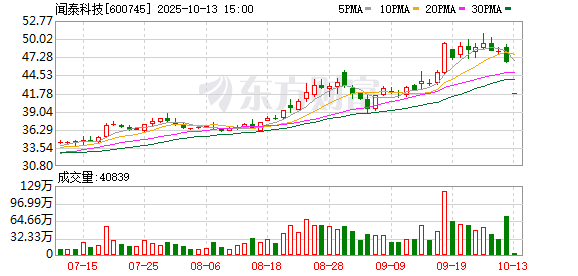
Core Viewpoint - The U.S. export control penetration rules are causing significant backlash, hindering billions of dollars in U.S. export activities and prompting countries like China to remove U.S. companies from their supply chains [1][2]. Group 1: Impact on U.S. Companies - A lobbying group consisting of major U.S. companies like Oracle, Amazon, and ExxonMobil is urging the U.S. government to suspend the new export control rules, which they claim are counterproductive to U.S. trade policy [1]. - The National Foreign Trade Council highlighted that the rules contradict the government's goals of reducing trade deficits and increasing global exports [1][2]. - The rules have led to a backlog of thousands of export license applications worth billions of dollars, particularly affecting exports to China [2]. Group 2: Reactions from China - The Chinese Ministry of Commerce criticized the U.S. rules as an abuse of export controls that severely disrupts international trade order and harms legitimate rights of affected enterprises [2]. - The Ministry further stated that the expansion of controlled entities under these rules has impacted thousands of Chinese companies [2]. Group 3: Long-term Consequences - Experts suggest that the U.S. rules may damage the interests of American high-tech companies reliant on the Chinese market, while simultaneously accelerating the development of independent supply chains within China [3].
美国商业游说团体敦促美政府停止出口管制穿透性规则,中方此前已驳斥该规则
Huan Qiu Wang· 2025-10-21 10:53
Core Viewpoint - The U.S. export control measures are putting significant pressure on American companies, prompting calls for the government to reconsider these regulations, which could lead to U.S. firms being excluded from global supply chains [1][3]. Group 1: U.S. Export Control Measures - The U.S. Department of Commerce issued new export control rules on September 29, which impose similar sanctions on subsidiaries with over 50% ownership in companies listed on the U.S. "Entity List" [3]. - The National Foreign Trade Council (NFTC) expressed that these regulations could lead to the immediate suspension of billions of dollars in U.S. exports, contradicting the government's goals of reducing trade deficits and increasing global exports [3]. - NFTC's letter indicates a significant level of opposition from the private sector regarding these controversial regulations [3]. Group 2: Response from China - The Chinese Ministry of Commerce criticized the U.S. export control rules as a severe violation of legitimate rights of affected enterprises and a disruption to international trade order [4]. - China urged the U.S. to correct its actions and stop the unreasonable suppression of Chinese companies, indicating potential measures to protect its enterprises' rights [4].


301调查、232措施、穿透性规则……美对华单边制裁有何伎俩?
Sou Hu Cai Jing· 2025-10-16 09:56
Core Viewpoint - The recent export control measures by the U.S. Department of Commerce, particularly the "penetrating rules," will significantly impact thousands of Chinese companies, as subsidiaries with over 50% ownership by entities on the U.S. "Entity List" will face the same export restrictions as their parent companies [1][8]. Group 1: U.S. Trade Measures - The U.S. has implemented multiple unilateral trade restrictions, including "301 investigations," "reciprocal tariffs," "penetrating rules," and "232 tariffs," which have escalated trade tensions with China [3][4]. - The "301 investigation" is seen as a symbol of U.S. unilateralism, allowing the U.S. Trade Representative to investigate and impose sanctions on perceived unfair trade practices by other countries [4][5]. - The "reciprocal tariffs" policy, pushed by the Trump administration, aims to enforce equal tariff rates between the U.S. and its trading partners, which has led to higher tariffs for U.S. goods compared to other countries [5][6]. Group 2: Export Control Measures - The newly implemented "50% penetrating rule" requires subsidiaries of sanctioned entities to comply with the same export licensing requirements as their parent companies, further tightening restrictions on China's technology sector [8][9]. - This rule is expected to force many Chinese companies to reassess their global investment strategies and subsidiary structures, potentially leading to adjustments in ownership ratios and supply chain management [8][9]. - The U.S. has also expanded its "Entity List," which prohibits listed companies from engaging in any commercial transactions with U.S. entities, representing a direct attempt to suppress foreign competition [11][12]. Group 3: Impact on Global Trade - The unilateral measures by the U.S. are viewed as detrimental to international trade norms and have been criticized for undermining the stability of global supply chains [1][11]. - The World Trade Organization (WTO) has previously ruled that certain U.S. tariffs, such as those under the "232" measures, violate international trade rules, highlighting the contentious nature of U.S. trade policies [9][10].
闻泰科技的“安世之乱”
2 1 Shi Ji Jing Ji Bao Dao· 2025-10-13 13:51
Core Viewpoint - Wentech Technology faces significant challenges following the Dutch government's directive to freeze its subsidiary, Nexperia, for one year, impacting its operations and leadership structure [2][5][6] Group 1: Company Developments - On October 12, Wentech Technology announced the Dutch government's directive to freeze Nexperia, requiring adjustments to assets and intellectual property [2] - The Dutch court has suspended Zhang Xuezheng from his role as CEO of Nexperia and appointed an independent foreign director with decisive voting rights [5][6] - Wentech Technology has undergone major personnel changes, including the resignation of Zhang Xuezheng's sister and several executives with ODM/OEM backgrounds, shifting leadership to executives from Nexperia [3][4] Group 2: Financial Impact - In 2024, Wentech Technology's ODM/OEM business faced significant setbacks due to being placed on the "entity list," resulting in a revenue of 17.485 billion yuan and a loss of 685 million yuan [7] - The company sold its ODM/OEM business for approximately 4.389 billion yuan to focus entirely on the semiconductor sector, particularly Nexperia [7] Group 3: Regulatory Challenges - The Dutch government's actions are perceived as excessive intervention based on geopolitical biases, with Wentech Technology protesting against what it views as discriminatory treatment of Chinese enterprises [5] - The U.S. Department of Commerce has implemented new export control rules that further complicate Wentech Technology's control over Nexperia, as it is fully owned by Wentech [6] Group 4: Historical Context - Wentech Technology acquired Nexperia between 2017 and 2020, fully purchasing it from a consortium led by Jian Guang Capital [7] - The semiconductor industry has faced challenges, including a chip shortage that has affected pricing and demand, particularly in the automotive sector [8] Group 5: Management Dynamics - The recent freeze on Nexperia was reportedly supported by senior foreign executives, indicating potential internal conflicts regarding management control [10][11] - The involvement of foreign executives in the legal actions against Wentech Technology suggests a complex power dynamic within the company [14]

美国出口管制升级!
国芯网· 2025-09-30 08:00
Core Viewpoint - The article discusses the implications of the new U.S. export control rules, particularly the "penetrating" nature of these regulations, which extend export controls to subsidiaries of companies listed on the U.S. Entity List, significantly impacting global supply chains and international trade dynamics [1][3][4]. Group 1: New Export Control Rules - The new U.S. export control rules state that any subsidiary with over 50% ownership by a company on the U.S. Entity List will automatically face the same export restrictions as the parent company [3]. - This regulation expands the scope of export controls beyond the listed entities to their entire corporate network, aiming to sever the technological access of sanctioned companies through subsidiaries [3][4]. - The rapid implementation of these rules, from draft to enforcement in less than a month, highlights the aggressive stance of the U.S. in controlling technology access [3]. Group 2: Impact on Global Supply Chains - The new rules could potentially bring thousands of companies into the control framework overnight, even if they have not engaged in any violations themselves [4]. - This approach effectively extends U.S. export controls to the global supply chain under the guise of national security, raising concerns about the implications for international trade and economic order [4]. - The Chinese Ministry of Commerce has condemned these actions, stating they severely disrupt international economic order and threaten the stability of global supply chains [1][4].
美国发布出口管制穿透性规则 中国商务部:此举性质极其恶劣
Zhong Guo Xin Wen Wang· 2025-09-29 23:24
Core Viewpoint - The U.S. Department of Commerce has announced new export control rules that impose additional sanctions on subsidiaries of companies listed on the U.S. "Entity List" if they hold more than 50% ownership, which China strongly opposes as a harmful action against its enterprises [1][1]. Group 1 - The new export control rules are seen as an example of the U.S. expanding the concept of national security and misusing export controls [1][1]. - The Chinese Ministry of Commerce claims that these actions severely damage the legitimate rights and interests of affected enterprises and disrupt international trade order [1][1]. - China urges the U.S. to correct its actions and stop the unreasonable suppression of Chinese companies, indicating that it will take necessary measures to protect the legal rights of its enterprises [1][1].
商务部回应美商务部发布出口管制穿透性规则
Xin Hua Wang· 2025-09-29 15:17
Core Viewpoint - The Chinese government strongly opposes the recent export control rules issued by the U.S. Department of Commerce, which impose additional sanctions on subsidiaries of companies listed on the U.S. "Entity List" if they are more than 50% owned by those companies [1] Group 1: U.S. Export Control Rules - The U.S. has introduced new export control rules that extend sanctions to subsidiaries of companies on the "Entity List" based on ownership thresholds [1] - The Chinese government views these rules as an example of the U.S. misusing national security to impose unjust restrictions [1] Group 2: Impact on Chinese Companies - The new rules are said to severely harm the legitimate rights and interests of affected Chinese companies [1] - The Chinese government emphasizes that these actions disrupt international trade order and threaten the stability of global supply chains [1] Group 3: Response from China - The Chinese government urges the U.S. to correct its actions and cease the unreasonable suppression of Chinese enterprises [1] - China plans to take necessary measures to protect the legal rights of its companies [1]
商务部回应美商务部发布出口管制穿透性规则
第一财经· 2025-09-29 13:55
Core Viewpoint - The article discusses the U.S. Department of Commerce's new export control rules that impose additional sanctions on subsidiaries of companies listed on the U.S. "Entity List" if they are more than 50% owned by those companies, highlighting China's strong opposition to these measures [1] Group 1 - The new U.S. export control rules are seen as an example of the U.S. expanding the concept of national security and abusing export controls [1] - The measures are characterized as harmful, significantly damaging the legitimate rights and interests of affected enterprises [1] - The rules are expected to severely impact the international economic and trade order, as well as disrupt the safety and stability of global industrial and supply chains [1] Group 2 - China urges the U.S. to correct its erroneous practices and stop the unreasonable suppression of Chinese enterprises [1] - The Chinese government indicates that it will take necessary measures to firmly protect the legitimate rights and interests of Chinese companies [1]
商务部回应美发布出口管制穿透性规则:美方泛化国家安全、滥用出口管制的又一典型例证
Xin Jing Bao· 2025-09-29 13:54
Core Viewpoint - The Chinese Ministry of Commerce strongly opposes the recent export control rules issued by the U.S. Department of Commerce, which impose additional sanctions on subsidiaries with over 50% ownership by companies listed on the U.S. "Entity List" [1] Group 1 - The new U.S. export control rules are seen as an example of the U.S. expanding the concept of national security and abusing export controls [1] - The Chinese government claims that these actions severely harm the legitimate rights and interests of affected enterprises and disrupt international trade order [1] - The Chinese Ministry of Commerce urges the U.S. to correct its actions and stop the unreasonable suppression of Chinese companies [1]