
区域协同创新

Search documents
乌海市工商联组织商会赴外开展交流合作考察工作
Xin Lang Cai Jing· 2025-12-09 13:36
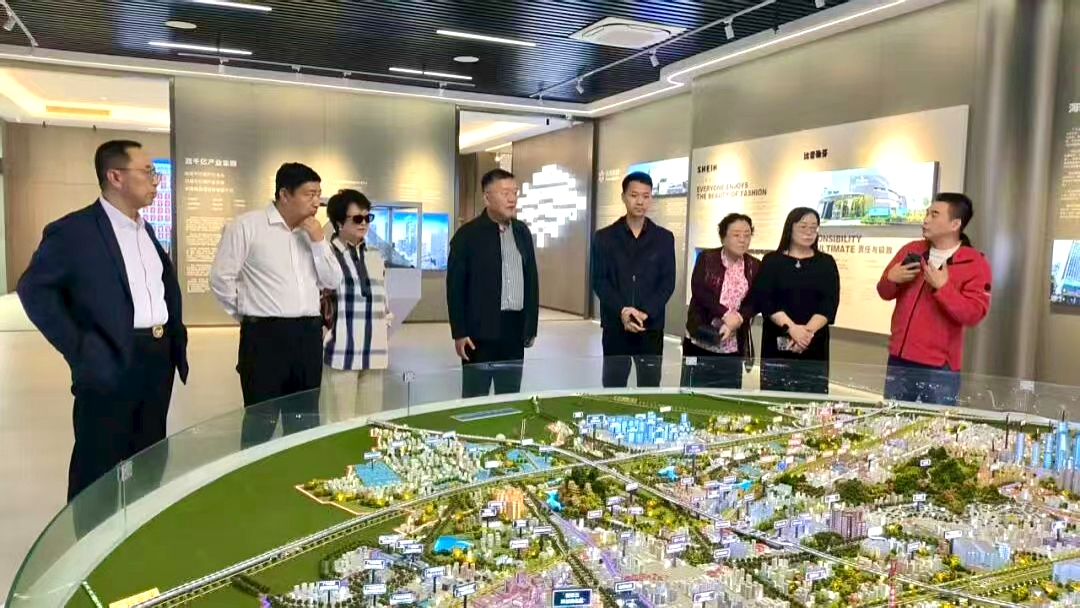
Group 1 - The Ulaanbaatar City Federation of Industry and Commerce organized a visit to Guangzhou, Shenzhen, Wuhan, and Beijing from November 30 to December 6 to discuss cooperation paths with local chambers of commerce and enterprises [1][4] - The delegation visited various chambers of commerce, introducing Ulaanbaatar's key industrial layout, advantages of local private economy development, and work strategies for the 14th Five-Year Plan, expressing a desire to attract investment and deepen cooperation [1][4] - In-depth discussions were held with the chambers on enhancing information exchange, resource sharing, and exploring new cooperation opportunities [1][4] Group 2 - In Beijing, the delegation focused on cutting-edge technology and emerging industries, visiting companies such as Beijing Ge'an Hengneng New Energy Technology Development Co., Ltd. and Beijing Wanlian Yida Holdings Group Co., Ltd. to discuss solid-state battery technology, big data, and AI applications [3][6] - The companies showed strong interest in the development of Ulaanbaatar's four key industrial chains [3][6] - The Ulaanbaatar City Federation of Industry and Commerce plans to establish a regular cooperation platform to strengthen connections with external chambers and track cooperation intentions to promote high-quality economic and social development [3][6]

生物制造领域唯一国家产业创新中心,即将试运行
2 1 Shi Ji Jing Ji Bao Dao· 2025-12-02 13:05
Core Insights - The "Guangming Science City Forum 2025" will be held from December 4 to 5, showcasing significant achievements such as the launch of the National Bio-Manufacturing Industry Innovation Center and the establishment of various research facilities and funds [1][6]. Group 1: Achievements and Developments - The Guangming Science City has made substantial progress since its planning in 2018, with over 3,000 high-level talents and a ranking of 7th in the national science city list for 2024 [1][4]. - Major scientific facilities, including synthetic biology and brain simulation devices, have been operational, serving over 200 users and providing more than 330,000 hours of effective equipment time [4][5]. - The National Bio-Manufacturing Industry Innovation Center is set to begin trial operations, facilitating key processes in technology transfer and commercialization [5][8]. Group 2: Collaborative Efforts and Infrastructure - Guangming Science City is collaborating with Dongguan Songshan Lake and other institutions to enhance new material development and has established a cross-city public transport line [5][8]. - The region has initiated mechanisms for collaboration with Hong Kong and Macau, including the establishment of the Guangdong-Hong Kong-Macau Greater Bay Area International Clinical Trial Center [5][8]. Group 3: Financial and Policy Support - Guangming District has created a multi-layered fund support system totaling approximately 30 billion yuan, which includes government-guided funds and various types of innovation funds [6][7]. - The district focuses on strategic emerging industries, with significant clusters in high-performance materials and high-end medical devices, aiming for high-quality development [7][8]. Group 4: Talent and Living Environment - Guangming District is enhancing its living environment by attracting quality educational institutions, improving healthcare facilities, and providing affordable housing [8].
四地合一 造机器人
Zhong Guo Xin Wen Wang· 2025-11-08 16:09
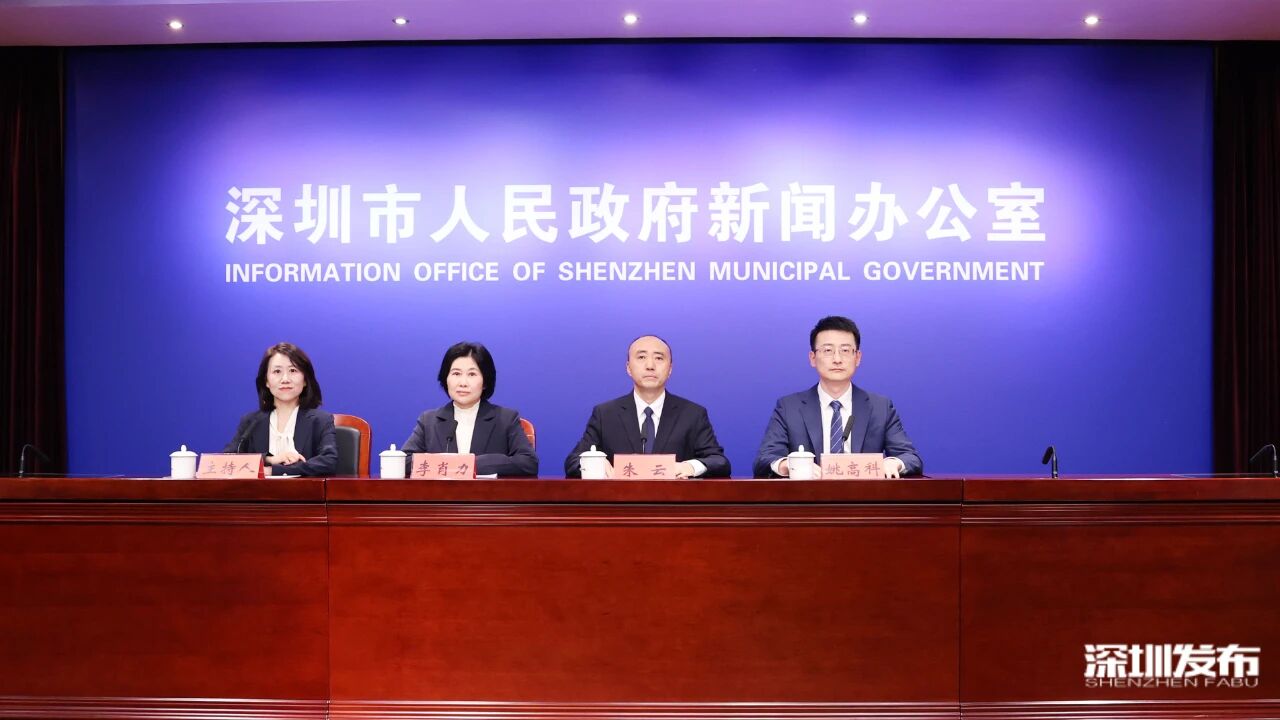
Core Insights - The integration of research and manufacturing in the Yangtze River Delta region is enhancing the efficiency and innovation of companies, exemplified by the collaboration between Shanghai and Jiangsu in the development of intelligent industrial robots [1][2][3] Group 1: Industry Collaboration - The collaboration model in the Yangtze River Delta has led to the successful integration of components from various provinces, resulting in nearly 8,000 arc welding robots being produced [1][4] - A network of 12 upstream and downstream enterprises has formed an efficient industrial chain, emphasizing the benefits of regional cooperation [1][4] Group 2: Policy and Institutional Innovation - The Chinese government has emphasized the need for cross-regional collaboration in technology and industry innovation, with actionable measures being implemented to facilitate this [3][4] - Local development committees are working to eliminate barriers to data flow and resource sharing, enhancing the integration of the region's industrial capabilities [3][4] Group 3: Competitive Advantage and Efficiency - The full-chain collaboration in research, incubation, manufacturing, and implementation is improving the system efficiency and competitiveness of enterprises [4][5] - The local supply chain has achieved 100% localization of core components, resulting in a 40% reduction in costs for products like arc welding robots [4][5] Group 4: Emerging Industrial Clusters - The Yangtze River Delta is evolving into a world-class industrial cluster, leveraging the strengths of various regions to create a stable bridge between innovation and manufacturing [5] - The region's collaborative density is reshaping the landscape of Chinese manufacturing within the global supply chain [5]

四地合一,造机器人
Bei Jing Ri Bao Ke Hu Duan· 2025-11-08 11:50
Core Insights - The article highlights the successful collaboration in the Yangtze River Delta region, emphasizing the integration of research and manufacturing capabilities to enhance efficiency in industrial robotics [1][3][5]. Group 1: Regional Collaboration - The collaboration model in the Yangtze River Delta allows for efficient integration of R&D in Shanghai and manufacturing in Jiangsu, leading to significant improvements in operational efficiency [1][3]. - The "full Yangtze River Delta manufacturing" approach has resulted in nearly 8,000 arc welding robots being produced, showcasing the effectiveness of a well-coordinated supply chain involving 12 companies [3][5]. - The region's industrial cooperation has been further strengthened by national strategies aimed at enhancing technological and industrial innovation across provinces [3][4]. Group 2: Industry Development - Key industries such as integrated circuits, biomedicine, and artificial intelligence in the Yangtze River Delta account for approximately 60%, 33%, and 33% of the national market, respectively [5][6]. - The industrial robot export volume from the Yangtze River Delta is projected to represent about half of the national total by mid-2025, indicating a strong growth trajectory [5][6]. - The local manufacturing ecosystem has achieved a 100% localization rate for core components in certain products, with overall domestic production rates reaching 94% and costs reduced by 40% [5][6]. Group 3: System Efficiency - The collaborative mechanisms in the Yangtze River Delta have transformed previously fragmented resources into a cohesive and efficient system, enhancing the competitiveness of local enterprises [5][6]. - The ability to rapidly develop and deploy technology across multiple cities illustrates the dynamic nature of the regional industrial landscape [6]. - The emergence of a world-class industrial cluster in the Yangtze River Delta reflects a shift towards leveraging regional strengths rather than relying on singular city advantages [6].
赛迪顾问:我国中西部城区发展呈现新趋势
Zhong Guo Jin Rong Xin Xi Wang· 2025-11-06 08:54
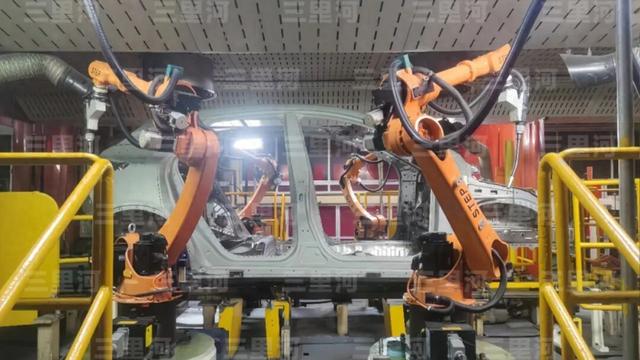
Core Insights - The report by CCID Consulting highlights the uneven economic development across cities in China's central and western regions, with significant disparities in distribution and scale [1][2] Economic Distribution - Hubei province leads with 29 cities in the top 100 of central China, followed by Anhui and Jiangxi with 17 and 16 cities respectively, while Henan and Shanxi lag behind with 13 and 10 cities [1] - Hubei has the highest city coverage rate at 83.3%, while Henan has the lowest at 29.4% [1] Scale of Economic Development - The majority of the top 100 cities in central China are concentrated in the GDP range below 100 billion, with 75 cities falling into this category [2] - Only one city has a GDP over 400 billion, while 4 cities range between 200 billion and 300 billion, and 20 cities between 100 billion and 200 billion [2] Future Trends - The report identifies three major trends for the development of central and western cities during the 14th Five-Year Plan: 1. Exploring a triadic model of industrial transfer, innovation collaboration, and factor flow [2] 2. Regional center cities will play a larger role in modern urban construction, leading to the emergence of more "dark horse cities" [2] 3. Urban renewal will shift from mere renovation to industrial introduction, creating a virtuous cycle of spatial restructuring, industrial upgrading, and consumption activation [2] Strategic Recommendations - The report suggests a dual approach of "precise undertaking + characteristic cultivation" to drive industrial upgrading, focusing on sectors like electronic information and new energy vehicles [3] - It emphasizes the need for a collaborative innovation network, leveraging the strengths of central cities to enhance innovation capabilities [3] - The integration into the Belt and Road Initiative is recommended to improve openness and connectivity, optimizing the business environment for foreign investment [3] Urban Development Strategies - The report advocates for the integration of production, city, and population to enhance urban quality, focusing on urban renewal and infrastructure upgrades [4] - It encourages the transformation of old spaces into new economic activities, fostering new consumption scenarios like night economy and live commerce [4]
从深海取火到机器人之舞:一场照见湾区科技未来的火炬传递
Nan Fang Du Shi Bao· 2025-11-02 16:05
Group 1: Core Concept - The event of the torch relay symbolizes the integration of sports spirit, technology, and civilization, showcasing the strong synergy between Guangdong's industry and technology [4] Group 2: Deep Sea Energy - The flame used in the torch relay originates from combustible ice, a key resource for global energy transition, with Guangdong's research team successfully developing in-situ ignition technology [5][6] - Combustible ice has an energy density approximately 10 times that of coal and 2 to 5 times that of natural gas, producing significantly less pollution compared to traditional energy sources [6] - China's total reserves of combustible ice are estimated at 800 billion tons of oil equivalent, with the South China Sea being the core area, accounting for about 80% of the total reserves [6] Group 3: Technological Innovations - The torch relay featured the world's first 5G-A humanoid robot, "Kua Fu," which successfully completed a segment of the relay, marking a significant milestone in the application of robotics in national events [9][10] - The Guangdong region is home to over 100,000 robot-related enterprises, with industrial robot exports from the Greater Bay Area accounting for 32.3% of the national total [12] - The event also included the use of a driverless car for the torch relay, highlighting the advancements in autonomous vehicle technology in Guangdong [12] Group 4: Innovation and Development - The Guangdong-Hong Kong-Macao Greater Bay Area has emerged as a leading innovation cluster, with a research and development expenditure intensity of 3.6% and approximately 77,000 high-tech enterprises [13][15] - The Shenzhen-Hong Kong-Guangzhou innovation cluster has ranked first in the global innovation index, surpassing the Tokyo-Yokohama cluster, reflecting the region's strengths in international patent applications and research output [15]

普陀机器人“走”进南通
Ren Min Ri Bao· 2025-10-28 22:56
Group 1 - Jiangsu Nantong City officials visited Putuo District for learning and exchange, focusing on the collaboration between local governments and industries [1] - Zhikangjia Company specializes in smart rehabilitation, developing a portable upper limb rehabilitation robot weighing 7 kg, which aids stroke patients in home rehabilitation through gamified training [1] - The collaboration between Zhikangjia Company and Nantong's medical insurance bureau was established in less than a month, highlighting the efficiency of resource integration [1] Group 2 - The cooperation between Nantong City and Putuo District is evolving from simple resource aggregation to deep integration, fostering a collaborative innovation platform [2] - Nantong officials are actively involved in integrating supply and demand resources, enhancing the innovation ecosystem in collaboration with cities along the Shanghai-Nanjing corridor [2] - The "Sci-tech Innovation Land" project is being promoted to connect Shanghai's R&D resources with Nantong's manufacturing capabilities, further deepening regional innovation collaboration [2]
剑指AI终端产业,东莞和深圳携手再放大招|东莞一周
Nan Fang Du Shi Bao· 2025-10-19 10:44
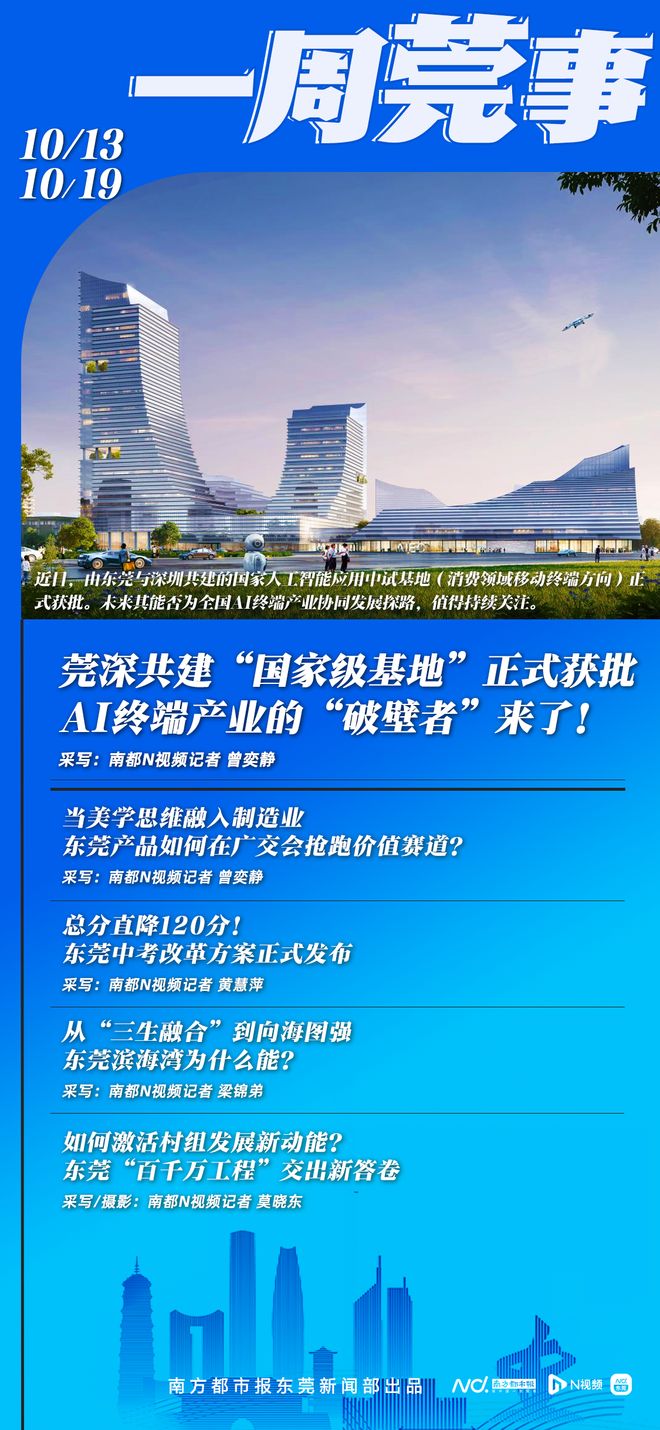
Group 1: AI Industry Development - The establishment of a national AI application pilot base in Dongguan and Shenzhen aims to address common challenges in the large-scale application of AI technology, leveraging Dongguan's manufacturing supply chain and Shenzhen's R&D advantages for synergistic effects [4][6]. Group 2: Manufacturing Aesthetics - Dongguan showcased its "Manufacturing Aesthetics City" image at the 138th Canton Fair, emphasizing the integration of aesthetics into manufacturing to enhance product value and shift from cost competition to value creation [6][7]. Group 3: Education Reform - Dongguan's education bureau announced a reform plan for high school entrance examinations, reducing the total score from 800 to 680 starting in 2027, and implementing a grading system for biology and geography exams to alleviate academic pressure on students [9]. Group 4: Coastal Development - The Dongguan Binhai Bay area has transformed from wetlands to a vibrant urban space, with significant developments such as the OPPO global computing center and ongoing construction of the Shenzhen-Jiangmen railway, aiming to enhance connectivity within the Greater Bay Area [11]. Group 5: Rural Development Initiatives - The "Hundred-Thousand-Ten Thousand Project" in Dongguan focuses on diversifying village economies and shifting emphasis from real estate to technology and industry to achieve sustainable high-quality development [14]. Group 6: Listing Preparation - Dongguan announced its 19th batch of listing backup enterprises, with 19 companies recognized across various sectors, including high-end equipment manufacturing and semiconductors, indicating a robust pipeline for future public offerings [16][17]. Group 7: Audit Report - The latest audit report for Dongguan revealed a 95.54% completion rate for addressing 202 issues identified in the previous year's budget execution, with a total rectification amounting to 14.34 billion yuan [18].
“十四五”时期建设西部地区创新高地主要成就公布 从三个数字看硬核“成绩单”
Si Chuan Ri Bao· 2025-09-26 00:28
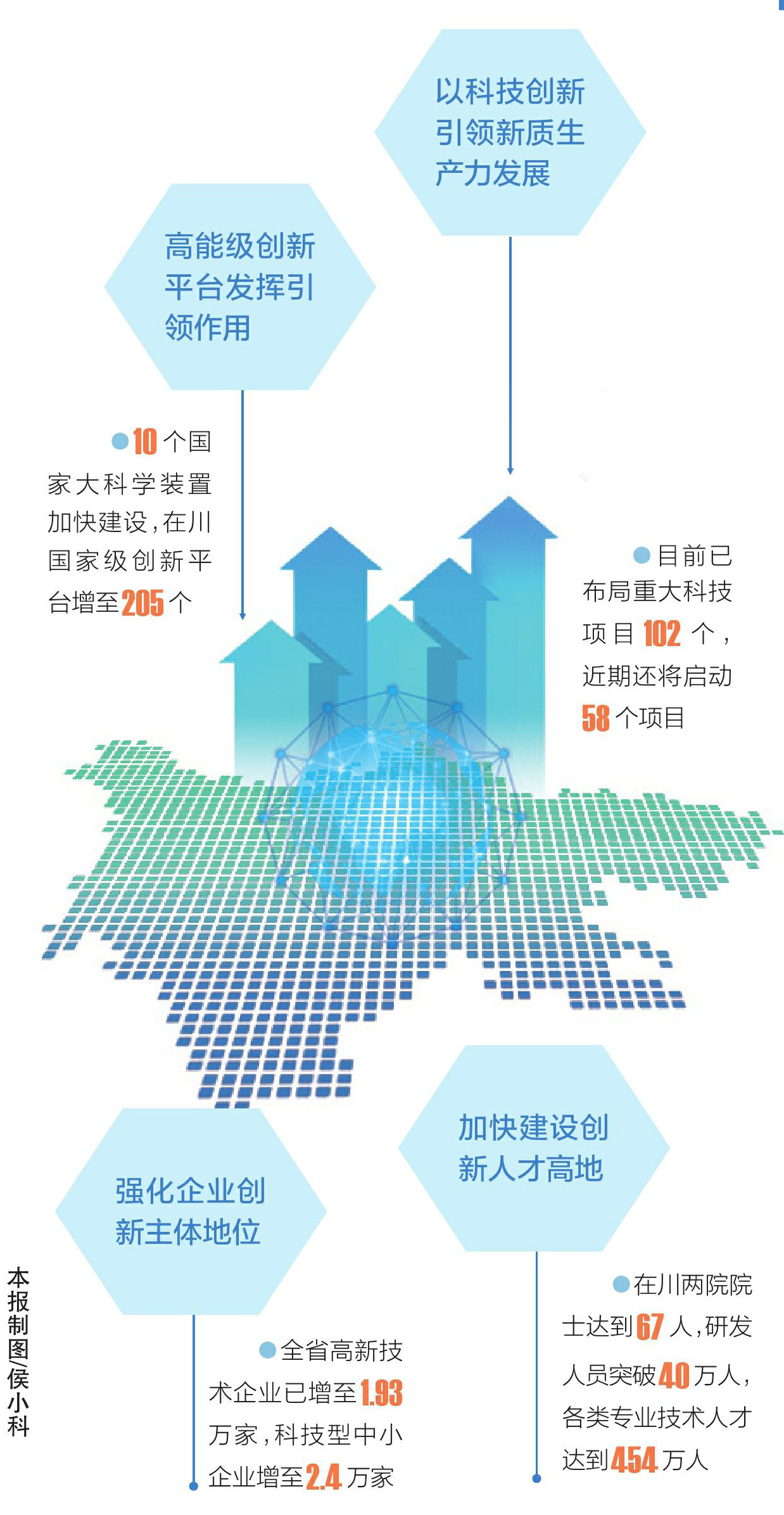
Core Viewpoint - Sichuan is advancing its position as an innovation hub in Western China by focusing on technological innovation and the transformation of scientific achievements, aiming to enhance its status as a high-level technology province during the "14th Five-Year Plan" period [4]. Group 1: Innovation Platforms and Achievements - The number of national-level innovation platforms in Sichuan has increased to 205, with 10 major national scientific facilities under accelerated construction [5][6]. - Sichuan has achieved significant breakthroughs in advanced magnetic field structures and fusion device operations, showcasing the leading role of its high-energy innovation platforms [5][6]. - The province has established a comprehensive innovation platform system covering basic research, applied research, and technology development [6]. Group 2: Major Technology Projects - Sichuan has laid out 102 major technology projects, with an additional 58 projects set to launch soon, focusing on areas such as artificial intelligence, aerospace, and clean energy [8]. - Notable advancements include the development of the first domestic F-class 50 MW heavy-duty gas turbine and the approval of the first TROP2 antibody-drug conjugate [8]. Group 3: Integration of Technology and Industry - The province is promoting deep integration between technological innovation and industry, encouraging collaborative efforts among enterprises, universities, and research institutions to expedite the transformation of laboratory results into market-ready products [9]. - Initiatives include a dual approach where enterprises seek technology and research outcomes find markets, addressing critical issues in the industrial chain [9]. Group 4: Growth of High-tech Enterprises - The number of high-tech enterprises in Sichuan has surged to 19,300, representing a 2.4-fold increase since 2020, with technology-based SMEs also experiencing significant growth [10]. - The proportion of enterprises leading major technology projects has risen to 60%, and R&D expenditure by these enterprises has increased by 58.4% compared to 2020 [10]. Group 5: Talent Development - Sichuan has accelerated the construction of an innovation talent hub, with 67 academicians and over 400,000 R&D personnel in the province [11]. - The province has implemented various measures to enhance the evaluation and support of scientific talent, benefiting over 30,000 individuals [11].
【西安】多举措推进科技创新和产业创新融合
Shan Xi Ri Bao· 2025-09-14 00:11
Core Viewpoint - Xi'an is making significant progress in integrating technological innovation with industrial development, as highlighted in the recent press conference by the Xi'an Municipal Government [1][2] Group 1: High-Quality Technological Supply - Xi'an is accelerating the construction of major technological infrastructure, including the world's first 10-picosecond-level fiber-optic time transfer system over a distance of 1,000 kilometers [1] - The city has successfully developed key technologies, including the largest mirror milling equipment in the world and the first domestic three-phase integrated 220 kV power transformer [1] Group 2: Deep Integration of Technological and Industrial Innovation - Xi'an has created a comprehensive map of innovation resources across education, technology, talent, and industry, and has implemented plans to enhance industrial chains in sectors like aerospace, semiconductors, and new materials [1] - The city has 893 gazelle enterprises, 1,254 specialized and innovative enterprises, and 2,661 high-tech enterprises above designated size [1] - The establishment of the first national technology manager academy has resulted in 4,645 technology managers in the city [1] Group 3: Optimizing Innovation and Entrepreneurship Ecosystem - Xi'an has launched a three-year action plan to enhance technological financial capabilities, promoting precise matching between technology, industry, and finance [2] - The city has evaluated 27,200 patent applications, increasing the average authorization rate from 48% to 65%, with an invention patent ownership rate of 85.26 per 10,000 people [2] - The "shared campus recruitment" initiative has attracted 116 urgently needed talents, with a total of 1,944 high-level talents nurtured [2] Group 4: Regional Collaborative Innovation Development - Xi'an is collaborating with nearby cities to plan over 30 innovation cooperation projects by 2025 and has released 27 results transformation demands with cities like Xining and Urumqi [2] - The city is organizing cross-regional technology tackling and results transformation projects in sectors such as semiconductors, energy, modern coal chemical industry, and modern agriculture [2] Group 5: Future Plans - The city aims to continue strengthening the construction of the Xi'an Regional Science and Technology Innovation Center and deepen the integration of education, technology, and talent systems [2]