
区域联动发展

Search documents
以协调发展促进城乡融合和区域联动——六论学习贯彻中央经济工作会议精神
Xin Hua She· 2025-12-17 13:40
Core Viewpoint - The Central Economic Work Conference emphasizes coordinated development, promoting urban-rural integration and regional linkage as essential for high-quality economic growth in China [1][2]. Group 1: Coordinated Development - Coordinated development is a key component of the new development philosophy, essential for China's modernization and high-quality growth [1][2]. - The conference outlines a series of decisions and practical requirements to enhance coordination in economic and social development, aiming for a balanced approach [1][2]. Group 2: Urban-Rural Integration - Urban-rural integration is identified as a critical area for improvement, addressing the shortcomings in agricultural and rural development [2]. - The focus is on promoting new urbanization centered on people, facilitating the urbanization of agricultural transfer populations, and ensuring the high-quality development of county economies [2]. Group 3: Regional Linkage - Economic powerhouses are seen as vital for national development, with a call for these regions to lead in technological and industrial innovation, deep reforms, and high-level openness [3]. - The need for coordinated efforts among key city clusters is highlighted, promoting efficient collaboration between innovation and industrial chains [3].
区域联动开创协调发展新局面
Jing Ji Ri Bao· 2025-12-17 00:40
Core Viewpoint - The article emphasizes the importance of regional coordinated development as an inherent requirement of Chinese-style modernization, highlighting the need for strategic deployment to promote regional interconnected development and address issues of unbalanced and insufficient development [1][2]. Group 1: Regional Development Strategy - The concept of "linkage" involves not only geographical connections but also the deep integration and collaborative evolution of factors, industries, and systems [2]. - Regional coordinated development is crucial for optimizing economic layout, advancing high-quality economic and social development, and enhancing national competitiveness [2]. - The current disparities in GDP and disposable income among different regions necessitate a focus on regional linkage to facilitate the free flow of production factors and break down isolation effects [2]. Group 2: New Development Pattern - Establishing a new development pattern that emphasizes domestic circulation requires addressing existing barriers and ensuring smooth economic cycles [3]. - The logistics cost in relation to GDP is projected to be 14.1% in 2024, which is still higher than that of developed countries, indicating the need for improved regional linkage to reduce operational costs [3]. - The article outlines the necessity of creating regional growth poles with global resource allocation capabilities to enhance China's position in the global value chain [3]. Group 3: Current Achievements and Challenges - Significant improvements have been made in regional linkage, with high-speed rail coverage reaching over 48,000 kilometers and a comprehensive transportation network covering over 80% of counties [4]. - Despite advancements, structural contradictions and institutional barriers still hinder regional linkage, necessitating higher-level coordination [5][6]. - Issues such as local protectionism and inconsistent standards continue to pose challenges for cross-regional cooperation, affecting overall competitiveness [5][6]. Group 4: Future Directions - The article suggests a clear roadmap for promoting regional linkage, emphasizing the need for top-level design, improved collaboration mechanisms, and the establishment of cooperative entities [7]. - Infrastructure development is highlighted as a foundational element for regional linkage, with a focus on enhancing connectivity in transportation, energy, and information sectors [7]. - Cities are identified as key carriers for regional linkage, with a call for the establishment of cross-regional industrial and innovation maps to facilitate efficient collaboration [8]. Group 5: Systematic Integration - Promoting regional linkage is described as a process of spatial restructuring, institutional reshaping, and re-energizing dynamics, requiring a shift from administrative boundaries to a holistic national perspective [9]. - The article advocates for a combination of top-down design and grassroots exploration, as well as the integration of hardware connectivity and mechanism collaboration to enhance regional development coordination [9].
丁茂战:区域联动开创协调发展新局面
Jing Ji Ri Bao· 2025-12-17 00:05
Core Viewpoint - The article emphasizes the importance of regional coordinated development as an inherent requirement of Chinese-style modernization, highlighting the need for strategic deployment to promote regional interconnected development and address issues of unbalanced and insufficient development [1][2]. Group 1: Regional Development Strategy - The concept of "linkage" involves not only geographical connections but also the deep integration and collaborative evolution of factors, industries, and systems [2]. - Regional coordinated development is crucial for optimizing economic layout, advancing high-quality economic and social development, and enhancing national competitiveness [2]. - The current disparities in GDP and disposable income among different regions necessitate a focus on regional linkage to facilitate the free flow of production factors and break down isolation effects [2]. Group 2: New Development Pattern - Establishing a new development pattern that emphasizes domestic circulation requires addressing existing barriers and ensuring smooth economic cycles [3]. - The logistics cost in relation to GDP is projected to be 14.1% in 2024, which is still higher than that of developed countries, indicating the need for improved regional linkage to reduce operational costs [3]. - The article suggests that fostering regional interconnected development can enhance the internal dynamics and reliability of domestic circulation [3]. Group 3: Current Achievements and Challenges - Significant improvements have been made in regional linkage, with high-speed rail mileage exceeding 48,000 kilometers and covering 97% of cities with populations over 500,000 [4]. - Despite advancements, structural contradictions and institutional barriers still hinder regional linkage, necessitating higher-level coordination [5][6]. - The existing policies are primarily designed around administrative regions, which complicates cross-regional governance and requires innovative approaches to overcome these challenges [6]. Group 4: Future Directions - The article outlines a clear roadmap for promoting regional linkage, emphasizing the need for top-level design, improved collaboration mechanisms, and the cultivation of interconnected development carriers [7]. - Infrastructure development is highlighted as a foundational element for regional linkage, with a focus on modernizing transportation, energy, and digital networks [7]. - Cities are identified as key carriers for regional linkage, with recommendations for establishing cross-regional industrial and innovation maps to facilitate collaborative development [8]. Group 5: Systemic Integration and Collaboration - Promoting regional linkage is described as a process of spatial restructuring, institutional reshaping, and re-energizing dynamics, requiring a shift from administrative-centric economic models to a more holistic national perspective [9]. - The article advocates for a combination of top-down design and grassroots exploration, as well as the integration of hardware connectivity and mechanism collaboration to enhance regional development coordination [9].
京杭大运河新增首条高等级人工入海航道 宿连航道千吨级航线双向首航
Xin Hua Ri Bao· 2025-12-15 10:33
12月12日14点50分,从连云港新云台码头出发的"皖宏远5988"轮抵达宿迁港。这是"连云港—宿迁"航线 的首航轮,并与日前"宿迁—连云港"航线首航完成接力,标志着京杭大运河首条高等级人工入海航道 ——宿连航道千吨级航线双向畅通。 宿连航道西起京杭大运河宿迁城区段,东至连云港疏港航道,全长124.2公里,其中宿迁段102.2公里、 连云港段22公里,相较以往从淮安绕行的传统盐河航线缩短80公里,航行时间从2.5天大幅压缩至24小 时以内。宿连航道按三级航道标准建设,设计底宽45米,设计水深3.2米,可满足1000吨级船舶正常通 行。近日,宿连航道宿迁段和连云港段的二级航道整治工程可行性研究报告分别获得省发改委批复,整 治工程完成后,宿连航道通航能力将提升至2000吨级船舶。 宿连航道为宿迁打通了一条高效经济的"最近出海口",填补了宿迁东向直接出海的内河水路集疏运空 白,为苏鲁豫皖地区企业开辟了便捷的水上物流"新通道"。今后,宿迁及周边地区货物可通过水路直达 连云港港口内河码头前沿,并无缝衔接港口丰富的海运网络。宿连航道工程是国家、省、市水运发展规 划中的重大基础设施项目,概算总投资115.98亿元,是全省干 ...
海南自贸港如何构建区域联动发展新格局
Hai Nan Ri Bao· 2025-12-13 00:29
Core Viewpoint - The article emphasizes the importance of regional linkage development for the high-standard construction of Hainan Free Trade Port, as highlighted by President Xi Jinping, who calls for deeper integration with various economic regions and initiatives like the Belt and Road [1][4]. Group 1: Regional Linkage Development - Regional linkage development is essential for aligning with national strategies and is a necessary requirement for Hainan Free Trade Port to gather resources and achieve high-quality development [1]. - Hainan has actively engaged in multiple outreach activities, including delegations to Hong Kong and Macau, to enhance cooperation and implement agreements [2]. - Significant achievements in regional cooperation include the establishment of the Guangdong-Hainan Advanced Manufacturing Cooperation Industrial Park, which has attracted 766 enterprises as of November [2]. Group 2: New Opportunities and Advantages - The full island closure operation of Hainan Free Trade Port is set to commence on December 18, marking a new phase of high-level openness and closer ties with domestic and international markets [4]. - Hainan's geographical advantages position it as a strategic hub for international markets, facilitating accelerated flows of people, goods, and capital [5]. - The proposed "45432" development framework aims to create a modern industrial system with Hainan's unique characteristics, enhancing technological and industrial competitiveness [5]. Group 3: Strategic Collaboration and Future Outlook - Hainan is innovating cooperation models by learning from other regions and establishing mechanisms for collaboration with key areas like Tianjin and Hebei [6]. - The focus on key sectors such as finance, professional services, and digital economy aims to deepen cooperation with Hong Kong and support mainland enterprises [6]. - The full island closure is expected to enhance Hainan's attractiveness and resource allocation capabilities, fostering a new regional cooperation model characterized by complementary advantages and high-quality development [6].
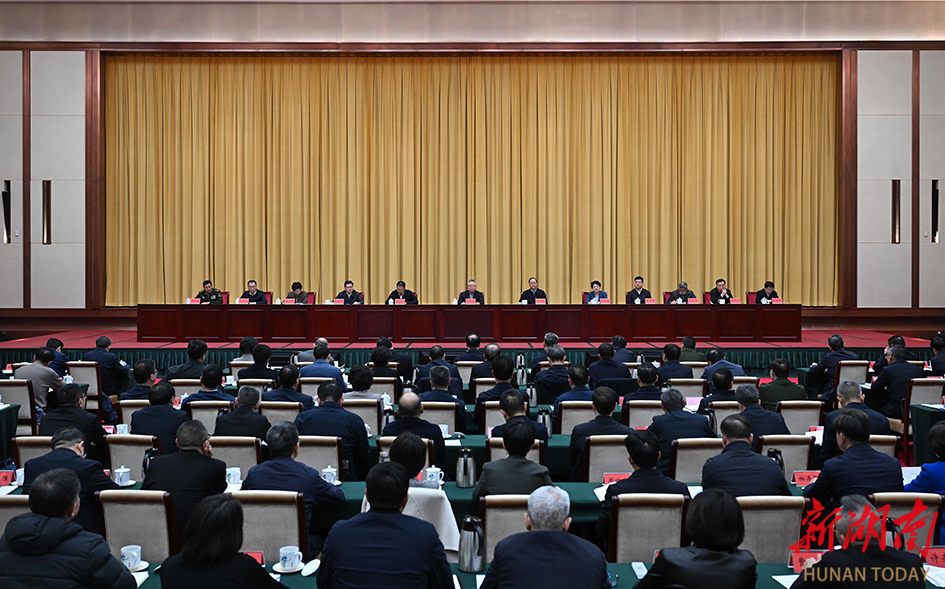
省委城市工作会议在长沙召开 沈晓明毛伟明讲话省委城市工作会议在长沙召开 沈晓明毛伟明讲话
Chang Sha Wan Bao· 2025-12-06 03:27
Core Viewpoint - The meeting emphasized the importance of high-quality urban development in Hunan, guided by Xi Jinping's important discourse on urban work and the spirit of the Central Urban Work Conference [1][3]. Group 1: Urban Development Principles - The need to understand the规律性认识 (regularity understanding) of urban work in the new era was highlighted, focusing on practical decision-making based on the city's developmental characteristics and resource endowments [3]. - A people-centered approach is essential, advocating for the concept of "People's City" and adapting to changes in population and demand, while enhancing public service resource allocation [3]. - The importance of a systematic perspective was stressed, balancing various relationships such as increment and stock, construction and governance, and hardware and software [3]. Group 2: Strategic Focus Areas - The meeting outlined key focus areas for urban development: innovation to enhance leadership, livability to increase happiness, beauty to boost attractiveness, resilience for safety, civilization to improve soft power, and intelligence for convenience [5]. - The integration of the "16th Games" with long-term urban development was emphasized, aiming to enhance the radiating power of the Chang-Zhu-Tan urban agglomeration and explore new paths for urban modernization with Hunan characteristics [5]. Group 3: Leadership and Responsibility - Strengthening the Party's comprehensive leadership over urban work and ensuring accountability among various stakeholders was underscored, along with enhancing the capabilities of officials [3][5].

下一个五年,湘鄂赣“中三省”准备怎么干?
Di Yi Cai Jing· 2025-12-05 06:12
Group 1: Core Perspectives - The central theme of the news is the strategic focus of the "Central Three Provinces" (Hunan, Hubei, Jiangxi) on expanding domestic demand, building a technological innovation hub, and serving as a model for regional coordinated development during the 14th Five-Year Plan period [1] Group 2: Economic Development Strategies - Hubei aims to accelerate consumption expansion by innovating consumption models and increasing the supply of quality goods, with a target of driving over 176 billion yuan in consumption through initiatives like trade-in programs [2] - Hunan emphasizes the integration of consumer welfare and investment, aiming to enhance the consumer market and support the development of regional consumption centers [3] - Jiangxi plans to actively create new demand and supply by leveraging its ecological and cultural resources to develop immersive consumption experiences [3] Group 3: Technological Innovation - All three provinces recognize technology as the primary productive force, with Hubei aiming to increase the number of high-tech enterprises to 35,000 and technology transaction volume to over 600 billion yuan by 2025 [4] - Hunan is focused on establishing itself as a competitive technological innovation hub, encouraging investment in fundamental research and breakthroughs in key technologies [5] - Jiangxi aims to build a nationally influential industrial technology innovation center, concentrating research efforts on areas like rare earth materials and modern agriculture [6] Group 4: Regional Coordination and Development - The news highlights the importance of the Yangtze River Middle Urban Agglomeration, with Hubei supporting the development of regional centers like Wuhan and Xiangyang to enhance economic collaboration [7] - Hunan plans to optimize its economic layout and promote coordinated regional development through new urbanization strategies [8] - Jiangxi is set to improve its regional coordination mechanisms to facilitate efficient resource flow and high-quality county-level economic development [8]
市政协召开辖市区政协主席座谈会和各民主党派市委会、市工商联负责同志座谈会
Zhen Jiang Ri Bao· 2025-11-11 23:30
Core Points - The meetings held on November 6 and 11 focused on soliciting opinions and suggestions for the 2026 key work arrangements and consultation plans of the municipal CPPCC [1] - The municipal CPPCC chairman emphasized the importance of political clarity and the continuous effectiveness of the work carried out by various CPPCC organizations [1] - The year 2026 marks the beginning of the "14th Five-Year Plan" and the conclusion of the current CPPCC's term, necessitating a focus on deepening regional collaborative development and addressing public concerns [1] Group 1 - The CPPCC aims to achieve a synergistic effect of "1+1>2" through enhanced regional collaboration [1] - There is a strong emphasis on addressing urgent public issues and effectively implementing proposals related to people's livelihoods [1] - The CPPCC plans to strengthen its institutional, standardized, and procedural functions to enhance its operational effectiveness [1] Group 2 - Various democratic parties and the municipal federation of industry and commerce are encouraged to maintain close ties with their respective communities and leverage their strengths to support the economic and social development of Zhenjiang [1] - The meeting was attended by leaders from multiple democratic parties and the municipal federation of industry and commerce, indicating a collaborative approach to governance [1]
中经评论:乡村振兴不能单村独斗
Jing Ji Ri Bao· 2025-11-11 00:10
Core Viewpoint - The concept of "regionalized promotion of rural revitalization" is gaining traction as a new exploration in many areas, as highlighted in the "Suggestions on Formulating the 15th Five-Year Plan for National Economic and Social Development" by the Central Committee of the Communist Party of China, marking its first appearance in such an important document [1] Group 1: Regionalized Promotion - Regionalized promotion addresses the issue of resource dispersion in individual villages while overcoming the challenges of implementing precise policies at the county or township level [1] - The approach encourages the integration of resources and collaborative development among neighboring villages to tackle imbalances in development and extend industrial chains [1] - The core of regionalized promotion is based on functional complementarity and industrial collaboration, aiming for regional coordinated development [1] Group 2: Industrial Foundation - Establishing a solid industrial foundation is crucial for regionalized promotion, with characteristic industrial clusters serving as natural support [2] - Some regions focus on 1-2 dominant industries, building standardized agricultural bases and coordinating facilities for processing, logistics, and tourism services [2] - Successful examples include villages that attract tourism but rely on surrounding areas for additional services, demonstrating the benefits of resource integration [2] Group 3: Systematic Innovation - Regionalized promotion emphasizes innovation in institutional mechanisms, requiring systematic thinking and coordinated planning across rural development, construction, and governance [2] - Infrastructure sharing and integrated public services are essential, with examples of collaborative efforts in education, healthcare, and elder care to avoid redundancy [2] - The "pre-operation + strong village company" model is highlighted for managing project construction and asset management effectively [2] Group 4: Practical Effectiveness - The implementation of regionalized promotion should focus on practical effectiveness rather than arbitrary segmentation, respecting farmers' opinions and protecting their rights [3] - The approach should align with natural geographical trends and economic developments, determining the scale and coverage of regions scientifically [3] - There is no fixed model for regionalized promotion; it should be adaptable to local needs, avoiding a one-size-fits-all approach [3] Group 5: County-Level Development - From the perspective of rural revitalization and county development, regionalized promotion helps break the isolation of individual villages, fostering resource sharing and complementary advantages [3] - This strategy aims to create a dynamic county economic system through collaborative development [3]
大江奔流谱新篇——武汉践行嘱托奋勇争先
Chang Jiang Ri Bao· 2025-11-04 00:43
Core Insights - Xi Jinping emphasized the need for Hubei to become a strategic support point for the rise of central China, aiming for high-quality development in the Yangtze River Economic Belt [1][2] - Wuhan is set to accelerate its transformation into a national central city, focusing on building "five centers" and enhancing its role as a leading city in central China [1][25] Technology and Innovation - Xi Jinping highlighted the importance of technological and industrial innovation during his visit to Wuhan, urging local scientists and entrepreneurs to enhance confidence and strive for progress [3][4] - Wuhan aims to establish itself as a nationally influential technology innovation hub by 2027, with significant investments in research and development [4][5] - The city has seen substantial growth in traditional and emerging industries, with electric vehicle production increasing by 152% year-on-year and a robust growth in artificial intelligence [5][6] Economic Development - Wuhan's GDP growth has consistently outperformed other sub-provincial cities, with a target to exceed 3 trillion yuan [14] - The city is focusing on investment, consumption, and foreign trade to enhance its economic capabilities [14] - The establishment of various logistics hubs has positioned Wuhan as a critical node in global supply chains, enhancing its international trade capabilities [7][8] Regional Cooperation - The Wuhan metropolitan area is advancing towards a population of 30 million and an economic total of 4 trillion yuan, emphasizing regional collaboration with neighboring cities [18][20] - The city is enhancing transportation and public service cooperation with cities like Changsha and Hefei to foster regional integration [20][21] Cultural and Tourism Development - Wuhan is working to become a world-renowned cultural tourism destination, with initiatives to promote its rich historical and cultural resources [21][22] - The city has seen a significant increase in tourism, with domestic travel orders rising by 22% and inbound tourism growing by 39% [22][23]