可信AI

Search documents
迎接2049:与AI共存的未来 | 两说
Di Yi Cai Jing Zi Xun· 2025-11-27 07:41
人工智能正以前所未有的速度重塑我们的世界:它让个体担忧职业的未来,让产业面临转型的阵痛,也 让全球格局步入新一轮科技竞争与协作的十字路口。当乐观成为迎接未来的必要选择,我们能否正视技 术回报"缓慢起飞"的发展周期,以人类命运共同体的愿景迈向AI技术跃迁的新纪元?本期《两说》邀请 美国《连线》杂志创始主编、未来学家凯文·凯利(Kevin Kelly)进行了一场深度对话,聆听其前瞻思 考。作为一位以洞察技术演化规律著称的科技预言家,凯文·凯利在节目中勾勒了一幅关乎趋势、周期 与文明的AI未来全景图。 乐观主义与聆听技术 塑造未来的理性工具 面对普遍的社会焦虑,凯文·凯利重新校准了"乐观"的含义。在他看来,乐观并非天真的期待或盲目的 信心,而是一种基于历史经验的、蓄意选择的理性工具。他指出,人类所有复杂的文明造物,从城市到 技术,最初都源于乐观者脑海中的蓝图。正是因为他们先"相信"其可能,才最终得以实现。 将此应用于AI,他认为讨论的起点应是客观证据。目前,数据显示AI直接导致的大规模失业并未发 生;长远来看,技术演进会如同计算机催生出"网页设计师"一样,创造大量前所未有的新职业。因此, 他的乐观主义哲学最终导向一 ...


迎接2049:与AI共存的未来 | 两说
第一财经· 2025-11-27 07:32
人工智能正以前所未有的速度重塑我们的世界:它让个体担忧职业的未来,让产业面临转型的 阵痛,也让全球格局步入新一轮科技竞争与协作的十字路口。当乐观成为迎接未来的必要选择,我 们能否正视技术回报"缓慢起飞"的发展周期,以人类命运共同体的愿景迈向AI技术跃迁的新纪元? 本期《两说》邀请美国《连线》杂志创始主编、未来学家凯文·凯利(Kevin Kelly)进行了一场深度 对话,聆听其前瞻思考。作为一位以洞察技术演化规律著称的科技预言家,凯文·凯利在节目中勾勒 了一幅关乎趋势、周期与文明的AI未来全景图。 乐观主义与聆听技术 塑造未来的理性工具 面对普遍的社会焦虑,凯文·凯利重新校准了"乐观"的含义。在他看来,乐观并非天真的期待或盲目的 信心,而是一种基于历史经验的、蓄意选择的理性工具。他指出,人类所有复杂的文明造物,从城市到技 术,最初都源于乐观者脑海中的蓝图。正是因为他们先"相信"其可能,才最终得以实现。 将此应用于AI,他认为讨论的起点应是客观证据。目前,数据显示AI直接导致的大规模失业并未发 生;长远来看,技术演进会如同计算机催生出"网页设计师"一样,创造大量前所未有的新职业。因此,他 的乐观主义哲学最终导向一 ...

AI改造最难啃的行业,万亿基建求解“效率”与“可信”
2 1 Shi Ji Jing Ji Bao Dao· 2025-11-04 01:51
Core Insights - The global infrastructure industry is at a transformative crossroads, with projected construction spending reaching $10 trillion by 2025, yet productivity has seen little improvement over decades. AI is viewed as a key opportunity to bridge the supply-demand gap in infrastructure [1][4] - AI is increasingly integrated into various stages of infrastructure projects, enhancing efficiency and decision-making, but its adoption faces significant challenges due to the industry's complexity and high stakes [1][8] Group 1: AI Integration and Impact - Approximately half of the respondents in a global survey have piloted or implemented AI in infrastructure, with one-third predicting AI will be applied to over half of their design and engineering projects within three years [4] - AI has demonstrated substantial efficiency improvements, with examples including a Chinese engineering company achieving over 60% operational efficiency in substations and a Turkish project reducing development time from five years to one year while cutting costs by over 75% [4][9] - Bentley's AI strategy emphasizes "trustworthy AI," focusing on specialized intelligence rooted in infrastructure scenarios, utilizing real project data and geographic information [7][8] Group 2: Challenges in AI Adoption - Data silos present a significant challenge, as infrastructure projects involve multiple phases and data formats, necessitating a unified data foundation to facilitate seamless data flow [8][9] - The rigorous engineering logic must be embedded in AI to ensure compliance with safety and construction standards, as any deviation could lead to unsafe outcomes [8][9] - The complexity of adapting AI to various geographical and climatic conditions poses a third challenge, requiring tailored solutions for different project environments [9][10] Group 3: Future Directions - Bentley's "Infrastructure AI Co-Creation Program" aims to involve users in the design of AI workflows, enhancing software optimization through user feedback [10] - The vision for AI in the infrastructure sector is not to replace engineers but to empower them, fostering a collaborative human-machine process [11]
善友探索流 01|从天才到归真:吴明辉的“悟道”之路
混沌学园· 2025-10-30 11:22
Core Viewpoint - The article highlights the journey of Wu Minghui, the founder of Minglue Technology, emphasizing his technical background, entrepreneurial challenges, and the evolution of his company towards AI-driven solutions, particularly focusing on trust and data credibility in business decision-making. Group 1: Entrepreneurial Journey - Wu Minghui is portrayed as a typical "scholar-type" entrepreneur with a strong technical background, having excelled in mathematics and computer science [1][7] - The company experienced significant ups and downs, including a dramatic downturn where it struggled to pay severance to employees, leading to negative public perception [1][39][46] - After nearly two decades of exploration in the business world, Wu has focused on the core question of what constitutes trustworthy data [3][24] Group 2: Product Development and Innovation - Minglue Technology recently launched the multi-modal foundational model web GUI intelligent agent, Mano, which achieved state-of-the-art performance in international benchmarks [1][2] - The proprietary large model product line, DeepMiner, aims to address the challenge of making AI agents trustworthy, explainable, and traceable in enterprise decision-making [2][68] - DeepMiner is designed to connect credible data sources, enabling businesses to make informed decisions based on reliable data analysis [68][69] Group 3: Strategic Insights and Reflections - Wu reflects on the importance of trust in data and the need for AI to act as a gatekeeper in business decisions [4][66] - The article discusses the strategic errors made during the company's rapid expansion, emphasizing the need for a controlled strategic pace [50][51] - Wu acknowledges the lessons learned from past failures, particularly the necessity of aligning team goals and maintaining trust within the organization [54][57]

如何驯服“侵入式AI”?从滥用无障碍权限到构建可信AI未来
3 6 Ke· 2025-10-23 04:13
Core Viewpoint - The article discusses the risks associated with the use of "accessibility features" in AI assistants, highlighting the potential for privacy invasion and unauthorized data access when these features are misused [2][4][5]. Group 1: Accessibility Features and Risks - "Accessibility features" were originally designed to assist individuals with disabilities, providing higher system permissions that allow for extensive control over devices [3][4]. - Granting AI assistants access to these features effectively gives them a "master key" to monitor and control various applications, raising significant privacy and security concerns [4][9]. - The misuse of "accessibility permissions" can lead to invasive software that exceeds user expectations and compromises personal data [5][9]. Group 2: Real-World Examples of Misuse - Malicious software has exploited "accessibility features" to perform unauthorized actions, such as intercepting data and executing transactions without user consent [7][8]. - Notable cases include software that automatically seized control of apps like WeChat for fraudulent activities, demonstrating the direct link between permission misuse and economic threats [7][9]. - The article cites a 2025 incident where criminals used AI technology to manipulate users into granting "accessibility permissions," leading to complete control over their devices [8][9]. Group 3: Alternative Solutions - The article suggests that there are safer, standardized methods for AI interaction that do not rely on "accessibility features," such as using API integrations [10][12]. - A new standard released in 2025 prohibits the misuse of "accessibility services," emphasizing the need for explicit user consent before enabling such features [10][14]. - Companies like Apple are highlighted for their commitment to user privacy, developing AI functionalities that do not compromise personal data through invasive methods [12][13]. Group 4: Industry Standards and Ethical Considerations - The industry is beginning to recognize the dangers of "accessibility permission" misuse, with new standards being established to protect user rights and data [13][14]. - The article argues that prioritizing user privacy over commercial convenience is essential for sustainable business practices in the AI sector [12][16]. - Ethical considerations in technology development are crucial, as sacrificing user trust for short-term gains can lead to long-term failures [16].

打造AI“虚拟开发区”,广州黄埔全国首创可信AI赋能平台
Nan Fang Du Shi Bao· 2025-09-12 03:19
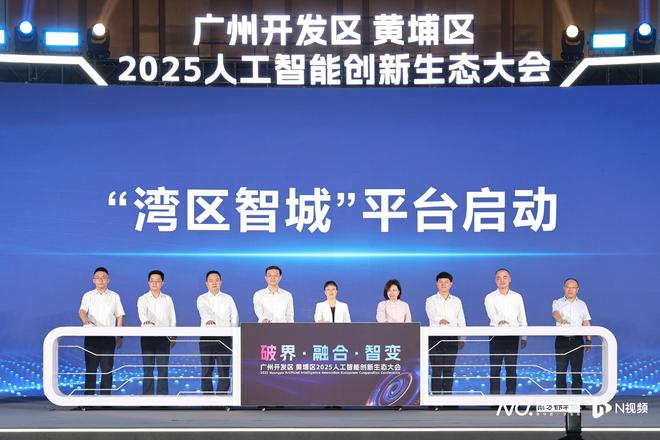
Core Insights - The Guangzhou Development Zone and Huangpu District are establishing a "virtual development zone" to enhance the synergy between industrial digitalization and digital industrialization [1][4] - The "Bay Area Smart City" platform, a pioneering trusted AI empowerment platform, was officially launched during the 2025 AI Innovation Ecosystem Conference [1][3] - The platform aims to provide affordable computing power and reliable data support for enterprises in Huangpu District, facilitating the development and trading of AI agents and data products [1][4] Group 1: Platform Features - "Bay Area Smart City" integrates trusted computing services, trusted AI agent services, and trusted data spaces to create a secure environment for data exchange and sharing [4][5] - The platform will establish five centers: Trusted AI Computing Service Center, Industry Incubation Center, Trusted AI Pilot Base, Trusted AI Innovation Center, and Talent Incubation Center [5] - It offers a "one-stop" AI customization solution, including data analysis, mining, consulting, and trading services [5] Group 2: Benefits for Enterprises - Enterprises can utilize the platform to develop AI models and agents, enabling a "use and earn" model where they can trade their developed AI products [5][9] - The platform aims to provide low-threshold R&D opportunities, allowing companies to benefit from "zero rental computing power + revenue sharing" [5][9] - The initiative is designed to accelerate the transformation of innovative ideas into productive capabilities on the production line [5][9] Group 3: Technological Advancements - The conference showcased the digital employee "Zhi Xiao Tong," a fifth-level AGI product capable of understanding missions and autonomously organizing resources [8] - Major tech companies like Tencent and Alibaba Cloud presented various AI innovations, highlighting the collaborative potential within the Huangpu District [9] - Huangpu District is actively developing the "Huangpu No. 1" intelligent computing inference cluster to support large-scale model training and inference [10]
观点| 杜雨博士接受吴晓波频道专访:解读AI生成内容强制标识政策
未可知人工智能研究院· 2025-09-08 03:01
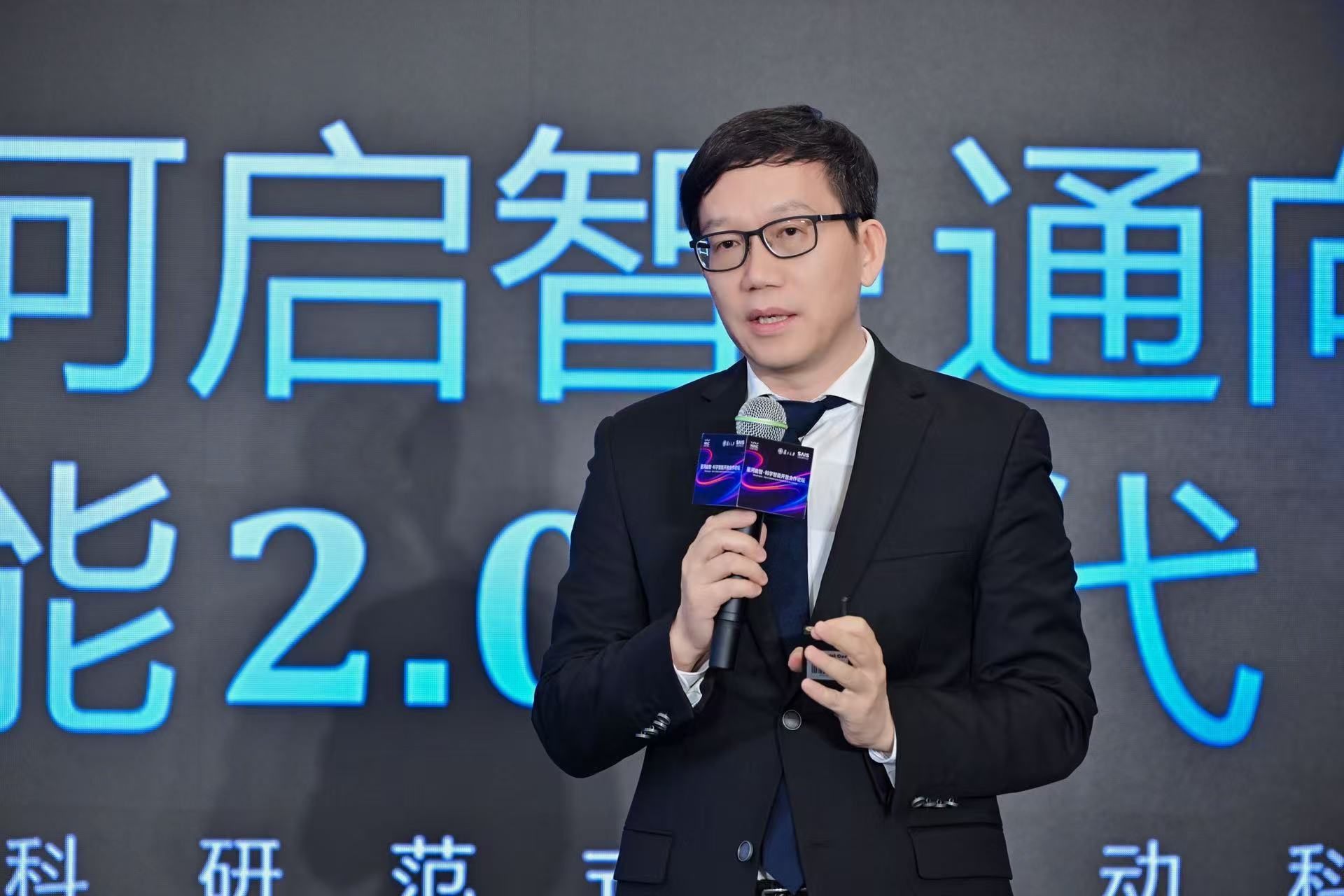
Core Viewpoint - The implementation of the "Artificial Intelligence Generated Synthetic Content Identification Measures" and "Cybersecurity Technology Artificial Intelligence Generated Synthetic Content Identification Methods" marks a new phase in the regulation of AI-generated content (AIGC) in China, addressing the risks associated with its rapid development and widespread use [1][2][3]. Policy Implementation - The new regulations are seen as a timely and necessary upgrade in supervision, establishing a foundation of trust within the industry [2][3]. - The policies transition AIGC governance from "industry self-regulation" to "national regulation," indicating a mature upgrade in governance systems [3][5]. Risk Prevention - The core objectives of the policy focus on three key risks: 1. Preventing fraud and the spread of false information by enabling quick identification of content authenticity [6][7]. 2. Clarifying copyright and content ownership to reduce legal disputes and protect the original ecosystem [7]. 3. Preventing internet data pollution by ensuring that low-quality AI-generated content does not degrade model performance [7]. Impact on AI Technology and Industry Applications - The policy is expected to positively influence the industry by shifting content creation focus from speed and quantity to quality and credibility, thus purifying the training data pool [8][9]. - It aims to provide a "license for entry" in high-trust sectors such as news, finance, healthcare, and education, alleviating societal concerns and accelerating value realization [8][9]. Long-term Governance Measures - Four supporting measures are proposed for achieving healthy AIGC development: 1. Strengthening responsibility tracing technology to ensure accountability [9][11]. 2. Controlling data quality from the source to enhance content reliability [11]. 3. Establishing a "human + AI" collaborative review mechanism for content verification [11]. 4. Enhancing public AI literacy through education and outreach initiatives [11]. International Comparison - The regulatory landscape for AIGC varies globally, with the U.S. favoring self-regulation, the EU implementing strict preemptive measures, and Japan taking a cautious approach [12][15]. - China's unique path combines explicit and implicit identification measures, emphasizing source and process management to mitigate misinformation [16]. Corporate Impact - The new regulations present both challenges and opportunities for companies, including increased costs for technology upgrades and extended responsibility chains [17][20]. - However, they also highlight new business opportunities in "trustworthy AI" and compliance technology, as well as the rising value of high-quality content [20]. Societal Value - The policy aims to reshape the content ecosystem and protect the public's cognitive space by preventing the spread of misinformation [21][26]. - The ongoing efforts of the Unknown Artificial Intelligence Research Institute will focus on promoting "technology for good" through standard-setting, technological development, and public education [22].

不止是“更会画画”,Google发布Gemini 2.5 Flash Image,为何Adobe率先拥抱?投资人必读
3 6 Ke· 2025-08-28 10:07
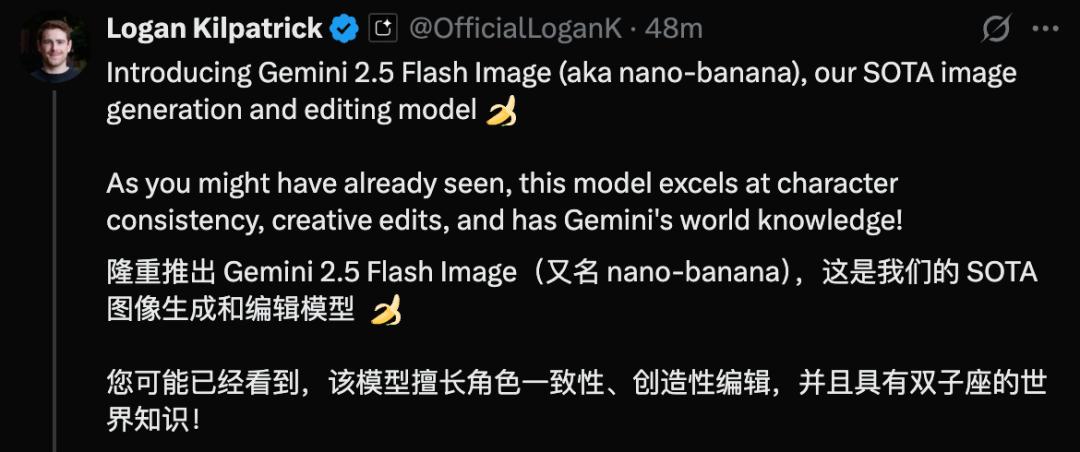
Core Insights - The release of Gemini 2.5 Flash Image-preview by Google marks a significant advancement in AI image generation, transitioning the technology from a "toy" to an "industrial-grade productivity tool" [1][10] - The model addresses three major pain points in AI-generated content: character consistency, modification difficulty, and style coherence, thus enhancing efficiency and controllability [3][10] Technological Breakthroughs - Gemini 2.5 Flash Image-preview enables a "controllable, iterative" creative process, integrating multimodal understanding and world knowledge, allowing AI to function more like a junior designer [5] - The model can seamlessly merge multiple images while maintaining character consistency across various scenes and styles, facilitating the creation of cohesive marketing materials [6] - Users can interact with the model using natural language for precise modifications, leveraging a vast knowledge base to understand complex instructions [6] Economic Implications - The cost of generating an image via the API is approximately $0.039, which supports its widespread commercial application [7] - The integration of Gemini 2.5 into Adobe's products signifies a major industry shift, allowing millions of designers and marketers to utilize advanced AI capabilities within their existing workflows [11][13] Market Dynamics - The demand for high-quality AI image generation is expected to drive significant growth in cloud computing services, particularly for companies like Google Cloud [14] - The rise of "model as a service" (MaaS) will encourage more SaaS platforms to integrate third-party AI models, fostering a robust API economy [14] Compliance and Trust - Google has introduced SynthID, an invisible digital watermark embedded in AI-generated images, enhancing transparency and trust in AI content [15][17] - This feature is particularly crucial for enterprises focused on brand safety and compliance, allowing them to manage legal and reputational risks effectively [17] Investment Opportunities - The emergence of Gemini 2.5 Flash Image-preview presents new investment coordinates, particularly in sectors reliant on visual content such as advertising, film production, and e-commerce [19] - Companies that effectively adopt AI tools are likely to see improved profit margins and market responsiveness, making "AI adoption rate" a key metric for assessing long-term competitiveness [19] - The infrastructure for AI, including AI chips and data centers, will benefit from the increasing demand for computational power [20] - Companies that successfully integrate top-tier AI models into their ecosystems, like Adobe, are expected to see enhanced user engagement and revenue metrics [20] Competitive Landscape - The competition in the AIGC space is intensifying, with Google's release serving as a strong response to rivals like OpenAI and Meta [21] - Investors should monitor advancements in model performance, ecosystem development, and commercialization efforts among leading tech companies [21] Ethical Considerations - The integration of SynthID highlights the growing importance of compliance and trust as competitive advantages in the AI industry [22]

从“幻觉”到“可信”,漆远谈AI如何跨越“敢用”门槛
Tai Mei Ti A P P· 2025-08-05 07:35
Core Insights - The global AI landscape is transitioning from a phase of technological exploration to one focused on creating tangible value through practical applications of AI technology [2] - There is a significant issue of homogeneity among current large model products, leading to market saturation [2] - The founder of Infinite Light Year, Qi Yuan, emphasizes that while the foundational large model market appears to be converging, industry applications are on the verge of an explosion, with unpredictable technological breakthroughs still possible [2] Industry Applications - Infinite Light Year has developed four major solutions for the financial sector, significantly expanding the coverage of index component stocks from 600 to 2600 and reducing the rebalancing cycle from quarterly to real-time responses in minutes [4][5] - The AI investment research assistant can complete a comprehensive analysis of a financial report within 5 minutes, improving efficiency by over 90% compared to manual analysis [10] Technological Innovations - The "Gray Box Large Model" concept proposed by Infinite Light Year aims to combine the probabilistic predictions of large language models with the logical reasoning of symbolic inference to address the issue of AI "hallucinations" [2] - The dual-engine technology system integrates neural-symbolic computing with large models, enabling precise handling of complex logical relationships and accurate predictions based on extensive data [9] Trust and Compliance - Trustworthiness is identified as a key factor for the successful implementation of AI in industries, particularly in finance where compliance with regulations is critical [8] - Infinite Light Year has introduced a "transparent reasoning mechanism" to enhance user trust by making the AI decision-making process clear and understandable [8] Future Outlook - The company is focusing on a dual-domain strategy for 2025, with horizontal development of a reusable AI infrastructure and vertical deepening in the financial and scientific intelligence sectors [3] - The future of AI competition is expected to shift from a focus on computational power to the ability to create value, with a strong emphasis on practical applications that address real-world problems [12]

直击WAIC 2025丨无限光年创始人漆远:对场景的深度理解和精耕是可信AI价值释放的终点
Mei Ri Jing Ji Xin Wen· 2025-07-29 13:56
Core Insights - The 2025 World Artificial Intelligence Conference (WAIC) held in Shanghai showcased over 800 companies and more than 3,000 cutting-edge exhibits, marking the largest scale in its history [1] - The focus of discussions shifted towards embodied intelligence, intelligent agents, and AI hardware terminals, indicating a more practical approach to AI applications [1] - The founder of Infinite Light Years, Qi Yuan, emphasized that the AI industry is transitioning from a phase of technological worship to a focus on value creation, with credibility being a central theme in this transformation [1] Industry Trends - The emergence of vertical large models is seen as a new phase in AI development, with companies now focusing on intelligent agents and specific industry applications [3][4] - Differentiated product value is crucial for vertical large models, as they must effectively address user pain points to stand out in the market [4] - The importance of Product Market Fit (PMF) is highlighted, suggesting that companies need to deeply understand industry-specific challenges to succeed [5] Trustworthy AI - The concept of trustworthy AI is gaining traction, with a need for models to transition from being merely usable to being reliable and effective in real-world applications [6][7] - The development of trustworthy AI involves a three-tiered approach: enhancing retrieval-augmented generation (RAG), implementing reinforcement learning with well-defined reward functions, and integrating knowledge with rules for open-domain problems [6] - AI companies must not only possess technical expertise but also understand the specific language, rules, and pain points of the industries they serve [7]