
台湾光复

Search documents
“全球视野下的中国抗战”国际学术研讨会在京开幕
Xin Hua She· 2025-11-02 10:42
Core Viewpoint - The international academic seminar "China's Anti-Japanese War from a Global Perspective" aims to reassess the historical significance and contemporary value of China's resistance against Japanese aggression, emphasizing the importance of historical reflection for future unity efforts [1][2]. Group 1: Seminar Overview - The seminar, hosted by Peking University, features nearly a hundred experts and scholars from various regions, including Taiwan, Hong Kong, Macau, the United States, the United Kingdom, and Japan [1]. - It includes 20 group meetings and one roundtable forum, focusing on the global perspective of China's anti-Japanese war and Taiwan's recovery [1][2]. Group 2: Historical Significance - The Chinese anti-Japanese war is recognized as the earliest and longest-running resistance in the global anti-fascist war, significantly altering the social landscape of China [2]. - The historical narrative of the anti-Japanese war has often been overlooked in international academia, highlighting the need for enhanced historical material sharing and collaboration between the two sides of the Taiwan Strait [2]. Group 3: Contributions and Future Directions - Peking University aims to support research in this field, enhance historical material organization and digitization, and promote international academic exchanges to contribute to building a community with a shared future for humanity [1]. - Experts will discuss various topics, including the global context of the Pacific War's outbreak in December 1941 and the significance of wartime international cooperation [2].
国台办:台湾光复值得两岸同胞共同铭记与维护
Yang Shi Xin Wen Ke Hu Duan· 2025-10-29 06:20
Core Viewpoint - The statement from the Taiwan Affairs Office emphasizes the significance of the victory in the Anti-Japanese War and the recovery of Taiwan as a collective achievement of the Chinese nation, highlighting the role of the Chinese Communist Party in this historical context [1] Group 1 - The Taiwan Affairs Office spokesperson, Peng Qing'en, responded to comments from Taiwan's Mainland Affairs Council regarding the establishment of a Taiwan Recovery Memorial Day [1] - The Anti-Japanese War victory and Taiwan's recovery are framed as a great victory for the entire nation, representing a shared glory for the Chinese people and the Chinese nation [1] - The Chinese Communist Party is credited with leading the anti-Japanese resistance and coordinating efforts with the Nationalist Party to effectively combat Japanese aggression [1] Group 2 - The Chinese Communist Party's strategies included establishing a united front against Japan and supporting the formation of Taiwanese volunteer forces to aid in the anti-Japanese efforts [1] - The statement calls for both sides of the Taiwan Strait to remember and uphold the significance of Taiwan's recovery [1]
中国驻加拿大使领馆及侨界举办多场座谈会纪念台湾光复80周年
Zhong Guo Xin Wen Wang· 2025-10-28 01:13
Core Viewpoint - The recent commemorative events for the 80th anniversary of Taiwan's recovery emphasize the significance of Taiwan's return to China as a crucial outcome of World War II and a fundamental part of the post-war international order, urging adherence to the One China principle [1][2][3]. Group 1: Commemorative Events - Multiple seminars were held by Chinese consulates and the overseas Chinese community in Canada to commemorate the 80th anniversary of Taiwan's recovery [1][2][3]. - The events included discussions with representatives from the Chinese community, Chinese enterprises, students, and scholars, highlighting the historical context and significance of Taiwan's recovery [1][2][3]. Group 2: Statements from Officials - Chinese Ambassador to Canada Wang Di articulated the importance of establishing Taiwan Recovery Day, asserting that Taiwan's return is a significant achievement of WWII and a consensus in international relations [1]. - Consul General Cheng Hongbo in Toronto emphasized the need for the Chinese community to oppose "Taiwan independence" and promote cultural integration between the two sides of the Taiwan Strait [2]. - Acting Consul General Zeng Zhi in Vancouver reiterated that Taiwan's recovery is an essential part of the historical and legal facts regarding China's unity, encouraging the Chinese community to contribute to national reunification efforts [3]. Group 3: Community Responses - Representatives from the overseas Chinese community expressed strong opposition to "Taiwan independence" and a commitment to supporting the reunification of China [1][2][3]. - The All-Canada Chinese Promotion Committee for China's Unification called for unity among overseas Chinese to promote peaceful reunification and uphold the One China principle [3].
“共铸民族魂”——设立台湾光复纪念日音乐会在京举办
Xin Hua She· 2025-10-28 00:52
Core Viewpoint - The music concert "Forging the National Soul" commemorates the Taiwan Restoration Day, emphasizing the historical connection and cultural ties between the people of Taiwan and mainland China [1][2]. Summary by Sections Historical Reflection - The concert opened with the grand overture "Forging the National Soul," which aimed to evoke the shared emotions of the people across the Taiwan Strait through music [1]. - The event featured three segments: "Treasure Island: Hometown," "Mountains and Rivers: Flames of War," and "Strait: Shared Glory," each revisiting collective memories and promoting national spirit [1]. Cultural Connection - A medley of classic Taiwanese songs was performed, showcasing the island's cultural heritage and the deep emotional ties between the people of Taiwan and mainland China [1]. - The duet "Waves of Gulangyu," sung by artists from both sides, highlighted the enduring familial bonds and sentiments shared between the two regions [1]. Tribute to Resistance - The concert included a segment of anti-Japanese war songs, such as "Great Wall Ballad" and "Nanniwan," paying homage to the historical struggles faced by the Chinese people, including those from Taiwan [2]. - A performance of the piano concerto "Defending the Yellow River" illustrated the united resolve of all Chinese people, including Taiwanese, against foreign aggression [2]. Commemoration of Taiwan Restoration - The children's choir performed "Taiwan Restoration Commemorative Song," reminding attendees of the significance of October 25, 1945, when Taiwan was restored to China [2]. - The concert concluded with a powerful rendition of "Singing the Motherland," expressing the shared aspirations of both sides for national unity and rejuvenation [2]. Audience Engagement - The concert attracted over 900 attendees, including officials and Taiwanese residents in Beijing, and was streamed online, engaging a wider audience across the Taiwan Strait [2].
外交部:希望各国支持中国人民完成国家统一的正义事业
财联社· 2025-10-27 12:25
Core Points - The establishment of Taiwan Recovery Memorial Day on October 25 reflects the historical significance of Taiwan's return to Chinese sovereignty after World War II, marking the 80th anniversary of this event [1] - The decision emphasizes the importance of the One China principle and aims to reinforce the international consensus that Taiwan is an inseparable part of China [2] Group 1 - Taiwan Recovery is a significant outcome of the victory in World War II and an essential part of the post-war international order [2] - The establishment of Taiwan Recovery Memorial Day showcases the commitment of the Chinese government and its people to uphold national sovereignty and territorial integrity [1][2] - The commemoration serves to unite all Chinese people, including those in Taiwan, in a shared historical memory and aspiration for national unity [1] Group 2 - The One China principle is recognized as a common consensus in the international community and a fundamental norm in international relations [2] - The Chinese government calls on other countries to adhere to the One China principle and support the rightful cause of national unification [2]


历史不容轻忽遗忘!民进党当局不办光复节纪念活动,“岛内人民无法接受”
Ren Min Wang· 2025-10-27 06:11
Core Viewpoint - The 80th anniversary of Taiwan's recovery is marked by significant commemorative events in mainland China, contrasting with the lack of recognition from Taiwan's ruling party, leading to public reflection on historical narratives and political motivations [1][4][5]. Group 1: Commemorative Events - Mainland China held a grand ceremony on October 25 to commemorate the 80th anniversary of Taiwan's recovery, including a reception at the Diaoyutai State Guesthouse, emphasizing the importance of this historical event [2][3]. - Attendees expressed that establishing Taiwan Recovery Day is timely and significant, with remarks highlighting the need to remember history and uphold historical truths [2][3]. - The event featured a display at the Chinese People's Anti-Japanese War Memorial Hall, showcasing Taiwan's historical governance and its role in the national anti-Japanese struggle [3]. Group 2: Political Reactions in Taiwan - The Taiwanese leadership, particularly Lai Ching-te, did not acknowledge the anniversary, leading to criticism regarding selective historical narratives and a lack of respect for history [4][5]. - Opposition figures, including KMT leaders, emphasized the importance of recognizing the anti-Japanese struggle and the historical significance of Taiwan's recovery, arguing against the ruling party's narrative [4][5][6]. - Criticism was directed at the ruling party for avoiding the term "recovery," with calls for a more respectful acknowledgment of historical events and the sacrifices made during the anti-Japanese war [6][7]. Group 3: Public Sentiment and Historical Reflection - Public sentiment in Taiwan reflects a desire to honor the historical significance of the recovery, with grassroots commemorative activities emerging despite the lack of official recognition [5][6]. - Commentary in Taiwanese media highlights the contrast between the mainland's commemorative approach and the ruling party's avoidance of historical acknowledgment, framing it as a betrayal of history [8]. - The discourse emphasizes the need for a collective memory that honors the sacrifices made for Taiwan's recovery and warns against the dangers of historical amnesia [7][8].
焦点访谈丨铭记光复历史 共创复兴伟业
Yang Shi Xin Wen Ke Hu Duan· 2025-10-27 01:31
这份铭记与宣示,在大会召开的前一天,已经通过国家的最高立法机关,以法律形式凝聚成了全民族的共同意志。 10月24日,十四届全国人大常委会第十八次会议作出决定:将10月25日设立为台湾光复纪念日,明确国家将举行纪念活动。表决通过的瞬间,会场响起经久 不息的掌声。 台湾自古以来就是中国的神圣领土。尽管清政府在甲午战争后被迫割让台湾,日本对台湾进行了50年殖民统治。但在1945年10月25日这一天,随着全民族抗 战的胜利,日本对台湾长达50年的殖民统治也彻底终结。中国受降官代表中国政府宣告:"自即日起,台湾及澎湖列岛已正式重入中国版图,所有一切土 地、人民、政事皆已置于中国主权之下。" 2025年10月25日,是第一个台湾光复纪念日。这是一个值得全体中国人共同铭记的日子。1945年的这一天,被日本殖民者窃据了50年的台湾终于光复,回到 祖国怀抱。在台湾光复80周年之际,全国人大常委会通过决定,将每年10月25日设立为台湾光复纪念日,并规定国家通过多种形式举行纪念活动。我们为何 要以法律形式、以国家名义来纪念这一天?"光复"二字的背后,又承载着怎样一段不容忘却的历史与民族记忆? 10月25日,在首个台湾光复纪念日这天 ...
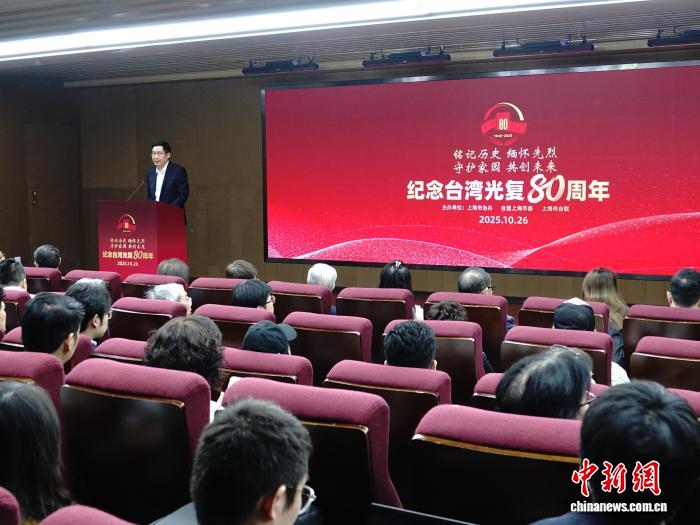
在沪台青谈设立台湾光复纪念日:共同的记忆将凝结更多的共识
Zhong Guo Xin Wen Wang· 2025-10-26 13:33
"面对日本侵略者,我的先辈们与大陆同胞同仇敌忾。两岸人民携手用鲜血共同谱写着壮烈的篇章,这 是不容置疑的事实,也是两岸同胞共同的历史记忆。"沙韵说。 中新网上海10月26日电 (记者缪璐)"张灯结彩喜洋洋,胜利歌儿大家唱,唱遍城市和村庄,台湾光复不 能忘……"26日举行的"铭记历史缅怀先烈守护家园共创未来"——上海市纪念台湾光复80周年主题纪念 会上,在沪台胞黄宗昊回忆起自己20世纪80年代初在台湾上小学时,音乐老师教唱的那首《台湾光复纪 念歌》。 10月24日,十四届全国人大常委会第十八次会议表决通过关于设立台湾光复纪念日的决定,以法律形式 将10月25日设立为台湾光复纪念日。 10月26日,"铭记历史 缅怀先烈 守护家园共创未来"——上海市纪念台湾光复80周年主题纪念会举行。 (上海市台办供图) 台湾光复是包括台湾同胞在内的全中国人民浴血奋战的结果。台湾泰雅人沙韵仍记得,祖父曾指着胸前 的伤痕告诉她,当年泰雅人翻越山岭,直面倭寇,浴血奋战,很多族人为此献出生命。 作为台胞抗日老战士何学仁(原名詹金平)的后代,胡思华回顾了外公从台湾奔赴祖国大陆、投身抗日烽 火的经历。他说:"外公的故事让我明白,爱国爱乡从来 ...
台湾人士:共同纪念台湾光复有助增进认同
Zhong Guo Xin Wen Wang· 2025-10-26 13:33
Core Points - The commemoration of Taiwan's recovery on October 25 has garnered significant attention across Taiwan, with various commemorative activities held nationwide [1] - The National People's Congress has legally established October 25 as Taiwan Recovery Memorial Day, marking a significant milestone in the path toward complete unification [1][2] - The establishment of this memorial day is seen as a reflection of the mainland's determination and will regarding Taiwan's status [1][2] Group 1 - The commemoration emphasizes the shared identity of both sides of the Taiwan Strait, enhancing mutual recognition among compatriots [1] - The new memorial day is viewed as a celebration not only for the people of Taiwan but for all Chinese people, highlighting the importance of historical context [1] - The term "recovery" used in the memorial day is believed to correct historical narratives and signify Taiwan's return from Japanese colonial rule [1] Group 2 - The restoration of the Taiwan Recovery Day as a public holiday after over 20 years is expected to help the Taiwanese public better understand their historical position within the Chinese nation [2] - The designation of October 25 as a national memorial day reinforces the legal fact that Taiwan is part of China, responding to public sentiment for peace and unification [2] - Acknowledging history is seen as essential for future cooperation and development between the two sides, laying a foundation for deeper integration [2]
焦点访谈|“光复”二字,承载着怎样一段不容忘却的民族记忆?
Yang Shi Wang· 2025-10-26 13:30
Core Viewpoint - The establishment of October 25 as Taiwan Recovery Memorial Day is a significant legal and national recognition of Taiwan's return to China after 50 years of Japanese colonial rule, marking a historical moment for all Chinese people [1][3][5]. Group 1: Historical Context - Taiwan was ceded to Japan in 1895 through the Treaty of Shimonoseki, leading to a 50-year colonial rule that ended on October 25, 1945, when Taiwan was officially returned to China [5][6]. - The formal surrender ceremony on October 25, 1945, marked the end of Japanese colonial rule and the restoration of Taiwan to Chinese sovereignty, as declared by the Chinese government [5][6]. Group 2: Commemoration and Significance - The National People's Congress has legally recognized October 25 as Taiwan Recovery Memorial Day, emphasizing the importance of this date in Chinese history and the unity of the nation [3][5]. - Various commemorative activities are being held across the country, including a significant event in Beijing attended by representatives from various sectors, including Taiwanese compatriots [3][12]. Group 3: Cultural and National Identity - The historical narrative emphasizes that Taiwan has always been an inseparable part of China, and the recovery of Taiwan is a testament to the sacrifices made by the Chinese people during the anti-Japanese war [5][10]. - The Taiwanese people's resistance against Japanese rule included both armed struggle and cultural preservation efforts, showcasing their enduring connection to Chinese identity [8][10]. Group 4: Political Implications - The establishment of the memorial day serves as a declaration that Taiwan is an integral part of China, countering any narratives that seek to undermine this fact [3][10]. - The current political climate in Taiwan, particularly under the Democratic Progressive Party, has seen attempts to downplay the significance of Taiwan's recovery history, which the central government aims to counteract through this commemoration [10][12].
