合伙人制度

Search documents
阿里合伙人瘦身:不在业务一线的基本都退出了
晚点LatePost· 2025-06-26 13:23
Core Viewpoint - Alibaba is undergoing significant organizational restructuring, focusing on streamlining operations and strategic refocusing, particularly within its partner system, which has seen a reduction in the number of partners to a historic low of 17 [3][4][11]. Summary by Sections Partner System Changes - Alibaba's partner team has decreased by 9 members, representing one-third of the total, marking the largest exit in the history of the partner system [4][11]. - The current partner committee has seen a change in one member, with Jiang Fan replacing Peng Lei, while the other four members remain unchanged [3][4]. Business Focus and Strategy - The restructuring signals a shift towards having more frontline business leaders in the decision-making body, with only 4 out of 17 partners being senior members not involved in day-to-day operations [4][5]. - The emphasis has shifted from internal value debates to focusing on growth and positioning, with e-commerce and AI + Cloud identified as the two main growth engines for Alibaba [4][5]. Financial Performance - For the fiscal year 2025, Alibaba reported revenues of 996.347 billion yuan, with a net profit increase of 77% to 125.976 billion yuan. E-commerce and cloud revenues grew by 8.3% and 11%, respectively [5][11]. - The company has exited several businesses, including Gao Xin Retail and Yintai Department Store, while achieving profitability in various segments like Gaode and Hema [5][11]. Partner Composition and Roles - The current 17 partners are divided into three tiers: 9 from e-commerce, cloud, and other businesses; 4 from the executive management team; and 4 senior partners focusing on cultural and strategic aspects [17][22]. - The partner system is designed to ensure the continuity of Alibaba's culture and values, with strict selection criteria emphasizing long-term commitment and cultural alignment [29][30]. Management and Decision-Making - The new CEO, Wu Yongming, has prioritized a user-first and AI-driven strategy, with a clear delineation of core and non-core business areas [24][25]. - The partner system allows for significant control over company decisions, with the ability to nominate board candidates and influence company direction [29][30].



中国企业传承驶入“三峡地带”
Hu Xiu· 2025-06-24 12:41
Core Viewpoint - The article discusses the challenges of succession in Chinese private enterprises, highlighting the difficulties faced by companies like Vanke and Alibaba in transitioning leadership from their founders to new management teams [2][24]. Group 1: Succession Challenges - Liu Qiangdong's retirement plan was influenced by the serious succession issues in domestic enterprises, aiming to be the first large internet company to be managed by professional managers [1][2]. - The succession of founders like Wang Shi and Jack Ma has led to significant personnel upheaval in their respective companies, indicating a broader issue in the succession of private enterprises in China [2][3]. - The lack of actual control in companies like Vanke and Alibaba complicates their succession process compared to those with a clear controlling shareholder [3][4]. Group 2: Internal Dynamics and Changes - Successors in both Vanke and Alibaba were chosen from within the companies, which can lead to instability as they navigate their new roles [5][6]. - Organizational changes initiated by new leaders, such as large-scale restructuring in Vanke and Alibaba, reflect their efforts to assert their leadership and justify their positions [8][9][10]. - Cultural shifts were also significant, with both companies undergoing discussions to redefine their core values and cultural frameworks post-succession [10][11]. Group 3: Leadership Styles and Strategies - New leaders like Zhang Yong and Yu Liang have adopted different strategies to establish their authority, including organizational restructuring and cultural iterations [12][13][15]. - The transition to a new business model, such as Vanke's shift to a partnership system and Alibaba's focus on a "business operating system," illustrates the need for successors to innovate and adapt to changing market conditions [16][17][18]. - The article emphasizes that successors must prove their capabilities and establish their own identities separate from their predecessors to gain legitimacy [20][21][22]. Group 4: Broader Implications - The ongoing challenges in succession highlight the complexities of leadership transitions in large private enterprises, which often face external market pressures alongside internal changes [23][24]. - The article concludes that the issue of succession in Chinese private enterprises remains unresolved and requires further exploration and solutions from future leaders [25].

邦基科技20250618
2025-06-19 09:46
Summary of the Conference Call for Bangji Technology Company Overview - **Company**: Bangji Technology - **Acquisition**: Acquired a 20% stake in American Pyston to enhance production management and efficiency in pig farming [2][8] Key Industry Insights - **Industry Focus**: Pig farming, specifically in breeding and fattening pigs - **Production Capacity**: Pyston currently manages a pig capacity of 80,000 to 100,000 sows, primarily in southern China, with a focus on improving production efficiency [3][5] Core Points and Arguments - **Production Efficiency**: Pyston's PSY (Pigs Sold per Sow per Year) is projected to reach 31-32 by 2025, indicating significant improvements in breeding efficiency [2][5] - **Strategic Expansion**: Bangji plans to collaborate with idle pig farms to accelerate the expansion of sow production capacity [2][7] - **Regional Focus**: The company aims to replicate its successful pig farming model from Shanxi to other regions like Yunnan and Sichuan [2][18] - **Sales Model**: Pyston will primarily focus on selling weaned piglets starting from 2024 [4] Financial Projections - **Feed Sales**: Expected feed sales for 2025 are projected to reach 1.4 to 1.5 million tons, exceeding the initial target of 1.2 million tons [16] - **Future Goals**: The target for 2026 is to increase feed sales to over 2 million tons [16] Operational Strategies - **Management Collaboration**: Bangji will leverage Pyston's management expertise to enhance pig farming operations [7][9] - **Cost Management**: The company provides transportation and credit support to reduce farming costs [11][12] - **Innovative Farming Practices**: The adoption of a partner system in Shandong has improved employee engagement and production outcomes [12] Additional Insights - **Biological Safety**: The new farming model emphasizes higher biological safety standards, which is crucial in the context of African Swine Fever [11][14] - **Future Trends**: The industry may see a shift towards a "south pig, north raising" model, optimizing resource allocation and production efficiency [15] - **Expansion Plans**: Bangji is cautious about expanding its feed factory layout, focusing on gradual growth based on market demand [12][17] Conclusion Bangji Technology is strategically positioning itself in the pig farming industry through acquisitions, operational efficiencies, and innovative farming practices, with a clear focus on expanding production capacity and improving overall efficiency in the coming years.

携手合伙人成功创办企业:注册公司流程与必备条件深度解析
Sou Hu Cai Jing· 2025-05-22 23:53
Core Insights - Partnership entrepreneurship is identified as a key pathway to achieving business goals, with a focus on the main processes of registering a partnership company and practical advice provided [1][3]. Group 1: Partnership Framework - Establishing a basic partnership framework is essential, with legal validity stemming from the signing of a Partnership Agreement that should detail capital contributions, equity ratios, decision-making mechanisms, and exit clauses [1]. - A dynamic equity distribution mechanism is recommended, reserving 10%-20% of equity for future talent acquisition or financing [1]. Group 2: Company Type Selection - Limited liability companies remain the preferred choice, while special partnerships may be suitable for specific industries like law and accounting, and limited partnerships can benefit tech companies for equity incentives [3]. - Awareness of foreign investment restrictions in 28 industries, including finance and education, is crucial, and prior registration with business authorities is necessary [3]. Group 3: Registration Process - The registration process includes preparing 3-5 alternative names that comply with the naming convention of "administrative region + name + industry characteristic + organizational form" [3]. - The articles of association must include core clauses such as shareholder rights and profit distribution, along with provisions for regular meetings and voting mechanisms for significant matters [3]. - Legal addresses must be legitimate, and if a residential address is converted for business use, proof is required; virtual address registration should involve legitimate services [3]. Group 4: Tax Planning and Legal Risk Management - Tax planning is critical, requiring tax registration within 30 days and selection of taxpayer status based on annual sales [3]. - Legal risk management should address issues such as non-compete agreements, equity holding, decision-making deadlocks, and exit mechanisms, including methods for calculating share buyback prices [3]. Group 5: Special Considerations - For technology-based partnerships, applying for high-tech enterprise status is advisable, and multi-regional operations may necessitate establishing branch offices [3]. - Shareholder conflicts can be resolved through equity buyouts or company divisions, emphasizing the importance of establishing clear rights and responsibilities, as well as communication mechanisms prior to registration [3].

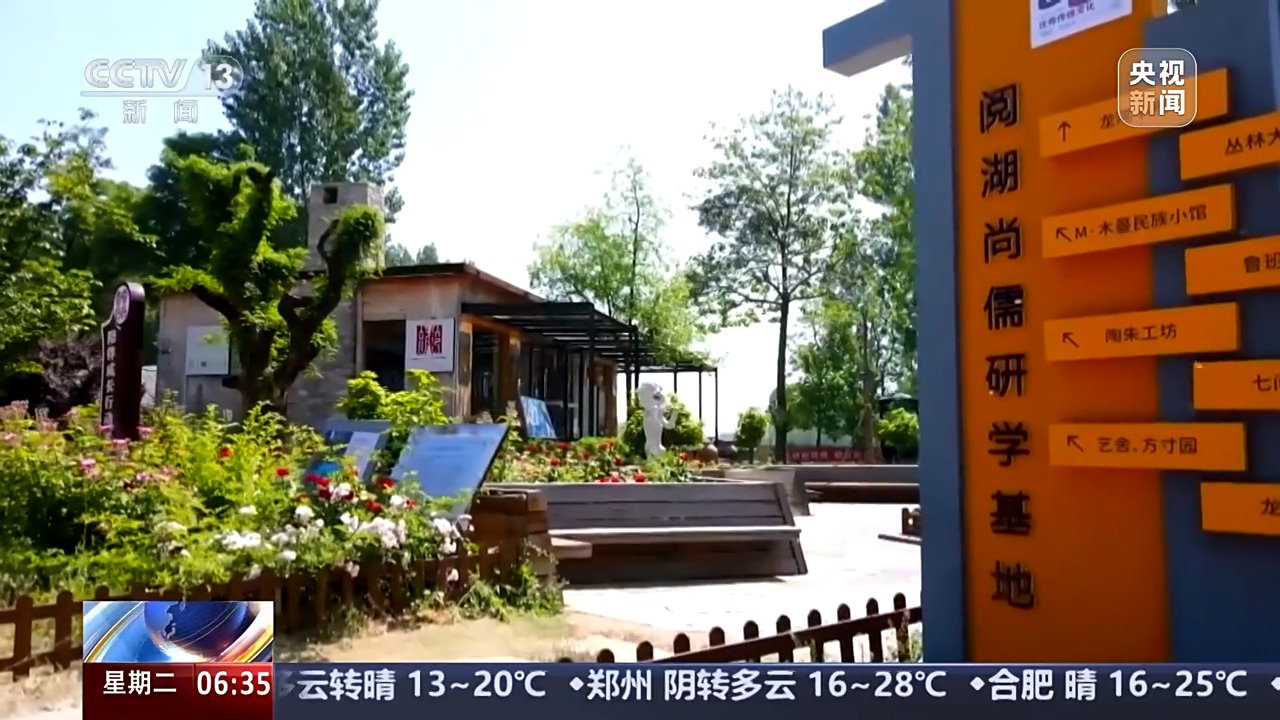
贫困县→乡村游“文旅热地” 山东泗水解锁乡村振兴新路径
Yang Shi Xin Wen· 2025-05-06 01:06
Core Insights - Shandong Sishui County has transformed from a poverty-stricken area to a popular rural tourism destination during the May Day holiday, showcasing the success of local government initiatives and community involvement [1][3][9] Infrastructure Development - The local government invested over 60 million yuan to improve essential infrastructure such as roads, water supply, electricity, and 5G networks to support the development of the cultural tourism sector [3] Community Engagement - Local entrepreneur Tian Bin, recruited by the government, initially faced challenges in attracting tourists but adapted by learning and implementing suitable cultural tourism projects [4][6] - The introduction of local specialties, such as sweet potato noodles, has proven successful in attracting visitors and enhancing the local economy [6][8] Agricultural Innovation - The "One Village, One Product" model has been implemented, recruiting agricultural experts to lead rural revitalization efforts, resulting in the development of various agricultural industries [9][16] - The strawberry cultivation project led by Zhang Shike has expanded from 100 acres to over 2,000 acres, generating an annual output value of over 13 million yuan [14] Employment Generation - The initiatives have created over 20,000 jobs and generated nearly 2 billion yuan in output value through the recruitment of agricultural partners and the establishment of industrial parks [16][20] - The industrial park in Bianjiazhuang Village has attracted over 20 enterprises, providing employment for more than 1,000 individuals and contributing over 200 million yuan in output value [20]