
商品牛市

Search documents
一场“不讲武德”的游戏:大宗商品的“逼仓”狂潮
对冲研投· 2025-12-13 10:04
Group 1: Gold and Silver Market Dynamics - The article discusses how silver has taken the spotlight as gold faces regulatory constraints, leading to a shift in market dynamics where silver reflects macroeconomic concerns more freely than gold [3][4]. - The gold-silver ratio has changed, indicating a more optimistic market sentiment, with silver's price rising faster than gold's, suggesting a potential bullish trend for silver [4]. - Current market conditions show a tightening of physical silver supply, with global inventories being affected by preemptive movements into the U.S. due to potential tariffs, leading to a significant price increase [4]. Group 2: Polysilicon Market Changes - The polysilicon market experienced a strong rally due to a shortage of deliverable warehouse receipts, which created a "squeeze" scenario, pushing prices up significantly [6][7]. - Recent developments indicate an increase in available warehouse receipts, which may signal a shift back to fundamental market conditions rather than speculative trading [10]. - The article highlights the transition from a speculative-driven market to one that is more aligned with actual supply and demand fundamentals [10]. Group 3: Glass Market Challenges - The glass market is facing a dual challenge of reduced production and stagnant demand, leading to a lack of price recovery despite some supply-side adjustments [12][13]. - Current data shows a slight decrease in daily melting capacity, but this has not sufficiently alleviated the oversupply situation, as demand remains weak [12]. - The article notes that while there have been some price fluctuations, the underlying demand issues continue to hinder any significant rebound in glass prices [13]. Group 4: Commodity Market Overview - The article emphasizes that the current discussions around a "commodity bull market" are largely driven by the performance of gold, silver, and copper, which have unique supply and demand characteristics [14][15]. - It contrasts the strong narratives surrounding these metals with the struggles faced by other commodities like oil and steel, which are still influenced by traditional supply-demand dynamics [20][21]. - The article suggests that the excitement around certain commodities may overshadow the more challenging realities faced by others, indicating a selective bullish sentiment in the market [20][21]. Group 5: Bidding War Dynamics in Futures Market - The article outlines the phenomenon of "squeezing" in the futures market, where traders exploit market rules and information asymmetries to gain an advantage [23][25]. - It describes how different commodities have experienced unique bidding wars, with some being driven by supply shortages and others by regulatory loopholes [26][27]. - The article highlights the importance of understanding market rules and dynamics to navigate the complexities of futures trading effectively [30]. Group 6: Long-term Outlook for Coal Market - The coal market is expected to face supply constraints due to completed production targets and regulatory pressures, which may limit future output increases [42]. - Demand is anticipated to recover as macroeconomic conditions improve, particularly with upcoming seasonal purchasing needs [44]. - The article suggests that current price declines may present buying opportunities, as the underlying supply-demand fundamentals remain supportive of a long-term bullish outlook [46].


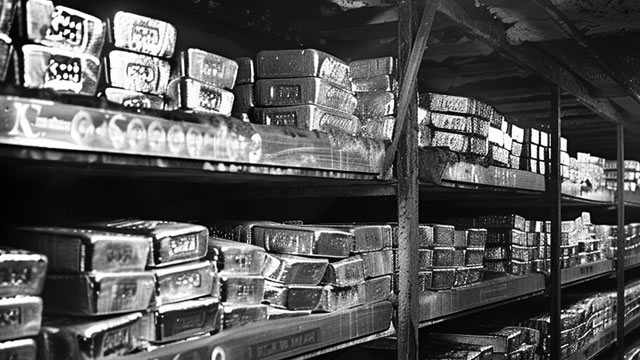
Silver Shortage Supports Rally, Technicals Point To Further Gains
Benzinga· 2025-11-28 11:59
Core Insights - Silver is significantly outperforming gold, indicating a potential second phase of the commodity bull market, with spot silver rising over 85% in 2025 from under $30 to over $54 per ounce [1] Supply and Demand Dynamics - The rally in silver prices is driven by tight inventories, persistent investor flows, and a structural supply deficit, with projections of silver reaching $60 next year [3] - Industrial demand for silver rose to 689 million ounces in 2024, with photovoltaic applications accounting for 244 million ounces, a more than 150% increase from 2020 [5] - The Silver Institute anticipates a fifth consecutive annual supply deficit of approximately 95 million ounces, despite weak demand for jewelry and silverware [6] - Over 70% of mined silver is a byproduct of other metal production, limiting the ability of producers to respond quickly to price increases [7] Technical Analysis - Silver's price patterns exhibit significant technical formations, including a cup-and-handle pattern, suggesting potential further price increases in 2025 [11]
严为民:又到一个好时机!
Sou Hu Cai Jing· 2025-07-07 09:30
Core Insights - The article emphasizes the strategy of "buying cold points and selling hot ones," suggesting that investors should focus on undervalued sectors rather than chasing after current hot stocks [1] - The electricity sector has recently seen a 10% increase in value, indicating a shift from cold to hot, which supports the idea of identifying potential opportunities in less popular sectors [1] - The overall market trend is upward, and investors are encouraged to look for sectors that are still relatively cold, such as non-ferrous metals, which may heat up following a stabilization in tariffs expected on July 9 [1] Sector Analysis - The electricity sector has transitioned from being cold to hot, demonstrating a significant 10% increase in just one week, highlighting the potential for rapid changes in sector performance [1] - Non-ferrous metals are currently identified as a cold sector, suggesting that there may be opportunities for growth as market conditions improve [1] - Emerging technologies such as controllable nuclear fusion, solid-state batteries, and computing chips are also mentioned as potential investment opportunities that may be reaching a favorable time for entry [1]

再Call锑板块:远未结束,坚定看涨
2025-03-09 13:19
Summary of the Conference Call on the Antimony Sector Industry Overview - The conference call focused on the antimony (T) sector, with a strong bullish outlook expressed by analyst Wang Qingyang from Guojin Metal Materials Group, indicating that the market is far from over and remains optimistic about future price increases [2][22]. Key Points and Arguments - **Historical Price Trends**: Antimony prices have shown significant cyclical and volatile trends, with prices rising from approximately 40,000 RMB per ton in 2008 to 110,000 RMB in 2011, driven by commodity bull markets and resource quota policies [2]. - **Current Market Dynamics**: The recent surge in antimony prices is attributed to multiple factors, including commodity bull markets, policy adjustments (such as rare earth quotas and export controls), and the growth of the photovoltaic (PV) industry [2]. - **Export Controls Impact**: Recent export controls on high-purity antimony have led to a drastic drop in export volumes, from 5,000 tons in September to only 50 tons in October, significantly tightening market supply [4]. - **Future Price Expectations**: With the anticipated recovery of exports and the rebuilding of international trade order, domestic antimony is expected to shift from surplus to scarcity, with prices projected to rise from a base target of 250,000 RMB per ton to potentially over 300,000 RMB [2][22]. - **Global Supply Chain Position**: China controls about 50% of global antimony ore production and nearly 70% of smelting capacity, highlighting its significant bargaining power in the global supply chain [9]. - **Photovoltaic Glass Market Influence**: The price increase in photovoltaic glass has significantly boosted industry margins, with a notable increase in gross margins by nearly 10 percentage points due to rising glass prices [11]. - **Supply and Demand Forecast**: The global antimony production is approximately 130,000 tons, with an annual growth rate of only 2%-3%. The decline in production from companies like Russia's Polar Gold may lead to negative growth in global antimony supply by 2025 [18][19]. Additional Important Insights - **Antimony in Photovoltaic Glass**: Antimony is used in photovoltaic glass in small quantities, with a minimum addition of about 1.3‰ per ton of glass, indicating a stable demand even with zero growth in global installations [12]. - **Market Demand Decline**: In the second half of 2024, both domestic and foreign demand for photovoltaic glass is expected to decline significantly, with total demand dropping by 30%-40% [7]. - **Price Discrepancies**: There is a notable price difference between domestic and international photovoltaic glass, with domestic prices around 200,000 RMB per ton compared to 52,000 USD per ton internationally, indicating potential for increased exports [10]. - **Investment Recommendations**: Analysts recommend focusing on key players in the sector, such as Huaxi Nonferrous and Hunan Gold, which are expected to perform well due to their strategic positions and market conditions [22]. This summary encapsulates the critical insights and projections regarding the antimony sector, emphasizing the bullish outlook and the factors influencing market dynamics.