
锑矿

Search documents
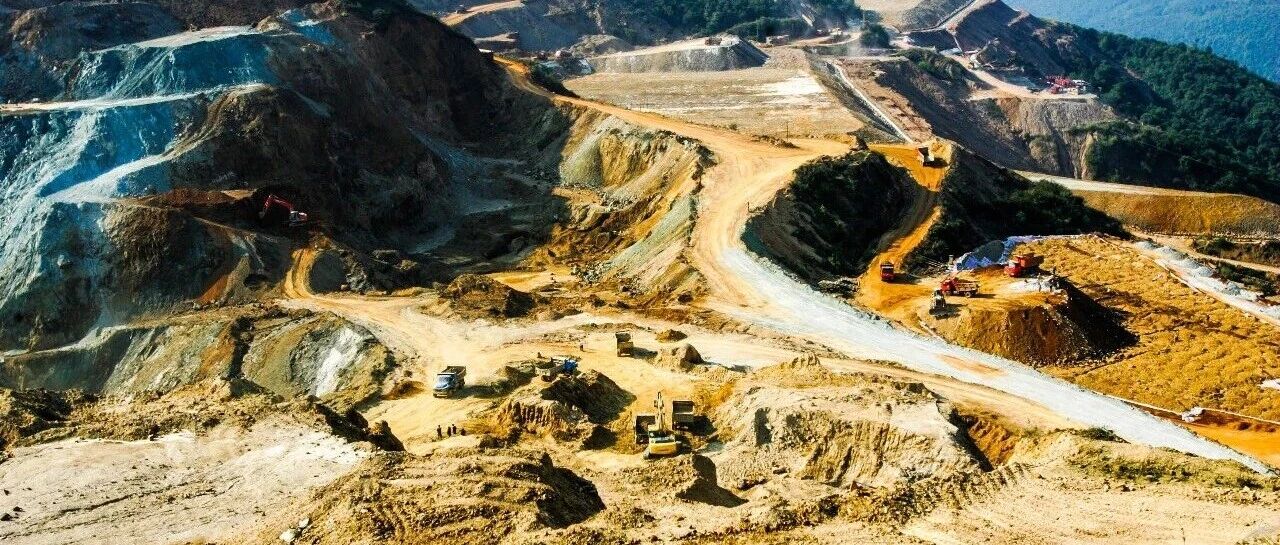
中国又发现四个新矿
第一财经· 2026-03-19 04:13
Core Viewpoint - The article highlights significant discoveries in mineral resources in China, particularly in Sichuan and Gansu, as part of the new round of mineral exploration strategy, showcasing the country's efforts to enhance its resource base and secure critical minerals for future development [1][3]. Group 1: Mineral Discoveries - Sichuan's Mianning County has reported the discovery of solid mineral resources, including rare earth elements, fluorite, barite, and antimony [1]. - The rare earth resources in Mianning County are quantified as follows: total resource amount of 9,665,612 tons, with proven resources at 1,567,985 tons, controlled resources at 4,575,765 tons, and inferred resources at 3,521,862 tons [2]. - The fluorite resources in the same area are reported with a total resource amount of 27,135,429 tons, proven resources at 2,747,778 tons, and inferred resources at 24,387,651 tons [2]. - Barite resources in Mianning County are detailed with a total resource amount of 37,227,720 tons, proven resources at 4,895,232 tons, and inferred resources at 32,332,488 tons [3]. - Gansu's Dangchang County has reported antimony resources with a total amount of 51,455 tons, proven resources at 36,011 tons, and inferred resources at 24,699 tons [3]. Group 2: Strategic Achievements - During the 14th Five-Year Plan period, China's new round of mineral exploration strategy has yielded impressive results, including the discovery of 10 oil fields with over 1 billion tons and 19 large gas fields [3]. - Key mineral resources such as uranium, copper, gold, lithium, and potassium salts have seen significant increases in resource quantities, with notable discoveries including a copper mine in Tibet exceeding 1 billion tons and a large gold mine in Shandong [3].

受益金、锑价格持续向好 湖南黄金或迎量价齐升
Mei Ri Jing Ji Xin Wen· 2025-12-25 14:36
Core Viewpoint - Hunan Gold is positioned as a leading player in gold and antimony production, with significant growth potential driven by rising metal prices and a robust operational framework [1][2]. Group 1: Company Performance - In the first three quarters of 2025, Hunan Gold achieved a revenue of 41.19 billion yuan, marking a year-on-year increase of 96.26% [1]. - The company's net profit attributable to shareholders reached 1.029 billion yuan, up 54.28% year-on-year, while the net profit excluding non-recurring items was 1.054 billion yuan, reflecting a 57.3% increase [1]. - The company produced 46,328 kilograms of gold in 2024, a slight decrease of 2.87% compared to the previous year [2]. Group 2: Market Dynamics - The Federal Reserve's interest rate cuts and central bank gold reserves accumulation are expected to provide strong support for gold prices [1]. - A significant decline in antimony production from China and Russia since 2020 has led to a rapid contraction in global antimony supply, with ongoing production cuts in various mines [1]. - The supply-demand gap for antimony is anticipated to widen, leading to an upward adjustment in antimony prices [1]. Group 3: Resource Development - Hunan Gold has a clear growth trajectory, controlling 30 mining rights, including 12 mining rights and 18 exploration rights [2]. - The company is focused on the development of the Anhua Zhazixi antimony mine and the Yuangling Woxi gold-antimony-tungsten mine, among others [2]. - The discovery of over 40 gold veins in the Wangu gold mine area, with the highest grade reaching 138 grams per ton, indicates significant resource potential [3]. Group 4: Strategic Partnerships - Hunan Gold has signed an agreement with its controlling shareholder to cultivate gold resources in the Wangu mining area, ensuring priority subscription rights for the company upon project maturity [3]. - The company is recognized as the largest antimony producer in China, enhancing its competitive edge in the market [3].

是时候跟美国算总账了!96吨稀金被海关追回,中国两张牌打得牛
Sou Hu Cai Jing· 2025-12-22 06:16
Group 1 - The Chinese Ministry of Commerce has approved the export license applications of some rare earth exporters, indicating a willingness to stabilize the global supply chain while maintaining strategic security [1][5] - China holds a dominant position in the global rare earth industry, with 36.7% of the world's rare earth reserves, and possesses 90% of the patents related to smelting and separation technology [3] - The recent easing of export controls has provided some relief to Western companies, particularly in the military and electric vehicle sectors, which heavily rely on Chinese rare earth materials [5][6] Group 2 - A significant smuggling case involving antimony ingots was recently adjudicated, highlighting the risks associated with strategic resource smuggling, with 166 tons of antimony involved [6][8] - Antimony is considered a critical strategic resource, essential for military applications, and China controls nearly half of the global antimony reserves [8] - The ongoing geopolitical tensions are reflected in actions such as the U.S. canceling a large wheat order from China while simultaneously announcing a substantial arms sale to Taiwan, indicating a broader strategy of containment against China [10][12] Group 3 - The Chinese government is adopting a counter-strategy targeting U.S. agricultural exports in response to provocations, particularly in light of the importance of agricultural trade in U.S.-China relations [12]
终于破案,96吨稀金被追回,13万吨订单被消除!开始跟美国算总账
Sou Hu Cai Jing· 2025-12-19 21:51
Group 1 - A significant smuggling case involving 166 tons of antimony ingots was thwarted, with 96 tons successfully recovered by customs [3][13][15] - The Shenzhen Intermediate People's Court sentenced the main perpetrator to 12 years in prison, highlighting the severity of the crime [3][19][22] - Antimony is a critical material for manufacturing thermal imaging devices and is essential in the semiconductor industry, making it a strategic resource for national security [5][17] Group 2 - The Chinese government has implemented export controls on antimony and is now approving certain export licenses for rare earth elements, indicating a structured approach to resource management [24][26][38] - Rare earth elements are crucial for various high-tech applications, including military equipment, and the U.S. heavily relies on imports from China for these materials [28][31][32] - The recent export control measures reflect China's strategy to manage its resources while ensuring compliance from legitimate exporters [38] Group 3 - Following the U.S. approval of a $111 billion arms sale, China responded by canceling a 132,000-ton wheat order, signaling its capability to leverage trade as a countermeasure [40][42][46] - The cancellation of the wheat order, while minor in terms of China's overall grain production, serves as a strategic signal to the U.S. regarding the consequences of its actions [44][54] - China's actions demonstrate its resolve to protect its strategic resources and assert its position in international trade negotiations [53][56]

华锡有色20251130
2025-12-01 00:49
Summary of the Conference Call on Huaxi Nonferrous Metals Industry Overview - **Antimony Market**: China dominates the global antimony supply, controlling approximately 50% of production and 70-80% of smelting. The market is currently experiencing a split due to export controls, leading to domestic oversupply and overseas shortages. [2][4][5] - **Tin Market**: The tin market is expected to experience a long-term bullish trend over the next 3-5 years, driven by continuous global demand and supply challenges. The supply growth has been stagnant for the past decade, with new mining developments lagging behind. [2][6][8] Key Insights - **Antimony Price Trends**: Following the easing of export controls, domestic antimony prices have risen to over 170,000 CNY, while overseas prices have decreased to around 350,000 CNY. Future price increases will depend on the stabilization of overseas prices. [2][5] - **Tin Demand Drivers**: Tin is increasingly in demand due to its applications in electronics and semiconductors. The semiconductor industry's recovery is expected to boost sales by 15-20% in 2025, with a significant reduction in inventory levels. [2][9] - **Strategic Importance of Antimony**: Antimony is recognized for its strategic importance, particularly in military applications. The government is likely to implement policies to stabilize prices and enhance profitability for antimony producers. [4][7] Company Positioning - **Huaxi Nonferrous Metals**: The company is positioned to benefit from both antimony and tin markets, with plans to increase production by approximately 15% in 2026 and nearly 40% by 2027. The company aims to consolidate regional resources and expand its project portfolio. [3][11][12] - **Future Growth Potential**: By 2030, the company anticipates an additional demand of over 70,000 tons driven by AI and semiconductor recovery, while facing a significant supply gap. This positions Huaxi Nonferrous Metals favorably for long-term growth. [12] Additional Considerations - **Supply Constraints**: The global tin supply is critically low, with reserves expected to last only about 14 years. This scarcity, combined with increasing demand from new technologies, is likely to keep tin prices elevated. [8] - **Impact of Wa State**: The Wa State's policies are expected to influence global tin supply, but current high prices have not sufficiently incentivized rapid production recovery. [10] This summary encapsulates the key points discussed in the conference call regarding the antimony and tin markets, the strategic positioning of Huaxi Nonferrous Metals, and the broader implications for the industry.

锑行业观点更新
2025-11-25 01:19
Summary of Antimony Industry Conference Call Industry Overview - The antimony industry is experiencing significant changes due to China's recent policy adjustments regarding antimony exports to the U.S. This is expected to substantially increase antimony export volumes, particularly to the U.S., thereby driving up domestic and international antimony prices [2][3][4]. Key Points Policy Changes - In late October, the Ministry of Commerce released export declaration conditions for state-owned trading enterprises for 2026-2027, providing clarity on future export trade and alleviating uncertainties regarding export policies [3] - On November 7, the Ministry announced the lifting of export restrictions on antimony to the U.S., effective until November 27, 2026, which is anticipated to boost China's antimony export volumes [3][4]. Supply Dynamics - Antimony is characterized by its strong scarcity, with a static extraction ratio of only 20 years, significantly lower than copper and lithium, which have ratios of 36 and 125 years, respectively [5]. - Global tin production has decreased from 178,000 tons in 2011 to an estimated 125,000 tons in 2024, a decline of 30%. China's tin production has dropped from 150,000 tons to 56,000 tons, a 63% decrease, primarily due to declining ore grades and the depletion of rich ores [5]. - The production of tin by Russia's Jikin Gold Company has also significantly declined, from 27,000 tons in 2023 to 12,700 tons in 2024, a 53% year-on-year drop [5]. Demand Trends - The demand for antimony in photovoltaic applications has surged, increasing from 6% in 2019 to 27% currently. The main sources of demand for antimony are flame retardants (45%), photovoltaics (27%), and lead-acid batteries (17%) [6]. - After a peak in substitution earlier this year, remaining demand is primarily rigid, with limited further substitution potential [6]. Market Conditions - Current inventories of antimony among refineries, traders, and users are low, leading to active market inquiries and increased transaction volumes, which support rising antimony prices [6]. - The domestic antimony price is expected to continue rising, while international prices may decline, leading to a gradual narrowing of the price gap between domestic and international markets [4][7]. Investment Opportunities - Huaxi Nonferrous is highlighted as a company with significant investment potential due to its expansion plans and being in an upward cycle. The company is expanding its Gaofeng and Copper Pit mines, with expected production capacities of 11,600 tons/year and 18,000 tons/year, respectively, representing year-on-year increases of over 60% and 130% [4][9]. Additional Insights - Historical tin price fluctuations have been influenced by supply, demand, and policy factors, with notable events including supply reductions due to environmental regulations and economic downturns impacting demand [8]. - The current environment suggests a continued tight supply situation for antimony, with limited global supply growth anticipated in the near term [5][6].
东兴晨报P1-20251117
Dongxing Securities· 2025-11-17 06:45
Economic News - The State Council meeting emphasized enhancing supply-demand adaptability to unleash consumption potential and promote economic circulation, focusing on consumption upgrades to lead industrial upgrades [1] - The Ministry of Foreign Affairs and Chinese consulates in Japan warned Chinese citizens about the deteriorating safety environment in Japan, advising against travel [1] - The National Bureau of Statistics reported that the industrial added value above designated size grew by 4.9% year-on-year in October, with a cumulative growth of 6.1% from January to October [4] Key Company Information - Ningde Times' shareholder Huang Shilin plans to transfer 1% of shares [4] - Huaxia Happiness has had its pre-restructuring accepted by the Langfang Intermediate Court [4] - Kaiser Travel Industry formed a consortium with Guangzhou Haina to participate in the restructuring investment of Zhangjiajie Tourism Group, acquiring 800,000 shares [4] - Huakang Clean won a project worth 100 million yuan [4] - Chuangye Huikang is planning a change of control and will resume trading on November 17 [4] Antimony Industry Insights - China holds 30% of global antimony resources, with reserves increasing from 480,000 tons in 2020 to 670,000 tons in 2024, reflecting a CAGR of 8.7% [6] - In 2024, China is projected to produce 60,000 tons of antimony, accounting for 57.7% of global production, which has been declining over the past decade [7] - The demand for antimony in flame retardants remains the highest, while the fastest growth is seen in photovoltaic glass, with a projected 10.8% increase in global antimony consumption in 2024 [8] - The strong growth in photovoltaic installations is expected to drive sustained demand for antimony, with projections indicating a significant increase in demand from 2024 to 2027 [9] - The global antimony supply-demand gap is expected to widen, with a projected shortfall of 9.5 million tons by 2027, representing 42.8% of demand [10] - The tightening of antimony supply due to export controls and environmental policies in China is likely to push prices higher, with potential increases of up to 56% in domestic prices [11]
锑行业深度:供需增速错配或推升行业进入强景气周期
Dongxing Securities· 2025-11-14 11:27
Investment Rating - The report maintains a "Positive" investment rating for the non-ferrous metals industry [2] Core Viewpoints - The antimony industry is expected to enter a strong prosperity cycle due to a mismatch in supply and demand growth rates [4][8] - China's antimony resource reserves account for 30% of the global total, with a significant increase in reserves from 480,000 tons in 2020 to 670,000 tons in 2024, reflecting a CAGR of 8.7% [4][18] - Global antimony production is highly concentrated, with China accounting for 58% of the total production in 2024, although production has been declining [5][23] - The demand for antimony is projected to grow significantly, driven by the rapid development of photovoltaic installations and the increasing use of antimony in glass for solar panels [6][42] Summary by Sections 1. Antimony Supply Dynamics - Antimony supply is experiencing an unexpected contraction, with China's environmental and export restrictions contributing to a rigid supply growth characteristic [8][27] - The global antimony supply is expected to decline from 137,000 tons in 2024 to 129,000 tons by 2027, with a CAGR of -2% [30][57] - China's reliance on imported antimony concentrates is high, with approximately 45.7% of the supply coming from imports in 2024 [28][31] 2. Antimony Demand Growth - Global antimony consumption is projected to increase by 10.8% year-on-year to 166,000 tons in 2024, with the fastest growth in demand coming from photovoltaic glass [6][45] - The demand for antimony in photovoltaic glass is expected to grow from 49,000 tons in 2024 to 90,000 tons by 2027, reflecting a CAGR of 22% [43][49] - The overall global antimony demand is anticipated to rise from 166,000 tons in 2024 to 224,000 tons by 2027, with a CAGR of 11% [45][50] 3. Supply-Demand Gap and Price Outlook - The supply-demand gap for antimony is expected to widen significantly, with projected deficits of 2.8 million tons in 2024 and increasing to 9.5 million tons by 2027 [51][58] - The tightening supply conditions and increasing demand are likely to push antimony prices into an upward trajectory, with potential price increases of up to 56% anticipated [52][52] - The report highlights that changes in China's export policies could fundamentally alter the global antimony trade flow and pricing dynamics [10][52] 4. Related Companies - Companies mentioned in the report include Huayu Mining, Huaxi Nonferrous, and Hunan Gold [11][59]

去美元化时代 黄金正在重塑全球“价值秩序” |IMARC 专访(ASX: BGD)首席执行官 Alexander Scanlon
Sou Hu Cai Jing· 2025-11-10 12:54
Core Insights - The article discusses the ongoing structural transformation of the global monetary system, emphasizing the resurgence of gold as a significant asset in the context of de-dollarization and geopolitical shifts [5][21][22]. Group 1: Geopolitical Transitions and Gold's Re-Monetisation - The process of gold's re-monetisation is in its early stages, driven by geopolitical changes and the reconfiguration of trade alliances, particularly among BRICS nations [6][27]. - The de-dollarization of energy markets is a strategic starting point, as energy is foundational to the global economy, influencing all other markets [7][25]. - Recent developments, such as BHP's acceptance of yuan for 30% of its iron ore sales, signify a notable shift away from the dollar in global commodity transactions [7][27]. Group 2: Erosion of the Dollar's Reserve Status - The relative value of the US dollar in international trade is declining, which threatens its long-standing status as the exclusive reserve currency [8][28]. - As countries require fewer dollars for commodity purchases, their reserves in dollars and US Treasuries are expected to decrease, indicating a long-term trend of de-dollarization [9][28]. Group 3: Gold as a Strategic and Geopolitical Hedge - Gold is re-emerging as a crucial component of international trade settlements and reserve systems, reflecting a shift back to a multi-currency market [10][31]. - The concerns over currency weaponization and the safety of reserve assets have led countries to seek alternatives to the dollar, with gold being a preferred choice due to its geopolitical neutrality [10][32]. Group 4: Structural Optimism in the Gold Market - Many financial institutions are optimistic about gold's long-term prospects, recognizing it as part of a changing global monetary order rather than merely a cyclical safe-haven asset [11][33]. - The recognition of de-dollarization by major institutions indicates a structural shift that has been underway for years, although broader understanding of its implications for gold may take time to develop [11][33]. Group 5: Company Overview - Barton Gold - Barton Gold Holdings Ltd (ASX: BGD) is a gold development company in South Australia, with over 2.2 million ounces of gold and 3.1 million ounces of silver resources [12][34]. - The company is advancing its Central Gawler Mill project and aims to achieve first production by late 2026, targeting an annual output of 150,000 to 200,000 ounces of gold [12][34].

湖南黄金(002155):业绩略低于预期,出口限制导致锑销售受限
Minsheng Securities· 2025-10-29 10:22
Investment Rating - The report maintains a "Recommended" rating for Hunan Gold, with a target price of 19.95 yuan [5]. Core Views - The company's revenue for the first three quarters of 2025 reached 41.19 billion yuan, a year-on-year increase of 96.26%, while the net profit attributable to shareholders was 1.029 billion yuan, up 54.28% year-on-year [1][2]. - The increase in gold prices and export restrictions have impacted the company's antimony sales, leading to a slight underperformance in earnings expectations [2][3]. - The company has significant growth potential due to resource injections from its parent group, with major breakthroughs in gold mining exploration in 2024 [3]. Summary by Sections Financial Performance - For Q3 2025, the company reported revenue of 12.76 billion yuan, a year-on-year increase of 117.9%, but a quarter-on-quarter decline of 16.7%. The net profit for the same quarter was 373 million yuan, up 63.13% year-on-year and 15.41% quarter-on-quarter [1][2]. - The average gold price in Q3 2025 was 3,459 USD/ounce, a year-on-year increase of 39.9% and a quarter-on-quarter increase of 5.4% [2]. Profitability Analysis - The company's gross profit margin and net profit margin for the first three quarters of 2025 were 5.29% and 2.55%, respectively, showing a year-on-year decline [2]. - The increase in net profit for Q3 2025 was primarily driven by gross profit contributions, while expenses and taxes negatively impacted profitability [3]. Growth Potential - Hunan Gold has access to high-quality gold and antimony resources, with expected net profits of 1.511 billion, 1.803 billion, and 2.176 billion yuan for 2025, 2026, and 2027, respectively [4]. - The company is set to benefit from the exploration breakthroughs in the Wangu Gold Mine, with significant gold resource discoveries [3].