
基于规则的国际秩序

Search documents
【8点见】海南省人民医院回应“门诊楼楼顶一市民欲跳楼”
Yang Shi Wang· 2026-01-05 00:09
Group 1 - The State Council issued a comprehensive action plan for solid waste management, emphasizing the principle of "whoever pollutes, whoever manages" [1] - The Ministry of Education plans to establish 15 new undergraduate higher education institutions across various provinces, including both public and private universities [2] - The Ministry of Public Security is soliciting public opinions on the draft revision of the People's Police Law [1] Group 2 - The Ministry of Foreign Affairs called for the immediate release of Venezuelan President Maduro and his wife by the U.S. [3] - The national railway system is projected to transport 4.255 billion passengers and 4.066 billion tons of cargo by 2025, with total railway revenue expected to exceed 1 trillion yuan for the first time [3] - During the New Year holiday, domestic travel reached 142 million trips, with total spending amounting to 84.789 billion yuan [4] Group 3 - China aims to achieve a record 92 space launches in 2025 [5] - The annual average PM2.5 concentration in Beijing is expected to drop below 30 by 2025, with 95.3% of the year experiencing blue skies [5] - Changqing Oilfield has maintained gas production exceeding 50 billion cubic meters for four consecutive years [5] Group 4 - The U.S. has lifted restrictions on Caribbean airspace, allowing multiple airlines to resume flights in the region [9] - The Venezuelan Vice President is currently acting in presidential capacity as Maduro faces legal proceedings in the U.S. [9] - Argentina expressed willingness to restart negotiations with the UK regarding the sovereignty dispute over the Falkland Islands [10]


图穷匕见,不过如此
Xin Lang Cai Jing· 2026-01-04 16:56
Core Viewpoint - The article discusses the U.S. military's large-scale operation against Venezuela, which resulted in the capture of President Maduro and the subsequent declaration by President Trump that the U.S. will "manage" Venezuela, allowing American oil companies to invest billions in the country's oil infrastructure [1][2]. Group 1 - The U.S. military's actions are characterized as blatant acts of hegemony, with the operation being compared to the Iraq War, highlighting a pattern of resource imperialism [1]. - The transition from "judicial justice" to "oil business" illustrates a complete disregard for international law, showcasing a modern form of piracy where the U.S. uses military force to overthrow sovereign governments and seize natural resources [1]. - The operation has drawn criticism even within the U.S., with lawmakers questioning its constitutional legitimacy and expressing concerns about the implications for international order [2]. Group 2 - The actions of the U.S. are seen as a threat to global peace and security, prompting calls from allies, including the EU, to respect international law and the principles of the UN Charter [2]. - The invasion has led to a growing realization that the so-called "rules-based international order" promoted by the U.S. is actually a "predatory order based on U.S. interests" [2].
新华社发声:图穷匕见,不过如此
中国基金报· 2026-01-04 07:19
Core Viewpoint - The article criticizes the recent military actions by the United States against Venezuela, labeling them as blatant acts of hegemony and resource imperialism, revealing the true motives behind U.S. interventions in sovereign nations [2][3]. Group 1: U.S. Military Actions - On January 3, the U.S. military conducted a large-scale attack on Venezuela, capturing President Maduro and forcibly taking him to the U.S. [2] - President Trump announced that the U.S. would "manage" Venezuela and that American oil companies would invest billions of dollars to "repair" the oil infrastructure [2]. Group 2: International Reactions - The international community is increasingly outraged by the U.S. actions, with UN Secretary-General Guterres stating that it sets a "dangerous precedent" [3]. - Brazilian President Lula condemned the actions as prioritizing power over multilateralism, while Cuban President Díaz-Canel described it as state terrorism against nations in the Americas [3]. Group 3: Criticism from Within the U.S. - U.S. Senator Ruben Gallego criticized the country for becoming a "bully" on the world stage, and Senator Mike Lee questioned the constitutional basis for the actions [3]. - Former National Security Advisor Benjamin Rhodes described the intervention as a ridiculous attempt at regime change in Latin America [3]. Group 4: Broader Implications - The article warns that such actions threaten global peace and security, with even U.S. allies like the EU calling for respect for international law and the principles of the UN Charter [4]. - Chilean President Boric expressed the widespread concern that if "jungle law" replaces international norms, no sovereign nation is safe [4].
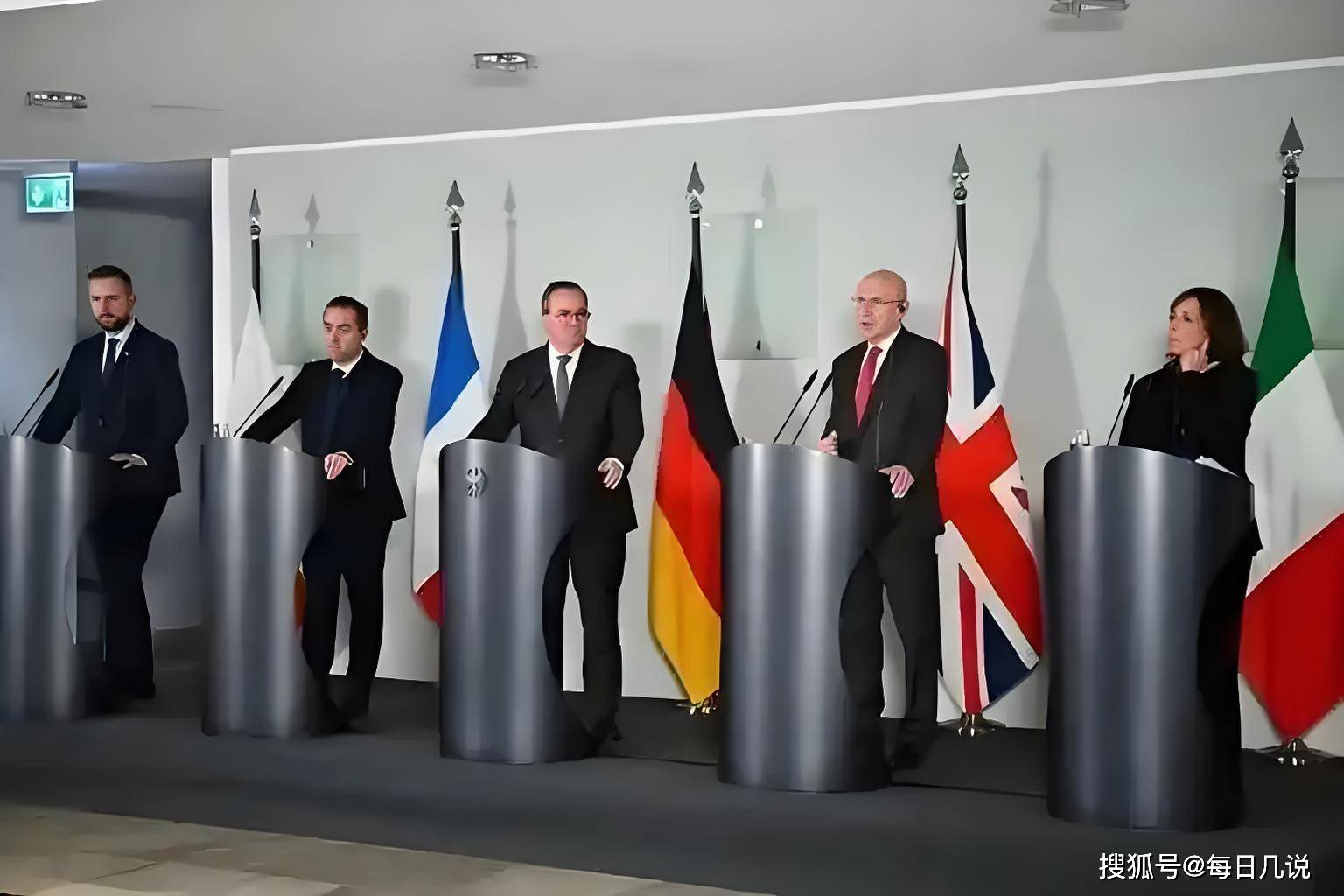
欧洲援乌困局:军火输送与经济反噬的双重博弈
Sou Hu Cai Jing· 2025-07-20 22:55
Group 1 - The military aid to Ukraine is revealing deep strategic anxieties within Europe, as countries face funding shortages and conflicting priorities [3][4] - The economic costs of supporting Ukraine are negatively impacting Europe, with natural gas prices rising by 20% and expected economic growth for the EU in 2025 revised down to 1.1% [4][5] - Public opinion in Europe is shifting, with a significant portion of the population supporting peace negotiations, leading to political decisions that reflect this change [5][6] Group 2 - European countries are struggling with the balance between military commitments and economic realities, as seen in Germany's military budget doubling to €8 billion by 2025 while facing domestic financial pressures [3][4] - The reliance on U.S. military support is highlighted, as European defense initiatives may falter without American backing, emphasizing the need for a more autonomous defense strategy [8] - There is a call for Europe to establish a more independent political stance, moving away from merely balancing U.S. and Russian interests to fostering its own diplomatic relations [8]
中方呼吁欧盟合作而非对抗,王毅:中欧不存在根本利害冲突,有着广泛共同利益
Huan Qiu Shi Bao· 2025-07-03 22:28
Group 1 - The core viewpoint emphasizes that China and the EU should not seek confrontation despite differences, highlighting the importance of partnership and cooperation [1][2][5] - Wang Yi stated that the development of China-EU relations should be based on mutual interests and cooperation, rather than viewing each other as adversaries [1][3] - The dialogue reflects a commitment to multilateralism and the core position of the United Nations, which is crucial for global economic recovery and long-term prosperity [2][3] Group 2 - The economic ties between China and the EU are significant, with bilateral trade estimated at $2.7 billion daily, making China the EU's second-largest trading partner [3][5] - There are ongoing discussions regarding trade issues, including tariffs on Chinese electric vehicles and the EU's control over rare earth exports, indicating existing tensions [1][5] - The upcoming China-EU leaders' meeting is seen as an opportunity to stabilize trade relations and address mutual climate goals, despite differing expectations for concrete outcomes [3][5]