
基层治理创新

Search documents
“三旧”变“三新”,老小区“逆生长”
Xin Hua She· 2025-08-13 02:53
Core Viewpoint - The article discusses the transformation of the old residential area "Wannan Liucun" in Shanghai, highlighting the successful implementation of the "Three Olds" to "Three New" renovation project, which aims to improve living conditions and community engagement among residents [1][3]. Group 1: Renovation Details - The renovation project began in early 2021, focusing on upgrading old housing, enhancing community facilities, and improving residents' quality of life [1]. - Key improvements include the installation of elevators in all 43 buildings, benefiting approximately 40% elderly residents, making it one of the fastest projects in Shanghai [1][2]. - The community underwent a comprehensive aesthetic upgrade, with 99% of the "four essentials" (clothes drying racks, awnings, air conditioning covers, and security windows) replaced, totaling 3,457 units [2]. Group 2: Community Engagement and Impact - The transformation has positively influenced residents' attitudes, leading to a cleaner environment as they are now more inclined to maintain communal spaces [3]. - The area is part of a larger urban renewal initiative in Xuhui District, with significant projects planned for 2024 and 2025, aiming to enhance living conditions for thousands of residents [3]. Group 3: Governance and Management - The article emphasizes the importance of both hardware improvements and soft governance, including community management and resident engagement, to ensure sustainable development [3]. - A proposed increase in property management fees from 0.8 to 1.4 yuan per square meter aims to enhance service quality, with plans for better security, cleaning, and maintenance already in motion [4]. Group 4: Broader Implications - The case of Wannan Liucun serves as a model for grassroots governance in large cities, demonstrating the need for meticulous attention to community needs and infrastructure [5].
镇江高新区打造“家门口”幸福共同体
Zhen Jiang Ri Bao· 2025-07-22 23:56
Core Viewpoint - The establishment of the Zhenjiang High-tech Zone Village Community Charity Fund represents an innovative measure to enhance local charity efforts, aiming to address community needs and improve grassroots governance [1][3]. Group 1: Fund Objectives and Structure - The charity fund aims to systematically integrate community resources to address urgent local needs, ensuring that charity is accessible and effective [1]. - The fund focuses on precise demand matching, efficient resource allocation, and multi-party collaboration, targeting specific community issues such as shortages of elderly aids and insufficient activity spaces [1][3]. - The fund will create a diverse participation ecosystem, encouraging contributions from businesses, residents, and organizations in various forms, fostering a culture of mutual support and community building [1]. Group 2: Operational Mechanism - The fund operates under a clear division of responsibilities and an efficient collaboration mechanism, with the community leading the identification of needs and implementation of projects [3]. - Social work organizations play a crucial role in connecting community needs with resources, enhancing resident engagement and ownership [3]. - The Charity Association serves as the management core, ensuring professional oversight, optimizing operations, and maintaining transparency through regular reporting [3]. Group 3: Vision and Future Development - The establishment of the charity fund is viewed as an innovative practice in grassroots governance, aimed at activating community dynamics and promoting mutual assistance among residents [3]. - The Zhenjiang High-tech Zone Charity Association plans to collaborate closely with local authorities and professional organizations to ensure the fund's sustainable and professional development [3]. - The ultimate goal is to create a seamless flow of goodwill and community care, enhancing governance efficiency and showcasing the warmth of the high-tech zone [3].
大港街道:聚“新”暖心 与“新”同行
Zhen Jiang Ri Bao· 2025-06-19 23:05
Group 1 - The core event "Gathering 'New' Warmth and Walking with 'New'" was held to provide services for new employment groups, including free medical consultations and recruitment for summer care classes [1] - The Dagang Street has established a "1+12+X" service system, creating 12 "Warm New" halls and 2 "Warm New" service stations to enhance service accessibility for new employment groups [1] - The initiative aims to improve the sense of belonging, security, and mission among new employment groups through community engagement and volunteer opportunities [1] Group 2 - The optimization of the permit application process for freight drivers has significantly improved efficiency, reducing the time and effort required for obtaining access to restricted areas [2] - The Dagang Street has implemented a "combination punch" service strategy, simplifying the application process and providing full-service assistance to businesses and drivers [2] - The focus on addressing the urgent needs of new employment groups has led to a more streamlined and user-friendly experience in logistics operations [2] Group 3 - To address the childcare concerns of new employment groups during the summer, Dagang Street has opened two summer care classes, alleviating the burden on young parents [3] - The initiative aims to provide educational support for children of new employment groups, allowing parents to focus on their work without worrying about childcare [3] - This program is designed to enhance the overall well-being and happiness of new employment groups by providing reliable summer care solutions [3]
赣榆“服务窗口”开到群众“家门口”
Xin Hua Ri Bao· 2025-06-10 23:52
Core Viewpoint - The article highlights the innovative grassroots governance model in Ganyu District, which combines "cadre sinking" and "digital empowerment" to enhance governance effectiveness and improve residents' sense of gain, happiness, and security [1][8]. Digital Empowerment and Service Efficiency - Ganyu District has implemented a digital revolution by introducing electronic seals and a cloud-based system for issuing village-level certificates, significantly reducing the time required for residents to complete administrative tasks [2][3]. - The district has fully utilized 563 electronic seals and established a "smart brain" for village services, providing 24/7 online assistance to residents [2]. Innovative Governance Structures - The district has divided its governance into 68 comprehensive grids and 16 specialized grids, creating a 5G command center that integrates various governance functions [3][4]. - The command center has processed over 22,000 cases since its inception, with 70% of issues resolved locally within the grid [3]. Cadre Engagement and Community Involvement - Approximately 80% of town and street cadres have been deployed to grassroots grids, with a focus on resolving local issues and enhancing community engagement [5][4]. - The district has established a "rotation pool" for administrative personnel and integrated various community resources, achieving a 96.6% satisfaction rate among residents [5]. Community Service Innovations - The establishment of micro-communities has led to improved service delivery, with community centers offering various amenities and activities for residents [6][7]. - The district has successfully matched 114 community service needs with available resources, benefiting over 6,400 households [7]. Future Directions - Ganyu District aims to continue enhancing grassroots governance through ongoing digital empowerment, cadre engagement, and community collaboration, with a focus on meeting residents' needs [8].
“精网微格”打底 “大滴茶馆”问需 “善行存折”赋能宝应亮出基层治理“新矩阵”
Xin Hua Ri Bao· 2025-06-09 23:49
Core Viewpoint - The article highlights the innovative grassroots governance practices in Baoying County, focusing on the establishment of a governance matrix that enhances community participation and resolves local disputes effectively through various initiatives like "Dadi Tea House" and "Good Deed Savings Book" [1][3][4]. Group 1: Governance Structure - Baoying County has developed a governance matrix that includes "bottom support," "extension of touchpoints," and "activation of momentum" to address issues in grassroots governance [1]. - The county has restructured its grid management into 73 comprehensive grids and 369 micro-grids, allowing for more precise capture of residents' needs and dynamics [2]. - A comprehensive coordination mechanism has been established, linking various community mediation centers and departments to create a collaborative governance environment [2]. Group 2: Community Engagement - The "Dadi Tea House" serves as a platform for informal conflict resolution, where local residents can discuss issues and seek mediation in a relaxed environment [3]. - The "Good Deed Savings Book" incentivizes community participation by quantifying good deeds and allowing residents to exchange points for rewards, thus fostering a culture of mutual assistance [4]. - The integration of these initiatives aims to transform residents from passive observers to active participants in community governance [3][4]. Group 3: Outcomes and Impact - The initiatives have led to increased community engagement, with residents actively participating in environmental cleaning and conflict resolution, resulting in a stronger sense of community [4]. - The village's collective economy has grown, and it has received recognition as a traditional village and a provincial-level characteristic rural demonstration area [4]. - The combination of "precise grid management," "Dadi Tea House," and "Good Deed Savings Book" creates a robust ecosystem for grassroots governance, ensuring clarity in community needs and active participation [4].
陕西府谷:让“快递小哥”成为基层治理“合伙人”
Huan Qiu Wang· 2025-05-26 02:34
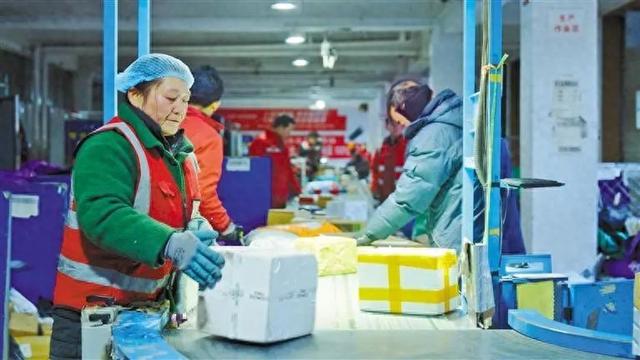
Core Viewpoint - The integration of logistics companies in Fugu County, Shaanxi, through a party organization platform has transformed the local express delivery industry into a collaborative model, enhancing efficiency and reducing costs while contributing to grassroots governance [3][12]. Group 1: Industry Transformation - The establishment of a logistics distribution center in Fugu County has allowed 12 logistics companies to share resources, leading to a reduction in annual site costs by over 40,000 yuan and transportation costs by 100,000 yuan per company [4]. - The distribution center features two intelligent sorting lines capable of processing 100,000 packages daily, addressing rural delivery challenges and achieving "one-time delivery, all-region access" [4][10]. Group 2: Governance and Community Engagement - The "governance partner" model enables express delivery personnel to report local issues such as damaged manhole covers and blocked fire lanes, integrating them into community governance [10][11]. - During the 2024 college entrance examination period, delivery personnel formed a volunteer team to provide free transportation for over 300 students, showcasing their role in community service [11]. Group 3: Employee Development and Welfare - The establishment of "Little Brother's Home 365" provides training, free charging stations, and affordable meals for delivery personnel, fostering a supportive work environment [7][12]. - The company has implemented a "dual cultivation" mechanism, promoting business staff to become party members and vice versa, enhancing operational efficiency and employee engagement [5][8]. Group 4: Economic Impact and Rural Development - The logistics center has facilitated the sale of local agricultural products, achieving over 6 million yuan in sales and benefiting more than 300 farming households [11][12]. - The logistics vehicles not only transport packages but also assist in delivering agricultural products, creating a win-win situation for both the logistics industry and local farmers [11].

老院子“变形记”
Ren Min Ri Bao Hai Wai Ban· 2025-05-26 00:59
Core Insights - The transformation of Nanxi Village showcases the effectiveness of the "Consultation Committee" system in revitalizing underutilized assets and enhancing grassroots governance [1][3][4] Group 1: Background and Initial Challenges - Nanxi Village faced significant challenges with a nearly 5-acre area that was neglected, with dilapidated buildings and unclear property rights, leading to a 20-year stagnation in development efforts [1] - The village's governance issues stemmed from conflicting interests between villagers and local officials, resulting in a lack of progress in asset development [1] Group 2: Implementation of the "Consultation Committee" System - The introduction of the "Consultation Committee," comprising various departments, provided a professional approach to address the village's asset management issues [1][3] - The committee facilitated discussions and developed a resource activation plan that involved consolidating village assets and leasing land to third-party operators [1][3] Group 3: Results of the Transformation - A micro-renovation project costing 300,000 yuan transformed the old courtyard into a vibrant cultural space, including a coffee shop and craft workshop, enhancing community engagement [2] - The cultural courtyard has generated over 700,000 yuan in collective income within a year, attracting tourism and revitalizing local businesses [2] - The "Consultation Committee" has successfully standardized contracts and improved financial transparency, increasing the annual rental income from 50,000 yuan to 150,000 yuan [3] Group 4: Broader Implications - The success of the "Consultation Committee" in Nanxi Village serves as a model for grassroots governance modernization across Ninghai County, with significant improvements in contract management and revenue collection [3][4] - The initiative has led to the identification and management of 3,453 economic contracts worth 228 million yuan, recovering 7.08 million yuan in overdue payments [3]
大兴区第七届“邻里节”举办,505场活动服务4万余人次
Xin Jing Bao· 2025-05-15 11:53
Group 1 - The Daxing District's 7th "Neighborhood Festival" took place on May 15, with participation from 296 communities and 68 villages, featuring 505 community service activities [1] - The festival showcased achievements in grassroots governance, social mobilization, and services for new employment groups through performances divided into four chapters [1] - A new public service model led by party building was introduced, bridging enterprises with residents and highlighting innovative grassroots governance [1] Group 2 - Starting from May 10, Daxing District launched the "Neighborhood Festival" across 20 towns and streets, involving over 400 government departments, social organizations, and more than 5,000 volunteers, serving over 40,000 residents [2]
社区治理,不容易
Hu Xiu· 2025-05-08 04:18
Core Viewpoint - The article discusses the differences in policy positioning and resource allocation between two districts (A and B) in Guangzhou, highlighting how these differences impact community governance and the challenges faced by community workers in both areas [1][2]. Group 1: Policy Positioning and Resource Allocation - District A is designated as a national-level new area and free trade pilot zone, receiving significant policy support and funding, while District B is positioned as an important transportation hub with less favorable resource allocation [1]. - The disparity in policy support leads to different experiences in community funding, with District A's communities reporting budget surpluses, while District B's communities face funding shortages and delays in performance payments [3][4]. Group 2: Community Governance Challenges - Community governance in District A is characterized by a higher number of staff and resources, yet both districts primarily focus on completing tasks assigned by higher authorities, showing no significant difference in governance outcomes despite resource disparities [5][6]. - The lack of motivation for innovation in community governance is attributed to a rigid evaluation mechanism, limited promotion opportunities, and a growing disconnect between community workers and residents [7][8][9]. Group 3: Financial Autonomy and Innovation - The article highlights the challenges of financial autonomy for grassroots communities, where strict regulations limit the flexibility of fund usage, leading to underutilization of available resources [10][12]. - A new community charity fund initiative in District A aims to encourage resource mobilization, but bureaucratic hurdles and complex approval processes hinder effective use of these funds, resulting in a lack of genuine innovation in community governance [11][12][13]. Group 4: Recommendations for Improvement - The article suggests that higher authorities should consider granting more autonomy to grassroots communities to stimulate internal motivation and enhance governance capabilities, especially in rapidly changing economic environments [14].
丁岗镇:创新服务“小阵地” 以文明之光照亮幸福家园
Zhen Jiang Ri Bao· 2025-04-28 23:58
Group 1 - The core theme of the news is the promotion of aerospace education and community engagement through innovative activities in Dinggang Town, enhancing residents' quality of life and fostering a love for science among youth [1][2][3] - The aerospace industry is a leading sector in the Zhenjiang Economic Development Zone, with initiatives like the "Qihang Blue Sky Dream" community practice platform aimed at integrating local industry development with educational activities [1][2] - The community has established various service stations and spaces, such as the "Neighbor's Home" service station, to provide convenient services for residents and new employment groups, thereby enhancing community interaction and support [2][3] Group 2 - The community practice activities are designed to create a positive learning environment for youth, encouraging exploration and growth through hands-on experiences in science and technology [2] - The initiatives have successfully reached nearly 4,000 residents, demonstrating the effectiveness of community engagement in promoting a culture of civility and support [2][3] - Dinggang Town plans to continue deepening its civil practice efforts with more diverse activities and innovative services to invigorate grassroots governance and improve residents' happiness [3]