
太空制造

Search documents
机器人(300024.SZ):目前暂未涉及太空制造领域
Ge Long Hui· 2026-02-02 04:16
Core Viewpoint - The company primarily provides comprehensive solutions for industries such as new energy vehicles, semiconductors, lithium batteries, electronics, photovoltaics, aerospace, and medical sectors, and has not yet ventured into the space manufacturing field [1] Group 1 - The company is focused on exploring and deepening opportunities in cutting-edge technology applications based on future market demand [1]

机器人:目前暂未涉及太空制造领域
Ge Long Hui· 2026-02-02 04:13
Core Viewpoint - The company primarily provides comprehensive solutions for industries such as new energy vehicles, semiconductors, lithium batteries, electronics, photovoltaics, aerospace, and medical sectors, and has not yet ventured into the space manufacturing field [1] Group 1 - The company is focused on exploring and deepening opportunities in cutting-edge technology applications based on future market demand [1]
【中国新闻网】中国成功实现太空金属3D打印 首次制造出完整金属构件
Zhong Guo Xin Wen Wang· 2026-01-26 02:31
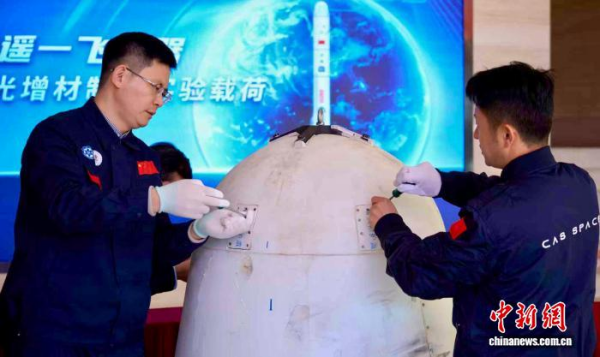
Core Insights - The Chinese Academy of Sciences has successfully developed a microgravity laser additive manufacturing (3D printing) payload, marking a significant advancement in China's space metal manufacturing technology from "ground verification" to "space engineering verification" [3] Group 1: Technology Development - The microgravity laser additive manufacturing payload was launched aboard the "Lihong-1" remote-controlled vehicle, successfully producing complete metal components in a microgravity environment [3] - The experiment achieved breakthroughs in key technologies such as metal additive manufacturing shaping and control under microgravity conditions, closed-loop control throughout the process, and high-reliability collaboration between payload and rocket [3] Group 2: Future Applications - Space metal 3D printing is viewed as a critical enabling technology for future space missions, allowing for rapid manufacturing and autonomous repair of spacecraft components in orbit, significantly enhancing the flexibility and sustainability of deep space exploration, long-term space station operations, and lunar base construction [3] - The success of this experiment establishes China at the forefront of this technology globally, laying a solid foundation for future development in on-orbit manufacturing and maintenance technologies [3] Group 3: Vehicle Capabilities - The "Lihong-1" vehicle operates at an altitude of approximately 120 kilometers, providing over 300 seconds of high-quality microgravity environment [4] - Future upgrades aim for a minimum orbital stay of one year and at least ten reuse cycles, supporting high-precision requirements for on-orbit manufacturing and advancing research in microgravity physics, space life sciences, and space materials science [4] Group 4: Strategic Importance - The Chinese Academy of Sciences is a key player in national strategic technology, focusing on cutting-edge space technology and gradually building a foundational theoretical framework and process database for space metal manufacturing [4] - Key technologies such as flexible cabin deployment and on-orbit stability control have been successfully developed, contributing to the future establishment of a "space factory" [4]

商业航天企业IPO迎新进展
Zhong Guo Zheng Quan Bao· 2026-01-17 08:36
Group 1 - The core point of the article is that Zhongke Yuhang has completed its IPO counseling work and is now in the acceptance stage, marking a significant advancement for the company in the commercial aerospace sector [1] - Zhongke Yuhang plans to apply for an initial public offering (IPO) and has completed counseling work with Guotai Junan Securities from August to December 2025, focusing on governance structure and internal control improvements [1] - The Liyuan series rockets, particularly the Liyuan-1, have achieved significant milestones, including its first flight in July 2022 and the successful launch of nine satellites in December 2025, indicating a mature stage of mass production and operational stability [1] Group 2 - Zhongke Yuhang is actively expanding into new areas such as space manufacturing and experiments, with the successful suborbital flight test of the Lihong-1 vehicle in January 2026, which included innovative scientific payloads [2] - The company has made progress in developing a "reconfigurable flexible in-orbit manufacturing platform," marking a significant advancement in space manufacturing technology [2] - Despite the positive developments, the company faces challenges in achieving economies of scale due to low launch frequency and underutilized payload capacity, leading to higher unit costs [2] Group 3 - Zhongke Yuhang and Blue Arrow Aerospace are leading commercial rocket companies in China, both of which have received acceptance for their IPO applications on the Sci-Tech Innovation Board [3] - The Shanghai Stock Exchange's guidelines support high-quality commercial rocket companies that have not yet achieved significant revenue to issue shares, provided they meet certain technological milestones [3]
南阳月季上太空了
He Nan Ri Bao· 2026-01-12 23:22
Core Viewpoint - The successful suborbital flight test of the Zhongke Yuhang Lihong-1 remote vehicle marks a significant advancement in space manufacturing and experimentation, transitioning from "concept validation" to "engineering validation" [1] Group 1: Flight Test Achievements - The flight test was completed successfully at the Jiuquan Satellite Launch Center, with the return capsule landing and recovery executed flawlessly [1] - The test validated the re-entry atmospheric return deceleration and recovery of the return capsule, achieving a precision landing accuracy of within 100 meters over a distance of 100 kilometers [1] Group 2: Scientific Experiments - The flight carried scientific payloads including microgravity laser additive manufacturing experiments and space radiation-induced mutation rose seeds [1] - The rose seeds were developed through artificial hybridization of wild roses and ancient Chinese rose germplasm resources, selected for their strong resistance traits [1] Group 3: Future Implications - The experiment opens new pathways for space breeding and lays a solid foundation for the future development of space agriculture [1] - The research aims to create new rose varieties with multiple resistances and clear genetic backgrounds, providing technical and theoretical support for breeding goals [1]
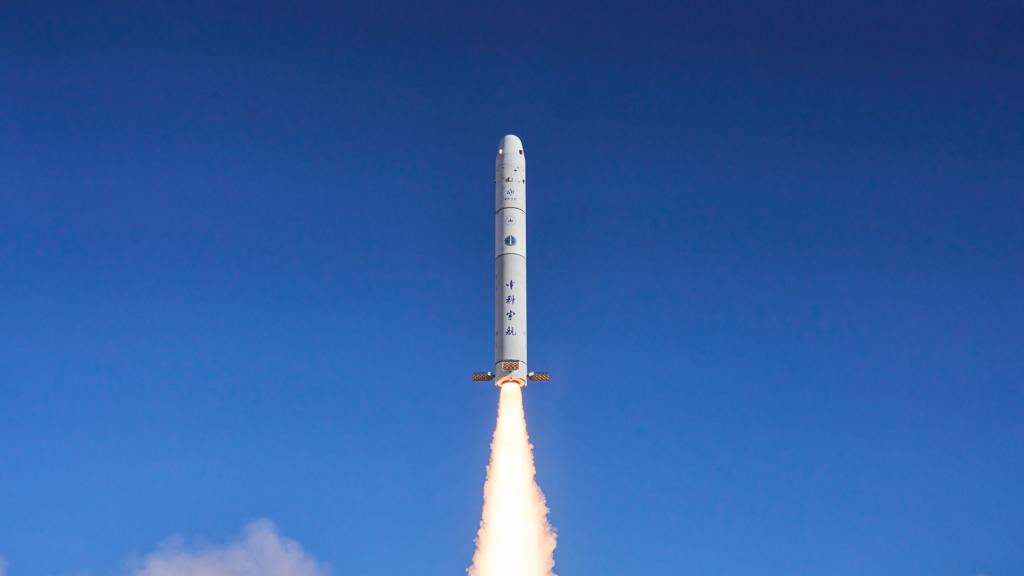
力鸿一号遥一飞行器亚轨道飞行试验任务取得成功
Ren Min Wang· 2026-01-12 22:33
Group 1 - The core achievement of the flight test was the successful completion of the suborbital flight mission by the Zhongke Yuhang Lihong-1 spacecraft, which included the safe landing and recovery of the return capsule [1] - The flight reached an altitude of approximately 120 kilometers and demonstrated capabilities such as low launch costs, high flexibility, and support for experimental payload recovery, catering to microgravity scientific experiments and near-space in-situ exploration [1] - The test marked a transition from "concept validation" to "engineering validation" for space manufacturing, laying a technical foundation for future endeavors in space manufacturing, experiments, medicine, and tourism [1] Group 2 - The Lihong-1 return capsule is set to be upgraded to an orbital-level spacecraft with a minimum operational duration of one year and at least ten reuses, designed to meet high-precision in-orbit manufacturing needs [2] - It will feature autonomous experimental manufacturing closed-loop control capabilities and high-speed communication links between space and ground, enabling fully unattended and efficient operations [2] - The spacecraft aims to establish a space science experimental platform that supports various in-orbit manufacturing and cutting-edge scientific experiments, including space pharmaceuticals, drug screening, animal experiments, and advanced semiconductor manufacturing [2]
培育“航天月季” 力鸿一号完成亚轨道飞行试验任务
Xin Hua She· 2026-01-12 13:21
Core Viewpoint - The successful return of the Lihong-1 suborbital flight experiment, which carried rose seeds, aims to explore the effects of space radiation on plant genetics and establish a unique brand of "space roses" for industry upgrades [1][3]. Group 1: Mission Overview - The Lihong-1 vehicle completed its suborbital flight test on January 12, reaching an altitude of approximately 120 kilometers and providing over 300 seconds of stable experimental conditions for scientific research [1]. - The mission's primary payload was a self-developed microgravity laser additive manufacturing device from the Chinese Academy of Mechanics, which preliminarily verified the feasibility of space manufacturing supported by rocket platforms [3]. Group 2: Technical Achievements - The design team optimized the aerodynamic shape of the payload capsule to enhance deceleration and stability during re-entry, ensuring safe parachute deployment [3]. - The flight vehicle achieved a landing accuracy of within a hundred meters, thanks to extensive analysis of the parachute dynamics and its impact on the capsule's flight trajectory [3]. Group 3: Future Developments - The Lihong series of vehicles will expand in scale for multiple reuses, with ongoing reliability tests to enhance capabilities for manned life support and high-reliability escape technologies [3]. - The goal is to achieve long-term orbital presence and reliable re-entry by 2028, transforming the Lihong series into a routine space manufacturing and scientific research platform [3].
力鸿一号遥一飞行器亚轨道飞行试验圆满成功 为太空制造等奠定坚实技术基础
Zheng Quan Shi Bao Wang· 2026-01-12 13:06
Core Insights - The successful suborbital flight test of the ZK Aerospace Li Hong No. 1 spacecraft marks a significant advancement in space manufacturing technology, transitioning from "concept validation" to "engineering validation" [1] - The flight achieved a return point accuracy of within 100 meters, demonstrating the capability for precise landing control, which is crucial for future applications in space manufacturing, experiments, medicine, and tourism [1] Group 1 - The Li Hong No. 1 spacecraft reached an altitude of approximately 120 kilometers, crossing the Kármán line into space, and successfully completed the return of its payload capsule through a parachute system [1] - The spacecraft is designed for low launch costs and high flexibility, supporting the recovery of experimental payloads, and provides over 300 seconds of stable and reliable experimental conditions in microgravity [1] - The flight test validated high-reliability parachute aerodynamic deceleration technology and precise landing control technology for the sub-stage of the spacecraft [1] Group 2 - The microgravity laser additive manufacturing payload (LAM-MG-R1) carried on the first flight is a self-developed technology verification payload by the Institute of Mechanics, Chinese Academy of Sciences, aimed at validating the feasibility of laser wire metal additive manufacturing in space [2] - This mission is expected to provide critical scientific data on key process parameters and performance characteristics of metal additive manufacturing in microgravity, laying a solid foundation for the development of space metal additive manufacturing technologies [2] - ZK Aerospace and the Institute of Mechanics have completed ground tests for the "reconfigurable flexible on-orbit manufacturing platform," achieving breakthroughs in key technologies necessary for reliable connections and stability in space manufacturing [2]
力鸿一号遥一飞行器亚轨道飞行试验任务取得圆满成功
Huan Qiu Wang Zi Xun· 2026-01-12 11:29
Core Viewpoint - The successful test flight of the PH-1 spacecraft marks a significant advancement in space manufacturing technology, transitioning from concept validation to engineering validation, laying a solid technical foundation for future developments in space manufacturing, experiments, medicine, and tourism [1]. Group 1: Test Flight Achievements - The PH-1 spacecraft completed its first flight test, reaching an altitude of approximately 120 kilometers and crossing the Kármán line into space, successfully demonstrating the return and recovery of its payload capsule [1]. - The flight verified high-reliability parachute aerodynamic deceleration technology and precise landing control technology for the sub-stage of the spacecraft, achieving a landing accuracy of within 100 meters [2][3]. Group 2: Technological Innovations - The parachute recovery system utilized during the landing process involved advanced trajectory prediction and reliability modeling techniques, which will support the development of reusable flight vehicles like the PH-2 [3][4]. - The precise landing control technology is crucial for the vertical return and reuse of rocket sub-stages, employing real-time trajectory optimization algorithms to address complex landing conditions [4]. Group 3: Scientific Experiments and Applications - The flight carried a microgravity laser additive manufacturing payload, which aims to validate the feasibility of laser melting wire metal additive manufacturing in microgravity, providing essential data for future space manufacturing technologies [6]. - The mission also included the space radiation mutation of rose seeds, which will contribute to the development of new rose varieties with improved traits, thus paving the way for advancements in space agriculture [7]. Group 4: Future Developments - The collaboration between the China Aerospace Science and Technology Corporation and the Chinese Academy of Sciences aims to develop a reconfigurable flexible on-orbit manufacturing platform, enhancing the capabilities for long-duration missions and multiple reuses [6][7]. - The upgraded payload capsule is expected to support missions with a minimum operational duration of one year and at least ten reuse cycles, facilitating a wide range of scientific experiments and manufacturing processes in space [6].
百公里高度的“太空一日游”,力鸿一号完成国内首例回收试验
Jin Shi Shu Ju· 2026-01-12 09:39
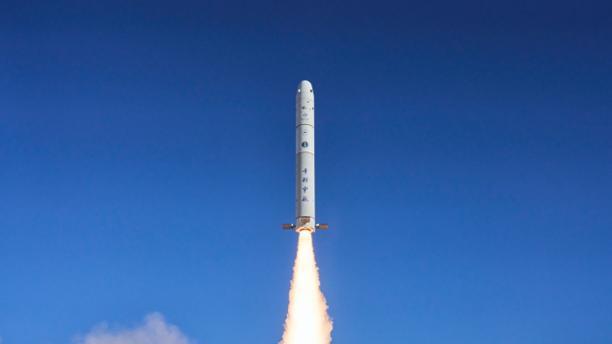
Core Viewpoint - The successful completion of the "Lihong No. 1" suborbital flight test marks a significant milestone in China's commercial space sector, achieving the first suborbital parachute recovery at an altitude of over 100 kilometers [1][2]. Group 1: Flight Test Achievements - The "Lihong No. 1" successfully reached a maximum altitude of approximately 120 kilometers, crossing the Kármán line, which is widely recognized as the boundary between the atmosphere and space [1]. - The test validated both the ascent and descent phases, achieving engineering verification goals for suborbital flight and parachute recovery [2]. - The return capsule demonstrated a landing accuracy within a hundred-meter range, laying the groundwork for future larger-scale, reusable spacecraft recovery technologies [2]. Group 2: Technological Features and Applications - The "Lihong No. 1" is designed as a general-purpose suborbital scientific experiment platform, emphasizing low cost, high flexibility, and reusability, primarily targeting microgravity scientific experiments and near-space in-situ detection [2]. - The platform can provide over 300 seconds of stable microgravity environment during flight, allowing research teams to conduct experiments without needing to enter orbit [2]. Group 3: Future Developments - The return capsule is expected to evolve into an orbital space manufacturing spacecraft, with design goals for a minimum orbital duration of one year and at least ten reuse cycles [4]. - This platform aims to support various in-orbit manufacturing applications, including space pharmaceuticals, drug screening, and advanced semiconductor manufacturing, contributing to the establishment of a routine space manufacturing capability [4]. - Future iterations will focus on the reuse of the recovery capsule, expanding in-orbit testing capabilities, and adapting for space tourism, preparing for market-oriented space tourism products and manufacturing services [4].