太空竞赛

Search documents
美欲在月球建百千瓦核反应堆?专家表示操之过急
Ke Ji Ri Bao· 2025-08-12 01:02
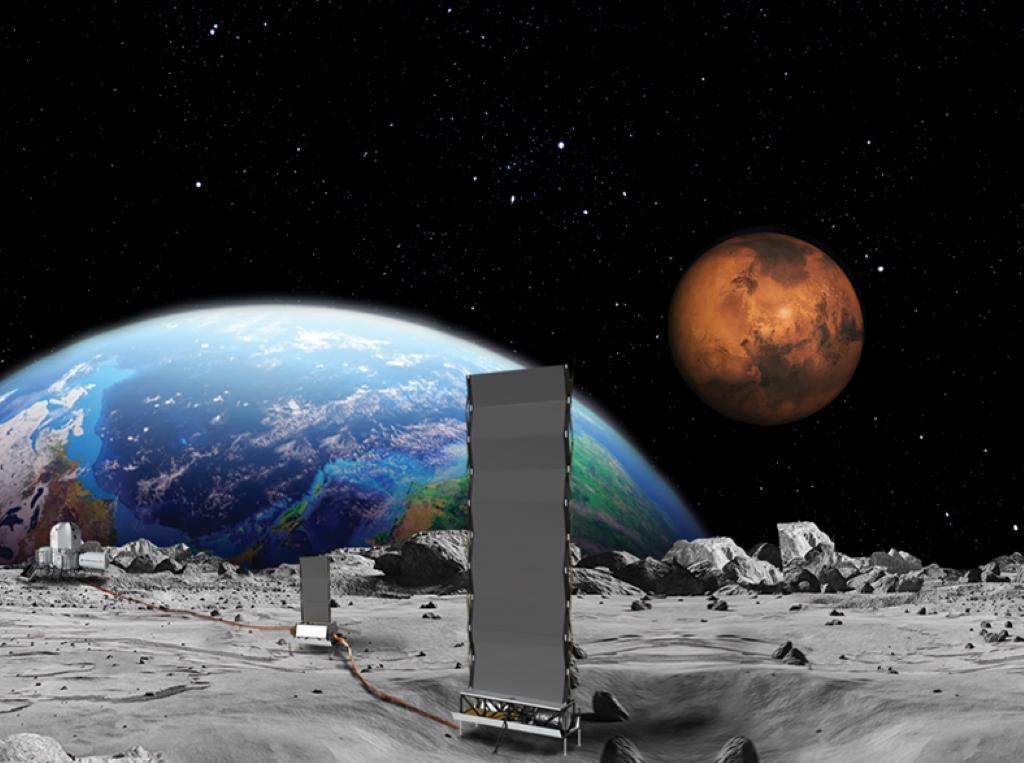
Core Viewpoint - NASA is accelerating the development of a lunar nuclear reactor, aiming to launch a 100-kilowatt fission reactor by 2030, which is seen as crucial for the Artemis lunar program and a strategic asset in the new space race [1][3][4]. Group 1: Lunar Nuclear Reactor Development - NASA plans to initiate industry bidding for the development of a 100-kilowatt lunar fission reactor system [1]. - The reactor is intended to provide a stable energy supply for a lunar base, which is essential for long-term human presence on the Moon and Mars [4][6]. - The project is driven by concerns over losing space dominance to countries like China and Russia, who are also pursuing lunar reactor projects [4][5]. Group 2: Technical Challenges - Experts highlight significant challenges in achieving the aggressive timeline, including engineering design, radiation protection, and stable operation in low gravity [3][9]. - Previous attempts to develop lunar nuclear power systems have faced hurdles, particularly with weight limitations, as none of the designs met the critical 6-ton weight threshold [6]. - The deployment of a nuclear reactor on the Moon involves overcoming unique challenges such as safe transportation of nuclear materials, temperature fluctuations, and waste heat management [9]. Group 3: Strategic Importance - The ability to establish a nuclear reactor on the Moon could allow the first nation to declare a restricted zone, impacting U.S. interests [5]. - The reactor's continuous power supply capability is deemed vital for scientific research and industrial operations on the Moon and Mars [4][6]. - The project reflects a broader strategy to secure U.S. leadership in space exploration amid increasing competition from other nations [4].

美欲在月球建百千瓦核反应堆?专家表示操之过急且存技术难度
Ke Ji Ri Bao· 2025-08-10 23:34
Core Viewpoint - NASA is accelerating its lunar nuclear reactor construction plan, aiming to develop a 100-kilowatt fission reactor system for launch by 2030, which is seen as crucial for the Artemis lunar program and a strategic asset in the new space race [1][2]. Group 1: Lunar Nuclear Reactor Development - NASA plans to initiate industry bidding for a 100-kilowatt lunar nuclear fission reactor system, with a target launch by 2030 [1]. - The nuclear reactor is intended to provide a stable energy supply for a lunar base, which is essential for long-term exploration and operations on the Moon and Mars [2][4]. - The reactor's design is expected to utilize uranium fuel and include a multi-layer shielding system to protect astronauts from radiation [4]. Group 2: Challenges and Concerns - Experts express skepticism about the feasibility of deploying a nuclear reactor on the Moon by 2030, citing significant technical and logistical challenges [6]. - Key challenges include ensuring the reactor can operate under extreme lunar conditions, such as temperature fluctuations and low gravity, as well as navigating lengthy approval processes [6]. - The development of materials that can withstand high temperatures and the safe transport of nuclear materials to space are also highlighted as critical hurdles [6]. Group 3: Strategic Implications - The push for a lunar nuclear reactor is partly driven by concerns over the U.S. losing its leadership in space exploration, especially with increasing collaboration between China and Russia on lunar projects [2][3]. - The first country to establish a nuclear reactor on the Moon could potentially claim exclusive rights to certain areas, impacting U.S. interests in lunar exploration [3].



NASA要在月球建核反应堆
Qi Lu Wan Bao· 2025-08-07 01:26
Core Viewpoint - The U.S. is accelerating plans to build a nuclear reactor on the Moon, which is a significant initiative led by the acting NASA administrator Sean Duffy since his appointment this year [1] Group 1: Project Details - The plan aims to establish a specific timeline for the lunar nuclear reactor project, targeting the launch and deployment of a 100-kilowatt reactor by 2030 [1] - NASA is required to consult industry opinions within 60 days and appoint a responsible person to oversee the project [1] - The agency is seeking companies capable of launching the nuclear reactor by 2030 [1] Group 2: Strategic Importance - Nuclear fission technology is deemed crucial for future deep space exploration missions, despite solar energy playing a role in certain lunar locations [1] - The U.S. has invested hundreds of millions of dollars in research and development in this field [1] - The acceleration of the lunar nuclear energy system is intended to lay the energy foundation for long-term crewed lunar and Mars exploration missions, while also gaining a competitive edge in the new space race [1]
NASA宣布:要在月球上建核反应堆!
Mei Ri Jing Ji Xin Wen· 2025-08-06 23:56
Core Viewpoint - The U.S. plans to accelerate the construction of a nuclear reactor on the Moon to support future space exploration missions, with a target to deploy a 100-kilowatt reactor by 2030 [1][3]. Group 1: Project Details - The initiative aims to establish a timeline for the lunar nuclear reactor project, with a directive for NASA to consult industry experts within 60 days and appoint a project leader [1]. - The nuclear reactor is expected to provide a reliable power source for various operations on the Moon, including habitation, life support systems, scientific experiments, and industrial activities [4][6]. Group 2: Technical Considerations - Nuclear fission technology is deemed crucial for deep space exploration, as it can deliver continuous power unaffected by lunar environmental conditions, unlike solar panels [3][4]. - Current designs for small reactors suggest that deploying a reactor on the Moon by 2030 is technically feasible if sufficient funding is allocated [6]. Group 3: Challenges and Concerns - There are significant technical challenges, including the safe transport of radioactive materials and the management of waste heat [7]. - Funding uncertainties exist, as NASA's budget has faced cuts, and there is no clear financial backing for the lunar reactor project [7]. - The reliability of private sector partners for launching the reactor remains questionable, with no U.S. company currently demonstrating the necessary capabilities [7].
美媒:美拟2030年前在月球建成核反应堆
Xin Hua Wang· 2025-08-06 09:37
Core Points - The U.S. is accelerating plans to build a nuclear reactor on the Moon, led by Transportation Secretary and acting NASA Administrator Sean Duffy [1] - The initiative aims to establish a timeline for the lunar nuclear reactor project, targeting the launch and deployment of a 100-kilowatt reactor by 2030 [1] - NASA is seeking industry input within 60 days and is looking for companies capable of launching the reactor by 2030 [1] Industry Implications - The nuclear fission technology is deemed crucial for future deep space exploration missions, despite solar energy playing a role in certain lunar locations [1] - The U.S. has invested hundreds of millions of dollars in research and development for nuclear technology [1] - The collaboration between NASA, the Department of Energy, and industry aims to develop a 40-kilowatt lunar surface nuclear fission power system for deployment in the early 2030s [1] - The establishment of a lunar nuclear energy system is intended to lay the groundwork for long-term crewed lunar and Mars exploration missions, positioning the U.S. advantageously in the new space race [1]
NASA代理局长被爆将宣布加速在月球建核反应堆,美媒又扯上中国
Huan Qiu Wang· 2025-08-05 06:48
Core Points - The U.S. Transportation Secretary and NASA Acting Administrator Sean Duffy is set to announce an accelerated plan for building a nuclear reactor on the Moon, marking his first major initiative since taking the role [1][3] - This initiative comes amid significant budget cuts for NASA, aiming to establish a clearer timeline for lunar reactor development [3] - The plan is seen as a response to concerns over China's and Russia's joint space projects, with the U.S. aiming to secure its position in the second space race [4] Group 1 - NASA has been instructed to solicit industry proposals for a 100-kilowatt nuclear reactor to be launched by 2030, with the first country to deploy such a reactor on the Moon potentially creating a "no-go zone" for the U.S. [4] - Duffy's directive also includes accelerating the process for replacing the International Space Station, which aligns with NASA's broader goals of landing on the Moon and Mars [4] - NASA plans to award contracts to at least two companies within six months after gathering proposals, emphasizing the urgency to establish a new space station before China achieves its goal of landing humans on the Moon by 2030 [4][5] Group 2 - The plans align with the Trump administration's focus on manned spaceflight, despite proposed budget cuts to other NASA projects, including a nearly 50% reduction in scientific mission funding [5] - Companies like Axiom Space and Blue Origin are already responding to the demand for space station construction, although there are concerns among U.S. lawmakers regarding NASA's timely funding allocation [5] - The Chinese government has publicly rejected the notion of a "space threat" from its activities, advocating for peaceful use of outer space and opposing militarization efforts by the U.S. [5]

人生在世,还不是有时笑笑人家,有时给人家笑笑 | 一周新书推荐
Xin Lang Cai Jing· 2025-06-16 03:09
Group 1 - The article discusses the release of various books, highlighting the works of notable authors and their themes, including personal reflections and cultural insights [3][4][7][10][11][15][18][21][25][29] - The book "Simplicity and Deliciousness: Selected Essays from Tsai Lan's Diary" features 62 essays and 23 diary entries, reflecting on life experiences and culinary delights [3][4] - "The Conquest Code: Six Elements of Eurasian Prosperity" explores historical questions about the rise and fall of empires, providing new insights from archaeological data [18] - "Nazi and the Philosopher: A Personal History of Exile" offers a perspective on the impact of fascism on intellectual freedom and the moral dilemmas faced by scholars during that era [15][16] - "The Crazy Man's Library" compiles bizarre and unique stories about books throughout history, showcasing the intersection of literature and the extraordinary [21] Group 2 - The article emphasizes the cultural significance of the works being published, reflecting on nostalgia, personal growth, and societal changes [25][29] - Kevin Kelly's analysis of the future highlights the transformative potential of technology, particularly in AI and its impact on human labor and creativity [29] - The discussion includes the evolution of cultural products, such as the Labubu toy and the game "Black Myth: Wukong," which represent a modern interpretation of Chinese culture [29]

谁将取代马斯克,成为特朗普在科技界的新密友?
财富FORTUNE· 2025-06-07 13:40
Core Viewpoint - The alliance between Donald Trump and Elon Musk has officially broken down after approximately 10 months and significant financial contributions, raising questions about who will replace Musk as Trump's new ally in the tech industry [1]. Group 1: Potential Replacements for Musk - Sam Altman, co-founder and CEO of OpenAI, is a strong candidate to become Trump's new "chief friend," as his company's advancements in AI challenge long-standing assumptions and policies in areas like safety and labor, which are likely to attract government scrutiny [4]. - Mark Zuckerberg, CEO of Meta, has been working to mend his relationship with Trump after past conflicts, including a $1 million donation to Trump's inauguration and public praise for Trump's administration's tech policies [6]. - Jeff Bezos, founder of Amazon, is also seeking to repair his relationship with Trump, having previously faced criticism from Trump during his presidency. Bezos's interests in space competition and Amazon's vast business operations make this relationship crucial [9]. - Tim Cook, CEO of Apple, has previously navigated Trump's trade policies effectively but faces challenges in the current political climate. If Cook can fill the void left by Musk, it could be a strategic advantage for Apple [10].

“比黄金珍贵”!嫦娥五号月球样品抵达英国
Huan Qiu Shi Bao· 2025-05-09 22:53
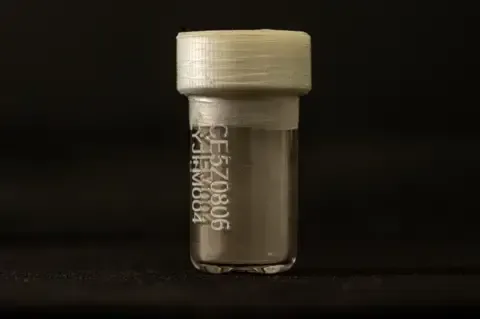
Group 1 - The core point of the article is that China has successfully returned moon samples to Earth, which are now being studied in the UK, highlighting China's leading position in the new space race [1][3]. - The moon samples, collected during China's Chang'e 5 mission in 2020, weigh approximately 2 kilograms and are considered more valuable than gold due to their rarity [1][3]. - The samples are being stored in a high-security facility at the Open University in the UK, where strict measures are in place to prevent contamination [3][4]. Group 2 - Professor Mahesh Anand, the only scientist in the UK to receive these rare materials, expressed that this collaboration could mark the beginning of long-term partnerships between China and international scientists [3]. - The research team has one year to analyze the samples, focusing on micro-level studies that could provide insights into the moon's formation and the early history of Earth [4]. - A specialized machine, developed since the early 1990s, will be used to heat the lunar soil to 1400°C to extract essential gases for analysis [4].