
存款

Search documents
6月金融数据解读:企业部门助力季末存款冲刺
Huachuang Securities· 2025-07-15 01:11
Report Industry Investment Rating No relevant content provided. Core Viewpoints - In June 2025, credit performance was not weak, with corporate short - term loans being the main support and bills "yielding space" for credit. Supported by government bond issuance, the social financing growth rate remained high. Due to the low - base effect after the ban on manual interest supplements last year and corporate sector's redemption of wealth management products, M1 and M2 growth rates rebounded significantly [1][8]. Summary by Related Catalogs Credit: Bills "Yield Space" to Corporate Short - term Loans - **Resident Sector**: In June, resident short - term loans increased by 26.21 billion yuan, 1.5 billion yuan more than the same period last year, rebounding from the previous month due to the shopping festival effect. Resident medium - and long - term credit increased by 33.53 billion yuan, 1.51 billion yuan more than the same period last year. However, the year - on - year growth rate of the commercial housing transaction area in 30 large and medium - sized cities was - 8.6%, with the decline rate expanding compared to the previous month, indicating a weaker sprint than last year [1][12]. - **Corporate Sector**: In June, corporate medium - and long - term loans increased by 1.01 trillion yuan, 40 billion yuan more than the same period last year, and the growth rate remained around 7.1%. Corporate short - term loans increased significantly, with an increase of 1.16 trillion yuan, 490 billion yuan more than the same period last year. Bill financing decreased by 410.9 billion yuan, 317.6 billion yuan less than the same period last year [2][14][20]. Social Financing: Government Bonds Still Provide Support, and Corporate Bond Issuance Willingness Continues - **Government Bonds**: In June, government bond issuance was large, with an increase of 1.35 trillion yuan, 503.2 billion yuan more than the same period last year. According to the current issuance plan, government bonds may still support social financing in July, with a net financing of about 1.4 trillion yuan and a year - on - year increase of about 700 billion yuan. From August to the end of the year, it may turn to a year - on - year decrease [3][23]. - **Corporate Bonds**: In June, corporate bond issuance was still strong, with an increase of 24.22 billion yuan, 3.22 billion yuan more than the same period last year. The new policy on science and technology innovation bonds may drive corporate bond financing. Unaccepted bills decreased by 18.99 billion yuan, close to the same period last year and at a seasonal low, indicating a continuous conversion from off - balance - sheet bills to on - balance - sheet [3][27]. Deposits: End - of - Quarter Deposit Rush, Significant Increase in M1 and M2 Growth Rates - **M1**: In June, the new - caliber M1 increased by 5 trillion yuan, 2.6 trillion yuan more than the same period in 2024, at a seasonally high level. The year - on - year growth rate rose from 2.3% to 4.6% [4][30]. - **M2**: Among the M2 components, non - bank deposits were significantly lower than the seasonal level, while corporate deposits increased significantly as the main support. Corporate customers' redemption of wealth management products helped banks boost general deposits at the end of the quarter. In June, inter - bank deposits decreased by 520 billion yuan, 340 billion yuan less than the same period in 2024. Corporate deposits increased by 1.7773 trillion yuan, 777.3 billion yuan more than last year. After the cross - quarter in July, corporate sector deposits may flow out, disturbing the bank's liability side [4][35].
中信证券:结构性宽松将成为下阶段政策主线
news flash· 2025-07-15 00:27
Group 1 - The report from CITIC Securities indicates that the issuance of government bonds supported a slight increase in social financing growth in June [1] - Looking ahead, social financing performance may continue to be supported by the shift in the main line of debt reduction towards stable growth, along with the traditional accelerated issuance of government bonds around mid-year [1] - On the credit side, banks increased lending on the supply side due to the half-year end timing and the low base from the previous year, with significant growth in short-term loans to enterprises, while medium and long-term loan issuance remained relatively stable year-on-year [1] Group 2 - The report suggests that corporate financing sentiment remains cautious amid trade friction, and current mortgage demand is still at a relatively low level based on real estate sales data [1] - The recovery in the retail sector is expected to depend on the implementation of previous comprehensive policies and subsequent incremental policies [1] - M1 improvement is mainly driven by a low base and the recovery of corporate funding, while the increase in M2 reflects the stability of bank liabilities, which helps maintain a loose liquidity environment [1] Group 3 - The People's Bank of China emphasized "technological innovation + service consumption" as the dual focus of monetary policy during a press conference on July 14 [1] - CITIC Securities believes that structural easing will become the main line of policy in the next phase, while total policies such as interest rate cuts may remain on hold [1] - In the short term, this approach is expected to help stabilize the credit environment, but long-term attention is needed on the transmission effects and the pace of real economy recovery [1]

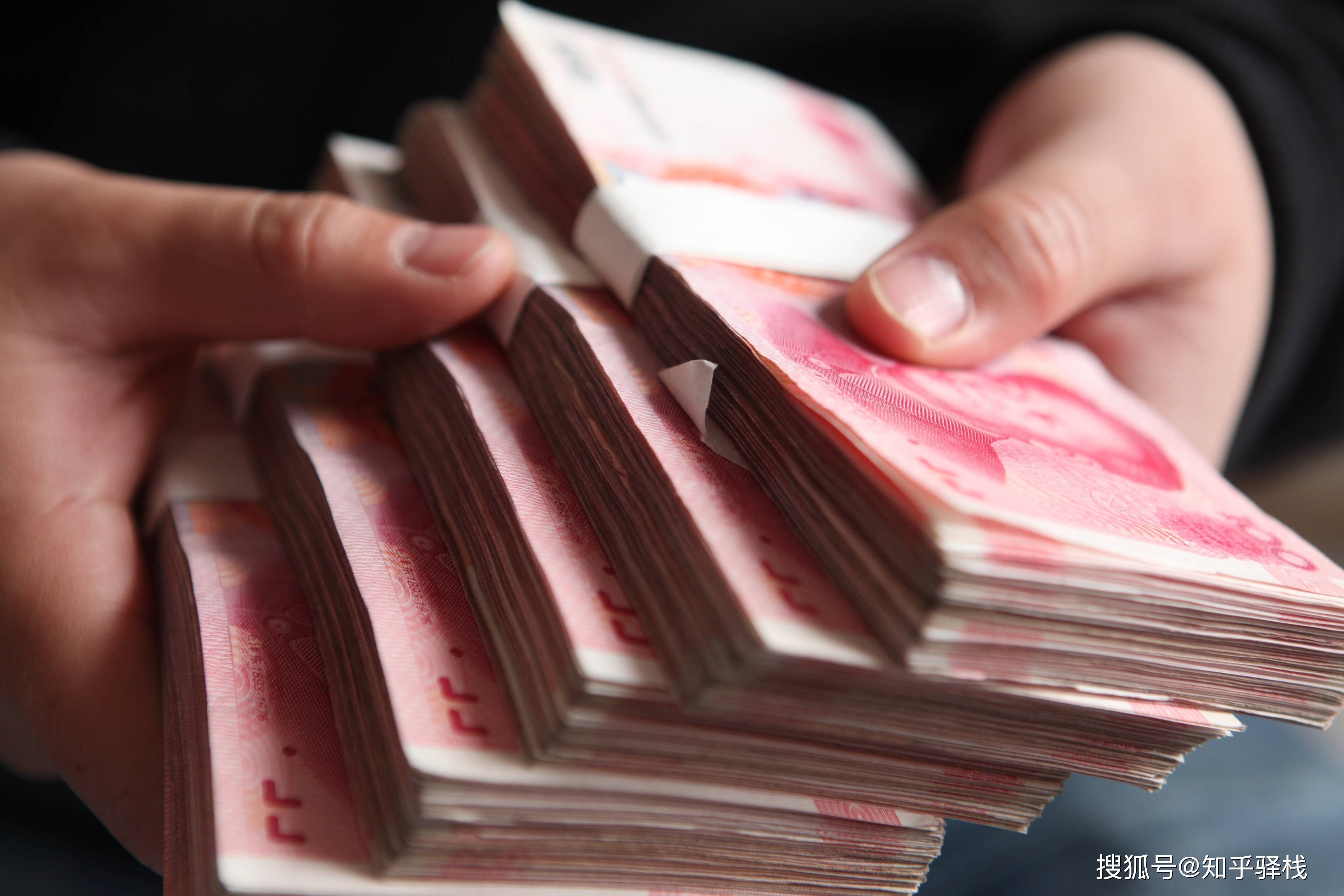
拥有多少存款,就已经超过98%的家庭了?内行人道出真相
Sou Hu Cai Jing· 2025-07-09 03:03
Core Insights - The pursuit of financial freedom has become a significant goal for many individuals, with personal savings often used as a benchmark for economic strength [1] - To surpass 98% of households in China, an individual needs to have savings exceeding 500,000 yuan, which only about 2% of the population currently achieves [1][4] Group 1: Savings Trends - The COVID-19 pandemic has led to an increase in savings enthusiasm among the population, yet the number of individuals with substantial savings remains low [1] - Many young people are struggling with savings, with some only managing to save a few thousand yuan despite working hard for several months [4] - The phenomenon of "moonlight clan" individuals, who spend their entire monthly income, is prevalent, with some even borrowing money to meet their consumption desires [4][7] Group 2: Consumption Habits - The rise of "premature consumption" is linked to a consumer culture driven by abundant advertising and the availability of credit tools like credit cards and online loans [7] - This consumption pattern poses risks, as losing a source of income can lead to significant financial distress and damage to credit ratings [7] Group 3: Housing Market Impact - A significant portion of personal finances is directed towards real estate, with soaring property prices making home ownership increasingly difficult for many [7][10] - Monthly salaries are often consumed by mortgage payments, leaving little room for savings, compounded by additional costs for home renovations and furnishings [10] Group 4: Rising Living Costs - The overall increase in living costs, including daily expenses and education for children, further strains individuals' ability to save [10][11] - Medical expenses for aging parents also contribute to financial pressures, making it challenging for many to accumulate savings [11]

4月金融数据解读:非银回流银行,M2增速回升
Huachuang Securities· 2025-05-14 23:30
1. Report Industry Investment Rating No relevant content provided. 2. Core Viewpoints of the Report - In April 2025, new RMB loans were 28 billion yuan, a year - on - year decrease of 45 billion yuan, and the credit balance growth rate dropped from 7.4% to 7.2%. New social financing scale was 1.16 trillion yuan, a year - on - year increase of 1.22 trillion yuan, and the social financing stock growth rate rose from 8.4% to 8.7%. The year - on - year growth rate of M2 recovered from 7% to 8%, and the growth rate of M1 under the new caliber slightly decreased from 1.6% to 1.5%. There was an obvious overdraft effect due to the end - of - quarter credit rush, and the enterprise sector was a significant drag on credit growth. However, due to the central bank's "pre - rate cut", the market reaction was dull after the data release. With the support of the pre - issued government bonds, the social financing growth rate continued to rise. In terms of deposits, M1 was not weak, and the return of non - bank deposits supported the significant recovery of the M2 growth rate this month [1][10]. 3. Summary by Directory Non - bank Funds Flow Back to Banks, M2 Growth Rate Recovers - In the second quarter, when the financing pricing is relatively low, wealth management and other broad - based funds increase their allocation of deposits, driving the significant recovery of the M2 growth rate. In April, M2 decreased by 88.15 billion yuan, 2.7 trillion yuan less than the same period last year, driving the M2 growth rate up by nearly 1 percentage point. Non - bank time deposits were the main support, with a year - on - year increase of 1.9 trillion yuan [1][13]. - In April, it was a big month for the growth of wealth management scale. When the capital constraints were relaxed in the second quarter, non - bank institutions had abundant funds and the financing pricing was relatively low. Wealth management might choose to increase the allocation of certificates of deposit and time deposits [16]. - In the long run, official media continued to emphasize downplaying the focus on the growth rate of aggregate targets such as M2. The relationship between the money supply and economic growth is weakening, and the relationship between money and prices is also affected by multiple factors [2][21]. Credit: The Household Sector is Mediocre, and the Enterprise Sector is Obviously Overdrafted - In April, household short - term loans decreased by 40.19 billion yuan, 5.01 billion yuan more than the same period last year. The real estate transactions in April were weak, and the year - on - year growth rate of the commercial housing transaction area in 30 large and medium - sized cities weakened significantly compared with the previous month. New household medium - and long - term loans decreased by 12.31 billion yuan, close to the level of the same period last year and still in the negative range [3][22]. - After the end - of - quarter rush, the performance of enterprise medium - and long - term loans in April weakened significantly. New enterprise medium - and long - term loans in April were 25 billion yuan, 16 billion yuan less than the same period last year. The bill department still had a large - scale impulse, with new bill financing of 83.41 billion yuan in the month, which was seasonally high. Enterprise short - term loans were significantly weak, decreasing by 48 billion yuan in the month, 7 billion yuan less than the same period last year [3][26][27]. Social Financing: Government Bonds Remain the Main Support - The pre - issued government bonds were still the largest supporting item for social financing. In April, government bond issuance was fast, with new issuance of 97.62 billion yuan, a year - on - year increase of 1.07 trillion yuan, which was an important sub - item supporting the social financing growth rate. In May, the net financing of government bonds may be around 1.67 trillion yuan, still showing a significant year - on - year increase [4][35]. - The issuance of enterprise bonds rebounded, and off - balance - sheet bills were converted into on - balance - sheet ones. In April, the willingness to issue enterprise bonds rebounded, with new issuance of 23.4 billion yuan, at a seasonal level. Due to the tariff disturbance in April, the central level of bond yields declined, and the enterprise issuance willingness might have rebounded. Unaccepted bills decreased by 27.93 billion yuan in April, at a seasonal low level, and off - balance - sheet bills accelerated the conversion into on - balance - sheet ones at the beginning of the quarter [4][37]. Deposits: M1 is Seasonally Low, Non - bank Deposits Increase Significantly - The month - on - month change of M1 was close to that of the same period last year, at a seasonal low. April was a small month for deposits. Under the new caliber, M1 decreased by 4.3 trillion yuan in the month, 13.03 billion yuan more than the same period in 2024, generally at a seasonally low level. The year - on - year reading of M1 decreased slightly from 1.6% to 1.5% [5][41]. - Among the M2 sub - items, inter - bank deposits increased significantly, and household and enterprise deposits increased slightly year - on - year on a low base. In April, inter - bank deposits increased significantly by 1.5 trillion yuan, 1.9 trillion yuan more than the same period in 2024. After the central level of capital prices declined, the attractiveness of non - bank time deposits might have increased. Enterprise deposits decreased 54.28 billion yuan less year - on - year, and household deposits increased 46 billion yuan year - on - year [5][43].