宏观经济因素

Search documents
彼岸控股(02885.HK)中期母公司拥有人应占纯利同比减少约17.2%至240万港元
Ge Long Hui· 2025-08-26 09:13
Group 1 - The core viewpoint of the article highlights that Bi'an Holdings (02885.HK) reported a significant decline in revenue and profit for the first half of 2025, with revenue approximately HKD 96.6 million, a year-on-year decrease of about 30.3% [1] - The net profit attributable to the parent company decreased by approximately 17.2% to around HKD 2.4 million, with earnings per share for ordinary equity holders at HKD 0.0061 [1][2] - The company faces unprecedented challenges primarily due to uncontrollable external macroeconomic factors, including persistently high U.S. interest rates, inflation driven by trade tariffs, soaring global energy prices, and the ongoing Russia-Ukraine conflict [1]
正通汽车(01728)发盈警 预计中期净亏损同比增加约40%
Zhi Tong Cai Jing· 2025-08-25 13:25
Group 1 - The core viewpoint of the article highlights that Zhengtong Automobile (01728) is facing significant challenges due to an intensifying price war in the automotive market and macroeconomic factors, leading to an expected increase in net losses by approximately 40% for the six months ending June 30, 2025, compared to the same period last year [1] - The increase in net losses is primarily attributed to declining new car prices, impairment of goodwill and intangible assets, as well as fixed asset impairments [1] - The company’s board believes that, with the long-term strategic support from its controlling shareholder, Xiamen Guomao Holdings Group Co., Ltd., the company can adapt to industry changes and continue its operational development [1]
美东汽车(01268.HK)盈警:预期中期权益股东应占亏损不少于8亿元
Ge Long Hui· 2025-08-20 08:43
Core Viewpoint - The company anticipates a significant loss for the mid-term period ending June 30, 2025, primarily due to macroeconomic factors, weakened domestic consumption, imbalanced supply and demand in the passenger car market, and intensified price wars, particularly affecting luxury vehicles [1] Financial Performance - The company expects a loss attributable to equity shareholders of not less than RMB 800 million for the mid-term of 2025, compared to a loss of approximately RMB 30 million for the mid-term of 2024 [1] - Non-cash impairment of goodwill and dealership rights is projected to total at least RMB 800 million for the first half of 2025, a significant increase from approximately RMB 150 million in the mid-term of 2024 [1] Market Conditions - The ongoing price war in the automotive sector is exacerbating the challenges faced by the company, particularly in the luxury car segment [1] - The increase in consumption tax on ultra-luxury vehicles is expected to negatively impact future performance in that segment [1] - A decline in mortgage commission rates is anticipated to lead to reduced income from mortgage application services [1]
美东汽车(01268)发盈警 预计中期股东应占亏损不少于8亿元
智通财经网· 2025-08-20 08:39
Core Viewpoint - The company anticipates a significant loss attributable to macroeconomic factors, weakened domestic consumption, and intensified price competition, particularly affecting the luxury car segment [1] Financial Performance - The company expects a loss attributable to equity shareholders of no less than RMB 800 million for the mid-2025 period, compared to a loss of approximately RMB 30 million for the mid-2024 period [1] - Non-cash impairment of goodwill and dealership rights is projected to be at least RMB 800 million for mid-2025, a substantial increase from approximately RMB 150 million for mid-2024 [1] Market Conditions - The board attributes the anticipated losses to ongoing macroeconomic challenges, an imbalance in supply and demand for passenger vehicles, and a worsening price war [1] - The increase in consumption tax on ultra-luxury cars is expected to negatively impact future performance in that segment [1] Financial Strategy - The company maintains a solid overall financial position and healthy cash flow from operating activities, indicating a commitment to a prudent financial strategy moving forward [1]
港股投资主要关注哪些方面?
Jin Rong Jie· 2025-08-19 03:26
Group 1: Macroeconomic Factors - The macroeconomic environment significantly impacts the Hong Kong stock market, with global economic growth directly affecting trade and finance in Hong Kong [1] - A rising global economy can lead to increased market demand, benefiting companies' revenues and profits, thus driving the overall stock market upward [1] - Local economic policies, including fiscal, monetary, and industrial policies, are crucial variables influencing the stock market [1] Group 2: Industry Development Trends - Different industries exhibit varying performances in the Hong Kong stock market, making it essential for investors to follow industry trends [2] - The emerging technology sector has gained prominence, with innovative companies attracting significant attention due to their growth potential [2] - Traditional industries, such as resources and manufacturing, face constraints from market demand changes and cost fluctuations [2] Group 3: Company Fundamentals - A company's financial health is a core aspect of its fundamentals, requiring analysis of balance sheets, income statements, and cash flow statements [2] - Stable revenue growth, reasonable debt levels, and strong cash flow indicate good operational health and resilience [2] - Governance structures are also important, as effective governance ensures sound decision-making and protects shareholder interests [2] Group 4: Market Valuation Levels - Accurate assessment of market valuation is critical for determining investment value, with common metrics including Price-to-Earnings (PE) and Price-to-Book (PB) ratios [3] - Comparing current valuation metrics with historical data and peer markets helps investors identify whether the market is overvalued, undervalued, or fairly valued [3] - Currency exchange rates, particularly the peg of the Hong Kong dollar to the US dollar, can significantly influence investment returns [3]
美股投资需关注什么要点?
Sou Hu Cai Jing· 2025-08-13 04:02
Group 1 - The macroeconomic factors significantly influence the performance of the US stock market, with GDP growth indicating potential corporate profit increases, thus supporting stock prices [1] - Employment data, including unemployment rates and market activity, directly affects consumer purchasing power and overall economic health, impacting corporate revenue growth [1] - Monetary policy, particularly the Federal Reserve's interest rate decisions, plays a crucial role in capital flow and costs, with lower rates stimulating investment and higher rates potentially leading to capital outflows from the stock market [1] Group 2 - Industry and company fundamentals are critical, with different sectors performing variably across economic cycles; consumer discretionary, technology, and finance sectors typically excel during expansions, while defensive sectors like consumer staples and healthcare may perform better during downturns [2] - A company's financial health, market competitiveness, product innovation, and management quality are essential for long-term growth prospects and stock price stability [2] - Understanding trading mechanisms and market rules, such as trading hours and T+0 trading systems, is vital for investors to develop effective strategies and optimize trading opportunities [2] Group 3 - Currency fluctuations, particularly the value of the US dollar, have significant implications for investment returns, affecting overseas investors' actual returns when converting US stock values back to their local currencies [2]
聚烯烃:趋势震荡偏弱
Guo Tai Jun An Qi Huo· 2025-07-06 13:17
1. Report Industry Investment Rating - The investment rating for polyolefins is trending weakly with oscillations [1][5][7] 2. Core Views of the Report - For polypropylene, the external environment is volatile, new production capacity offsets supply - side efforts, and the overall supply is in excess. Although there is optimism about improved trade - war situations, the high - level should be treated with caution. The key to future seasonal reversal may be the recovery of Sino - US seasonal demand driven by the Fed's interest - rate cuts [6] - For polyethylene, the easing of the conflict between Iran and Israel has led to a retracement of the premium caused by import risks. The demand is weak, but the rapid decline in social sample warehouse inventory provides short - term support. The supply pressure will gradually increase in Q3 2025, and attention should be paid to the spread changes between different types of polyethylene [8] 3. Summary by Relevant Catalogs 3.1 Overview - Polypropylene is trending weakly with oscillations. The external environment brings uncertainty, new production capacity offsets supply - side efforts, and export growth is limited [5][6] - Linear low - density polyethylene (LLDPE) is also showing a weakly oscillating trend. The macro environment affects the price premium, and supply - demand imbalance exists [7][8] - Core data shows that the spot price of both polypropylene and polyethylene has decreased compared to the previous period and the same period last year. The basis and monthly spread of both have weakened. The polypropylene's average capacity utilization has decreased, while polyethylene's has increased. The polyolefin inventory has increased slightly compared to the previous period but decreased compared to the same period last year [9] 3.2 Polypropylene Supply and Demand - **Price and Spread**: The non - standard price spread is not conducive to price rebound [17] - **Supply - Side**: New domestic production capacity is being put into operation, and more manufacturers are producing copolymer products with higher profits. The short - term overall start - up rate has declined, and there are still many overhauls in July, but new production capacity offsets the support from overhauls. The potential new production capacity in 2025 is 785.5 million tons, with a capacity increase of 15.4% [20][22][26] - **Inventory**: The production inventory has decreased, while the trader inventory has increased. The total commercial inventory has decreased slightly, mainly due to more upstream overhauls and lower downstream purchasing enthusiasm [27][31] - **Cost and Profit**: The cost has decreased due to the decline in crude oil prices. The profit of oil - based manufacturers has declined, while the profit of PDH - based production has increased [32][37] - **Downstream**: The BOPP start - up rate remains flat, with fewer orders and more finished - product inventory. The profit is at a low level due to over - capacity. The tape master - roll start - up rate, orders, and the start - up rate and orders of plastic - weaving and non - woven fabric industries have all declined. The CPP start - up rate and orders have slightly decreased [39][42][47] 3.3 Polyethylene Supply and Demand - **Spread**: The short - term L - LL spread is declining, which is negative for polyethylene. The HD - LL spread has expanded in 2025, but may oscillate later [62][65] - **Supply - Side**: The start - up rate has decreased, but the output has increased. The expected overhaul loss in July will be less than that in June. The potential new production capacity in 2025 is 613 million tons, with a capacity increase of 17.17% [66][69][70] - **Inventory**: The production - enterprise inventory has decreased, while the social inventory has increased [72] - **Cost and Profit**: The cost has decreased due to the decline in crude oil prices, and the profit of oil - based production devices has declined [76][82] - **Downstream**: The start - up rate and orders of the agricultural film industry have decreased. The start - up rate and orders of the packaging film industry have increased. The start - up rates of the pipe and hollow industries are lower than the same period last year [84][85][86]
国新国证期货早报-20250529
Guo Xin Guo Zheng Qi Huo· 2025-05-29 02:55
Variety Views - On May 28, A-share market's three major indices fluctuated. The Shanghai Composite Index dropped 0.02% to 3339.93, the Shenzhen Component Index fell 0.26% to 10003.27, and the ChiNext Index declined 0.31% to 1985.38. The trading volume in Shanghai and Shenzhen stock markets reached 1.01 trillion yuan, with a slight increase of 11 billion yuan compared to the previous day. The CSI 300 Index closed at 3836.24, down 3.16 [1]. - On May 28, the weighted index of coke was weak, closing at 1339.7 yuan, down 25.8 [2]. - On May 28, the weighted index of coking coal remained weak, closing at 780.0 yuan, down 17.5 [3]. - Affected by concerns about increased exports from India and waiting for sugar production data from Brazil, the Zhengzhou sugar 2509 contract tumbled on May 28. India's monsoon rainfall in 2025 is expected to be 106% of the long - term average [4]. - With the start of rubber tapping in major producing countries and concerns about tire demand, the spot price in Southeast Asia dropped significantly. The Shanghai rubber futures fell sharply on May 28 [5]. - On May 28, palm oil rebounded slightly within the range and then fell back. The reference price of crude palm oil in Indonesia for June was lowered to $856.38 per ton, and the export tariff was reduced to $52 per ton [7]. - On May 28, CBOT soybean futures were weak. The planting rate of US soybeans as of May 25 was 76%. The domestic soybean meal futures closed up 0.54% to 2966 yuan/ton. The supply of soybean meal is expected to be loose [8]. - On May 28, the hog futures fluctuated at the bottom. The market is in a state of loose supply in the long - term, and the futures price is bearish [9]. - The Shanghai copper futures showed a narrow - range fluctuation. The supply of raw materials is expected to be stable. The price is supported by downstream restocking [10]. - On May 28, the iron ore 2509 contract closed down 0.14% to 698.5 yuan. The supply - demand fundamentals are weakening, and the futures price will fluctuate in the short term [10]. - On May 28, the asphalt 2507 contract closed down 0.91% to 3481 yuan. The supply - demand fundamentals may weaken, and the futures price will fluctuate [11]. - On May 28 night, the Zhengzhou cotton futures closed at 13245 yuan/ton. The cotton price is at a near - three - year low, and weather changes should be monitored [12]. - On May 28, the log futures opened at 754, closed at 758, and decreased in positions by 1356 lots. The spot market is in the off - season, and the supply - demand relationship has no major contradiction [12]. - On May 28, the rb2510 of steel closed at 2964 yuan/ton, and hc2510 closed at 3100 yuan/ton. The black - series market will remain in a "bottom - grinding" pattern [13]. - On May 28, the ao2509 of alumina closed at 2991 yuan/ton. The price is near the cost line, and the upside space is limited [13]. - On May 28, the al2507 of Shanghai aluminum closed at 20095 yuan/ton. The inventory is low, and the price will fluctuate at a high level in the short term [13].
Smith Douglas Homes(SDHC) - 2025 Q1 - Earnings Call Transcript
2025-05-14 13:32
Financial Data and Key Metrics Changes - Smith Douglas Homes reported pretax income of $19.6 million and net earnings of $0.30 per share for Q1 2025, with home closing revenue reaching $225 million, a 19% increase from Q1 2024 [5][11] - Gross margin for the quarter was 23.8%, down from 26.1% in the prior year, reflecting higher average lock costs and increased incentives [12][13] - Net income for the quarter was $18.7 million, compared to $20.5 million in the prior year, with adjusted net income at $14.7 million versus $16.1 million [13][14] Business Line Data and Key Metrics Changes - The company closed 671 homes in Q1 2025, a 19% increase from 566 closings in the same quarter last year [11] - Average sales price was approximately $335,000, slightly up year over year due to shifts in geographic and product mix [11] Market Data and Key Metrics Changes - Backlog at the end of the quarter was 791 homes with an average sales price of $341,000, down from 1,100 homes year over year [16][17] - Monthly sales per community improved from 2.4 in January to 3.8 in March, but dipped back to approximately three in April [17] Company Strategy and Development Direction - The company is focused on controlling land through option agreements rather than outright ownership, with less than 5% of unstarted controlled lots owned on the balance sheet [7] - Smith Douglas aims to improve build times and limit spec inventory, emphasizing pre-sales to enhance buyer attachment and reduce cancellation rates [8][9] - The company remains committed to long-term goals of growing market share and achieving better economies of scale while maintaining a strong balance sheet [9] Management's Comments on Operating Environment and Future Outlook - Management noted that while there are affordability concerns and macro uncertainties, demand remains consistent across their footprint [6][23] - The outlook for Q2 includes expectations to close between 620 and 650 homes, with gross margin projected between 22.75% and 23.25% [18][19] - Management acknowledged risks related to macroeconomic factors such as inflation and interest rates, which could impact demand and sales timing [19] Other Important Information - The company is in the final stages of amending its credit facility to increase the total facility size by $75 million to $325 million [16] - The mortgage joint venture continues to improve, with a capture rate of 56% for the mortgage partner [58] Q&A Session Summary Question: How would you characterize the spring selling season overall and expectations for that? - Management indicated that demand has been consistent across their markets, with efforts to solve for affordability [23] Question: Any color on the land environment and ability to find new lots? - Management noted that while land inflation has continued, there are signs of a transition to a buyer's market with some moderation in land prices [26][27] Question: Outlook beyond Q2 and guidance for the full year? - Management expressed uncertainty due to macro conditions but indicated a target of 6,100 closings for the year, contingent on market stability [35][36] Question: Update on Houston expansion and cycle time improvements? - Significant improvements in cycle times were reported, with a goal to reach a 70-day schedule by year-end [40] Question: Demand and pricing power observed in May? - Demand remained consistent with April, but affordability challenges persist [43] Question: Any updates on the mortgage joint venture? - The mortgage joint venture is performing well, with a consistent message on incentives and improving capture rates [57] Question: Are you seeing a pullback in starts from competition? - Management has not experienced interruptions in starts and continues to push starts ahead of budget [61]

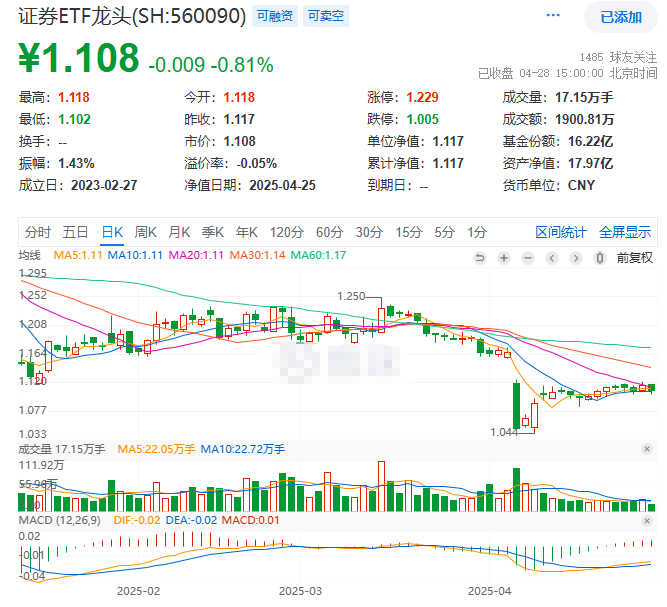
【深度分析】券商一季报“成绩单”发布!东北证券净利激增8倍,两大业务强支撑!证券板块配置价值怎么看?三大因素全方位分析!
Xin Lang Cai Jing· 2025-04-29 01:20
Group 1 - The A-share market showed narrow consolidation with trading volume shrinking to 1.07 trillion yuan, indicating a pre-holiday effect [1] - As of April 27, 15 listed securities firms reported their Q1 performance, with 4 firms achieving a net profit increase of over 100%, and Northeast Securities' net profit surged over 800% [3] - The average daily trading volume for Q1 2025 reached 15,198 billion yuan, a 70% year-on-year increase, driven by brokerage business and proprietary investments [3] Group 2 - The macroeconomic environment is improving, with Q1 2025 GDP reaching 31.88 trillion yuan, a 5.4% year-on-year growth, supporting market sentiment [8][9] - The CPI in March decreased by 0.1%, indicating a narrowing decline, which positively impacts consumer spending [10] - The monetary policy is set to be "moderately loose," with expectations for potential interest rate cuts, which could enhance market liquidity and activity [11] Group 3 - The securities sector's performance is expected to continue improving, with a projected revenue and net profit growth of 8.27% and 11.13% respectively for 2026 [13] - The current price-to-book ratio of the securities ETF leader is 1.38x, indicating strong value for investment [13] - The securities sector is seen as a core beneficiary of improved market conditions, with a robust safety margin in valuations [15]