
就业下行风险

Search documents
重磅!美联储降息25基点!鲍威尔强调就业下行风险,预计年内还降两次,中国资产大涨!
美股IPO· 2025-09-17 23:28
Core Viewpoint - The Federal Reserve has initiated its first interest rate cut in nine months, aligning with market expectations, and is projected to lower rates further in the coming months [3][6]. Summary by Sections Interest Rate Decisions - The Federal Reserve's decision to cut rates by 25 basis points to a target range of 4.00% to 4.25% was anticipated by investors, with a 96% probability indicated in futures markets prior to the announcement [6][12]. - The median forecast from Federal Reserve officials now suggests a total of three rate cuts for this year, an increase from the previous estimate of two [5][20]. - The dot plot indicates that while nine officials expect two more cuts this year, this does not constitute a majority, as six officials predict no further cuts [21][20]. Economic Outlook - The Federal Reserve has revised its GDP growth forecasts upward for the next three years, while also adjusting unemployment rate expectations downward for the same period [23][24]. - The PCE inflation expectations have been raised for the next two years, with a target of returning to 2% by 2028 [23][27]. Employment and Risks - The latest statement highlights a slowdown in job growth and a slight increase in the unemployment rate, indicating rising risks in the labor market [4][9]. - The shift in focus from inflation concerns to employment risks provides a rationale for the Federal Reserve's decision to implement a modest rate cut [6][8]. Voting Dynamics - In the recent vote, only one member, newly appointed Stephen Miran, opposed the decision, advocating for a more aggressive 50 basis point cut [12][14]. - The voting results indicate a less divided stance among Federal Reserve officials compared to previous meetings, suggesting a consensus on the current economic strategy [15][12]. Future Projections - The updated projections show a median federal funds rate of 3.6% by the end of 2025, down from previous estimates, with expectations of further cuts in the following years [17][20]. - The anticipated rate cuts are expected to total 125 basis points from September 2023 to the end of 2027, which is significantly lower than the 300 basis points previously suggested by former President Trump [17][20].

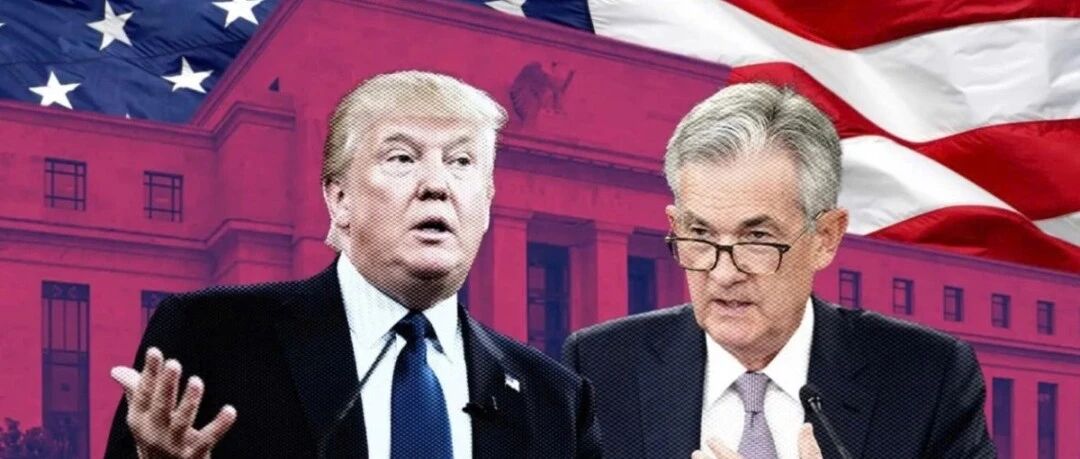
重阳问答︱ 如何解读今年杰克逊霍尔会议上鲍威尔的演讲
Jing Ji Guan Cha Bao· 2025-09-03 05:03
Core Viewpoint - The Jackson Hole meeting highlighted a shift in the Federal Reserve's monetary policy focus towards employment risks, with potential interest rate cuts anticipated if inflation data does not significantly rise [2][3]. Group 1: Monetary Policy Insights - Powell's speech indicated a more dovish stance, emphasizing rising unemployment risks in a weak labor market [2]. - Concerns about tariffs affecting inflation were downplayed, suggesting that price changes are likely to be temporary rather than persistent [2]. - The Fed's dual mandate of maintaining employment and inflation stability is now leaning more towards addressing employment risks [2]. Group 2: Interest Rate Expectations - The likelihood of interest rate cuts in September is high if inflation data remains stable, with futures indicating more than two rate cuts by year-end [2]. - The relationship between short-term rate cuts and long-term Treasury yields is complex, as short-term cuts do not guarantee a decrease in long-term rates [3]. - Historical precedents show that rate cuts can occur alongside rising long-term yields, as seen in 1995 and 1998 during soft landing scenarios [3]. Group 3: Economic Context - The expansion of the fiscal deficit and increased government power are trends that may lead to higher credit risk premiums for long-term rates [3]. - The current economic outlook remains positive, with households in good financial shape and corporations benefiting from tax cuts and lower rates [3].
美联储主席鲍威尔:风险平衡的转变或许意味着需要调整政策
Sou Hu Cai Jing· 2025-08-22 15:01
Core Viewpoint - Federal Reserve Chairman Jerome Powell indicated a potential need for policy adjustments due to a shift in risk balance, highlighting a slowdown in U.S. GDP growth and weakening consumer spending [1][2] Group 1: Economic Indicators - Current U.S. GDP growth is noticeably slowing, reflecting a decline in consumer spending [1] - The latest data shows that the Personal Consumption Expenditures (PCE) price index rose by 2.6% year-on-year in July, while the core PCE price index increased by 2.9% [1] Group 2: Federal Reserve Policy - The Federal Reserve will abandon the flexible average inflation targeting framework adopted in 2020, removing references to the effective lower bound on interest rates [1] - Powell stated that the labor market is in a "peculiar balance," with the policy interest rate at a moderately tight level [1] - The Fed is cautious in considering policy adjustments due to stable unemployment rates, aiming to prevent transient price increases from evolving into persistent inflation [1] Group 3: Market Expectations - Following Powell's speech, traders estimated a 90% probability of a rate cut in September, up from 75% prior to the speech [2] - Market expectations indicate that the Federal Reserve may implement two rate cuts before the end of the year [2]
鲍威尔:形势意味着,就业面临的下行风险上升。风险的平衡转变,可能需要调整政策
Hua Er Jie Jian Wen· 2025-08-22 14:00
Core Insights - The article discusses the recent financial performance of a specific company, highlighting significant revenue growth and improved profit margins [1] - It emphasizes the strategic initiatives undertaken by the company to enhance operational efficiency and market competitiveness [1] Financial Performance - The company reported a revenue increase of 15% year-over-year, reaching $2.5 billion [1] - Net profit margin improved from 10% to 12%, indicating better cost management and pricing strategies [1] Strategic Initiatives - The company has implemented a new technology platform aimed at streamlining operations and reducing overhead costs [1] - Expansion into new markets has been a key focus, with a 20% increase in market share in the last quarter [1]
美联储理事库格勒:特别关注通胀的上行风险以及就业的下行风险。
news flash· 2025-04-22 22:12
Core Insights - The Federal Reserve Governor, Christopher Waller, is particularly focused on the upward risks of inflation and the downward risks of employment [1] Group 1 - The emphasis on inflation risks indicates a potential concern for rising prices, which could impact monetary policy decisions [1] - The mention of employment risks suggests that there may be challenges in the labor market that could affect economic stability [1]