
工业生产者出厂价格(PPI)

Search documents
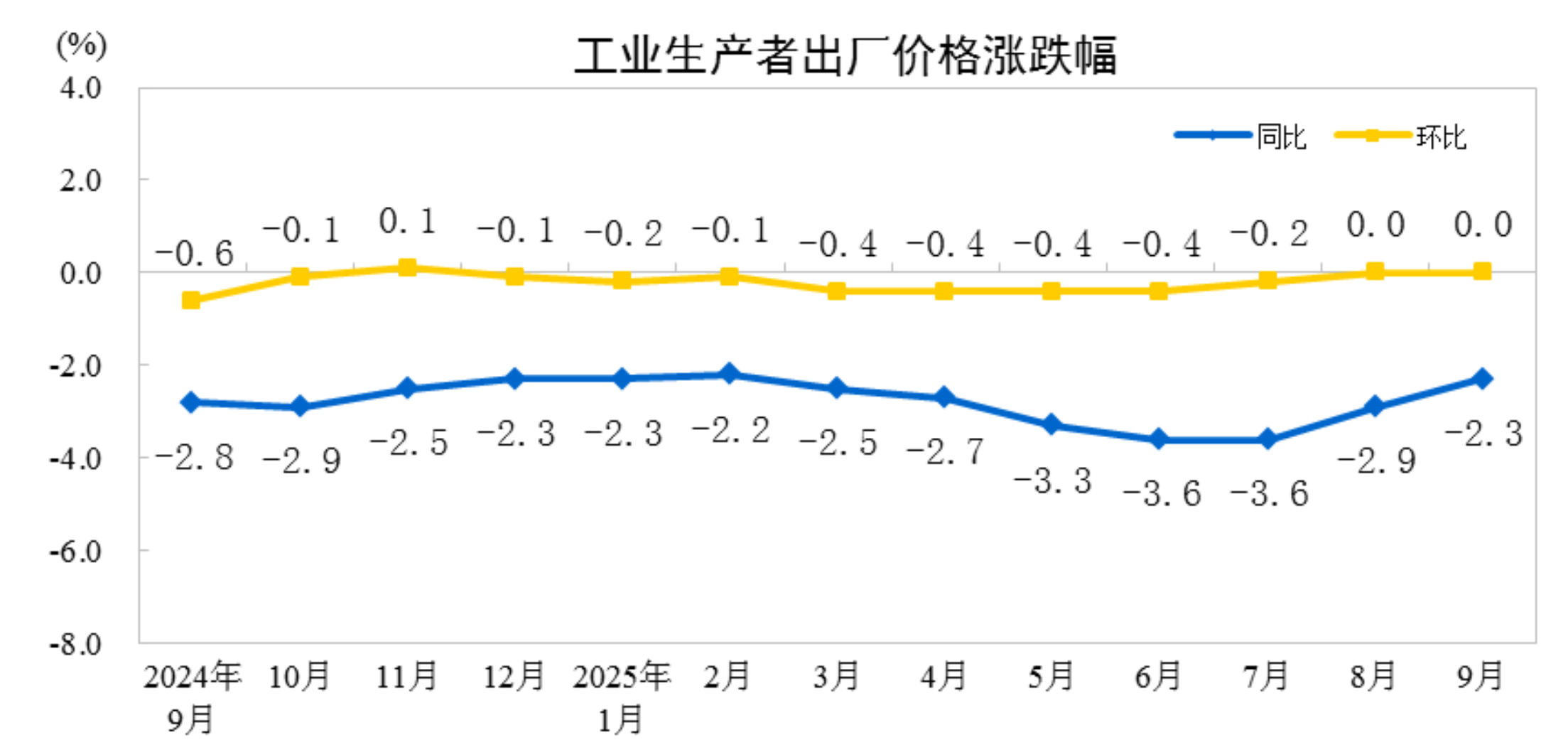
国家统计局:9月份PPI同比下降2.3% 降幅继续收窄
Yang Guang Wang· 2025-10-15 03:09
Core Insights - The National Bureau of Statistics reported a year-on-year decline of 2.3% in the Producer Price Index (PPI) for industrial producers in September 2025, with the decline narrowing by 0.6 percentage points compared to the previous month [1] - The average PPI for January to September 2025 decreased by 2.8% compared to the same period last year [1] Group 1: Producer Prices - In September, the prices of production materials fell by 2.4%, contributing approximately 1.81 percentage points to the overall decline in the PPI [1] - The mining industry experienced a significant price drop of 9.0%, while raw materials and processing industries saw declines of 2.9% and 1.7%, respectively [1] Group 2: Purchasing Prices - The purchasing prices for industrial producers decreased by 3.1% year-on-year in September, with the decline narrowing by 0.9 percentage points from the previous month [1] - The average purchasing price for January to September 2025 fell by 3.2% compared to the same period last year [1] Group 3: Consumer Prices - In September, consumer goods prices decreased by 1.7%, impacting the overall PPI by approximately 0.45 percentage points [1] - Food prices dropped by 1.7%, while clothing prices decreased by 0.3%. Conversely, general daily necessities saw a price increase of 0.7%, and durable consumer goods prices fell by 3.9% [1]
国家统计局:9月PPI同比下降2.3%,环比持平
Guo Jia Tong Ji Ju· 2025-10-15 01:41
Group 1 - In September, the producer price index for industrial producers showed a year-on-year decline, with production material prices decreasing by 2.4%, contributing approximately 1.81 percentage points to the overall decline in producer prices [3] - The mining industry experienced a significant price drop of 9.0%, while raw material prices fell by 2.9% and processing industry prices decreased by 1.7% [3] - Prices for living materials also decreased by 1.7%, impacting the overall producer price index by about 0.45 percentage points, with food prices down by 1.7% and durable consumer goods prices down by 3.9% [3] Group 2 - In terms of month-on-month changes in September, the producer prices for industrial producers remained stable for production materials, with mining prices increasing by 1.2% and processing industry prices declining by 0.1% [7] - Living material prices saw a slight decrease of 0.2%, with food prices down by 0.1% and durable consumer goods prices down by 0.4% [7] - The purchasing prices for industrial producers indicated an increase in non-ferrous metal materials and wires by 1.2%, while fuel and power prices rose by 0.5% [7]

8月份辽宁PPI环比上涨0.1
Liao Ning Ri Bao· 2025-09-20 01:00
Core Insights - In August, the Producer Price Index (PPI) in Liaoning decreased by 4.5% year-on-year, with the decline narrowing by 1.3 percentage points compared to the previous month. Month-on-month, it increased by 0.1%, a reduction of 0.2 percentage points from last month [1] - The Industrial Producer Price Index (IPI) saw a year-on-year decrease of 6.1%, with the decline narrowing by 0.7 percentage points from the previous month. Month-on-month, it shifted from a decrease of 0.2% last month to an increase of 0.3% this month [1] Price Changes in Major Categories - In August, the prices of production materials decreased by 3.4% year-on-year. The mining industry saw a decline of 8.8%, raw materials industry decreased by 4.6%, and processing industry dropped by 1.5% [1] - The prices of living materials fell by 9.6% year-on-year, with durable consumer goods decreasing by 16.9%, food prices down by 3.3%, general daily necessities down by 2.4%, and clothing prices down by 0.3% [1] Raw Material Purchase Price Trends - In August, the purchase prices of nine major raw materials showed a "two increases and seven decreases" trend year-on-year. Non-ferrous metal materials and wires increased by 2.2%, while textile raw materials rose by 1.1% [1] - Other industrial raw materials and semi-finished products decreased by 1.3%, wood and pulp materials fell by 1.9%, construction materials and non-metallic products dropped by 3.2%, black metal materials decreased by 6.9%, chemical raw materials fell by 8.1%, agricultural and sideline products dropped by 10.5%, and fuel and power materials decreased by 10.6% [1]
8月辽宁工业生产者出厂价格同比下降4.5%
Xin Hua Cai Jing· 2025-09-11 08:12
Core Insights - In August 2025, the Producer Price Index (PPI) in Liaoning decreased by 4.5% year-on-year, with a narrowing decline of 1.3 percentage points compared to the previous month. Month-on-month, it increased by 0.1%, a decrease in growth of 0.2 percentage points from the last month [1] - The Industrial Producer Price Index (IPI) fell by 6.1% year-on-year, with a narrowing decline of 0.7 percentage points from the previous month. Month-on-month, it shifted from a decrease of 0.2% to an increase of 0.3% [1] Price Trends - The prices of production materials decreased by 3.4% year-on-year in August, with specific declines in various sectors: mining industry down by 8.8%, raw materials industry down by 4.6%, and processing industry down by 1.5% [1] - Consumer goods prices saw a year-on-year decline of 9.6%, with durable goods down by 16.9%, food down by 3.3%, general daily necessities down by 2.4%, and clothing down by 0.3% [1] Raw Material Price Movements - In August, the prices of nine major raw materials showed a mixed trend with "two increases and seven decreases." Notable increases included non-ferrous metals and wire materials up by 2.2%, and textile raw materials up by 1.1% [1] - Other industrial raw materials and semi-finished products decreased by 1.3%, wood and pulp materials down by 1.9%, construction materials and non-metallic materials down by 3.2%, black metal materials down by 6.9%, chemical raw materials down by 8.1%, agricultural and sideline products down by 10.5%, and fuel and power down by 10.6% [1]
国家统计局:8月份PPI同比下降2.9%,环比持平
Jing Ji Guan Cha Bao· 2025-09-10 05:57
Core Viewpoint - In August 2025, the national industrial producer price index (PPI) decreased by 2.9% year-on-year, with the decline narrowing by 0.7 percentage points compared to the previous month, and month-on-month changes shifted from a decrease of 0.2% to flat [1] Group 1: Producer Prices - The industrial producer ex-factory prices for the first eight months of the year averaged a 2.9% decrease compared to the same period last year [1] - The industrial producer purchase prices decreased by 4.0% year-on-year, remaining flat month-on-month [1] Group 2: Price Breakdown - In August, the prices of production materials fell by 3.2%, contributing approximately 2.40 percentage points to the overall decline in industrial producer ex-factory prices [1] - The mining industry saw a significant price drop of 11.5%, while raw materials and processing industries experienced declines of 4.1% and 2.2%, respectively [1] - Prices of living materials decreased by 1.7%, impacting the overall industrial producer ex-factory prices by about 0.45 percentage points [1] - Food prices decreased by 1.7%, clothing prices remained stable, general daily goods prices increased by 0.4%, and durable consumer goods prices fell by 3.7% [1]
7月份辽宁PPI环比上涨0.3
Liao Ning Ri Bao· 2025-08-13 01:06
Core Insights - In July, the Producer Price Index (PPI) in Liaoning decreased by 5.8% year-on-year, with the decline widening by 0.2 percentage points compared to the previous month [1] - Month-on-month, the PPI shifted from flat in the previous month to an increase of 0.3% [1] - The Industrial Producer Price Index (IPI) saw a year-on-year decline of 6.8%, with the drop also widening by 0.1 percentage points from the previous month [1] - Cumulatively from January to July, the PPI decreased by 4.8% year-on-year, while the IPI fell by 5.0% [1] Price Trends - In July, the prices of production materials decreased by 5.0% year-on-year, with specific declines in various sectors: mining industry down 10.7%, raw materials industry down 5.8%, and processing industry down 3.7% [1] - The prices of living materials dropped by 9.5% year-on-year, with durable consumer goods down 15.1%, food down 5.5%, general daily necessities down 2.2%, and clothing slightly up by 0.1% [1] Raw Material Price Movements - Among nine major raw material categories, the price trend showed "two increases and seven decreases" year-on-year [1] - Textile raw materials increased by 1.7%, and non-ferrous metal materials and wires rose by 1.4% [1] - Conversely, building materials and non-metallic materials decreased by 0.9%, wood and pulp by 1.0%, other industrial raw materials and semi-finished products by 1.1%, chemical raw materials by 7.9%, black metal materials by 8.7%, agricultural and sideline products by 9.9%, and fuel and power by 12.8% [1]
7月辽宁工业生产者出厂价格同比下降5.8%
Xin Hua Cai Jing· 2025-08-12 06:28
Core Insights - In July 2025, the Producer Price Index (PPI) in Liaoning decreased by 5.8% year-on-year, with the decline widening by 0.2 percentage points compared to the previous month [1] - The Industrial Producer Price Index (IPI) also saw a year-on-year decrease of 6.8%, with a slight month-on-month decline of 0.2%, which is a narrowing of the previous month's decline by 0.7 percentage points [1] Price Trends - The prices of production materials decreased by 5.0% year-on-year in July, with the mining industry down by 10.7%, raw materials down by 5.8%, and processing industry down by 3.7% [1] - Consumer goods prices fell by 9.5% year-on-year, with durable goods down by 15.1%, food down by 5.5%, general daily necessities down by 2.2%, while clothing saw a slight increase of 0.1% [1] Raw Material Price Movements - In July, the prices of nine major raw materials showed a mixed trend with two categories increasing and seven decreasing [1] - Textile raw materials increased by 1.7%, and non-ferrous metals and wire materials increased by 1.4% [1] - Conversely, building materials and non-metallic materials decreased by 0.9%, wood and pulp decreased by 1.0%, other industrial raw materials and semi-finished products decreased by 1.1%, chemical raw materials decreased by 7.9%, black metal materials decreased by 8.7%, agricultural and sideline products decreased by 9.9%, and fuel and power decreased by 12.8% [1]
我国7月份PPI环比降幅收窄
Zheng Quan Shi Bao Wang· 2025-08-09 01:38
Core Insights - In July 2025, the national industrial producer's ex-factory prices decreased by 0.2% month-on-month, while the purchasing prices fell by 0.3%, with the decline rates narrowing by 0.2 and 0.4 percentage points compared to the previous month [1] - Year-on-year, the industrial producer's ex-factory prices dropped by 3.6%, and the purchasing prices decreased by 4.5% [1] - From January to July, the average ex-factory prices of industrial producers fell by 2.9% compared to the same period last year, while the purchasing prices declined by 3.2% [1]
通胀延续惯性-宏观经济专题报告
格林大华期货· 2025-03-10 04:40
Inflation Trends - In February, China's Consumer Price Index (CPI) decreased by 0.7% year-on-year, against a market expectation of a 0.4% decline, following a 0.5% increase in January[1] - The average CPI for January-February showed a slight decline of 0.1% compared to the same period last year, while December's CPI had a 0.1% increase[5] - Food prices fell by 1.3% year-on-year in January-February, compared to a 0.5% decline in December[5] Core CPI and PPI Analysis - The core CPI for January-February increased by 0.3% year-on-year, slightly down from a 0.4% increase in December[5] - The Producer Price Index (PPI) in February dropped by 2.2% year-on-year, slightly worse than the expected 2.1% decline and an improvement from a 2.3% drop in the previous month[9] - The prices of production materials decreased by 2.5% year-on-year, contributing approximately 1.86 percentage points to the overall PPI decline[9] Price Movements and Policy Implications - February's PPI saw a month-on-month decrease of 0.1%, following a 0.2% decline in January[10] - The government has set a CPI growth target of around 2% for 2025, down from 3% in 2024, indicating a shift in monetary policy focus[13] - The report emphasizes the importance of maintaining liquidity and aligning monetary supply growth with economic growth and price expectations[13]