
战略石油储备

Search documents
中国一口气吞下全球九成增量囤油,油价被稳住,中国在为哪场大考抢时间?
Sou Hu Cai Jing· 2025-11-03 18:39
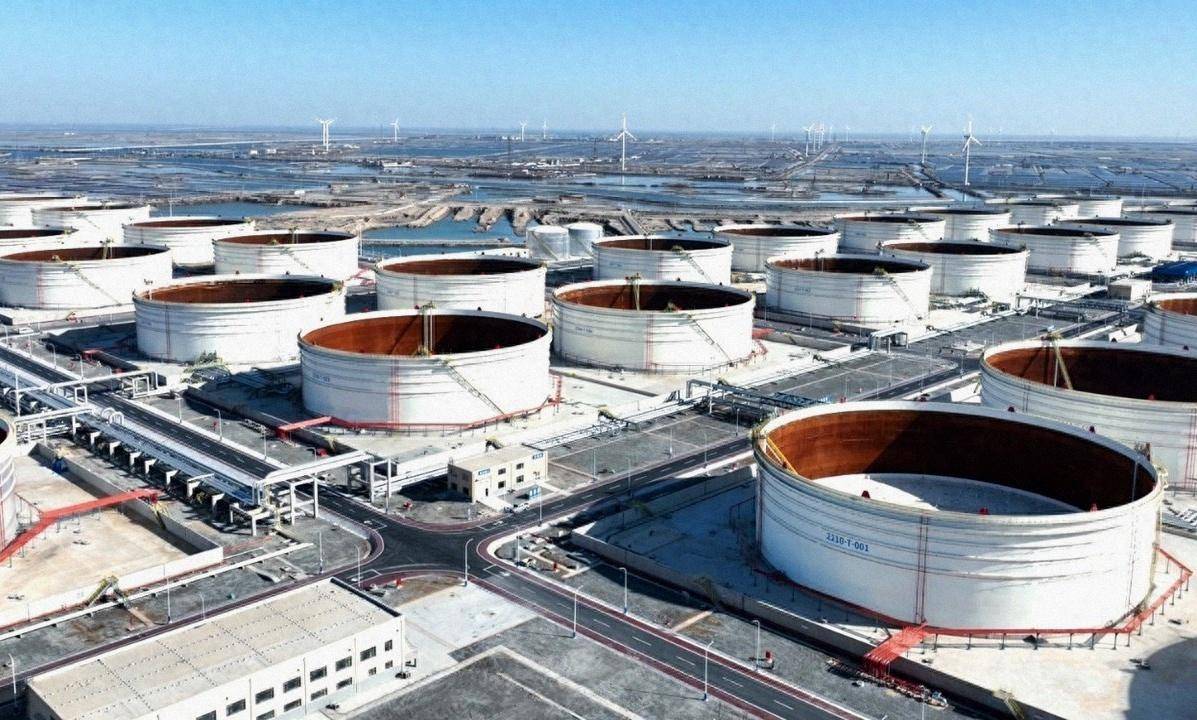
Core Viewpoint - China is accelerating its oil stockpiling, with average daily imports exceeding 11 million barrels in the first nine months, leading to a reserve duration of approximately 180 days, which has stabilized international oil prices around $65 per barrel [1][3][5] Group 1: Oil Import and Stockpiling Strategy - Since March, China's average daily oil stockpiling has reached about 1.4 million barrels, marking the highest speed in recent years [3] - By September, customs data showed that daily imports remained steady at over 11 million barrels, with approximately 1 to 1.2 million barrels going directly into storage rather than refineries [3][5] - China's strategic oil reserves are nearing 2 billion barrels, with a utilization rate of about 60%, and an additional 12.4 million barrels of capacity expected to be added by the end of the year [5][11] Group 2: Market Impact and Price Stability - The recent stockpiling has altered market dynamics, preventing oil prices from continuing to decline despite a drop to near five-year lows in October [5][9] - The International Energy Agency estimates a global daily supply surplus of about 3.7 million barrels for the current quarter, while OPEC and its allies plan a slight production increase [5][9] - Analysts suggest that if China were to halt its purchases, oil prices could drop to just above $50 per barrel, indicating the market's sensitivity to China's marginal demand [7] Group 3: Energy Security and Policy Implications - China's energy policy emphasizes the need for self-sufficiency, with the implementation of the Energy Law mandating stockpiling as a necessity rather than an option [9][11] - The current oil stockpiling strategy is seen as a hedge against currency fluctuations and supply disruptions, reinforcing the importance of oil as a safety net [9][11] - Comparisons with other countries highlight the strategic importance of oil reserves, with the U.S. facing slow progress in replenishing its emergency oil reserves [11][13] Group 4: Future Outlook and Energy Transition - The long-term energy structure in China is expected to see a decrease in coal, stability in oil and gas, and an increase in renewable energy, indicating a balanced approach to energy security and transition [13] - The ongoing stockpiling is not merely speculative but aims to provide certainty against potential global disruptions, with the focus on both capacity and pricing [13]

特朗普政府拟利用油价低位时机回补100万桶战略石油储备
Sou Hu Cai Jing· 2025-10-21 20:03
Core Insights - The Trump administration plans to purchase 1 million barrels of crude oil for the Strategic Petroleum Reserve (SPR) to replenish its dwindling stock amid falling oil prices [1] - The Department of Energy is expected to announce the procurement on Tuesday, seeking deliveries for December and January, funded by a $171 million allocation from a tax and spending bill signed by Trump [1] - WTI crude oil prices have dropped approximately 30% since mid-January, currently trading around $58 per barrel, nearing the lowest levels since 2021 [1] - The SPR has a maximum capacity of about 700 million barrels, with current reserves at approximately 408 million barrels, but the government has limited funds available for procurement [1]
保油价?以前靠沙特,现在靠中国
Hua Er Jie Jian Wen· 2025-10-02 04:36
Core Viewpoint - The article discusses China's emerging role as a stabilizer in the oil market, taking over from Saudi Arabia, particularly in light of recent OPEC+ decisions to increase production despite a cooling global demand for oil [1][3]. Group 1: China's Role in the Oil Market - China is significantly increasing its crude oil purchases to fill its strategic reserves, which absorbs surplus oil that does not enter global commercial inventories, thus not reflecting in international oil prices [2][3]. - As the largest oil buyer globally, China's actions are currently more effective in supporting oil prices than those of Saudi Arabia, which has historically been seen as the market stabilizer [4]. Group 2: Market Dynamics and Predictions - The traditional belief in the "Saudi put option," where Saudi Arabia would cut production to support prices, has weakened, especially after its recent decision to increase output despite global demand concerns [3][4]. - Analysts predict a severe oversupply in the global oil market from Q4 2023 to 2026, but as long as surplus oil continues to flow into China's strategic reserves, the impact on prices may be mitigated [4]. - A potential risk for the market is if China's willingness to stockpile oil diminishes, which could expose the hidden oversupply and lead to significant downward pressure on oil prices [4].
法兴银行报告,中国石油采购量惊人!在准备什么?存多少合适?
Sou Hu Cai Jing· 2025-09-24 10:41
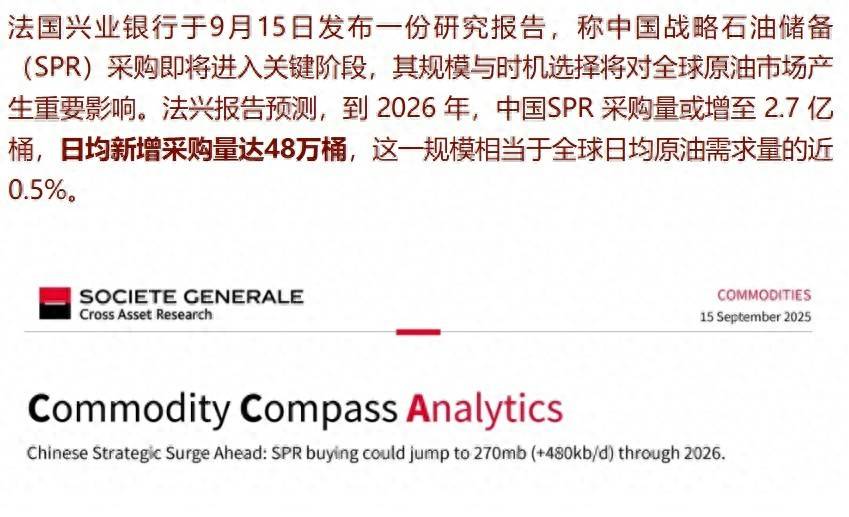
Group 1 - The core viewpoint of the news is that China's strategic oil reserve procurement is entering a critical phase, with an expected increase in procurement volume due to favorable international oil prices [1][2] - According to the report, the procurement volume may rise to 270 million barrels next year, which translates to an average daily increase of 480,000 barrels, accounting for 0.5% of global daily crude oil demand [2] - The report indicates that China's strategic oil reserve capacity currently stands at 800 million barrels, which is sufficient to accommodate the increased procurement [4] Group 2 - China has established eight national-level oil reserve bases with a total storage capacity of 28.6 million cubic meters, equivalent to 26.1 million tons of crude oil [6] - The strategic oil reserve scale in China can cover over a month of consumption, while the U.S. reserves can cover 240 days, Japan 187 days, and France 116 days [6] - Recent reports suggest that the number of oil reserve bases in China has increased to nine, with total storage capacity exceeding 33 million tons [8] Group 3 - The strategic oil reserve is crucial for national energy security, as it ensures the operation of machinery, vehicles, and weapon systems in times of supply disruption [10][11] - The concept of strategic oil reserves emerged after the oil crisis in the 1970s, prompting major countries to establish their reserves to mitigate the impact of potential supply interruptions [14][16] - China's strategic oil reserve planning aims to establish reserves equivalent to at least 100 days of net crude oil imports, with ongoing construction of storage facilities across the country [20] Group 4 - The best long-term strategy for oil reserves is domestic production, as new discoveries of oil reserves continue to grow globally [27] - China's future oil import scale is expected to decrease as domestic production increases, enhancing energy security [29] - The overall importance of oil as a primary energy source is likely to persist unless significant advancements in alternative energy sources, such as nuclear fusion, are achieved [34][36]

世界上石油储备量最多的国家:就在中国家门口,主要靠进口
Sou Hu Cai Jing· 2025-08-15 05:38
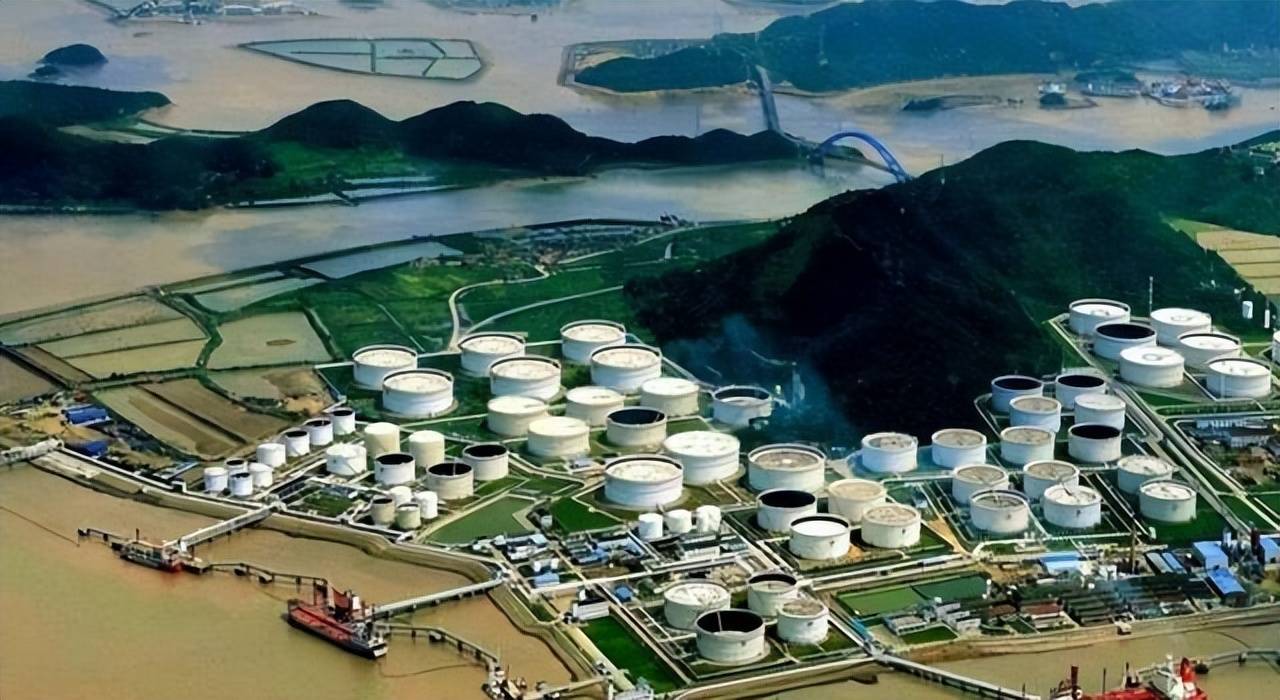
Core Insights - Oil plays a crucial role in modern society, being essential not only for transportation but also for various products like plastics and cosmetics. The increasing global demand for oil is met with limited resources, leading to supply pressures in the future [1][15] - To mitigate potential energy shortages, governments worldwide are taking measures to stockpile strategic oil reserves, which are artificially stored emergency stocks to address sudden supply disruptions [1] Japan's Oil Reserve System - Japan has established a robust national oil reserve system, which began in the 1970s in response to oil crises, mandating companies to maintain a minimum of 70 days' worth of oil supply [2][4] - By 2010, Japan's oil reserves reached 583 million barrels, sufficient for 224 days of national consumption, reflecting the country's commitment to energy security due to its lack of domestic oil resources [4][6] - Japan's oil reserve system is structured in three layers: national reserves, mandatory private reserves, and additional stocks, with the government managing these reserves through various funding mechanisms [10] Comparison with Other Countries - Japan's oil reserves are significantly higher than the average of IEA member countries, which can sustain 90 days of supply, with Japan's reserves exceeding this standard [6][8] - In contrast, the United States has the largest strategic oil reserve at 727 million barrels, but its reserves can only sustain approximately 60 days of usage due to high import levels [8] - Other countries like South Korea and Germany also maintain substantial reserves, with South Korea's reserves exceeding 160 days and Germany meeting the IEA's 90-day standard [13] Global Energy Landscape - The global demand for oil is expected to continue rising, with non-OPEC countries increasing supply, making reserves a critical component of energy security [13] - Despite the rise of alternative energy sources like electric vehicles and wind power, oil reserves remain essential for energy security in the short term [15]
美国能源部宣布,根据交换协议,将提供至多100万桶战略石油储备(SPR)原油。
news flash· 2025-07-11 16:07
Core Viewpoint - The U.S. Department of Energy announced it will provide up to 1 million barrels of crude oil from the Strategic Petroleum Reserve (SPR) under an exchange agreement [1] Group 1 - The announcement indicates a strategic move to manage oil supply and potentially stabilize market prices [1] - The exchange agreement allows for the temporary release of oil, which may impact domestic oil inventories [1] - This action reflects ongoing efforts by the U.S. government to address energy security and market dynamics [1]
原油成品油早报-20250702
Yong An Qi Huo· 2025-07-02 01:35
Group 1: Report Industry Investment Rating - No relevant content provided Group 2: Core Viewpoints of the Report - With the geopolitical risk premium related to the tense situation in the Middle East fading, oil prices dropped significantly this week. The market is turning to OPEC+ production policy formulation and Trump's decision on reciprocal tariffs, and the US will hold talks with Iran next week. Fundamentally, global oil products were destocked in late June, with the destocking slope slightly exceeding expectations and the inventory being overall neutral to high. The US commercial crude oil inventory decreased by 5.836 million barrels per day in the week of June 20th, currently at the lowest level in the same period of history. The WTI fundamentals are improving, while domestic refinery profits are rebounding and the Dubai monthly spread has strengthened recently. However, OPEC+ is preparing to significantly increase production by 414,000 barrels per day again in August. Overall, the fundamentals are still in the summer peak season, the supply - demand contradiction in the US market is large, and the upward space for absolute prices is limited. Maintain a positive spread trading strategy and pay attention to the impact of tariff policies on absolute prices [5] Group 3: Summary by Relevant Catalogs 1. Daily News - Saudi Arabia is exporting crude oil at the fastest pace in over a year, with exports increasing by 441,000 barrels per day to 6.36 million barrels per day in June, an increase of about 7%. - US President Trump said he will fill the strategic petroleum reserve when market conditions are right. - Mexico's oil production has dropped to the level of the late 1970s, with exports in June dropping to a record low of 529,000 barrels per day. - Iran was reported to have loaded mines onto ships in the Persian Gulf last month, preparing to lay mines in the Strait of Hormuz. - The API crude oil inventory in the US for the week ending June 28th was 680,000 barrels, compared with an expected - 2.257 million barrels and a previous value of - 4.277 million barrels [3][4] 2. Regional Fundamentals - In the week of June 20th, US crude oil exports decreased by 91,000 barrels per day to 4.27 million barrels per day, while domestic production increased by 400 barrels to 13.435 million barrels per day. - The commercial crude oil inventory excluding strategic reserves decreased by 5.836 million barrels to 415 million barrels, a decrease of 1.39%. - The four - week average supply of US crude oil products was 20.049 million barrels per day, a 1.6% decrease compared to the same period last year. - The US strategic petroleum reserve (SPR) inventory increased by 237,000 barrels to 402.5 million barrels, an increase of 0.06%. - The import of commercial crude oil excluding strategic reserves in the US was 5.944 million barrels per day, an increase of 440,000 barrels per day compared to the previous week. - This week, the operating rate of major refineries in China increased, while that of Shandong local refineries decreased. The production of gasoline and diesel in China both increased, and the sales - to - production ratio of local refineries for both gasoline and diesel increased. Gasoline and diesel inventories accumulated this week, and the comprehensive profits of major refineries and local refineries rebounded [4] 3. Weekly Viewpoints - As the geopolitical risk premium related to the Middle East situation fades, oil prices dropped significantly this week. The market focuses on OPEC+ production policy and Trump's tariff decision, and the US - Iran talks are upcoming. - In late June, global oil products were destocked, with the US commercial crude oil inventory at a historical low in the same period. The WTI fundamentals are improving, and domestic refinery profits are rebounding. - OPEC+ plans to increase production by 414,000 barrels per day in August. The upward space for absolute oil prices is limited, and a positive spread trading strategy is recommended. Attention should be paid to the impact of tariff policies on absolute prices [5]
美国总统特朗普:将会填满战略石油储备。当市场条件合适时,将会对战略石油储备进行填充。
news flash· 2025-07-01 17:05
Core Viewpoint - The U.S. President Trump announced plans to fill the Strategic Petroleum Reserve when market conditions are favorable [1] Group 1 - The Strategic Petroleum Reserve will be filled to ensure energy security [1] - The timing of the filling will depend on market conditions, indicating a strategic approach to oil reserve management [1]
市场消息:美国能源部表示,延迟交付的原因是战略石油储备(SPR)地点的维护工作。
news flash· 2025-06-27 01:36
Core Viewpoint - The U.S. Department of Energy has announced that delays in deliveries are due to maintenance work at the Strategic Petroleum Reserve (SPR) sites [1] Group 1 - The maintenance work at SPR locations is the primary reason for the delayed deliveries [1]
美国白宫:目前没有立即补充战略石油储备的计划。
news flash· 2025-06-26 17:42
Core Viewpoint - The White House currently has no immediate plans to replenish the Strategic Petroleum Reserve [1] Group 1 - The decision indicates a strategic approach to managing oil reserves amid current market conditions [1] - This stance may influence oil prices and market dynamics in the short term [1]