
战略石油储备

Search documents
地缘变局下的原油市场后市如何展望-煤炭行业资深专家
2026-03-26 13:20
Summary of Key Points from Conference Call Records Industry Overview - The records primarily discuss the **oil market** and the impact of geopolitical events, particularly focusing on the **Middle East** and the **Hormuz Strait**. Core Insights and Arguments 1. **Impact of Geopolitical Events**: The blockade of the Hormuz Strait has led to a reduction in Middle Eastern oil production by approximately **10 million barrels per day**, which is ten times the scale of the initial impact from the Russia-Ukraine conflict in 2022 [1][2][3]. 2. **Storage Capacity and Production Shutdowns**: Oil-producing countries have critical storage capacities, with Iraq having only **6 days** of storage left, while Saudi Arabia has **36 days**. Countries like Iraq have already begun to shut down production due to exhausted storage [1][6]. 3. **Strategic Oil Reserves**: The International Energy Agency (IEA) released **426 million barrels** of strategic reserves, which can only cover about **20 days** of the supply interruption caused by the blockade [1][10][11]. 4. **Price Predictions**: Goldman Sachs predicts that if the blockade lasts over **60 days**, Brent crude oil prices could rise to **$145 per barrel**, and if it exceeds **3 months**, prices may reach between **$150 and $170 per barrel** [1][8][24]. 5. **China's Oil Reserves**: China has sufficient oil reserves to last over **4 months**, but it relies on the Hormuz Strait for **52%** of its maritime imports. The country is diversifying its sources to mitigate risks [1][13]. 6. **U.S. Shale Oil Dynamics**: The U.S. shale oil sector is shifting its focus towards shareholder returns, resulting in a decrease in production elasticity. Even with high oil prices, production is expected to increase by only **400,000 barrels per day** [1][19]. 7. **Historical Context of Oil Price Movements**: The records highlight historical price movements during geopolitical conflicts, noting that sustained price increases require significant impacts on oil supply [4][21]. 8. **Market Reactions to Supply Interruptions**: The blockade has led to a significant drop in the number of vessels transiting the Strait, affecting global oil logistics and prices [5][3]. 9. **Future Production Recovery**: If the Hormuz Strait reopens, the recovery of oil production will be phased, taking approximately **30 to 45 days** to return to normal levels [9][10]. Additional Important Content 1. **Quantitative Assessments**: Market institutions have quantified the potential impacts of the blockade, with estimates of supply losses ranging from **700,000 to 1,000,000 barrels per day** [5][11]. 2. **OPEC's Production Decisions**: OPEC has been increasing production since 2025, but the current geopolitical situation may limit its ability to compensate for losses from the Middle East [14][17]. 3. **Iran's Oil Production and Geopolitical Risks**: Iran's oil production is gradually recovering, but geopolitical tensions remain high, particularly concerning the Hormuz Strait [15][22]. 4. **Global Oil Inventory Trends**: Global oil inventories have been declining, with significant impacts from the ongoing geopolitical tensions, leading to a supply-demand imbalance [18][20]. 5. **Economic Implications of High Oil Prices**: High oil prices can lead to inflationary pressures, affecting economic growth and potentially leading to a recession if sustained [21][24]. This summary encapsulates the critical insights and data points from the conference call records, providing a comprehensive overview of the current state and future outlook of the oil market amidst geopolitical tensions.
光大期货能化商品日报-20260324
Guang Da Qi Huo· 2026-03-24 03:02
1. Report Industry Investment Rating No relevant content provided. 2. Core Viewpoints of the Report - The prices of various energy and chemical products are affected by geopolitical situations, supply - demand relationships, and cost factors. Most products are expected to fluctuate in the short - term. For example, oil prices are affected by the US - Iran situation and will fluctuate repeatedly; fuel oil, asphalt, polyester, rubber, methanol, polyolefin, and PVC are all in an oscillatory state [1][3][5]. 3. Summary by Relevant Catalogs 3.1 Research Views 3.1.1 Crude Oil - On Monday, WTI May contract closed down $10.1 to $88.13 per barrel, a decline of 10.28%; Brent May contract closed down $12.25 to $99.94 per barrel, a decline of 10.92%; SC2605 closed at 742.2 yuan per barrel, down 62.9 yuan per barrel, a decline of 7.81%. - The US - Iran situation has led to significant oil price fluctuations. The market is affected by news and will oscillate repeatedly [1]. 3.1.2 Fuel Oil - The main fuel oil contract FU2605 on the Shanghai Futures Exchange rose 5.99% to 5060 yuan per ton on Monday, and the low - sulfur fuel oil contract LU2605 rose 3.51% to 5980 yuan per ton. - The market structures of low - sulfur and high - sulfur fuel oil remain strong. Low - sulfur fuel oil supply from the Middle East and Europe has decreased, and high - sulfur fuel oil supply in Singapore is tight. The short - term cracking spread is expected to remain high [1][3]. 3.1.3 Asphalt - The main asphalt contract BU2604 on the Shanghai Futures Exchange rose 3.59% to 4640 yuan per ton on Monday. - High raw material prices and reduced supply from refineries, along with expected increases in downstream demand, are expected to keep asphalt prices high in the short - term [3]. 3.1.4 Polyester - TA605 closed at 7134 yuan per ton, up 7.28%; EG2605 closed at 5574 yuan per ton, up 4.13%. - Due to upstream raw material supply issues, some production devices plan to reduce loads or shut down. With cost support and downstream demand changes, polyester prices will oscillate widely in the short - term [3]. 3.1.5 Rubber - On Monday, the main natural rubber contract RU2605 rose 145 yuan to 16145 yuan per ton, NR rose 190 yuan to 13055 yuan per ton, and butadiene rubber BR rose 1485 yuan to 17470 yuan per ton. - Tight geopolitical situations, changes in butadiene production, and expected early tapping of natural rubber in China will affect rubber prices. The price difference between natural rubber and synthetic rubber may continue to widen [5]. 3.1.6 Methanol - The inventory of methanol has started to decline, but the expected resumption of Iranian plants may limit price increases. The unclear Iranian situation may cause significant price fluctuations [6]. 3.1.7 Polyolefin - Upstream plant maintenance and reduced loads will keep production at a low level, while downstream demand is expected to increase. However, rising costs due to geopolitical risks may squeeze downstream profit margins and affect future demand growth [6]. 3.1.8 Polyvinyl Chloride (PVC) - The PVC market prices in East, North, and South China have increased. The geopolitical situation has a greater impact on ethylene - based PVC, but the profit of calcium - carbide - based PVC has increased rapidly. The overall market is expected to maintain a de - stocking trend [7]. 3.2 Daily Data Monitoring - The report provides the basis data of various energy and chemical products on March 23, 2026, including spot prices, futures prices, basis, basis rates, and their changes and historical quantiles. For example, the basis of crude oil was 291.81 yuan per barrel on March 23, with a basis rate of 36.25% [8]. 3.3 Market News - The US Energy Secretary said that the release of the strategic petroleum reserve is possible but the probability is very low. The Trump administration is taking measures to stabilize the market. - The El Feel oil field in Libya has stopped production due to pipeline damage, and the oil from the Sharara oil field is transported through alternative pipelines [10]. 3.4 Chart Analysis 3.4.1 Main Contract Prices - The report shows the closing price charts of main contracts of various energy and chemical products from 2022 to 2026, including crude oil, fuel oil, low - sulfur fuel oil, asphalt, LPG, PTA, ethylene glycol, etc. [12][15][18]. 3.4.2 Main Contract Basis - The basis charts of main contracts of various products are presented, such as crude oil, fuel oil, low - sulfur fuel oil, asphalt, ethylene glycol, PP, etc., showing the basis changes over time [29][33]. 3.4.3 Inter - period Contract Spreads - The spread charts of different contracts of fuel oil, PTA, ethylene glycol, PP, LLDPE, natural rubber, etc. are provided, including spreads between 01 - 05 and 05 - 09 contracts [38][40][44]. 3.4.4 Inter - variety Spreads - The spread and ratio charts between different varieties are shown, such as crude oil internal and external spreads, fuel oil high - low sulfur spreads, fuel oil/asphalt ratio, etc. [53][55][56]. 3.4.5 Production Profits - The production profit charts of LLDPE, PP, etc. are presented, showing the profit changes over time [61]. 3.5 Team Member Introduction - The report introduces the members of the energy and chemical research team, including the deputy director of the research institute, the research director, and analysts for different product segments, along with their educational backgrounds, honors, and professional experiences [64][65][66].
Oil From US Reserves Started Flowing Friday, Says Energy Secretary Wright
Youtube· 2026-03-23 14:48
Group 1 - Market prices are signaling producers to increase output, but prices have not yet reached levels that significantly reduce demand [1] - Energy entrepreneurs are finding innovative solutions to address temporary supply issues, such as rerouting floating oil barrels to refineries in other Asian nations [2] - The International Energy Agency (IEA) is facilitating the release of strategic oil stocks, with U.S. oil starting to flow from reserves as of last Friday [2][3] Group 2 - Some countries are responding quickly to the IEA's framework, while others are slower or lack sufficient oil and gas stocks [3] - The IEA was originally established to stabilize oil markets, but its use for political purposes, such as influencing gasoline prices for elections, raises concerns about its intended role [3]

国投期货能源日报-20260323
Guo Tou Qi Huo· 2026-03-23 12:54
1. Report Industry Investment Ratings - Crude oil: ★☆☆ [1] - Fuel oil: ★☆☆ [1] - Low-sulfur fuel oil: ★☆☆ [1] - Asphalt: ★☆☆ [1] 2. Core Views - The core variable of oil price trends depends on the smooth passage of the global energy transportation route. Geopolitical conflicts show no sign of easing, and oil price fluctuations may intensify [1]. - Fuel oil is expected to follow crude oil, with a solid lower support, be easily affected by news, and show a wide - range oscillating pattern [2]. - The fundamentals of asphalt have marginal improvement expectations, and its direction will follow oil price fluctuations [3]. 3. Summaries by Related Catalogs Crude Oil - Trump issued a 48 - hour ultimatum to Iran, and Iran responded with a severe warning. The gap between alternative pipeline capacity and normal oil transport volume through the Strait of Hormuz is large. The release of strategic oil reserves by IEA member countries is for emergency buffering and has replenishment needs. The key to oil price is the strait's passage, and attention should be paid to whether energy infrastructure is directly attacked [1]. Fuel Oil & Low - Sulfur Fuel Oil - Geopolitical tensions over the weekend led to a sharp rise in fuel oil prices. Supply from the Middle East decreased, and although there are some alternative supplies, they are insufficient. Domestic refinery operating rates declined, increasing import demand. Overseas, LNG gas field attacks increased the demand for fuel oil. For low - sulfur fuel oil, the attack on Fujairah Port increased Singapore's bunkering demand, and supply is limited [2]. Asphalt - The military conflict between the US, Israel and Iran continues, and the traffic volume in the Strait of Hormuz is low. Asphalt refinery supply tightened, and production decreased. Downstream demand is expected to improve with rising temperatures. Refinery inventory decreased, and social inventory increased slightly, but both are at near - three - year lows. The asphalt's direction will follow oil price fluctuations [3]
伊朗突发地震!中东局势,传来重大信号!伊朗外长发声!
券商中国· 2026-03-21 09:59
Core Viewpoint - The article discusses the ongoing tensions in the Middle East, particularly focusing on Iran's stance on the conflict and recent developments regarding oil supply and geopolitical risks [1][2]. Group 1: Iran's Position on the Conflict - Iran's Foreign Minister, Zarif, expressed that Iran seeks a complete and lasting end to the war rather than a temporary ceasefire, emphasizing the need for guarantees against future attacks and compensation for damages [2][3]. - Multiple countries are reportedly pushing for a ceasefire, but Iran is only considering a comprehensive solution to end the conflict [2]. Group 2: Regional Developments and Warnings - Iran has issued warnings to residents in the UAE's Haifa region, advising them to evacuate through designated routes due to potential military actions targeting Iranian islands [4][5]. - The Iranian Revolutionary Guard has threatened significant retaliation if Iranian islands are attacked again from the UAE [5]. Group 3: Impact on Oil Supply and Prices - Iran's oil ministry spokesperson stated that there is no remaining Iranian crude oil stranded at sea, and the U.S. has authorized a temporary release of approximately 140 million barrels of oil to the global market [6]. - The U.S. Treasury has approved a 30-day authorization for the sale of Iranian oil that is already on ships, which is part of a broader strategy to manage rising fuel prices amid ongoing conflicts [6][7]. - The International Energy Agency (IEA) announced a historic release of 400 million barrels of strategic oil reserves, doubling previous releases in response to supply disruptions and geopolitical risks [7].

高盛最新判断“油价短期或破2008年147高点” (复盘五轮原油冲击)
华尔街见闻· 2026-03-20 10:19
Core Viewpoint - Goldman Sachs predicts that Brent crude oil prices may exceed the historical high of 2008, with a rising risk of oil prices maintaining at $100 in the long term [4][6][25]. Group 1: Oil Price Trends - Goldman Sachs' commodity research team indicates that the upward trend in oil prices is likely to continue due to ongoing disruptions in the Strait of Hormuz [5]. - Brent crude oil reached a historical high of $147.50 per barrel in July 2008 [7]. - If the current low supply situation persists, concerns about prolonged supply disruptions could lead Brent crude prices to surpass the 2008 peak [6]. Group 2: Supply Chain and Production Risks - Goldman Sachs emphasizes that even after the Strait is reopened, production may take a long time to recover due to infrastructure damage [9]. - Historical analysis shows that major supply shocks often last for years, with affected countries typically experiencing an average of 42% production loss four years post-shock [12]. - If Iran and surrounding regions suffer significant production capacity damage, oil prices could remain above $100 for longer than current market expectations [13]. Group 3: Strategic Oil Reserves and Global Demand - The ongoing uncertainty from the Strait of Hormuz crisis may trigger accelerated construction of global strategic oil reserves starting in 2027 [16]. - Goldman Sachs identifies three reasons for this potential increase in reserves: low levels of existing reserves in OECD countries, heightened government reserve targets, and the need to replenish the U.S. strategic oil reserve [17]. - An accelerated pace of global strategic reserve construction could add approximately $12 per barrel to oil prices by the end of 2027 [17]. Group 4: Historical Context and Future Predictions - Historical experiences indicate that high oil prices can lead to increased energy efficiency and fuel substitution, ultimately reducing economic dependence on oil [22]. - The report suggests that the balance of risks for oil prices remains tilted towards the upside, with potential for sustained prices above $100 per barrel in scenarios of prolonged supply disruptions [24][25]. - Goldman Sachs' baseline forecast for Brent crude oil prices in Q4 2027 is $69 per barrel, with various risk scenarios indicating potential price deviations [26].


能源早新闻丨6个上榜,创建国家新型工业化示范区首批城市名单公布
中国能源报· 2026-03-17 22:33
News Focus - In January and February, the total electricity consumption in China increased by 6.1% year-on-year, reaching 165.46 billion kilowatt-hours. The first industry consumed 22.3 billion kilowatt-hours, up 7.4%, while the second industry consumed 1,027.9 billion kilowatt-hours, up 6.3%. Industrial electricity consumption grew by 6.4%, and high-tech and equipment manufacturing electricity consumption rose by 10.6%. The third industry consumed 323.1 billion kilowatt-hours, up 8.3%, with the charging and swapping service industry and internet data service industry growing by 55.1% and 46.2%, respectively. Urban and rural residents' electricity consumption was 281.3 billion kilowatt-hours, up 2.7% [2]. Domestic News - Six cities were listed in the first batch of national new-type industrialization demonstration zones, including Beijing Daxing District and Tianjin Binhai New Area [3]. - By 2025, electrical faults are expected to cause 30.8% of all fire incidents in China, with a projected total of 841,000 fire reports nationwide [3]. - China's geothermal industry remains the largest in the world, with a projected growth rate of around 7% in geothermal heating and cooling areas over the next decade, reaching a cumulative area of 3 billion square meters by 2035 [3]. Corporate News - A new international standard for pipeline geological disaster monitoring in the oil and gas industry was released, led by a Chinese state-owned enterprise. This standard integrates various technologies, including satellite remote sensing and intelligent sensing, creating a comprehensive monitoring system [7].
国际能源署署长:如有必要可释放更多战略石油储备
中国能源报· 2026-03-17 02:45
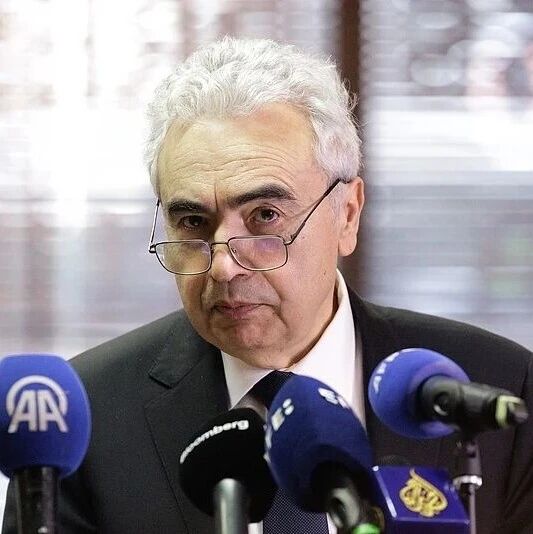
Core Viewpoint - The International Energy Agency (IEA) has announced that member countries have agreed to release 400 million barrels of strategic oil reserves to address global oil supply tightness caused by military actions involving the US and Israel against Iran, marking the largest release since the agency's establishment in 1974 [3]. Group 1 - The IEA's director, Fatih Birol, stated that member countries could release more strategic oil reserves "if necessary" [3]. - The release of strategic oil reserves is not a long-term solution, and the key to restoring stability in the oil and gas markets is the reopening of the Strait of Hormuz [3]. - Even if the Strait of Hormuz reopens quickly, the recovery of global energy trade will still take time [3].
国际油价,再度破百!
新浪财经· 2026-03-16 10:10
Group 1 - The core viewpoint of the article highlights the ongoing geopolitical tensions due to the attacks by the US and Israel on Iran, which have led to a surge in international crude oil prices, surpassing $100 per barrel [2] - As of March 15, the price of light crude oil futures for April delivery reached a peak of $101.32 per barrel on the New York Mercantile Exchange [2] Group 2 - The International Energy Agency (IEA) announced that member countries will soon release emergency oil reserves to alleviate the current tightness in international oil supply [4] - A total of 400 million barrels of strategic oil reserves will be released, with 271.7 million barrels coming from government reserves, 116.6 million barrels from industry reserves, and 23.6 million barrels from other sources [5] - Approximately 72% of the released oil will be crude oil, while 28% will be refined products, marking the largest coordinated action to provide market relief amid severe supply disruptions [5] - The IEA emphasized that restoring normal shipping through the Strait of Hormuz is crucial for stabilizing trade flows, highlighting the need for improved insurance mechanisms and enhanced safety for vessels [5]

美伊冲突持续-与船东探讨后续局势发展对油运影响
2026-03-16 02:20
Summary of Conference Call Notes Industry Overview - The ongoing conflict in the Middle East, particularly the blockade of the Strait of Hormuz, has drastically reduced oil exports from the region, dropping from 29 million barrels per day to 7 million barrels per day [1][3] - The blockade has created a significant supply gap, particularly affecting countries like Iraq and Kuwait, which lack alternative export routes and have been forced to cut production substantially [1][3] - The global refined oil supply is critically tight, leading to skyrocketing prices for products like naphtha and low-sulfur diesel, with a one-sided upward trend in global refined oil prices [1][4] Key Points and Arguments - **Oil Export Dynamics**: - Saudi Arabia's pipeline to the Red Sea has a capacity of 7 million barrels per day, but operational constraints limit actual exports to about 500,000 barrels per day due to refinery needs [3] - The UAE and Oman have limited capacity to compensate for the shortfall, with Oman exporting around 100,000 barrels per day [3] - The International Energy Agency (IEA) has released 143 million barrels of reserves, which is insufficient to cover the daily supply gap of over 10 million barrels from the Middle East [1][5] - **Shipping Market Conditions**: - The oil shipping market is highly differentiated, with shipowners willing to operate in high-risk areas commanding significant premiums, while those avoiding these areas see a decline in rates [1][6] - VLCC (Very Large Crude Carrier) rates have seen fluctuations, with rates from Brazil to China dropping from over 260 points to 163 points, yet remaining historically high [6][8] - **Future Scenarios**: - If the Strait of Hormuz reopens, there will be a rush to transport accumulated oil stocks, leading to a potential spike in shipping rates due to limited vessel availability [11] - The market is expected to see a shift towards diversifying oil import sources, reducing reliance on Middle Eastern oil, which may increase shipping distances and costs [11][12] Additional Important Insights - **Insurance and Risk Concerns**: - Shipowners are hesitant to operate in the Strait due to fragmented decision-making within Iran and the inability to secure adequate insurance coverage against potential threats [2][16][18] - The average war risk insurance rate is around 2.5%, but rates for traditional insurance can be as high as 10% [18] - **Impact of Potential Escalation**: - A blockade of the Red Sea would have catastrophic implications for global oil trade, with limited alternative routes available [10][21] - The economic impact of such a blockade would extend beyond oil prices, affecting the supply of essential chemicals and energy sources globally [21] - **Market Expectations**: - The market is currently uncertain about the future, with expectations of a potential easing of tensions but also recognition of the complexities involved in negotiations [12][13][19] This summary encapsulates the critical insights from the conference call, highlighting the significant challenges and dynamics within the oil shipping industry amid ongoing geopolitical tensions.